
PeopleImages.com - Yuri A / Shutterstock.com

fizkes / iStock via Getty Images

ipopba / Getty Images

Dash_med / iStock via Getty Images

Olena Yakobchuk/Shutterstock

Dean Drobot / Shutterstock.com

fizkes / Getty Images

marilyna / Getty Images

Trixy Gatto / Shutterstock.com

msheldrake / iStock via Getty Images

Lipik Stock Media/Shutterstock
Rimma Bondarenko / Shutterstock.com
Pixel-Shot / Shutterstock.com
andresr / Getty Images













Does Dairy Cause Nightmares? What a Medical Study Actually Found
Is your favorite late-night ice cream or grilled cheese actually setting you up for bad dreams? A 2025 study published in Frontiers in Psychology found an association between food sensitivities, gastrointestinal symptoms, eating habits, sleep quality, and nightmares. The dairy connection was more specific than some of the headlines made it sound. Only 5.5% of the 1,082 participants said food affected their dreams. Among those who did report food-related dream changes, sweets and dairy were the foods most often blamed for disturbing dreams, at 31% and 22%, respectively.
The study's strongest dairy-related finding involved lactose intolerance rather than dairy consumption in general. Participants who reported lactose intolerance had higher nightmare-severity scores, and the severity of gastrointestinal symptoms helped explain that association. The researchers suggested that discomfort such as bloating, cramping, or gas could affect sleep or make its way into dream content. However, this was a survey, not an overnight sleep-lab experiment, so it did not show that dairy directly causes nightmares or that dairy-related symptoms disrupt specific stages such as REM sleep. Eating late at night was also associated with poorer sleep, more negative dream content, and higher nightmare scores.
To bring you the answers, 247 Tempo reviewed the original Frontiers study first, along with existing coverage from Neuroscience News, Times Series, and additional medical and academic sources. We'll look at what the research actually says about dairy, sweets, food sensitivities, eating habits, and nightmares, along with what it still cannot tell us.
As always, 247 Tempo reports on medical and health research but does not provide medical advice. If recurring nightmares, sleep problems, gastrointestinal symptoms, or suspected food sensitivities are affecting you, talk with a qualified healthcare professional.
Study Overview
A research team led by Tore Nielsen of the Dream & Nightmare Lab at the Center for Advanced Research in Sleep Medicine surveyed 1,082 undergraduate psychology students at MacEwan University in Edmonton, Alberta. Participants completed the online survey between January and April 2023. Their average age was 20.3, although ages ranged from 17 to 54. The team also included Jade Radke of the University of British Columbia, Claudia Picard-Deland of the Dream & Nightmare Lab, and Russell Arnold Powell of MacEwan University.
The survey incorporated measures of sleep quality and nightmare severity, including a modified Pittsburgh Sleep Quality Index and the Nightmare Disorder Index. Participants also answered questions about food allergies and intolerances, eating habits, health, sleep, dreams, and whether they believed particular foods affected either. Overall, 40.2% said certain foods improved or worsened their sleep, including 24.7% who said foods made their sleep worse. Just 5.5% reported that food affected their dreams.
Key Findings: Nightmare Disorder Index & Diet
Participants who reported lactose intolerance had higher Nightmare Disorder Index scores than those who did not, as did participants reporting food allergies. Gluten intolerance, however, was not associated with higher NDI scores. The lactose finding became especially interesting when researchers accounted for gastrointestinal symptoms. Bloating, cramping, gas, and other GI problems statistically mediated the association between lactose intolerance and nightmare severity. In other words, the results were consistent with digestive distress being one possible piece of the connection. They did not prove that dairy itself causes nightmares.
Key Findings: Dairy
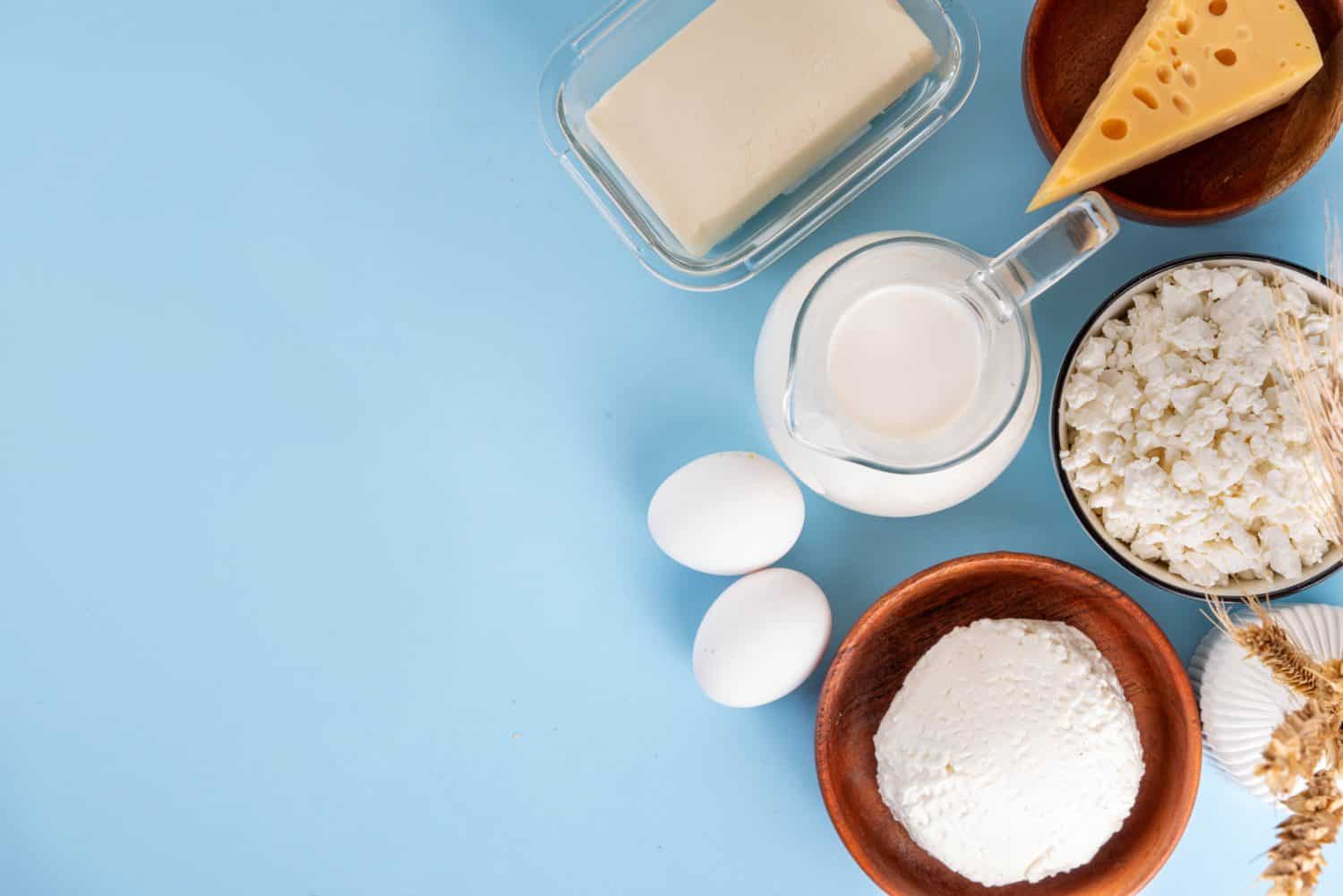
Dairy was one of the foods most often mentioned by the small group of participants who believed food affected their dreams. The study's dairy category included milk, yogurt, cheese, and other dairy products. Across all reported dream changes, dairy accounted for about 21% of the food-category mentions. For disturbing dreams specifically, dairy accounted for 22%, behind desserts and sweets at 31%. Dairy was also blamed for 27% of bizarre-dream changes. Those percentages should not be confused with the entire study population, since only 5.5% of participants said food affected their dreams in the first place.
Key Findings: Sweets, Spicy Foods, and Gluten
Desserts and sweets were actually blamed more often than dairy. Among reported disturbing dream changes, sweets accounted for 31% of food mentions, compared with 22% for dairy and 13% for spicy foods. When participants were asked about sleep rather than dreams, desserts and sweets were again the most commonly blamed category for worse sleep at 22.7%, followed by spicy foods at 19.5% and dairy at 15.7%. Gluten intolerance showed a different pattern. People reporting gluten intolerance were more likely to say food affected their dreams, but gluten intolerance itself was not associated with higher Nightmare Disorder Index scores in the study.
Mechanisms: GI Distress
Gastrointestinal distress is the most plausible mechanism the researchers identified for the lactose finding. Greater GI symptom severity was associated with more negative dream content and higher nightmare scores, and the statistical analysis found that GI symptoms helped mediate the relationship between lactose intolerance and nightmares. The researchers proposed that uncomfortable bodily sensations during sleep could influence dream content or contribute to disturbed sleep. What they did not do was monitor participants overnight for micro-arousals, REM disruption, or other changes in sleep architecture, so those mechanisms remain possibilities rather than demonstrated findings.
The study also found some striking differences in who remembered dreams and nightmares in the first place, particularly between women and men in this sample.
Gender & Recall Differences
Women in the study recalled more dreams and nightmares than men, reported more negative dream emotions, and scored higher on the Nightmare Disorder Index. About 36.6% of women reported at least one nightmare per week, compared with 20.8% of men. Food sensitivities were also reported by 38.1% of women and 19.8% of men, with significant gender differences appearing for food allergy, lactose intolerance, and gluten intolerance as well. Because gender was associated with several of the study's measures, the researchers controlled for it in their later statistical analyses rather than treating those raw differences as an explanation on their own.
Eating Habits Matter
The findings extended beyond individual foods. Eating at night and eating more heavily during the evening were both associated with poorer self-reported sleep, more negative emotional tone in dreams, and higher Nightmare Disorder Index scores. Less evening eating was also associated with greater dream recall. Other measures linked to more negative dreams included more gastrointestinal symptoms and relying less on natural hunger and fullness cues when deciding when to eat. These relationships remained after researchers accounted for several other factors, but they were still correlations. The study cannot tell us whether late eating causes nightmares, nightmares and poor sleep influence eating habits, or another factor contributes to both.
Limitations of the Research
This is where the brakes need to come on a little. The study relied on self-reported survey responses from undergraduate psychology students at one Canadian university, with an average age just over 20. Food allergies and intolerances were also self-reported rather than confirmed through clinical testing. Only 5.5% of participants believed food affected their dreams, making the food-specific dream results especially small. Most importantly, the researchers explicitly described the findings as correlational. Participants were not randomly assigned to eat cheese, sweets, or another food before bed, and their sleep was not monitored in a laboratory. The results are interesting, but they cannot establish cause and effect.
Contrasting Views
One frequently cited counterexample is a 2005 survey commissioned by the British Cheese Board. Two hundred volunteers reportedly ate 20 grams of cheese about 30 minutes before bed for a week, and none reported nightmares. The Cheese Board even reported different dream patterns for different varieties of cheese. It makes for a memorable story, but the project was sponsored by an organization created to promote British cheese, had no control group, and was never published in a peer-reviewed journal. More importantly, the newer MacEwan study does not really prove the opposite. It found associations involving lactose intolerance, gastrointestinal symptoms, and nightmares, not evidence that a piece of cheese inevitably produces bad dreams.
Dairy Before Bed? Here's What the Research Shows.
There is no good evidence from this study that everyone should stop eating dairy before bed. The more relevant question is whether dairy gives you gastrointestinal symptoms. For people with lactose intolerance, the National Institute of Diabetes and Digestive and Kidney Diseases recommends managing symptoms by limiting or, when necessary, avoiding lactose. Many people with lactose intolerance can still tolerate some lactose, and products such as yogurt and hard cheeses may be easier for some people to handle. Whether reducing lactose specifically reduces nightmares has not yet been demonstrated in a controlled trial. A milk allergy is also different from lactose intolerance and should be discussed with a healthcare professional.
Future Research: the Connection Between Nightmares and Dairy
The researchers themselves make clear what needs to happen next: experiments in which food intake is deliberately manipulated rather than simply reported after the fact. Controlled feeding studies could compare lactose-containing foods with appropriate control foods and examine whether the results differ for people with and without lactose intolerance. Future work would also benefit from more diverse age groups and populations, objective confirmation of food sensitivities, and physiological sleep monitoring. Until studies like that are completed, researchers cannot say with confidence whether particular foods cause nightmares, how large any effect might be, or exactly what happens in the body when the association appears.
Avoiding Dairy-Fueled Nightmares At Home
If you repeatedly notice that dairy causes bloating, gas, cramps, or other digestive symptoms and those nights also seem to come with poor sleep or disturbing dreams, keeping a simple food and sleep diary may help you spot a pattern. That does not diagnose lactose intolerance or prove that a particular food caused a nightmare, but it can give you useful information to discuss with a healthcare professional. General sleep guidance from the National Institutes of Health also recommends avoiding heavy or large meals within a few hours of bedtime. Persistent nightmares, ongoing sleep disruption, or recurring gastrointestinal symptoms deserve proper evaluation rather than automatically blaming the last thing you ate.
Conclusion
The 2025 Frontiers in Psychology study adds some real evidence to the old idea that food and dreams may be connected, but the takeaway is more nuanced than "cheese gives you nightmares." Lactose intolerance, gastrointestinal distress, evening eating, and nightmare severity were associated with one another, while sweets and dairy were the foods most often blamed for disturbing dreams by the relatively small group of participants who believed food affected their dreaming. The study did not demonstrate that dairy directly causes nightmares or identify REM disruption as the mechanism.
For now, the most practical takeaway is individual rather than universal. If a particular food reliably causes digestive trouble near bedtime, managing that trigger may help your comfort and sleep regardless of what happens in your dreams. If it does not bother you, this study is not a reason to ban cheese from the kitchen after sunset. Controlled trials are still needed to determine whether changing specific foods or meal timing can actually reduce nightmares.