
Courtesy of Focus Features

Courtesy of Twentieth Century Fox

Courtesy of Paramount Pictures

Ovidiu Hrubaru / Shutterstock.com

Courtesy of Newmarket Films

2024 Getty Images / Getty Images Entertainment via Getty Images

Courtesy of Buena Vista Pictures

Courtesy of Buena Vista Pictures
Courtesy of Paramount Pictures

Courtesy of Twentieth Century Fox

Courtesy of Neon

Courtesy of Dimension Films
Courtesy of Newline Cinema

Courtesy of Polygram Filmed Entertainment

Courtesy of Oscilloscope

Courtesy of Warner Bros.

Courtesy of Gramercy Pictures (I)

Courtesy of Paramount Pictures

Courtesy of Stage 6 Films

Courtesy of Arrow Films

Courtesy of Summit Distribution

Courtesy of Universal Pictures

Courtesy of Sony Pictures Classics

Courtesy of Universal Pictures

Courtesy of GKIDS

Courtesy of Paramount Classics

Courtesy of TriStar Pictures

Courtesy of TriStar Pictures

Courtesy of Orion Pictures

Courtesy of Twentieth Century Fox

Courtesy of Paramount Pictures





30 Puzzle Movies That Keep You Guessing Until the End
Some movies tell you a story. Others hand you a pile of clues, scramble the timeline, introduce someone you probably should not trust, and quietly dare you to figure out what is really happening before the credits roll.
The best puzzle movies do more than save one big surprise for the end. They make you question what you have already seen. Sometimes the mystery involves a murder. Sometimes it involves memory, identity, time, dreams, or whether the reality on screen can be trusted at all.
We are keeping these descriptions intentionally light on spoilers. If you have somehow made it this far without learning the secrets behind a few of these movies, we are not going to be the ones who ruin them.
Gone Girl (2014)
A woman disappears on her fifth wedding anniversary, and suspicion quickly lands on the husband who does not exactly look devastated enough for cable news. David Fincher's adaptation of Gillian Flynn's novel keeps changing the question you think you are trying to answer. Just when the case starts making sense, another piece lands on the table and changes the entire picture.
Shutter Island (2010)
A U.S. marshal travels to an isolated psychiatric hospital to investigate the disappearance of a patient, only to discover that nearly everyone seems to know more than they are saying. Martin Scorsese piles on suspicious doctors, strange dreams, missing records, and an approaching storm until figuring out the investigation becomes almost as difficult as figuring out the investigator.
Knives Out (2019)
When a wealthy mystery novelist turns up dead after his 85th birthday celebration, detective Benoit Blanc finds himself surrounded by relatives with motives, secrets, and very selective memories. Rian Johnson takes the classic country-house mystery, lets the audience think it understands the trick surprisingly early, and then keeps pulling new threads until almost nobody is above suspicion.
Memento (2000)
Christopher Nolan turns the movie itself into the puzzle. Guy Pearce plays Leonard, a man unable to form new long-term memories who relies on Polaroids, notes, and tattoos while trying to solve his wife's murder. Much of the story unfolds backward, leaving the audience to reconstruct events while Leonard is constantly losing the information he just gained.
Get Out (2017)
Chris expects an awkward weekend when he travels with his girlfriend to meet her wealthy parents. What he gets is something much stranger. Jordan Peele turns uncomfortable conversations, odd behavior, and seemingly harmless details into clues, gradually revealing that the uneasy feeling surrounding the visit is not paranoia. Something really is very wrong.
The Prestige (2006)
Two rival magicians become obsessed with discovering and defeating each other's greatest tricks. Since the entire movie is about professional deception, Christopher Nolan practically warns you that you are being misdirected. The answers are there, often sitting right in front of you, but knowing where to look is another matter entirely.
The Sixth Sense (1999)
A child psychologist tries to help a frightened boy who says he can see dead people. Even if you already know the famous revelation, M. Night Shyamalan's breakthrough still works because of how carefully the movie hides clues without really hiding them at all. A second viewing becomes almost as interesting as the first.
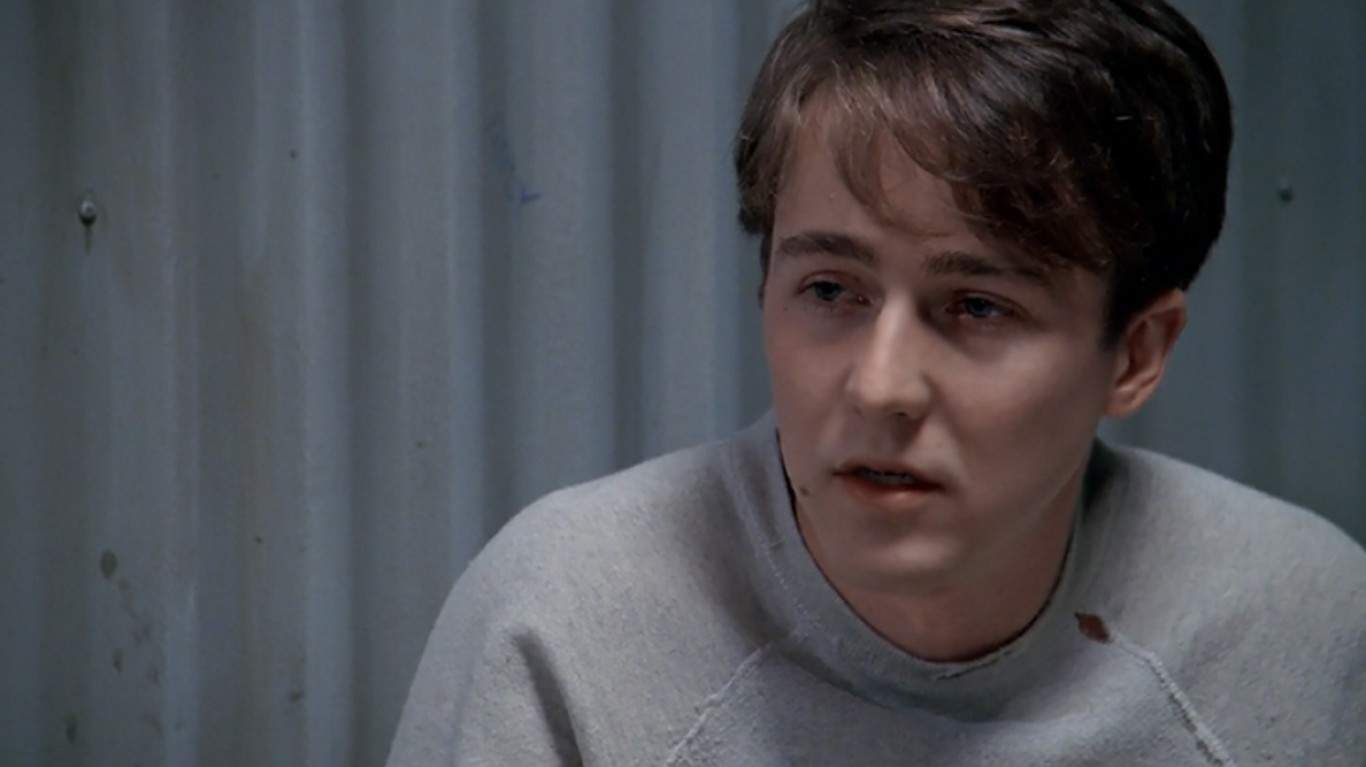
Primal Fear (1996)
A famous defense attorney takes the case of a frightened altar boy accused of murdering a prominent Chicago archbishop. Richard Gere anchors the courtroom mystery, but Edward Norton's feature-film debut is what people remember. Evidence keeps changing the shape of the case until the movie delivers the kind of final revelation that makes everything before it look different.
Fight Club (1999)
An unhappy office worker meets the charismatic Tyler Durden and helps create an underground club where men beat each other senseless to escape their ordinary lives. Then that club turns into something much larger. David Fincher destabilizes the story long before explaining what is really happening, leaving clues that become almost embarrassingly obvious once you know where to look.
Oldboy (2003)
A man is kidnapped, imprisoned in a private room for 15 years, and then abruptly released without explanation. His captor gives him only a few days to discover why it happened. Park Chan-wook turns that mystery into a brutal maze of revenge, memory, manipulation, and consequences. The eventual answer is one viewers tend to remember whether they want to or not.
The Others (2001)
Nicole Kidman plays a mother living with her two photosensitive children in a darkened mansion shortly after World War II. When unexplained noises and apparent intruders begin disturbing the house, she becomes convinced something supernatural is happening. The movie builds its mystery patiently before using what you have learned to change your understanding of the entire house.
Se7en (1995)
Two detectives hunt a serial killer who designs murders around the seven deadly sins. David Fincher gives the investigation enough clues to feel solvable while keeping the killer several steps ahead. Eventually, the mystery becomes less about discovering who is responsible and more about figuring out what his final plan actually looks like.
The Game (1997)
A wealthy investment banker receives an unusual birthday gift from his brother: participation in an elaborate experience run by a mysterious company. Soon he cannot tell which disasters are part of the game and which are real. David Fincher spends nearly the entire movie making both his protagonist and the audience wonder where the performance ends.
Coherence (2013)
Eight friends gather for dinner on the same night a comet passes overhead. Then the power goes out and the neighborhood starts behaving in ways that make increasingly little sense. Made on a tiny budget, Coherence gets enormous mileage from one house, a handful of glow sticks, and the unsettling possibility that everyone at the table may not be exactly who they seem.
Inception (2010)
Corporate thieves use technology that allows them to enter another person's dreams. Their next job requires something harder than stealing an idea: they have to plant one. Christopher Nolan stacks dreams inside dreams and gives each layer its own rules and sense of time. Keeping track of where everyone is becomes part of the fun.
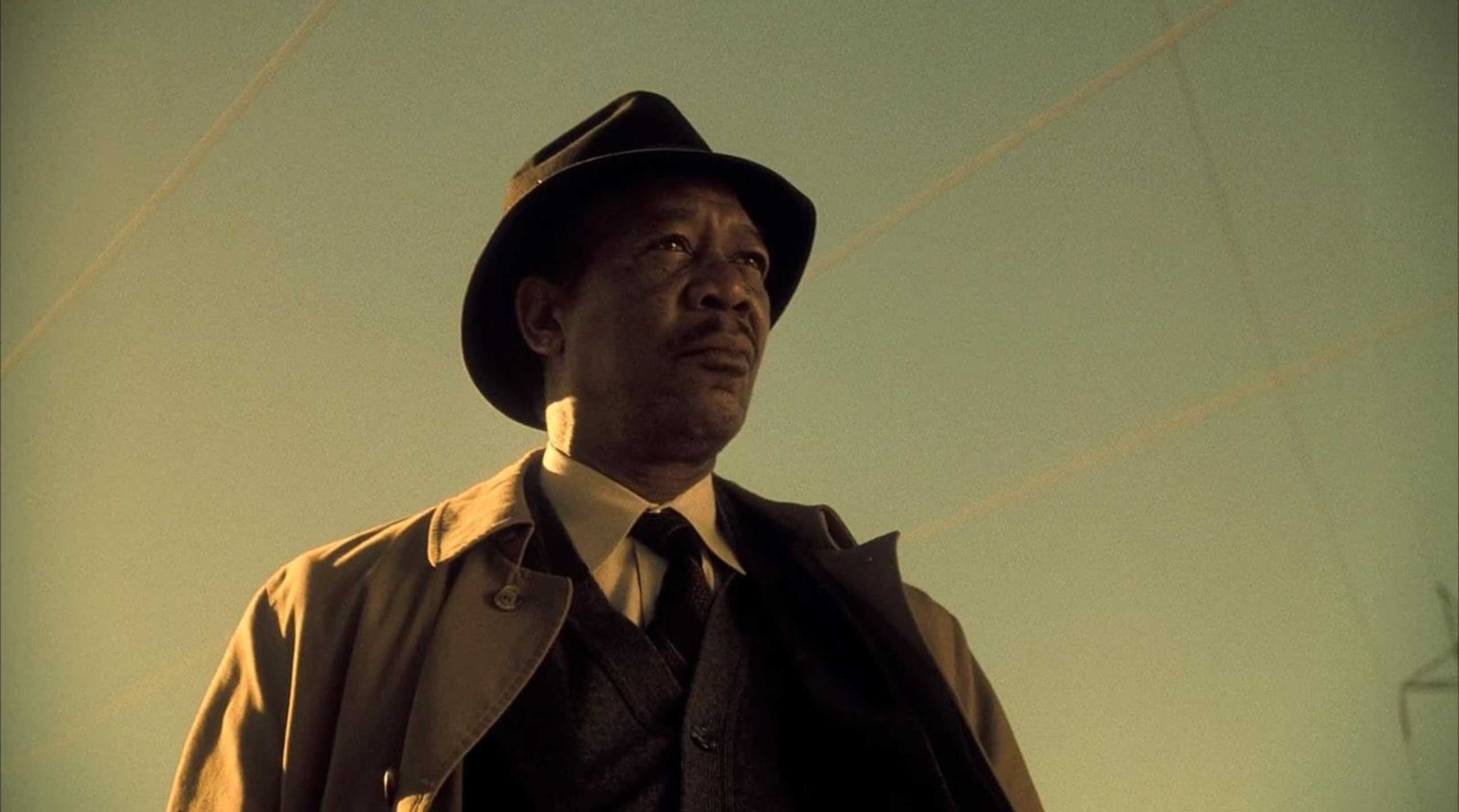
The Usual Suspects (1995)
A small-time criminal recounts the complicated events that supposedly led five crooks from a police lineup to a disastrous confrontation aboard a ship. Hanging over the story is the mysterious criminal mastermind Keyser Söze. The deeper the interrogation goes, the more important it becomes to remember that almost everything the audience knows is coming from someone telling a story.
Arrival (2016)
When alien spacecraft appear around the world, a linguist is recruited to determine how their occupants communicate and what they want. The mystery initially seems to be about language and extraterrestrials. Denis Villeneuve gradually reveals that the movie has also been quietly asking the audience to reconsider something much more basic: how the story itself is moving through time.
Predestination (2014)
A time-traveling agent is sent through history to stop a bomber who repeatedly escapes capture. That description barely scratches the surface. Based on Robert A. Heinlein's story "All You Zombies," Predestination keeps folding its characters and timelines back onto themselves until figuring out who everyone is becomes inseparable from figuring out when everyone is.
Donnie Darko (2001)
A jet engine crashes into a teenager's bedroom while he is conveniently somewhere else, following a giant rabbit named Frank who says the world will end in 28 days. From there, Donnie Darko mixes suburban drama, time travel, alternate realities, and questions about whether Donnie is seeing something impossible or simply losing his grip on reality.
Source Code (2011)
A soldier wakes up in another man's body aboard a commuter train eight minutes before it explodes. Then he wakes up and has to do it again. His mission is to identify the bomber, but each trip reveals new information about the train, the program sending him there, and his own situation. It is a mystery built around learning eight minutes at a time.
12 Monkeys (1995)
After a virus nearly wipes out humanity, a prisoner is sent into the past to gather information that might help scientists understand the outbreak. The problem is that time travel is messy, his information is incomplete, and nearly everyone assumes he is mentally ill. Terry Gilliam builds a circular mystery in which understanding history proves considerably easier than changing it.
Moon (2009)
Sam Bell is nearing the end of a lonely three-year assignment operating a lunar mining facility with only an artificial intelligence system for company. Then an accident leads to a discovery that makes his entire assignment look different. Duncan Jones keeps the scale small and lets the mystery grow from one simple question: what exactly has Sam been doing on the moon?
Mulholland Drive (2001)
An aspiring actress in Los Angeles befriends a woman suffering from amnesia after a car crash, and the two begin trying to discover her identity. That description sounds much more straightforward than the movie actually is. David Lynch gradually fractures identities, timelines, dreams, and Hollywood fantasy until solving the film becomes part mystery and part interpretation.
Perfect Blue (1997)
A Japanese pop idol leaves her music group to become an actress, attracting an obsessive stalker while increasingly losing her ability to distinguish performance from reality. Satoshi Kon uses editing to erase the boundaries between memories, acting scenes, dreams, and actual events. Every time you think you have caught up, the movie moves the line again.
The Machinist (2004)
Trevor Reznik has not slept in a year, looks dangerously thin, and begins finding cryptic messages around his apartment and workplace. Then a mysterious coworker appears and things get worse. Christian Bale's physical transformation gets most of the attention, but underneath it is a carefully constructed mystery about memory, guilt, and why Trevor's world seems determined to torment him.
Jacob's Ladder (1990)
A Vietnam veteran living in New York begins experiencing disturbing visions, missing memories, and increasingly impossible events. His search for an explanation points toward wartime experiments, psychological trauma, supernatural forces, or some combination of all three. Adrian Lyne keeps pulling reality out from underneath the viewer until the movie offers a new way to understand everything that came before.
Total Recall (1990)
A construction worker pays to have memories of a secret-agent adventure implanted in his brain, only for the procedure to apparently uncover memories that were already there. Paul Verhoeven surrounds Arnold Schwarzenegger with enough contradictory evidence to keep one question alive all the way through: is this really happening, or is he still sitting in the Rekall chair?
House of Games (1987)
A psychiatrist becomes fascinated by a professional con man after trying to help one of her patients escape a gambling debt. She soon enters a world where every gesture may be part of a scam. David Mamet's directing debut turns confidence games into a puzzle about human behavior, especially the uncomfortable gap between believing you are difficult to fool and actually being difficult to fool.
Sleuth (1972)
A wealthy mystery novelist invites his wife's younger lover to his country estate and proposes an elaborate criminal scheme that supposedly benefits them both. From there, the two men begin a battle of tricks, disguises, humiliations, and counter-tricks. With essentially two principal performers, Sleuth proves you do not need a huge cast to make the audience distrust absolutely everything.
Vertigo (1958)
A retired San Francisco detective suffering from a fear of heights is hired to follow an old friend's wife, who appears strangely obsessed with a woman from the past. Alfred Hitchcock famously reveals part of the mystery earlier than most thrillers would dare, then uses that knowledge to transform the movie from a detective story into something much darker about obsession, identity, and manipulation.