Hulton Archive / Archive Photos via Getty Images

Public Domain / Wikimedia Commons
Everett Collection / Shutterstock.com

Evening Standard / Getty Images

Hulton Archive / Archive Photos via Getty Images

Public Domain / Wikimedia Commons

KUHT, CC0, via Wikimedia Commons

Public Domain / Wikimedia Commons

Express/Getty Images

Hulton Archive / Getty Images

Public Domain / flickr


10 Real-Life Spies and Intelligence Operatives Who Made History
James Bond made espionage look like a career built around tuxedos, exotic cars, secret gadgets, and an alarming number of martinis. Real intelligence work was usually much less glamorous. It could mean memorizing troop movements, carrying coded messages, sorting classified reports, cultivating informants, or spending years pretending to be someone you weren't.
Some of the people who became famous for espionage were trained agents. Others stumbled into intelligence work because their careers, languages, connections, or unusual talents made them useful at exactly the right moment. A few became national heroes. Others became infamous traitors.
From a baseball catcher tracking Nazi nuclear research to a world-famous entertainer carrying secret messages for France, these 10 real-life spies and intelligence operatives have stories that sound like they were written for Hollywood.
Moe Berg
Moe Berg had one of the strangest résumés in American history. He played Major League Baseball, graduated from Princeton, studied law at Columbia, spoke multiple languages, and eventually found himself working for the Office of Strategic Services, the wartime predecessor of the CIA. Even before joining the OSS, Berg used a baseball trip to Japan to film Tokyo Harbor and other strategic sites.
His most famous assignment involved Germany's nuclear program. In 1944, Berg attended a lecture in Switzerland by physicist Werner Heisenberg while carrying orders that could have included killing or abducting him if Germany appeared close to building an atomic bomb. Berg concluded it was not. His wartime intelligence work earned him an offer of the Medal of Freedom, but in true Moe Berg fashion, he declined it.
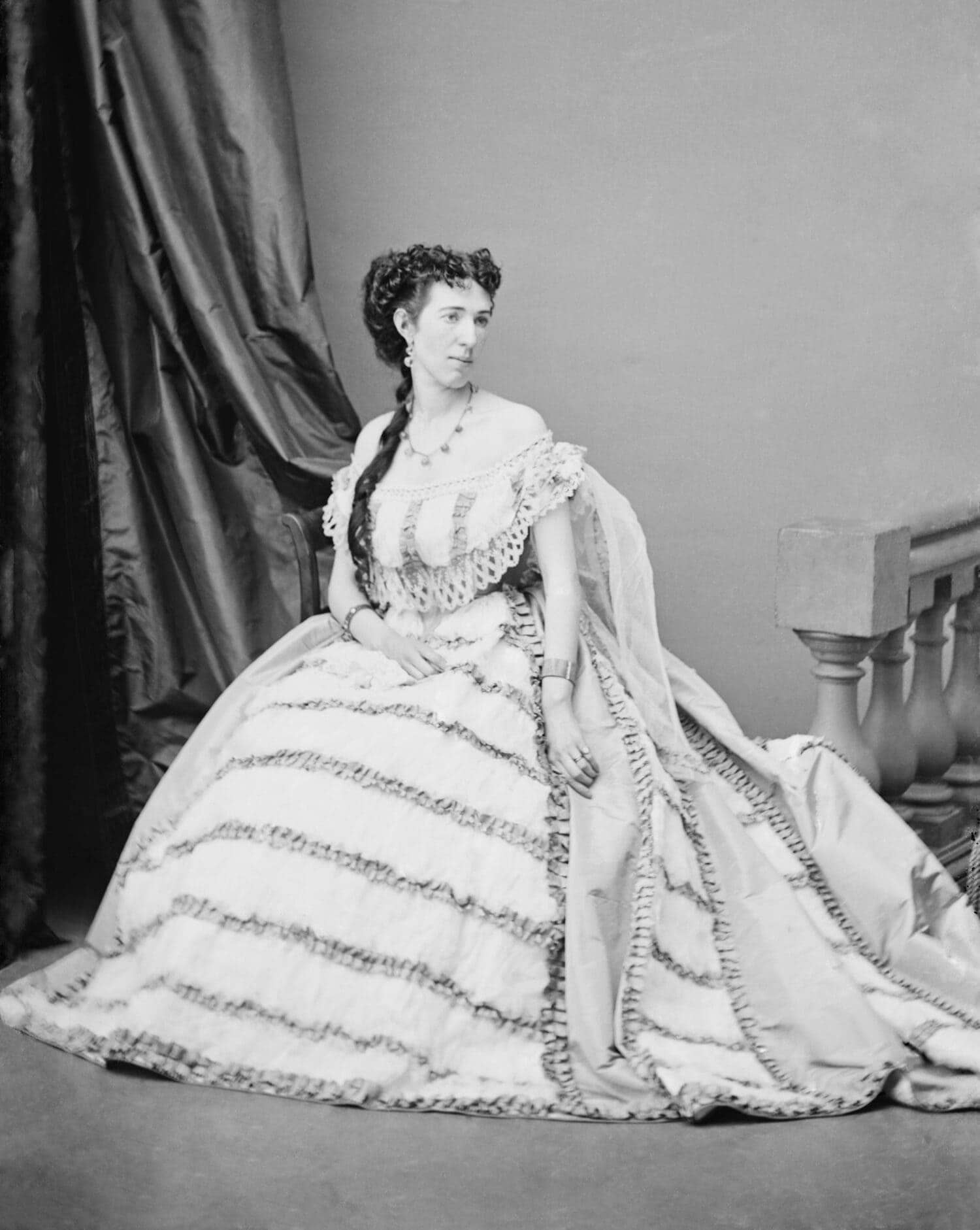
Belle Boyd
Belle Boyd's career as a Confederate spy began in 1861, not 1866 as some older accounts mistakenly claim. She was only 17 when Union troops occupied her hometown of Martinsburg, then part of Virginia. On July 4, a confrontation erupted at the Boyd home after Union soldiers objected to Confederate flags displayed there. When one soldier insulted Boyd's mother, Boyd shot and killed him. Authorities ultimately cleared her of wrongdoing but placed guards around the house.
That surveillance did not stop Boyd from gathering information. She cultivated Union officers, learned about Federal troop movements, and passed intelligence to Confederate forces. She was arrested and imprisoned during the war, but continued her activities after her release. In 1864, she was captured aboard a blockade runner and fell in love with Union naval officer Samuel Hardinge, one of the men involved in her capture. They later married in England, where Boyd became an actress and published a colorful memoir of her wartime adventures.
Klaus Fuchs
Klaus Fuchs was not just a spy. He was one of the scientists who actually understood the atomic secrets he was stealing. The German physicist fled the Nazis for Britain in 1933 and eventually joined Britain's Tube Alloys atomic research program. He later traveled to the United States as part of the British scientific mission working on the Manhattan Project, eventually joining the theoretical division at Los Alamos.
At the same time, Fuchs was secretly passing highly classified nuclear information to the Soviet Union. He provided details about the plutonium implosion bomb and later shared information connected to early hydrogen-bomb research. Fuchs confessed in 1950 and received a 14-year prison sentence, serving nine years before his release in 1959. He then moved to East Germany and resumed a successful career as a nuclear physicist.
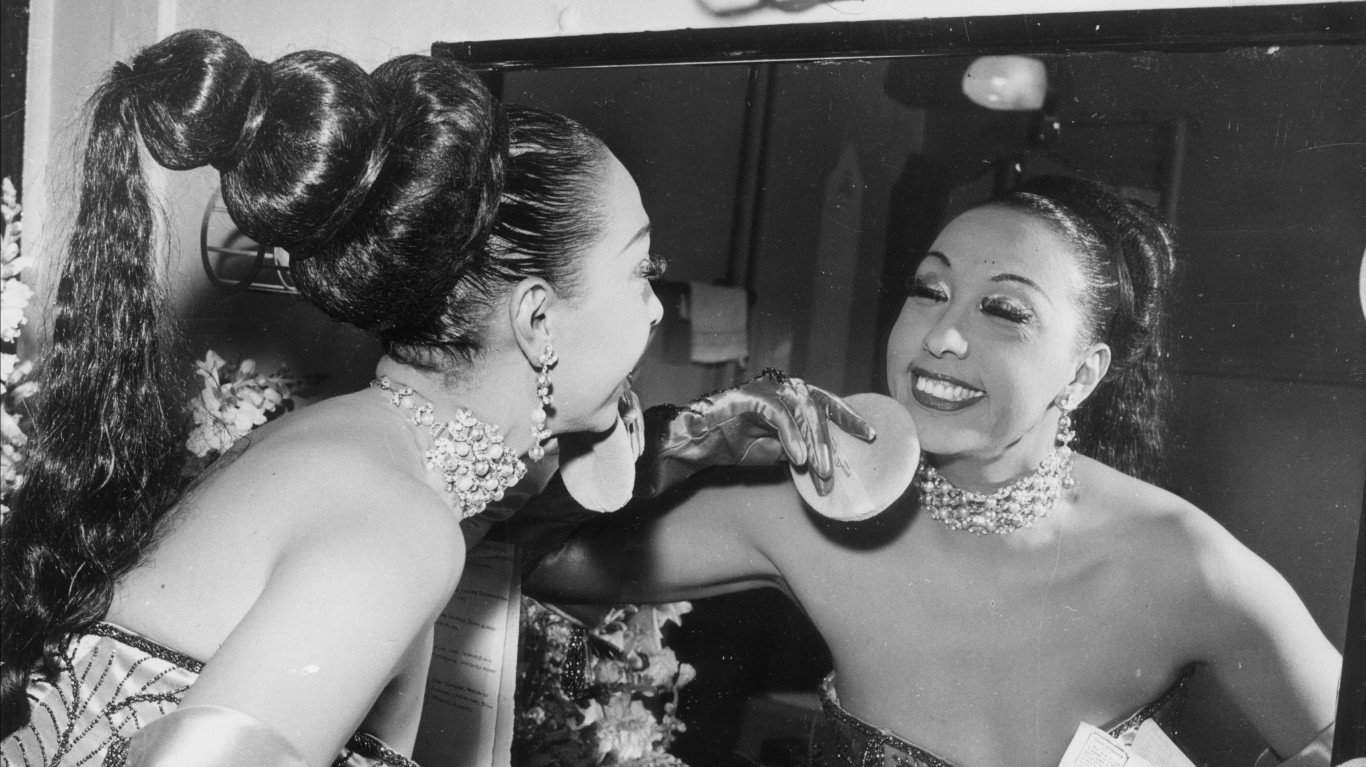
Josephine Baker
Josephine Baker was already an international superstar when World War II turned her celebrity into an unlikely intelligence asset. The American-born singer and dancer had become one of Europe's biggest entertainers and moved comfortably among diplomats, military officials, and wealthy social circles. French intelligence realized those connections gave Baker access that a conventional agent could never hope to match.
Baker gathered information for French counterintelligence and later supported the Free French and Resistance. She famously carried intelligence written in invisible ink on sheet music and concealed sensitive material among her belongings while traveling. France eventually recognized her wartime service with honors including the Croix de Guerre, the Resistance Medal, and the Legion of Honor. In 2021, she became the first Black woman honored in France's Panthéon.
Mata Hari
Few names are more closely associated with spying than Mata Hari, although her actual espionage career remains surprisingly murky. Born Margaretha Geertruida Zelle in the Netherlands, she reinvented herself in Paris as an exotic dancer and courtesan. Her relationships with military officers and political figures, combined with the freedom to travel as a citizen of neutral Netherlands, made her interesting to intelligence agencies during World War I.
She accepted money from a German official and was assigned the codename H 21, but historians still debate how much useful information she actually provided. French intelligence later recruited her as well, creating the appearance of a double agent. France arrested her in 1917 after intercepted German messages identified H 21, and a military court convicted her of espionage. She was executed by firing squad on Oct. 15, 1917. More than a century later, scholars still argue over whether Mata Hari was a serious spy, an inept one, or a convenient scapegoat for a country desperate for someone to blame.
Julia Child
Before Julia Child taught Americans how to cook French food, she worked with some of the most sensitive intelligence material of World War II. Child, then Julia McWilliams, joined the Office of Strategic Services in 1942 and initially worked at its Washington headquarters under OSS director William Donovan.
She later served in Ceylon, now Sri Lanka, and in Kunming, China, where she worked in the registry operation that handled incoming and outgoing intelligence reports and decided how classified material should be routed. That makes calling Child a secret field agent a stretch, something she herself pushed back against later in life. She was, however, a genuine member of America's wartime intelligence organization who worked directly with sensitive operational information before becoming one of television's most recognizable chefs.
John André
British Major John André was running intelligence operations in North America during the Revolutionary War when he became involved in one of the most infamous betrayals in American history. Benedict Arnold, then the American commander at West Point, secretly agreed to help the British capture the strategically crucial Hudson River fortress.
André met Arnold in September 1780 and left with documents detailing West Point's defenses along with a pass allowing him to travel under the name John Anderson. Three New York militiamen stopped him on Sept. 23 and discovered the incriminating papers. Arnold escaped to British lines, but André was tried as a spy. He asked to be executed by firing squad, the death traditionally afforded a soldier, but George Washington upheld the court's decision. André was hanged at Tappan, New York, on Oct. 2, 1780.
Ian Fleming
Ian Fleming created the most famous fictional spy in history, but his understanding of the intelligence world was not entirely imagined. Before writing the James Bond novels, Fleming served during World War II as an officer in Britain's Naval Intelligence Division and rose to the rank of commander in the Royal Naval Volunteer Reserve.
Fleming worked on intelligence planning and helped develop specialized units designed to seize enemy documents, codes, equipment, and technical information. He was closely involved with 30 Assault Unit, which conducted missions behind advancing Allied forces to capture valuable intelligence before the Germans could destroy it. Fleming was not James Bond, and calling him an MI6 field spy oversells the story. But the operations, personalities, and bureaucracy he encountered during the war gave him plenty of material when he eventually sat down to create 007.
Nathan Hale
Nathan Hale had almost no experience as a spy when he volunteered for what became the most famous intelligence mission of the American Revolution. The 21-year-old Continental Army captain agreed to slip behind British lines in September 1776 and gather information about enemy positions around New York.
The mission went badly. Hale was captured on Long Island on Sept. 21 and hanged as a spy the following morning. The sentence that later made him an American legend, "I only regret that I have but one life to lose for my country," is traditionally attributed to Hale, but there is no contemporary record proving he spoke those exact words. The surviving evidence about his mission is surprisingly thin, but his willingness to volunteer for it made Hale one of America's enduring symbols of wartime intelligence and sacrifice.
Sir Francis Walsingham
Sir Francis Walsingham was not the kind of spy who slipped through a window in disguise. He was something more dangerous: the man running the network. As one of Queen Elizabeth I's most important officials in the late 16th century, Walsingham developed an extensive intelligence operation using informants, intercepted correspondence, codebreakers, and agents scattered across Europe.
His network helped expose plots against Elizabeth, including the Throckmorton and Babington conspiracies. The latter proved especially consequential. Walsingham's agents intercepted and deciphered secret correspondence involving Mary, Queen of Scots, and the plot to assassinate Elizabeth. Those letters became crucial evidence against Mary, who was executed in 1587. Walsingham also gathered intelligence as tensions with Spain moved toward the 1588 Armada, helping establish many of the methods later associated with organized state espionage.