Shahzad Bhiwandiwala / Flickr

vitranc / iStock Unreleased via Getty Images
nicescene / iStock Editorial via Getty Images
ivanastar / Getty Images
Public Domain / Wikimedia Commons
Gobi / Flickr
Mathue / Wikimedia Commons
John Trainor / Wikimedia Commons

Guma89 / Wikimedia Commons
ilbusca / iStock Unreleased via Getty Images
Public Domain /. Wikimedia Commons
ivanastar / iStock Unreleased via Getty Images
panchof / iStock Unreleased via Getty Images
Courtesy of Twentieth Century Fox
dominiquegodbout / Flickr
Shahzad Bhiwandiwala / Flickr
Valerie Loiseleux / iStock Unreleased via Getty Images
Chris Harrison / Flickr


17 Classic Toys and Games Millennials Couldn't Get Enough Of
Every generation has a handful of toys that can instantly send them back to childhood. For Millennials, generally defined by Pew Research Center as people born from 1981 through 1996, that means everything from Cabbage Patch Kids and Transformers to Game Boy, Beanie Babies, and one extremely giggly red monster.
The 1980s and 1990s also produced some legendary toy crazes. Parents lined up for hard-to-find Cabbage Patch Kids, hunted for Talkboys after "Home Alone 2," and battled holiday shortages when Tickle Me Elmo became nearly impossible to find. Meanwhile, Nintendo was changing what childhood play looked like entirely by putting video games in living rooms and eventually in kids' hands wherever they went.
To revisit 17 classic toys and games Millennials couldn't get enough of, 24/7 Tempo reviewed information from toy companies and brand owners, The Strong National Museum of Play, Nintendo, the Smithsonian, and other historical sources. Some arrived before the first Millennials were old enough to play with them, but remained fixtures of toy boxes, bedrooms, arcades, and Christmas lists throughout their childhood years.
Rubik's Cube
Hungarian architecture professor Ernő Rubik developed his famous twisting puzzle in 1974 to explore spatial relationships. Originally called the Magic Cube, it was renamed the Rubik's Cube when Ideal Toy Company took over distribution and the puzzle launched internationally in 1980.
The concept could hardly have been simpler: scramble six colored sides and somehow get every face back to a single color. Actually doing it was another story. The Cube became such a phenomenon that an entire market of strategy books and solution guides followed. By the time Millennials were old enough to encounter one, it was already a toy-box staple and an excellent way to discover just how little patience you actually had.
Smurfs
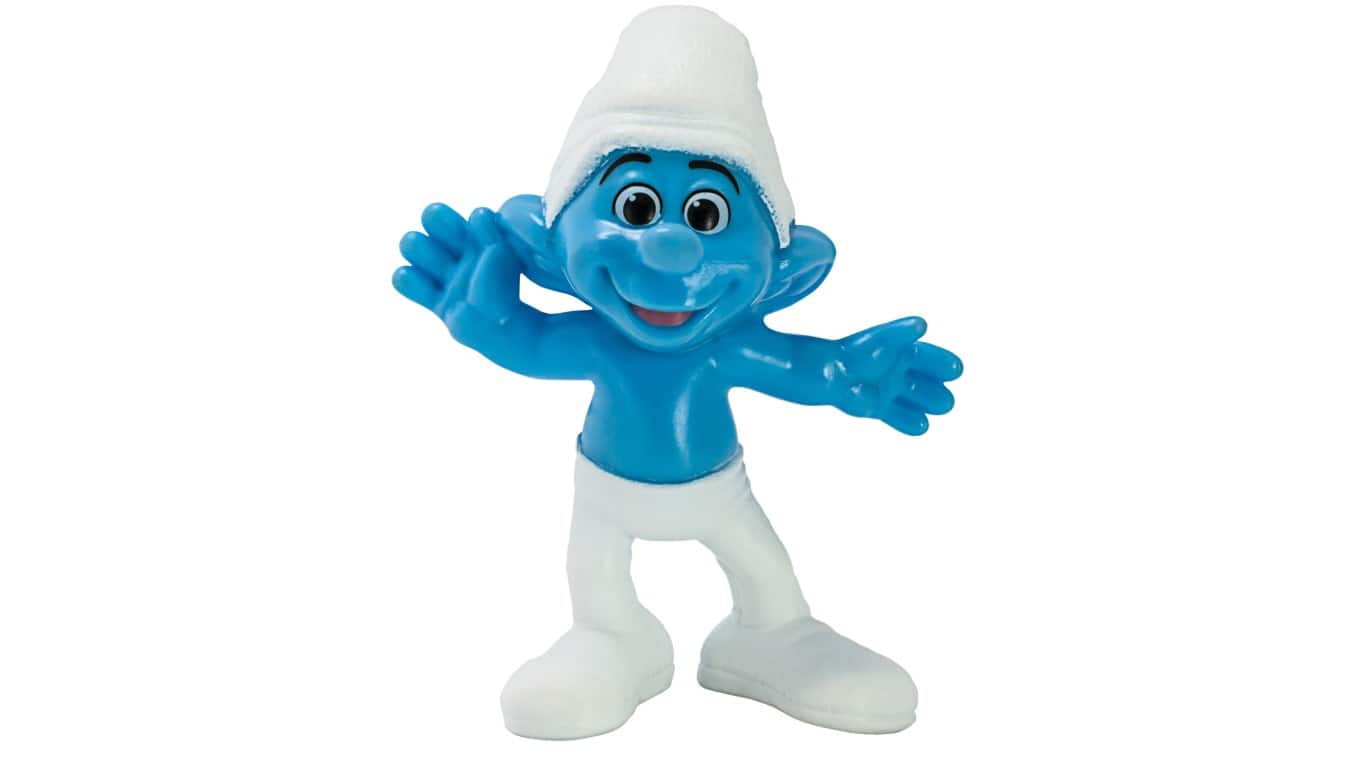
The Smurfs were much older than many American kids realized. Belgian cartoonist Pierre Culliford, better known as Peyo, introduced the tiny blue characters in 1958. German toy company Schleich began making Smurf figurines in the 1960s, giving the characters a physical life long before their biggest American breakthrough.
That came in 1981, when Hanna-Barbera's animated "The Smurfs" debuted on NBC. The series ran for nine seasons and turned Papa Smurf, Smurfette, Brainy, Gargamel, and the rest of the village into household names. By the 1980s, Smurf figures and merchandise were everywhere, making them an easy hand-me-down favorite for older Millennials and a franchise that seemed almost impossible to escape.
My Little Pony
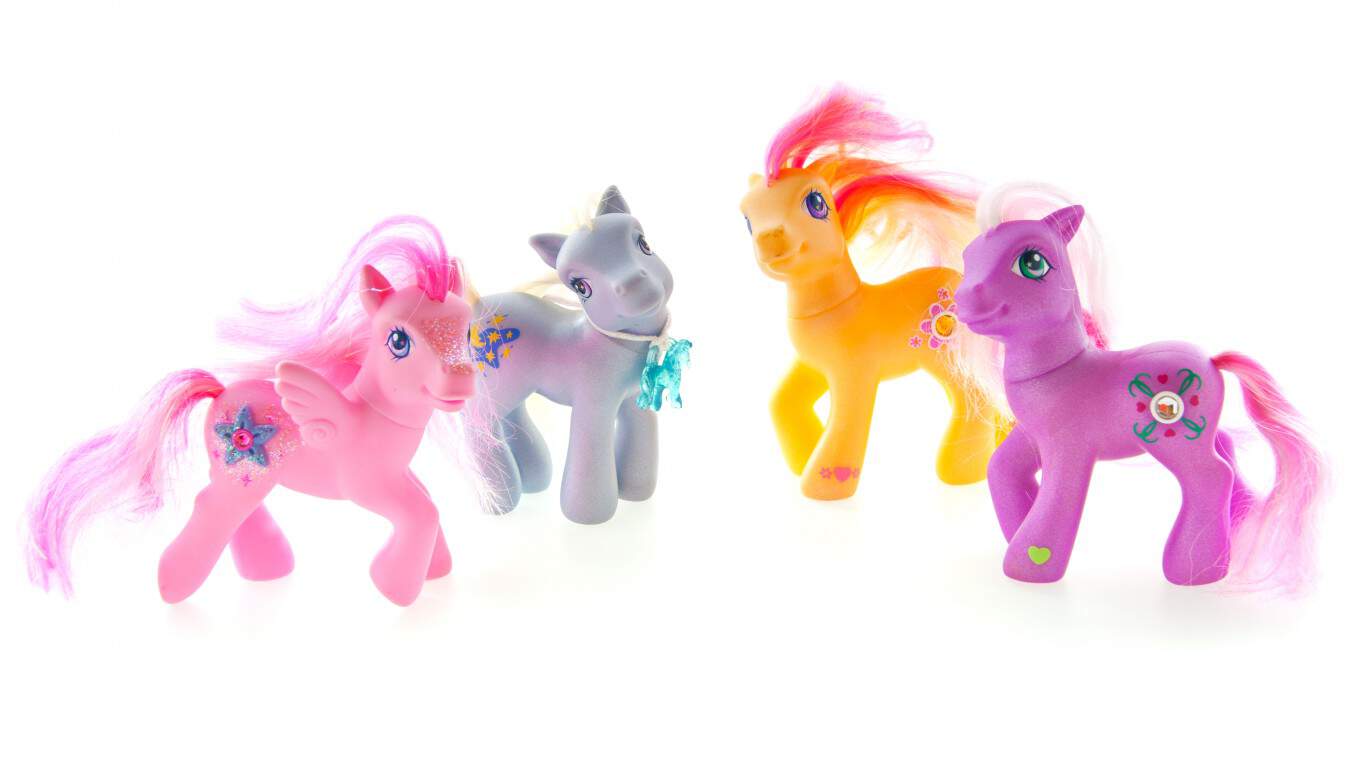
Hasbro introduced the My Little Pony franchise in 1983, turning brightly colored ponies with flowing manes and distinctive symbols into one of the decade's most recognizable toy lines. The combination was almost tailor-made for collecting. One pony was good, but there was always another color, character, or accessory waiting on the toy-store shelf.
Animation helped give those toys personalities and a world of their own. Television specials arrived in the mid-1980s, followed by a theatrical movie and the "My Little Pony 'n Friends" television series in 1986. The brand has been reinvented repeatedly since then, but for Millennials who grew up with the original ponies, the pastel colors and plastic combs are pure 1980s nostalgia.
Cabbage Patch Kids
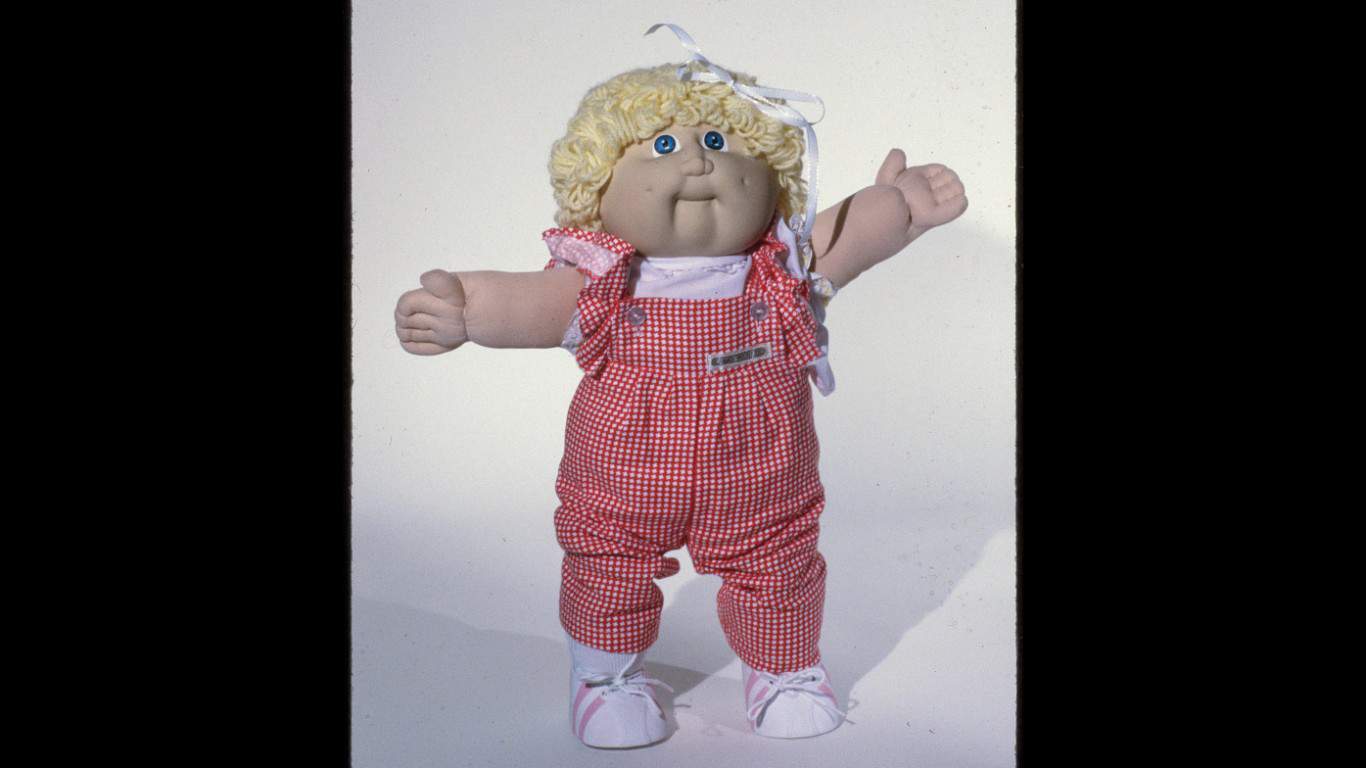
Cabbage Patch Kids began with artist Xavier Roberts' handmade Little People dolls in the 1970s. Roberts presented the dolls as children to be "adopted" rather than ordinary toys to be purchased, complete with names, birth certificates, and adoption papers. That gimmick turned out to be marketing gold.
Coleco licensed the concept and introduced the mass-market Cabbage Patch Kids line in 1983. Demand quickly overwhelmed supply during that year's holiday season, producing packed stores and frantic searches by parents who suddenly discovered that their child's happiness apparently depended on obtaining one particular vinyl-headed doll. The craze eventually cooled, but the adoption concept and enormous 1983 frenzy made Cabbage Patch Kids one of the defining toy phenomena of the decade.
Transformers
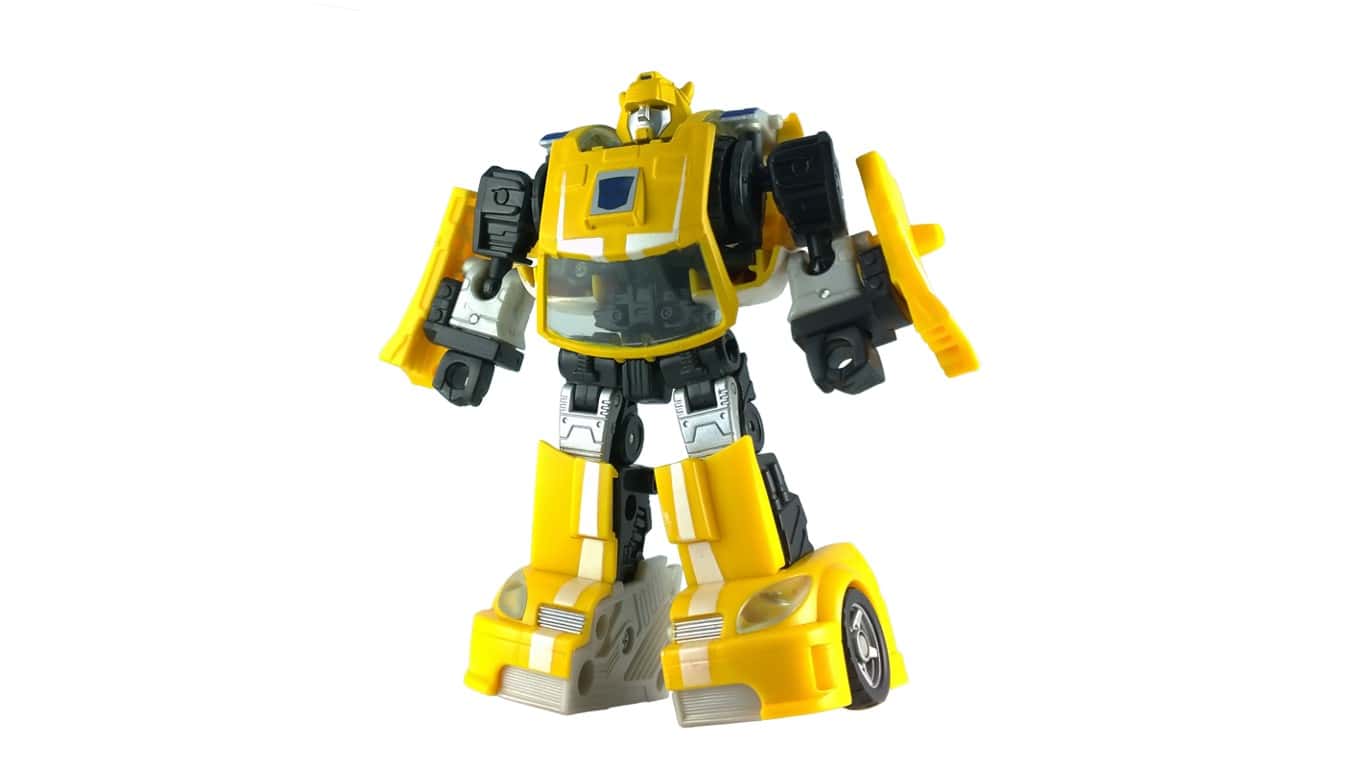
Hasbro and Takara launched Transformers in 1984 with a premise that practically sold itself: robots that could actually transform into cars, trucks, planes, weapons, and other objects. Optimus Prime and the Autobots battled Megatron and the Decepticons, while kids got the satisfaction of turning the characters back and forth between their two forms.
The toys were supported from the beginning by comic books and an animated television series, creating a full fictional universe around what otherwise might have been clever transforming action figures. That combination worked. Transformers became a lasting global franchise, and plenty of Millennial kids spent the late 1980s and 1990s trying to remember exactly which plastic panel had to fold where without snapping something important off.
Teddy Ruxpin
Worlds of Wonder introduced Teddy Ruxpin in 1985, and this was not an ordinary stuffed animal. A cassette mechanism built into the toy played stories while Teddy's mouth and eyes moved along with the audio. For kids accustomed to stuffed animals simply sitting there, watching one apparently tell you a story felt remarkably futuristic.
Created by Ken Forsse, Teddy became one of the signature electronic toys of the mid-1980s and eventually spawned an animated television series and several later versions. The original cassette-driven model looks wonderfully primitive next to today's interactive toys, but that is part of the appeal. For a kid in 1985, a bear moving its face and talking directly to you was plenty impressive.
Care Bears
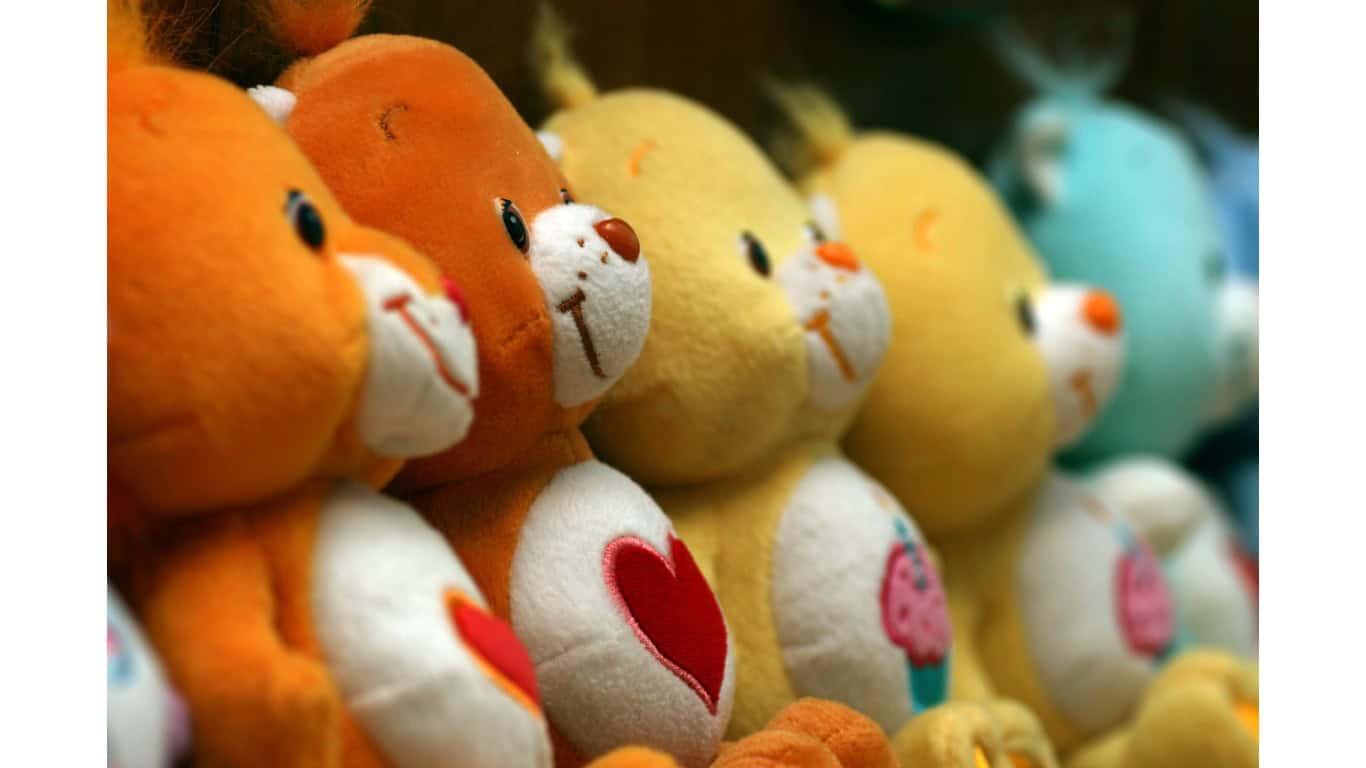
The Care Bears originated with American Greetings before expanding into toys through Kenner in the early 1980s. Each colorful bear had its own name, personality, and symbol across its stomach, from Cheer Bear's rainbow to Grumpy Bear's rain cloud. That made them characters rather than interchangeable stuffed animals, and naturally encouraged kids to want more than one.
Television specials, animated series, books, and movies pushed the Care Bears far beyond the toy aisle. By the middle of the decade, Care-a-Lot and the Care Bear Stare were familiar territory to a generation of kids. The franchise has been revived several times since, but the original plush bears remain firmly tied to the neon-colored, aggressively cheerful side of 1980s childhood.
Jenga
Leslie Scott developed the game that became Jenga from a wooden-block stacking game her family had played while living in Africa. She began selling it under the name Jenga, derived from the Swahili word for "build," and the game eventually reached the American mass market through Milton Bradley in 1987.
The genius of Jenga is that almost anyone understands it within about 20 seconds. Pull out a block, put it on top, and try not to be the person who destroys everything. No batteries, elaborate setup, or lengthy instruction manual required. The increasingly crooked tower also makes every move more stressful, which explains why a pile of wooden blocks became a game-night staple that is still widely played decades later.
Super Mario Bros.
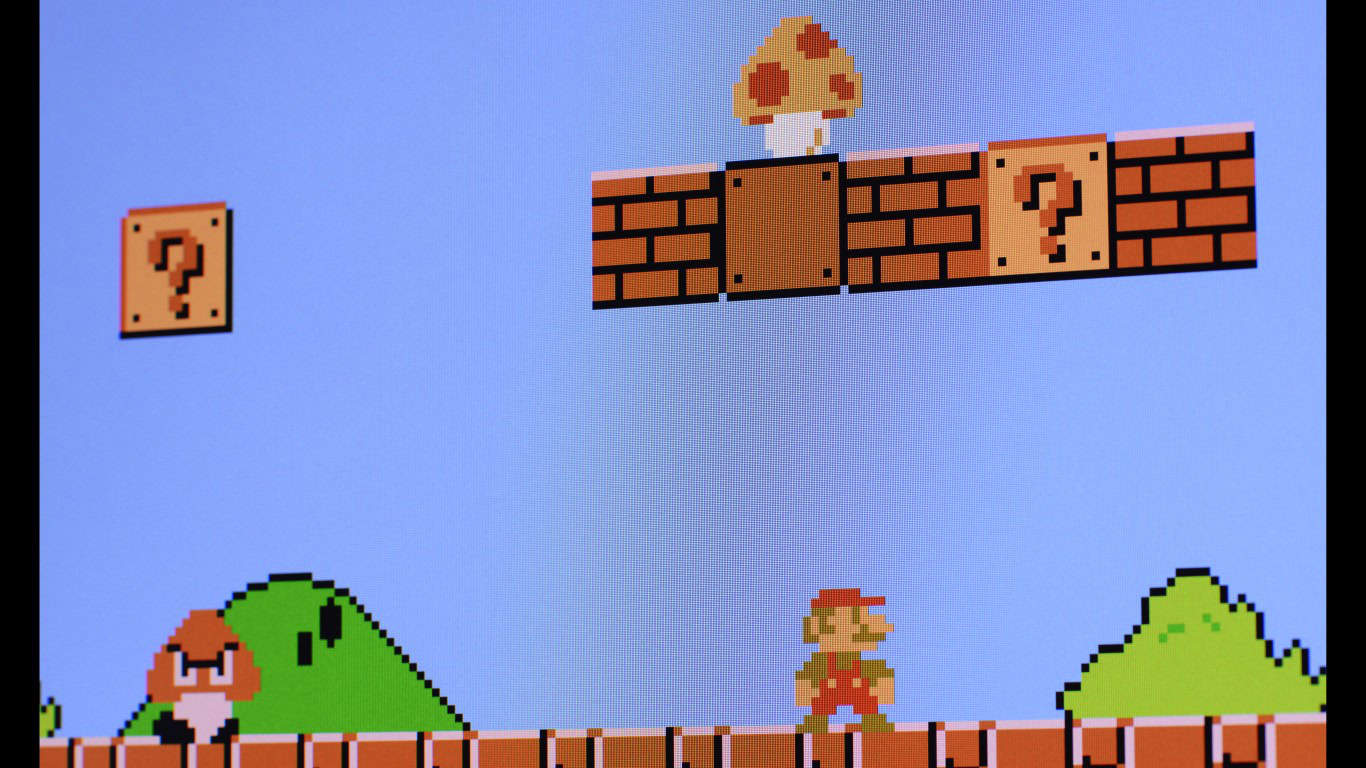
Nintendo released "Super Mario Bros." for the Nintendo Entertainment System in the United States in 1985. Mario had appeared previously, but this game sent him through the Mushroom Kingdom on the adventure that established the basic formula millions of players now recognize: run, jump, smash blocks, grab power-ups, and rescue Princess Toadstool from Bowser.
The timing could hardly have been better. The NES became a smash hit in North America, and "Super Mario Bros." was one of the games that demonstrated why having a console at home felt completely different from dropping quarters into an arcade cabinet. For older Millennials, Mario was not merely another character. He was often one of their first introductions to video games at all.
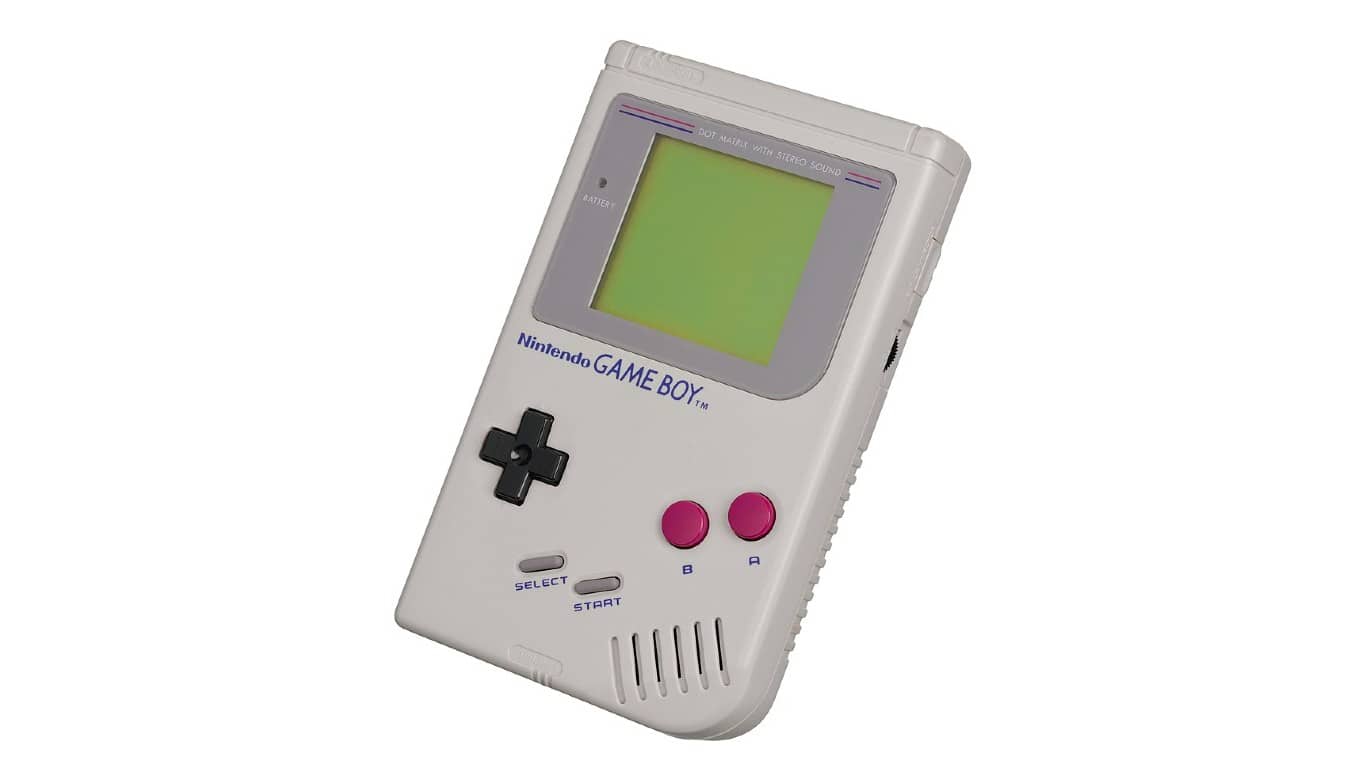
Game Boy
Nintendo introduced the Game Boy in 1989, putting interchangeable-cartridge gaming into a machine small enough to carry around. Its monochrome greenish screen looks almost comically basic today, but portability mattered far more than color graphics when the alternative was leaving your Nintendo at home.
The system's association with "Tetris" gave it an especially addictive launch title, while later games brought Mario, Zelda, Kirby, and eventually Pokémon onto the handheld. Suddenly road trips, waiting rooms, and the back seat of the family car had their own gaming system. For Millennial kids, the Game Boy helped turn video games from something tied to the television into something that could go practically anywhere.
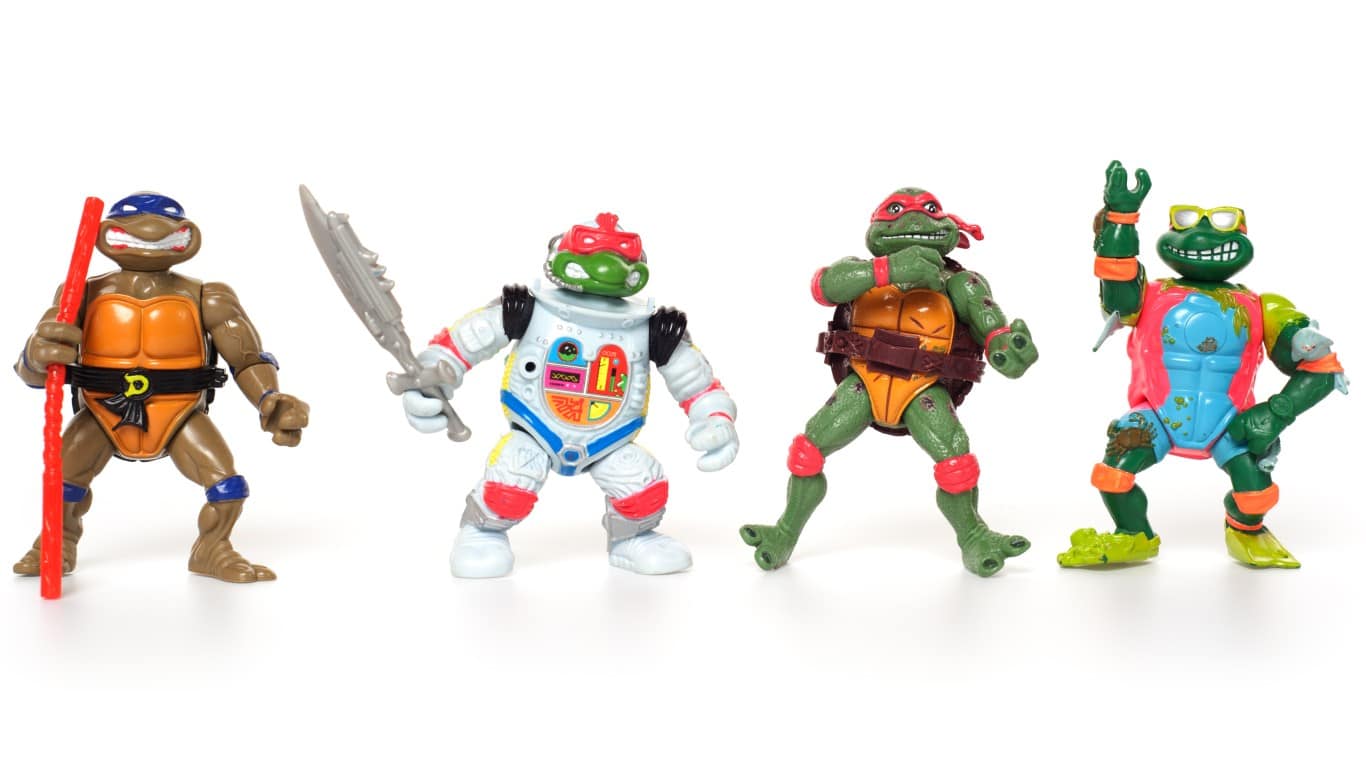
Teenage Mutant Ninja Turtles
Kevin Eastman and Peter Laird created the Teenage Mutant Ninja Turtles as comic-book characters in 1984, but the version most Millennial kids remember exploded into the mainstream a few years later. An animated television miniseries premiered in late 1987, and Playmates Toys launched its first TMNT action-figure line in 1988.
Leonardo, Donatello, Raphael, and Michelangelo soon seemed to be everywhere. There were figures, vehicles, video games, cereal, pajamas, and eventually a hugely successful 1990 live-action movie. Playmates itself describes the original toy line as one of the most successful brands in toy-industry history. Pizza-loving mutant reptiles trained in ninjutsu sounds ridiculous when written out like that, but to a kid in 1989 it made perfect sense.
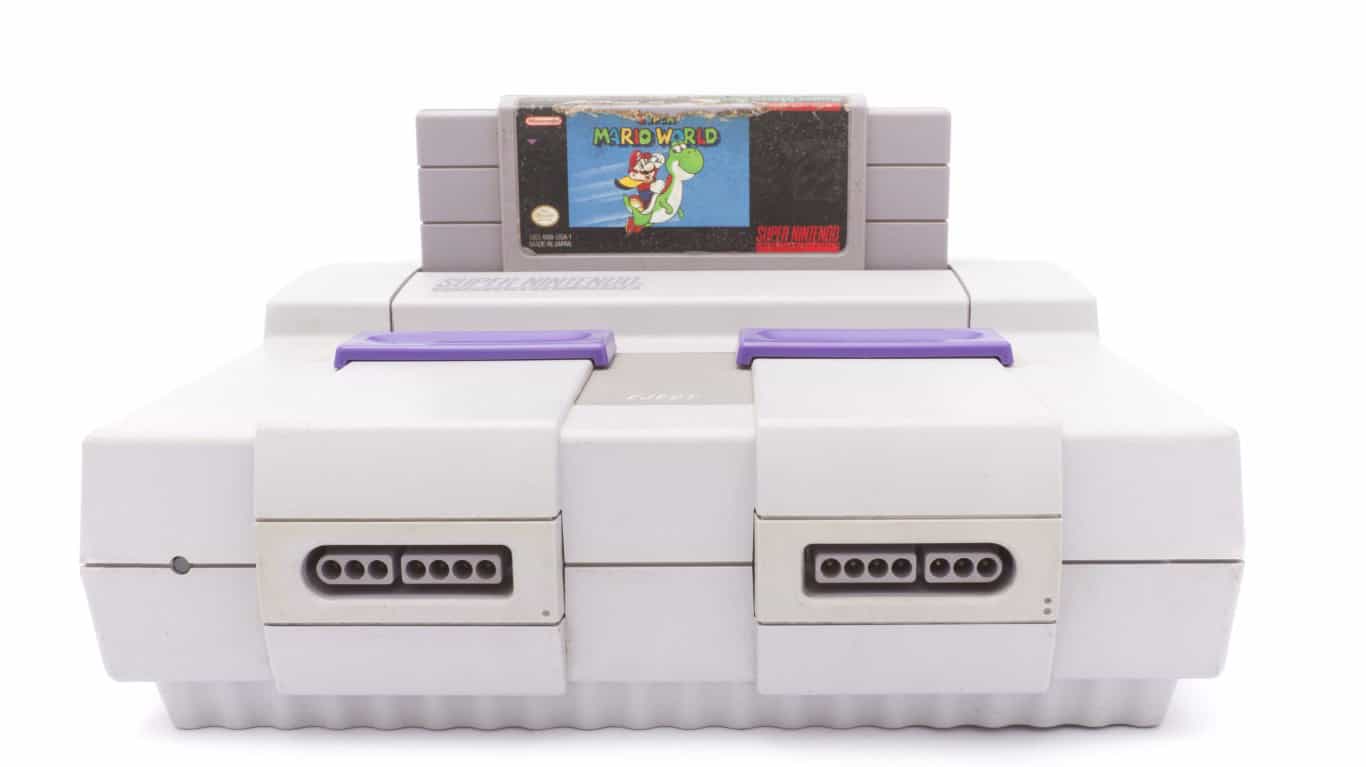
Super Nintendo
Nintendo released the 16-bit Super Nintendo Entertainment System in the United States in 1991. Compared with the original NES, the hardware allowed developers to create more colorful, detailed games with improved sound and increasingly ambitious worlds. For kids who had grown up with 8-bit Nintendo, it felt like a serious upgrade.
The library did not hurt. "Super Mario World" arrived with the system, while games such as "The Legend of Zelda: A Link to the Past," "Super Metroid," "Donkey Kong Country," and "Super Mario Kart" helped give the console an extraordinary lifespan. It also fueled the great schoolyard Nintendo-versus-Sega debate, because apparently playground diplomacy was not particularly advanced in the early 1990s.
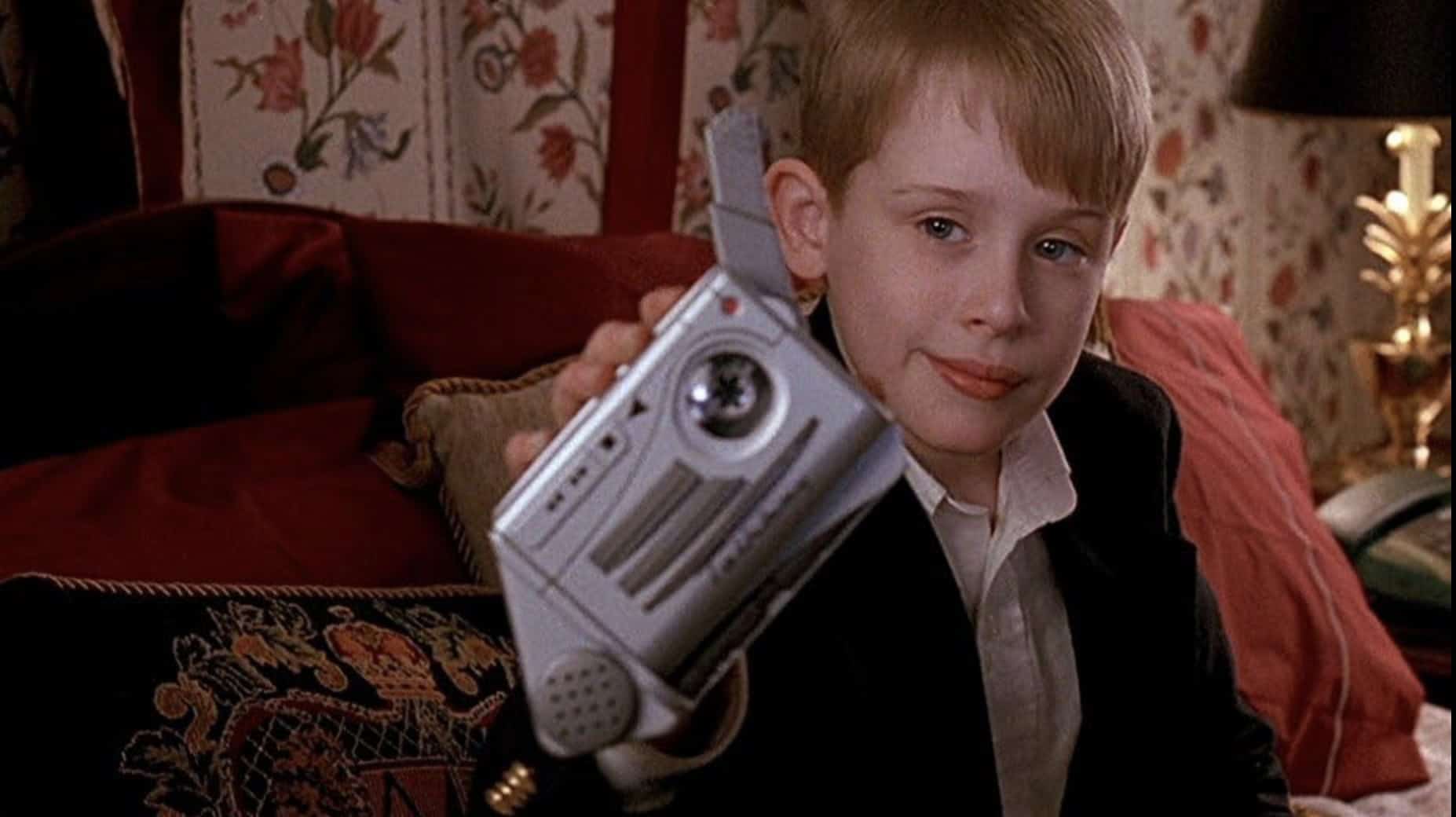
Talkboy
The Talkboy has one of the better movie-to-toy origin stories. Tiger Electronics originally designed the handheld cassette recorder as a prop for 1992's "Home Alone 2: Lost in New York," where Kevin McCallister uses it to record voices and alter their playback speed while carrying out his usual campaign of unsupervised chaos.
Tiger released a consumer version, but the Deluxe Talkboy that arrived in 1993 added the slow-playback voice effect kids recognized from the film. That was the version everyone wanted. Demand surged after the movie reached home video, and the Deluxe Talkboy became one of the hardest-to-find toys of the 1993 holiday season. Few products have ever demonstrated the power of one kid using a gadget in a Christmas movie quite so effectively.
Beanie Babies
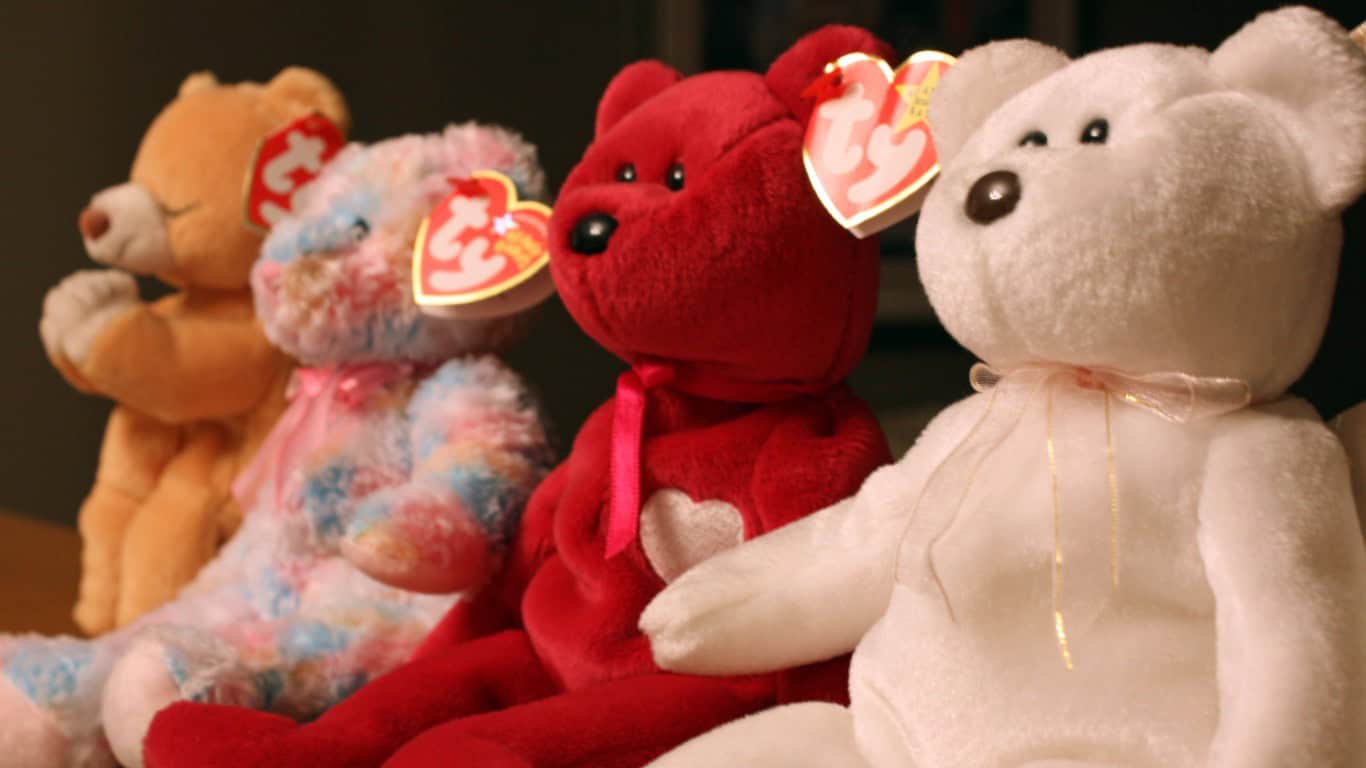
Ty Warner introduced the original nine Beanie Babies in 1993. They were small, relatively inexpensive plush animals filled partly with plastic pellets, which gave them a looser feel than traditional stuffed toys. That alone would have made them cute collectibles. What happened next was considerably stranger.
Limited availability, retiring certain characters, collector enthusiasm, and a booming resale market transformed Beanie Babies into a full-blown 1990s phenomenon. The rise of the consumer internet also gave collectors new ways to track, buy, and sell them. Kids wanted the animals because they were cute. Adults increasingly treated some of them like investments. For a brief period, a tiny stuffed bear with a heart-shaped tag could inspire conversations normally reserved for stocks and real estate.
Power Rangers
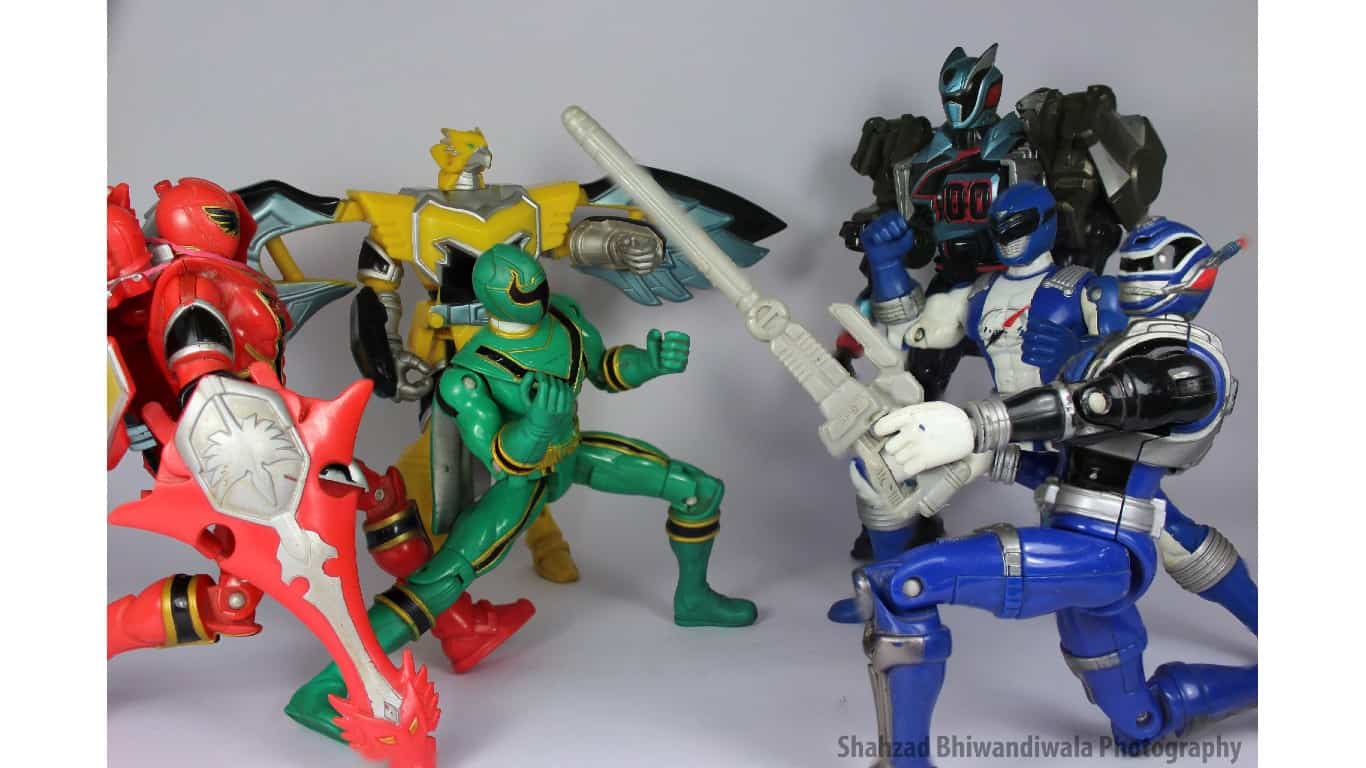
"Mighty Morphin Power Rangers" hit American television in 1993, combining newly filmed American scenes with action footage adapted from Japan's long-running Super Sentai franchise. The strange formula worked spectacularly well. Kids quickly learned the Rangers' colors, weapons, dinosaurs, Zords, and the important childhood lesson that five robots are better when they combine into one extremely large robot.
Bandai produced the major Power Rangers toy line during the original 1990s craze, and the company's own history describes its Power Rangers products as a major U.S. hit in 1993. Action figures, transforming Megazords, role-play weapons, and other merchandise followed the television show's explosive popularity. Hasbro would not acquire the Power Rangers franchise until decades later, so those original Mighty Morphin toys belong to the Bandai era.
Buzz Lightyear
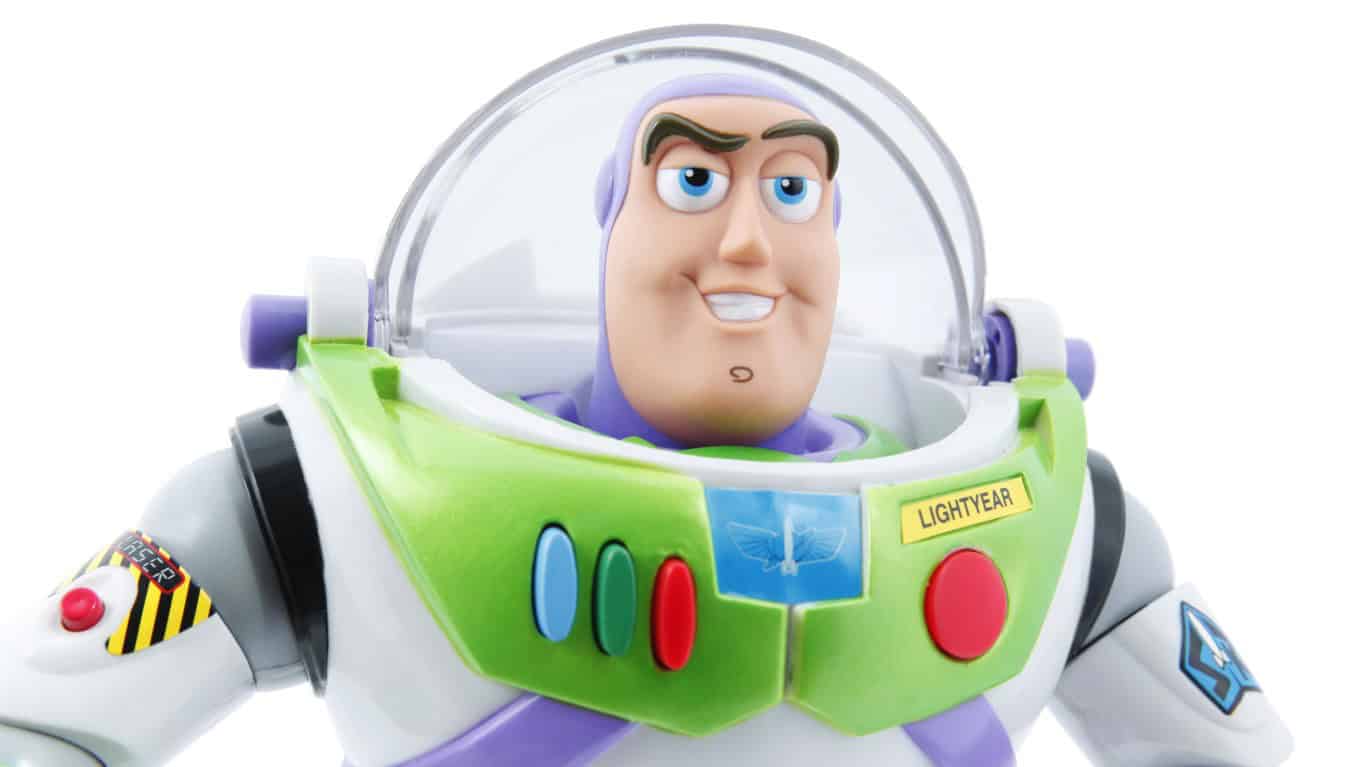
"Toy Story" reached theaters in 1995 and introduced Buzz Lightyear as the flashy new space ranger who threatens Woody's status as Andy's favorite toy. Naturally, children watching a movie about toys immediately wanted the toys from the movie. Canadian company Thinkway Toys had taken the chance on producing Woody and Buzz figures when larger manufacturers were less enthusiastic about the unproven computer-animated film.
That gamble worked. Thinkway's Buzz Lightyear action figure came with the kind of features kids had just watched on screen, including pop-out wings, lights, and electronic phrases. Demand quickly became difficult to satisfy as "Toy Story" turned into a blockbuster. Suddenly every kid wanted a Buzz of their own, preferably one capable of going to infinity and beyond without requiring Dad to hunt through six different stores first.
Tickle Me Elmo
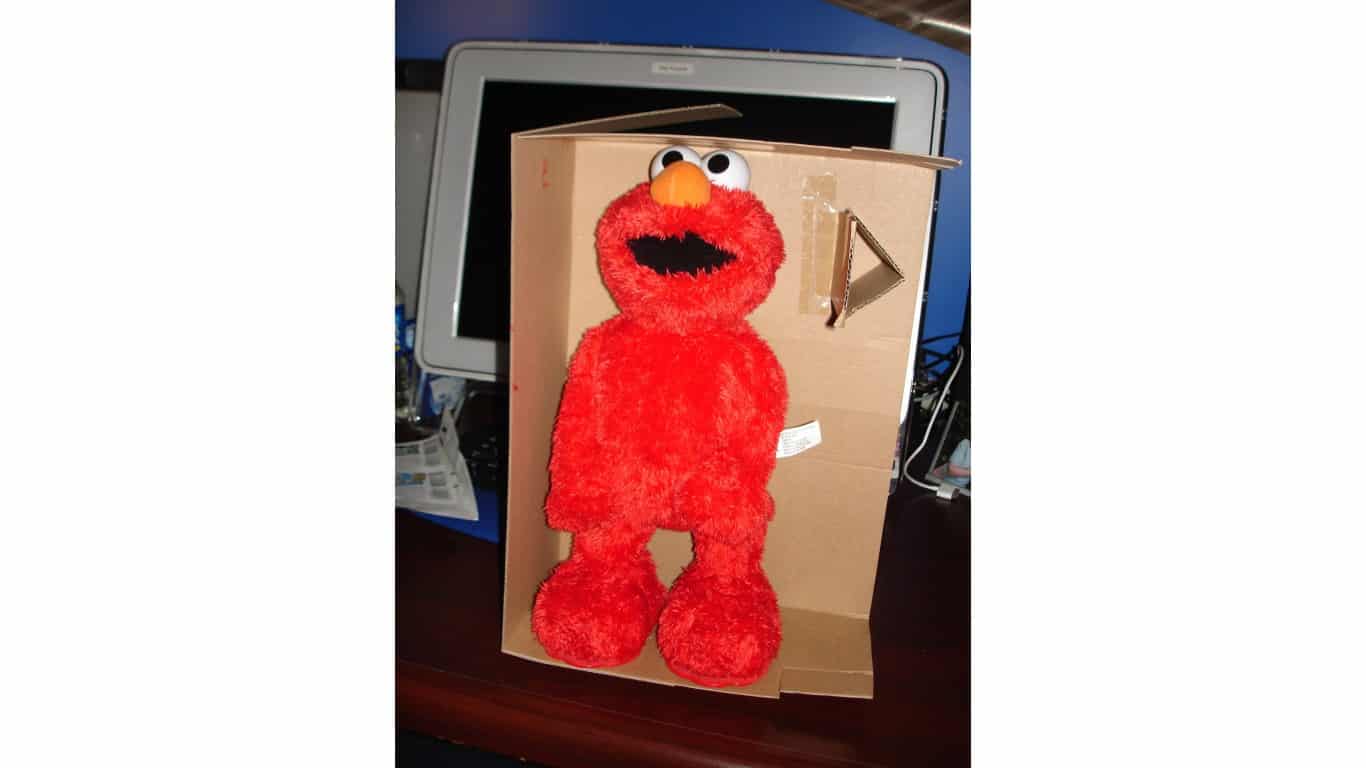
Tyco Preschool released Tickle Me Elmo in 1996. Squeeze or tickle the Sesame Street character and he giggled, shook, and vibrated. That was basically the whole pitch, yet it turned out to be more than enough to create one of the decade's most memorable holiday toy crazes.
Demand accelerated in the fall after major television exposure, including appearances connected to "The Rosie O'Donnell Show." By the Christmas shopping season, stores were selling out and desperate shoppers were chasing new shipments almost as quickly as retailers could receive them. The Strong National Museum of Play says at least 1 million were sold during the phenomenon. For Millennial kids and their exhausted parents, Tickle Me Elmo became the perfect final chapter to a decade filled with must-have toys.