
If you were to walk into a kid’s bedroom in 1985, you would probably be surprised by how familiar everything looked, no matter where in the country you were. The toys came in different colors, the posters featured different bands or movie stars, and every kid had their own personal mess, but the general inventory was surprisingly consistent. An entire generation grew up with a specific set of objects that defined the space where they slept, played, studied, listened to music, argued with siblings, and spent entire Saturdays doing absolutely nothing productive.
These were the things that turned a room into “your room.” They were the posters on the wall, the gadgets on the dresser, the toys on the floor, and the objects that made an ’80s bedroom feel like its own little world. If you grew up during that decade, chances are at least a few of these were part of your childhood.
Boom Box
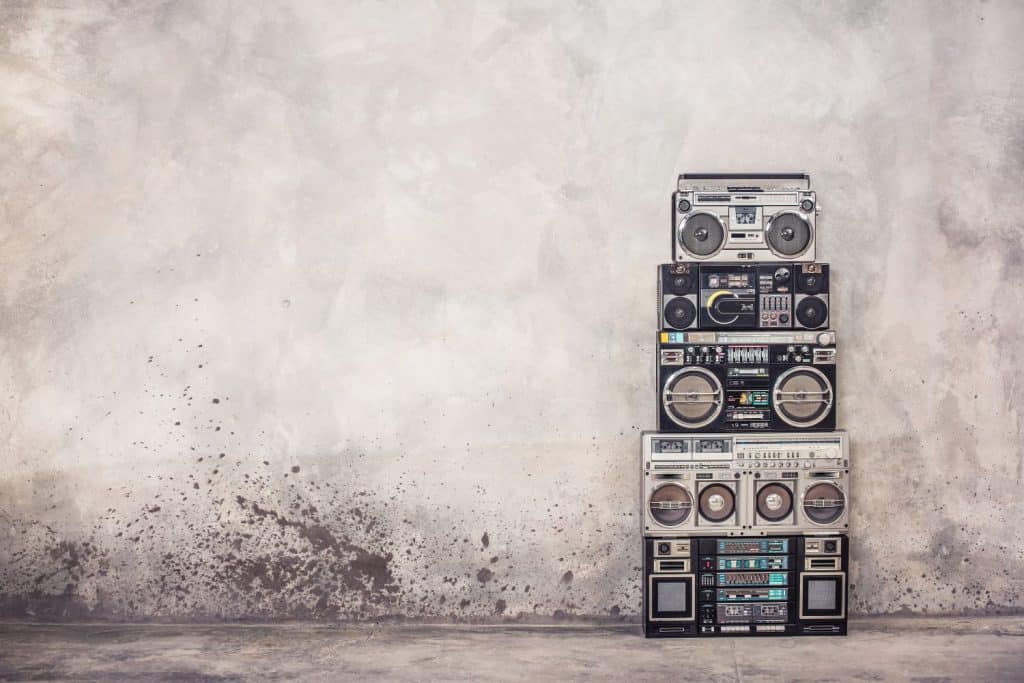
The bedroom boombox was the center of the universe. Sitting atop the dresser, on a desk, or directly on the floor, it usually had a cassette player on one side, maybe two if you were lucky enough to dub tapes, and a telescoping antenna that could be angled toward the window in hopes of picking up a cleaner signal. It was part radio, part stereo system, and part status symbol.
The bigger, the better. Sony, JVC, Panasonic, and others all seemed to be competing to make the loudest, heaviest, most button-covered machine possible. Saturday mornings meant cranking it up, pressing record at just the right moment, and waiting for your favorite song to come on the radio. If the DJ talked over the intro, you simply had to live with it.
Atari 2600
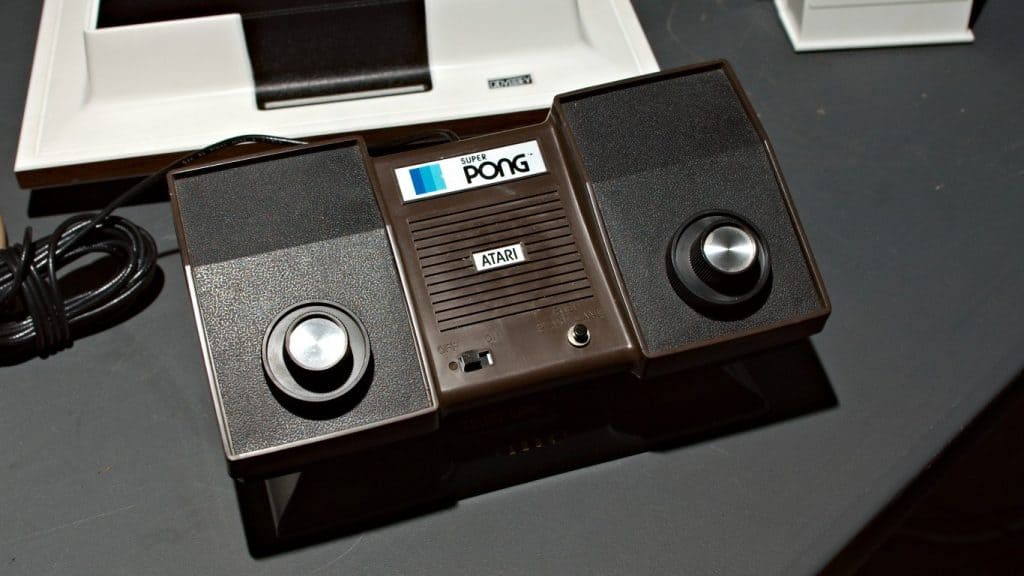
The Atari 2600 launched in 1977, but it became an essential part of the early 1980s bedroom. By 1982, 10 million units had been sold in America alone, and the game library had grown into the hundreds. Kids kept cartridges piled up in a box, stacked near the TV, or thrown into an old shoebox, trading them back and forth with friends the same way they traded baseball cards or action figures.
The controllers, with their simple joystick and one orange button, were easy enough for almost anyone to use. Then came 1982 and E.T., a game widely considered one of the worst ever made and often tied to the video game crash of 1983. Still, for many kids, the Atari survived on momentum, nostalgia, and hours spent trying to beat just one more level.
Star Wars Action Figures
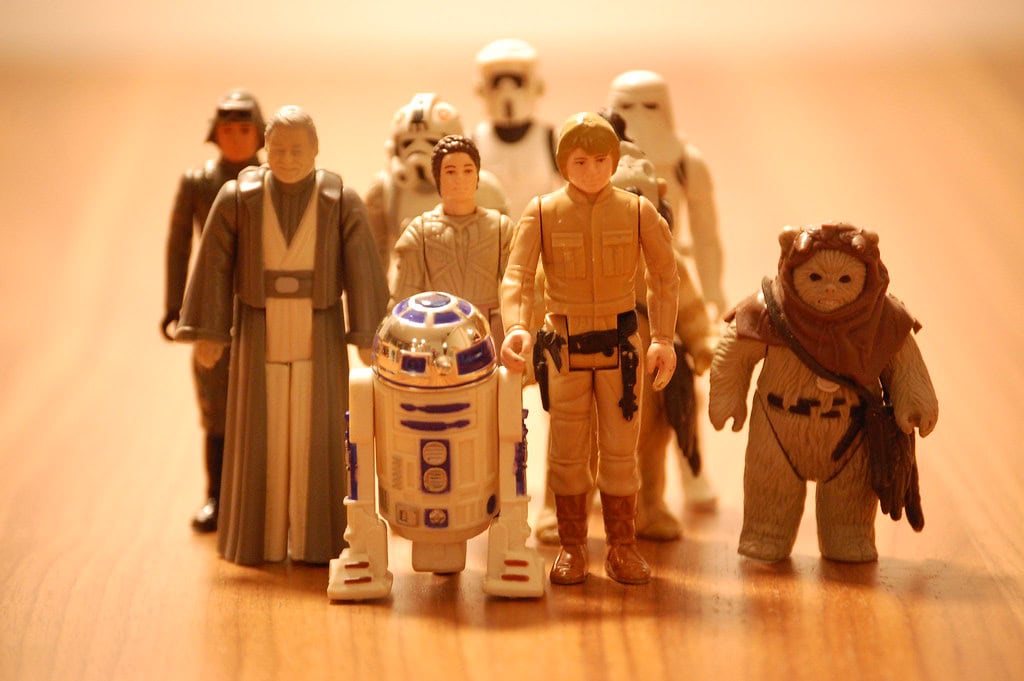
The original Kenner line of Star Wars action figures debuted in 1978 and carried on until 1985, with more than 100 figures from the original trilogy. By the 1980s, they were a bedroom staple. Kids created whole worlds with them on the floor, across shelves, under beds, and anywhere else they could stage a battle between the Rebellion and the Empire.
They were designed to fit into vehicles and playsets, which meant the spending never really stopped. Of course, there were Luke, Darth Vader, Han Solo, Leia, and Chewbacca, but serious collectors knew the obscure background characters mattered just as much. Walrus Man. Hammerhead. Squid Head. Bossk. Greedo. These figures may have appeared on screen for only a few seconds, but in an ’80s kid’s bedroom, they could become the star of the entire story.
Cabbage Patch Kid
The licensing agreement between Coleco and Xavier Roberts was signed in 1982, and the Cabbage Patch Kid dolls were released in stores in 1982, with the all-out hysteria hitting during the Christmas season in 1983. Parents waited in line at the entrance of Toys R Us stores and there were even fistfights when it came to buying the very last doll in the store. Each doll had a name and an adoption certificate, making the act of purchasing a doll something like a cute little civil affair. By the mid-1980s, the craze felt more like a standard, and the dolls were everywhere.
Nintendo Entertainment System
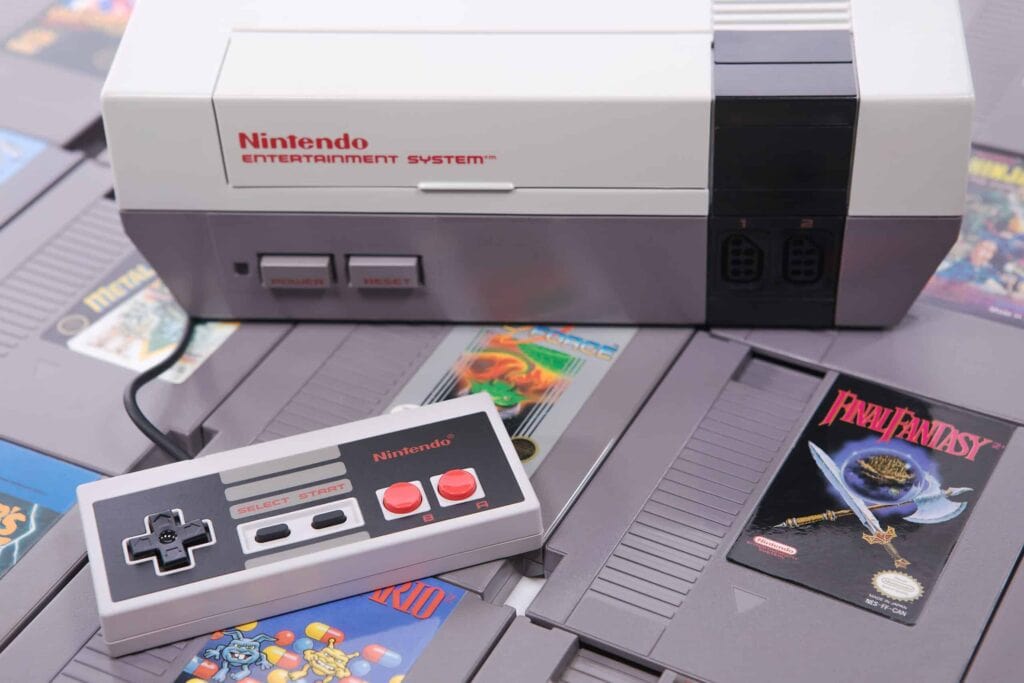
The NES arrived in American homes in 1985, and in just a few years, it made its way to bedrooms everywhere in the country. Nintendo’s strict licensing system meant the quality of games was far more consistent than Atari’s catalogue had been. Super Mario Bros. came bundled with the console and gave kids a game that could be played endlessly without ever quite getting boring. The controller, simple as it was, felt like a real step forward. By the late 1980s, having an NES wasn’t impressive. Not having one was.
Trapper Keeper
This one was technically designed for schools, but the Trapper Keeper had just as many uses on the bedroom desk as it did in class. It was invented by Mead in 1978 and became the defining organizational tool of the 1980s.
The fold-over Velcro closure and interchangeable cover art made it incredibly popular among kids in the era. Kids would choose their Trapper Keeper to match their personality, from abstract geometrical shapes to airbrushed dolphins to fantastic landscapes. The Velcro rip in a quiet classroom was one of the most reliably disruptive sounds of the decade.
Band or Movie Poster
Undecorated walls in kids’ bedrooms during the 80s were a rare sight and the poster was the primary form of expression available to a kid with a very limited decorating budget. The Musicland or Sam Goody stores would have a poster stand near the counter. Bon Jovi, Duran Duran, Motley Crue, and Madonna were constantly featured. Posters from movies like Back to the Future and The Goonies also graced many walls. It took some skill to smooth the poster out properly and tape it with no wrinkles, but the corners always curled up within a week regardless of how good you got at it.
Glow-in-the-Dark Ceiling Stars
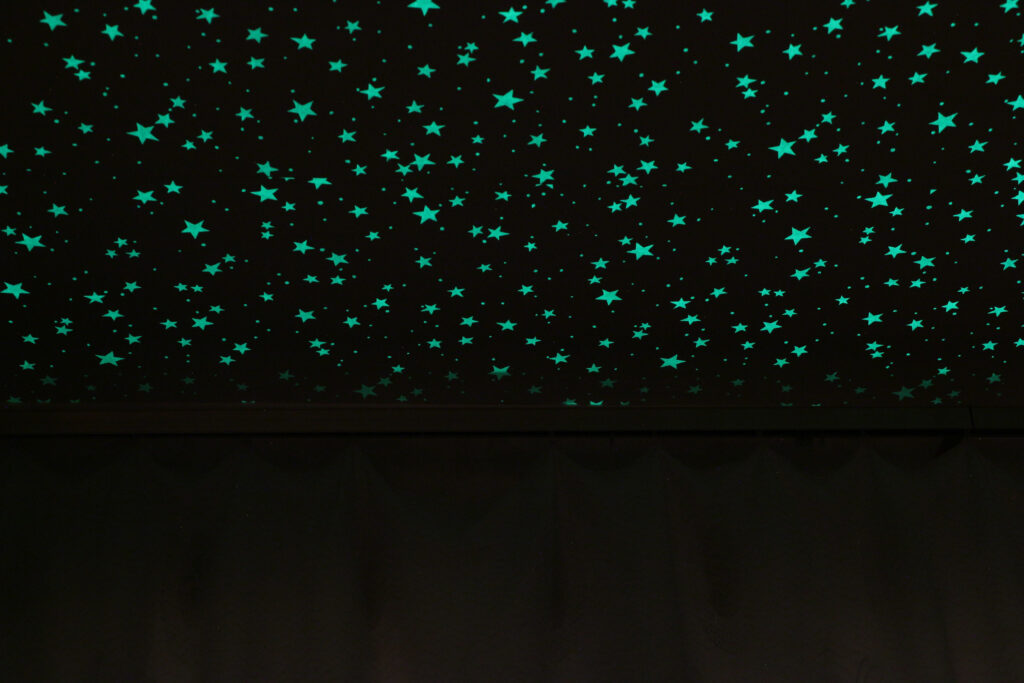
The idea was for kids to place the little glow-in-the-dark stars in constellation formations along the ceiling, something only very few kids did. They were put randomly, and the more the merrier. The stars would take in daylight to glow in the dark, but that glow faded to almost nothing within an hour. Those first ten minutes of green light after lights-out were magical nonetheless.
Rubik’s Cube
The Rubik’s Cube hit American toy shelves in 1980 and was an immediate success. By 1982, 100 million had been sold throughout the world. Every kid had a Rubik’s Cube sitting on their desk or shelf, typically in one of two conditions: solved and untouched or hopelessly jumbled up. Books on how to solve them were selling almost as well as the cube itself. A kid who could solve the cube in less than a minute had a reliable party trick for the rest of the decade. Most, however, never really solved one and stopped trying way before they reached adulthood.
Transformers
The Transformers toys were first released by Hasbro in 1984, and their unique selling point was the transformation itself. The robot could transform into a jet or a truck or a cassette player, rewarding patience and dexterity in a way that a static figure didn’t. Kids kept the instructions for months because some of the conversions were truly complicated. The animated series was released in the same year, and Optimus Prime and Megatron became instantly recognizable names to everyone.
Mix Tapes on Cassette
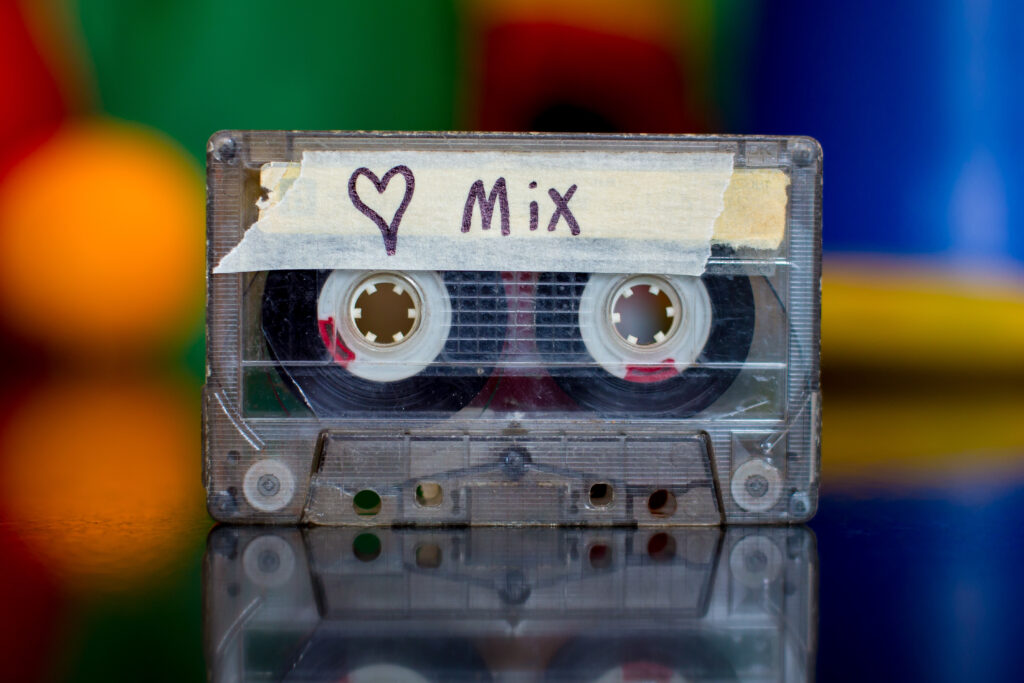
The mixtape was a form of expression back then. Kids taped music from the radio, hitting both play and record buttons at the same time and hoping the DJ would stop talking before the vocals started. Older siblings or friends with better music taste produced tapes for their younger ones. The handwritten list of the songs on the J-card insert was an integral part of the tape itself. Making a good tape required effort and time. The tape stretched and tangled. It occasionally needed a pencil through the spool to rewind, but it was all worth it.
Bedroom Television
A lot of kids growing up in the 1980s had their first television in the bedroom, and it was usually a reward for good grades or a birthday gift. You wouldn’t get anything too big, something about 13 inches in size, equipped with a rabbit-ear antenna. Cable TV was not yet widely available, so kids who wanted to watch MTV or Nick would have to make do with whatever was picked up from the antenna.
Garbage Pail Kids Cards
Garbage Pail Kids was created by Topps in 1985 as a direct parody of Cabbage Patch Kids, and their crude sense of humor was successful among young school students. The cards had a caricatured character with a ridiculous name and a tragic tale, all illustrated with disgusting detail.
Efforts were made to ban them from schools, and although they weren’t favored by the teachers or parents, students loved collecting them, keeping them in shoe boxes under their beds and exchanging the duplicates during recess. Topps produced 15 different series from 1985 to 1988 before they retired the cards. The most pristine sets are worth real money today.
He-Man and Masters of the Universe Figures
The Masters of the Universe line of toys from Mattel first came out in 1982, and the TV series debuted one year later in the fall of 1983. It was a huge success. The figures were bigger and more muscular than the Star Wars line, and they had an easy-to-operate action feature (a twist-and-release of the waist resulting in swinging of the arm for a punching motion) that the children found fascinating and never stopped using. Castle Grayskull, which served as the main playset, was huge at that time and stayed on the floor rather than on the shelf. He-Man and Skeletor outsold almost everything else in the boys’ toy aisle for most of the decade.
Walkman (or Knockoff)
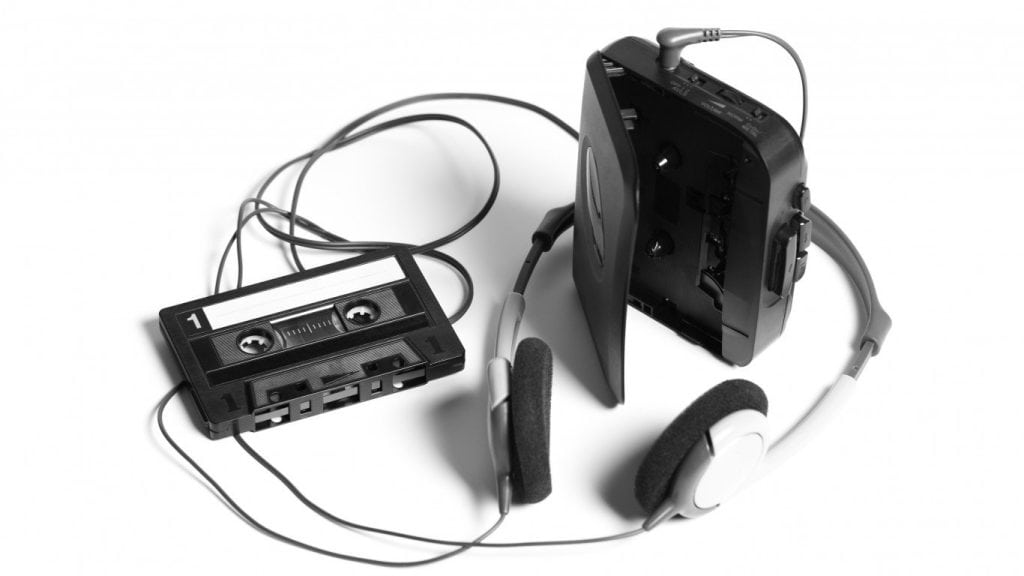
The Walkman was launched by Sony back in 1979 as portable cassette players became ubiquitous in the beginning of the 1980s. It was a prestige object, and there was no shortage of similar gadgets at one-third of the cost. Having the official Walkman can be compared to having an iPhone in today’s age.
The Walkman could be found everywhere you went, making headphones a normal part of daily life for the first time. The ear pads of the foam got worn very quickly and were rarely replaced.
Sticker Collection
Scratch and sniff stickers were the gateway, but the collection rarely stayed there. Children collected puff stickers, hologram stickers, metal stickers, and the coveted “excellent” and “great job” stickers that teachers gave on graded papers.
Trading duplicates was a real secondary economy done while riding the bus to and from school. Apparently, scent-based advertising worked pretty well since some of the most common scratch-and-sniff stickers included strawberry, pizza, popcorn, and root beer. The scent held up surprisingly well over time.
Choose Your Own Adventure Books
The Bantam Books’ Choose Your Own Adventure series debuted in 1979 with “The Cave of Time” by Edward Packard and continued for 184 installments until the series ended in 1998. The concept placed the reader in the first-person point of view and provided choices at the end of each chapter that would lead to one of many different possible endings.
Kids kept large piles of books in their rooms and read them again and again, looking for the various branches. “The Cave of Time” alone sold more than 17 million copies. The books taught a generation of kids that their choices had consequences. Some would lead to being eaten by a creature or lost in a time loop.
Alarm Clock Radio
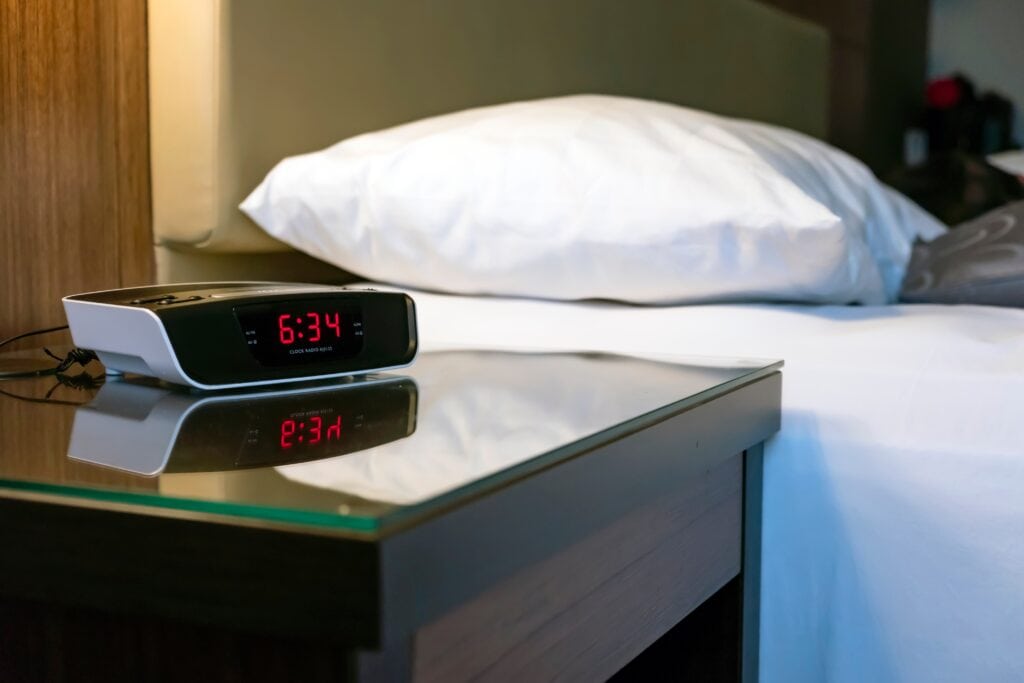
The digital alarm clock radio was the first piece of technology you were personally responsible for. The red LED display digits, the AM/FM tuner, a buzzer/radio toggle for the alarm, and a nine-minute snooze bar at the top. There were Sony and Panasonic models that cost less than thirty dollars and lasted indefinitely.
Failure to set it up correctly could result in being late to class, so kids made sure to get it right. Waking up to whatever the DJ played that morning was always a kind of roulette that would signal how well your day would go.
Speak & Spell
Texas Instruments launched the Speak & Spell in 1978 as an educational toy, but kids absorbed it into their bedrooms as something stranger and more interesting than a learning tool. The synthesized voice was slightly eerie and recognizable to anyone who heard it once. The device asked for words and told you whether you got it right in that flat electronic baritone. It appeared in E.T. the Extra-Terrestrial in 1982, which only added to its success.
Kids who weren’t using it for spelling were using it to see what happened when you typed things that weren’t words.
Lite-Brite
The first Lite-Brite came out from Hasbro in 1967, but it remained an important part of kids’ bedrooms through the 1980s, as the idea never grew boring. You pushed colored translucent pegs through the black paper template into a backlit grid, which resulted in a glow-in-the-dark image.
Templates included cartoon characters, holiday scenes, and geometric shapes. Pegs were small enough to get lost all the time, but fun enough to arrange in different colors. There was only one light bulb inside the device, which heated up the whole plastic case after some time. Parents who stepped on a Lite-Brite peg in the dark remembered it for years.