In the criminal underworld, informants, referred to as snitches, rats, or stoolies, are widely despised and frequently targeted for retaliation. To safeguard their most valuable sources, federal authorities often offer them entry into the Witness Protection program, providing new identities and homes. Despite these protections, the dynamics between the government and its informants are often complicated, murky, and at times, unethical. Some people, through circumstance or fate, become among the most notorious federal informants.
To compile a list of the most famous federal informants, 24/7 Tempo consulted a range of crime, history, and entertainment publications including History.com, NewsOne, and Time Magazine. Next, we selected federal informants who either gained fame through their testimony or who were celebrities in some capacity beforehand. After that, we confirmed aspects of their stories using sites like CNN.com and Biography.com.
This post was updated May 30, 2025 to reflect additional information.
Here are the high-profile informants behind major FBI cases:
Henry Hill

Born in New York City in 1943 and raised in the Brownsville section of Brooklyn, Henry Hill admired the neighborhood gangsters from an early age. Envious of their lifestyle, Hill scored a job running errands for gangster Paul Vario, a caporegime for the Lucchese Crime Family. Small-time gigs quickly led to bigger crimes like union scams and arson-based insurance fraud. By the 1960s, Hill became a full-fledged wise guy, taking part in murders and even the massive Air France robbery. Though he participated in countless crimes for the mafia, his mixed background prevented him from becoming a made man.
With all organized crime careers, however, there is little retirement plan, especially for mafia associates without a made-man status. After being arrested on a narcotics trafficking charge in 1980, Hill became convinced that his fellow mob associates planned to have him killed. To get ahead of any retribution, Hill turned snitch. He testified against his former associates, which led to 50 separate convictions.
The FBI placed Hill and his family in the Federal Witness Protection Program for his testimony. Even in hiding, Hill couldn’t help but keep committing crimes. This caused the FBI to expel him from the program, and later convictions led to more jail time. His story served as the basis for Martin Scorcese’s classic mob film, “Goodfellas.”
Max Mermelstein

From the outset, Max Mermelstein seemed destined for a professional, straight-laced life. He trained as a mechanical engineer at the New York Institute of Technology and scored an impressive gig as the chief engineer for the Sheraton Hotel. After he married a Colombian woman, however, Mermelstein began his criminal activity by creating a pipeline to smuggle his wife’s relatives into the country. This led to a chance meeting with Rafael Cardona Salazar, the Medellin Cartel’s point man in the United States. After witnessing Salazar murder a man in cold blood, Mermelstein effectively became an employee of the cartel.
Quickly, Mermelstein met the requisite big shots and used his logistical knowledge to transform the fledgling drug trafficking business into a multi-billion dollar enterprise. This bought him a seat at high-council Medellin Cartel meetings, an unheard-of position for an American. Inevitably, Mermelstein’s status led to riskier crimes like contract murders. Upon his 1985 arrest, Mermelstein became one of the most famous federal informants.
Due to his incredibly detailed testimony, the government allowed an unprecedented 30-person relocation in the Witness Protection Program. It proved successful, as not a single picture of Mermelstein has ever been published. The Los Angeles U.S. Attorney later called him, “the single most valuable government witness in drug matters that this country has ever known.”
Ken “Tokyo Joe” Eto
Born in Stockton, California, and raised by religious immigrant parents, Ken “Tokyo Joe” Eto despised his oppressively religious home life. As a teenager, Eto dropped out of school and ran away from home. During World War II, Eto was imprisoned at a Japanese internment camp, where he picked up gambling and perfected his skills. After the war, Eto used his newfound gambling skills to gain employment at an underground Denver casino. From there, he moved to Chicago, set up a hugely successful underground gambling house, and came into close contact with the Chicago mob.
Upon his arrest, Chicago Outfit associates feared he would turn state’s evidence and ordered his murder. Miraculously, Eto survived three bullets to the head, dragged himself to the hospital, and quickly fulfilled the mob’s prophecy. After snitching on his former mob associates, he helped put away 15 Outfit associates including corrupt police officers. Following this, Eto entered the Witness Protection Program, living to the ripe old age of 84 under the assumed identity of Joe Tanaka.
Jack Parsons
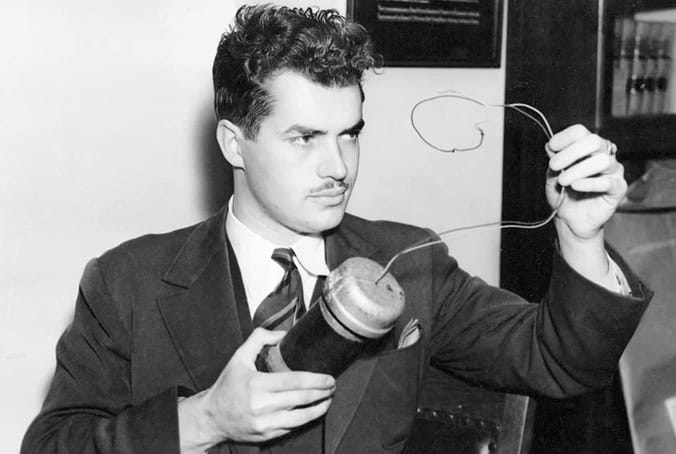
Not all of the most famous federal informants endured a life of crime. Take Jack Parsons, for example. A brilliant scientist, ardent occultist, and dedicated radical, Parsons became famous for inventing the first rocket engine in history. This led to being co-founder of the esteemed Jet Propulsion Laboratory. In this capacity, Parsons pioneered the use of both liquid-fuel and solid-fuel rocket engines, effectively paving the way for space travel.
All the while, however, Parsons involved himself in various sorcerer-like and communist activities. A member of the communist group Unit 122 at Caltech, Parsons secretly became a federal informant in 1942. Surreptitiously, Parsons provided the government with a list of his fellow scientists holding Marxist persuasions.
Though the feds ultimately considered him an unreliable witness, this information remained hidden until well after Parson’s untimely death from an accidental rocket test explosion. With his hands in so many pies, we may never know the extent of Parsons’ backroom deals.
Joe Valachi

Before Joe Valachi turned snitch, the American government had little understanding of the shadowy and nefarious Italian-American mafia. Born in New York City around the turn of the 20th century, Valachi became a small-time criminal in his youth. This activity caught the attention of the New York mafia, who inducted him as a made man in 1930 as part of the Lucchese Crime Family. He slowly moved up the mafia rankings until being arrested on a narcotics violation in 1959 and sentenced to 15 years in prison.
There, he made contact with crime boss Vito Genovese, who was also serving out a sentence for heroin trafficking. Genovese assumed (incorrectly) that Valachi already become an informant so he set enforcers out to kill him. After murdering a fellow inmate whom he mistook for a mob associate, Valachi began to feel the heat that had initially started as a mistake. In short order, he reached out to the government and offered to become an informant.
In October 1963, Valachi testified extensively about the structure, motivations, and rituals of the Italian-American Mafia in a U.S. Senate Committee meeting now known as the Valachi hearings. Though his testimony didn’t lead to any arrests, he became the first mobster to expose the shadowy structure of the mob, naming dons and associates alike. Valachi is credited with popularizing the term Cosa Nostra, a Sicilian term for the mafia meaning “this thing of ours.”
Frank Lucas
Though he ended up as a New York drug lord and one of the most famous federal informants, Frank Lucas came from humble beginnings in South Carolina. After being exposed for having an affair with his boss’s daughter as a teenager, Lucas attacked him, stole $400, and absconded to New York City. There, he drifted through a life of petty crime before being mentored by gangster Bumpy Johnson. Upon Johnson’s death, Lucas became ambitious and sought a way to break the criminal stranglehold the Italian mafia had in New York City. He found the solution in Thailand, where he conspired with US soldiers to smuggle heroin into the United States.
Some say he used soldier’s caskets to transport smack, others say he hid the product in furniture. Whatever the case, Lucas quickly became a veritable drug lord, making up to $1 million per day selling heroin through an extensive criminal network on 116th Street in Harlem. With huge stacks of cash filling up his coffers, Lucas bought far-flung properties, donned expensive fur coats, and rubbed shoulders with high-profile celebrities, businessmen, and politicians. This time of exposure, however, proved costly to his illegal activities.
This put him squarely in the government’s sights and a task force raided Lucas’ New Jersey home in 1975. Facing a 70-year prison sentence, Lucas became an informant and his testimony led to over 100 drug-related convictions. While this reduced his sentence considerably and put his family in the Witness Protection Program, he later found trouble after attempting to get back into the drug game. Director Ridley Scott later adapted Lucas’ story into the successful film “American Gangster.”
Salvatore ‘Sammy the Bull’ Gravano

Compared to other mob associates that turned state’s evidence, Salvatore “Sammy the Bull” Gravano remains one of the most famous federal informants due to his love of media publicity. The son of Sicilian immigrants, Gravano grew up in the mob-infested Brooklyn neighborhood of Bensonhurst. A childhood of petty grime and associations with street gangs led Gravano into the mafia after leaving the military at the age of 23. Initially, Gravano performed loansharking, larceny, and racketeering activities. He became a favorite of local mafia dons, however, and Gravano quickly became a made man. Later, the mob promoted him to underboss for the Columbo Crime Family.
Eventually, Gravano switched sides, so to speak, becoming a member of considerable status in the rival Gambino Crime Family. After hearing some disparaging comments made about him by Gambino boss John Gotti, however, Gravano agreed to turn state’s evidence. One of the highest-ranking mafia members to ever become an informant, Gravano’s testimony led to life imprisonment for both John Gotti and Frank LoCascio.
Though he was sentenced to five years for his criminal activity, Gravano’s information let him out early and right into the Federal Witness Protection Program. This secret status didn’t take, however, and Gravano left the program after a few months. Less than a decade later, Gravano got caught up in a massive drug ring which placed him back in prison for nearly 20 more years.
Walt Disney
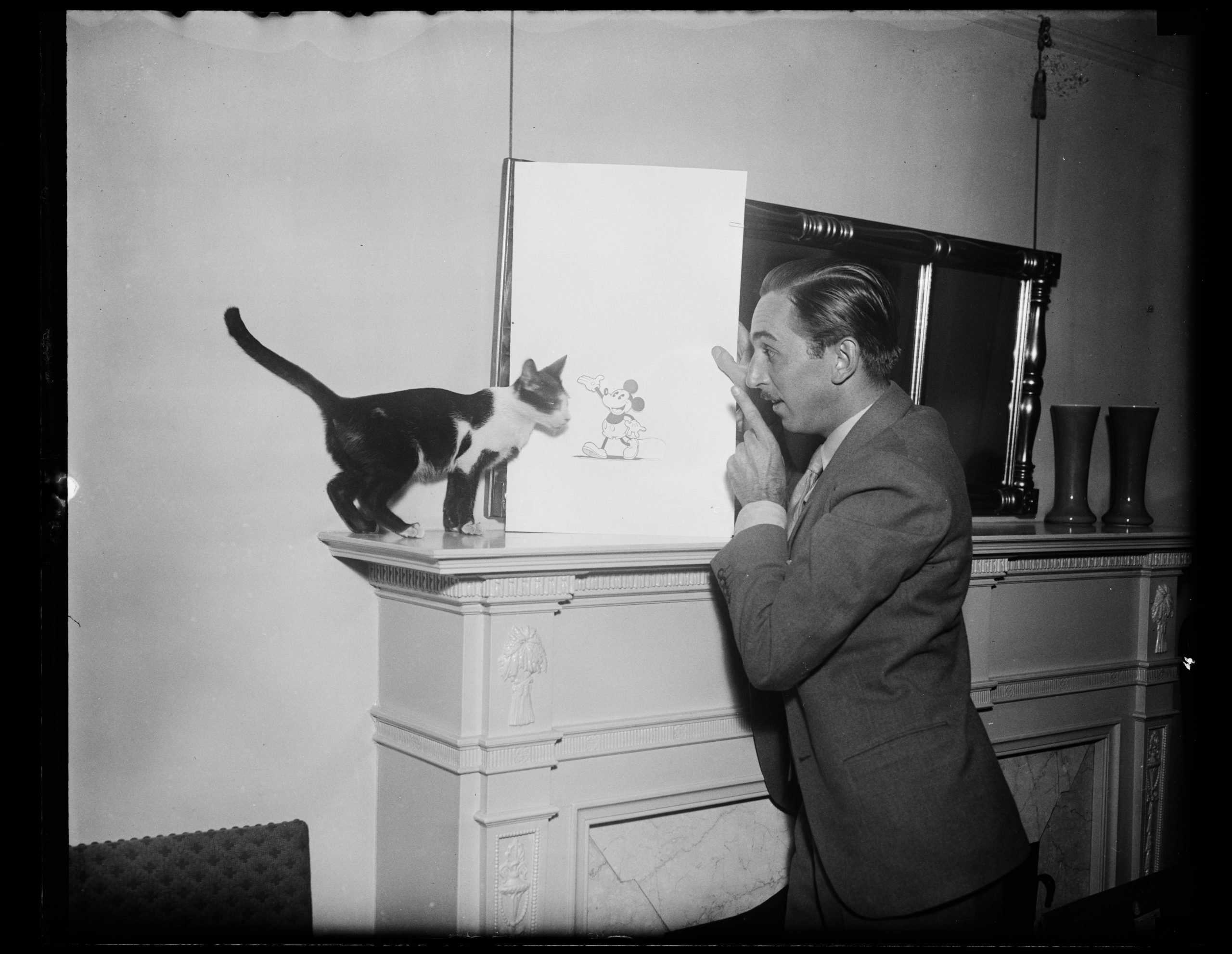
As the founder of one of the most successful entertainment companies in history, Walt Disney needs little introduction. Many people, however, do not know that Walt Disney was also one of the most famous federal informants. He entered the animation industry in the early 1920s. Though the industry called New York City home at the time, Disney moved to Los Angeles instead to be with his brother convalescing from tuberculosis. After struggling in the industry for several years, Disney created the Mickey Mouse character. This found unparalleled success at home and abroad and catapulted Disney’s status.
Over the next three decades, Disney’s animation pipe dreams manifested into one of the biggest entertainment companies in history, complete with large film studios, television networks, and theme parks. While he started his career as a Democrat, money and success transformed him into more of a conservative. This led to him co-founding the Motion Picture Alliance for the Preservation of American Ideals, which enacted a “sharp revolt against a rising tide of Communism, Fascism, and kindred beliefs, that seek by subversive means to undermine and change this way of life.”
When the Second Red Scare hit the United States in the late 1940s, Disney testified before the House Un-American Activities Committee. There, he branded former collaborators like Herbert Sorrell, David Hilberman, and William Pomerance as communist agitators. Years after Disney’s death, The New York Times revealed him to be a longtime FBI informant. He worked with the government to such a degree that the FBI made him a “Special Agent in Charge Contact.”(For other people who earned the FBI’s interest, discover famous people who have been investigated by the FBI.)
Whitey Bulger

Perhaps more than any other person on this list, gangster Whitey Bulger embodied the saying “Oh, what a tangled web we weave, when first we practice to deceive.” As the head of the vicious Winter Hill Gang in south Boston, Bulger played every side of the judicial cat-and-mouse game to stay in power. An accomplished murderer, extortionist, and all-around menace to the city of Boston, Bulger snitched on rivals until he effectively gained control of the Boston criminal underworld.
In 1994, Bulger’s FBI handler John Connolly tipped him off about a pending RICO indictment. At once, Bulger disappeared and remained successfully on the lam for 16 years. For a few years, he even graced the FBI’s Ten Most Wanted Fugitives List. In June 2011, however, the government finally picked up on Bulger’s trail and caught him outside an apartment complex in Santa Monica. He stood trial back in Boston and was sentenced to two life sentences. Upon arrival at the United States Penitentiary, Hazelton a few years later, imprisoned mob associates beat Bulger to death.
During his life, Bulger adamantly denied working for the government. The FBI, however, revealed that Bulger had been one of its most famous federal informants since as far back as 1975. Under the tutelage of agent John Connolly, Bulger provided information on rivals and ensured that his Winter Hill Gang’s activities would go purposely unnoticed. This unseemly web of connections and mutual back-scratching led to allegations of criminal misconduct by government officials and caused untold embarrassment for multiple government agencies, including the FBI.
Richard ‘White Boy Rick’ Wershe Jr.

Not only is Richard “White Boy Rick” Wershe Jr. one of the most famous federal informants, but at the time of his testimony, he became the youngest informant in FBI history. Wershe Jr. grew up in a working-class family on the east side of Detroit during the explosion of the crack epidemic in the 1980s. His father owned a gun store, where he mingled with FBI agents. After Wershe Sr. discovered his daughter to be dating a drug dealer, he offered to become an informant for the government.
Upon closer inspection, however, the FBI realized his 14-year-old son Richard would make a much better informant. One day, an agent pulled up to Wershe Jr. as he walked home from school. The impressionable teenager agreed to work for the government, which sent him on drug buys and other criminal deals to gather information. Agents even let Wershe Jr. keep some of the drugs for himself. This set Wershe Jr. on a twisting, complicated path as the FBI provided him with more money, drugs, and assets to assist in gathering information.
Here the story becomes even more murky, as the FBI seemed to find little more use for Wershe Jr. as excelled in crime. At age 17, he was arrested for possession of 8 kg of cocaine and sentenced to life imprisonment. After spending over three decades in prison, Wershe Jr. was released in 2020. A year later, he sued the FBI for what amounted to child abuse for grooming him into a federal informant at such a young age.