While the Soviet Union made history during the Space Race by sending the first human, Yuri Gagarin, into space, it was the U.S. that ultimately triumphed, becoming the first country to land a man on the moon. And there have been many more to follow since the very first moon landing, with plenty of proud astronauts recounting their stories.
To compile a list of astronauts who made history when they landed on the moon, 24/7 Tempo reviewed resource material including NASA’s Apollo Program page and Space.com. A new generation of astronauts will suit up when NASA prepares for a new lunar mission, scheduled for September 2025 with the Artemis campaign.
This post was updated May 30, 2025 to reflect additional information.
Here are the trailblazing astronauts who walked on the moon:
July 16-24, 1969: Apollo 11
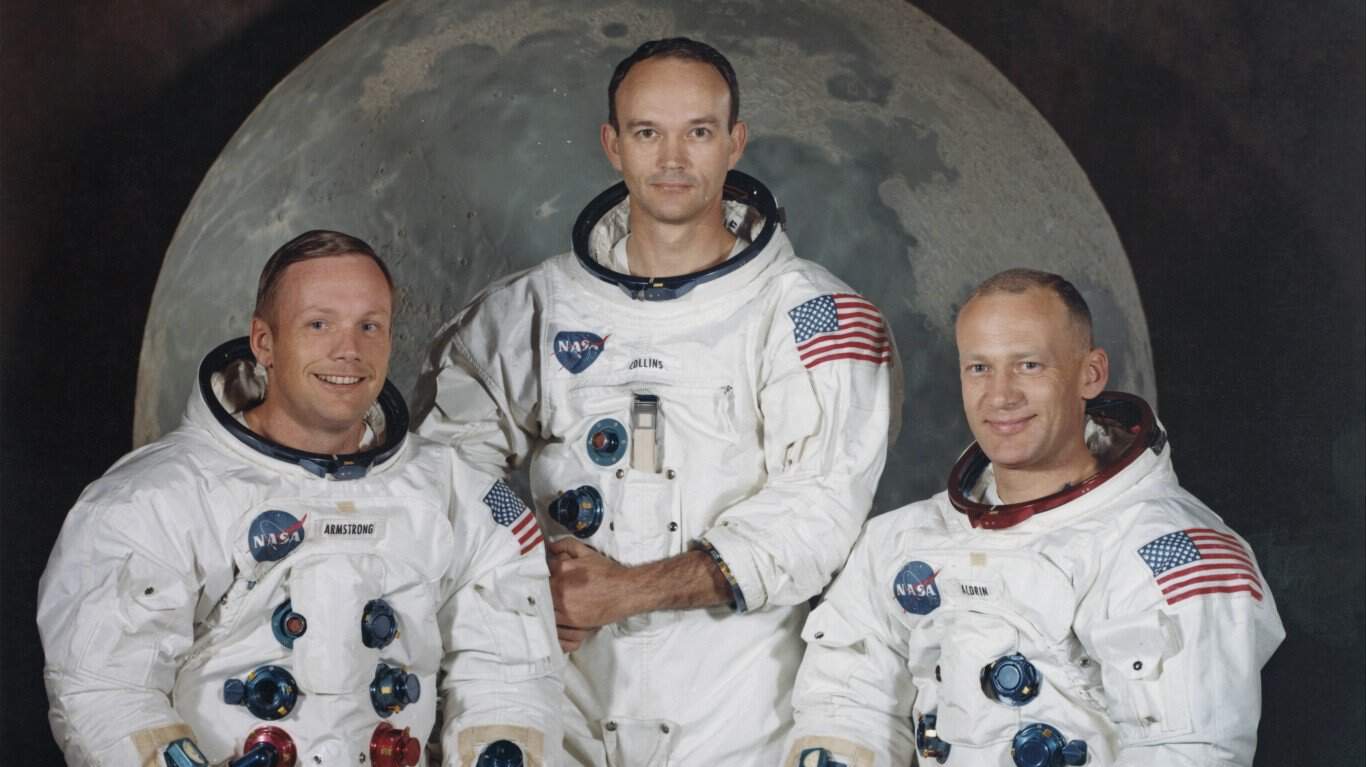
- Astronauts: Neil Armstrong, Edwin E. Aldrin Jr., Michael Collins
Neil Armstrong, the first person to walk on the moon, became a licensed student pilot at 16, even before he got his driver’s license. He and fellow Apollo 11 crew member Edwin “Buzz” Aldrin, the second person to walk on the moon, both served during the Korean War. Before Michael Collins piloted the command module during the Apollo 11 mission, he had become the third American to walk in space during the Gemini X mission in 1966.
1969: Apollo 11
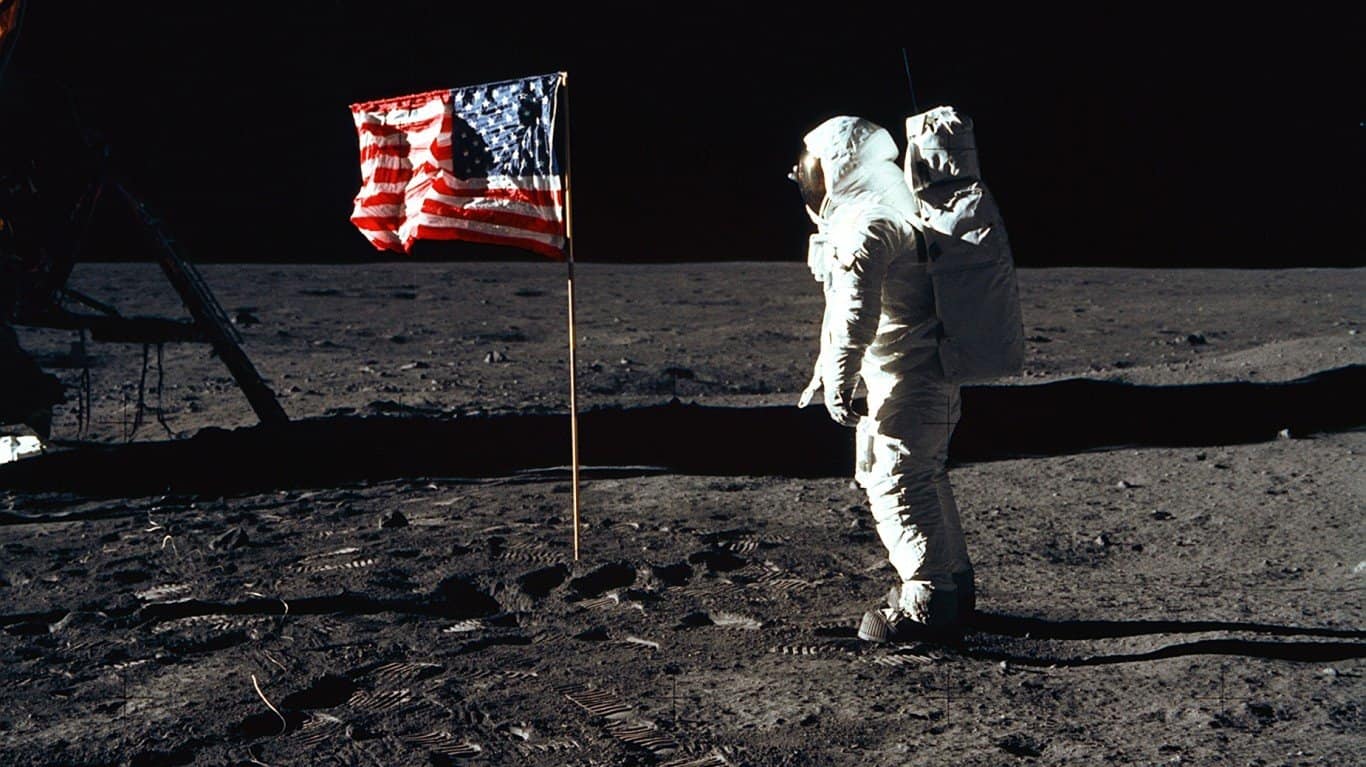
- Mission goals: Explore the moon’s surface in the lunar module; gather rocks and other materials; set up television equipment to return signals back to earth; photograph lunar terrain; deploy solar wind composition and seismic experiments.
Nov. 14-24, 1969: Apollo 12
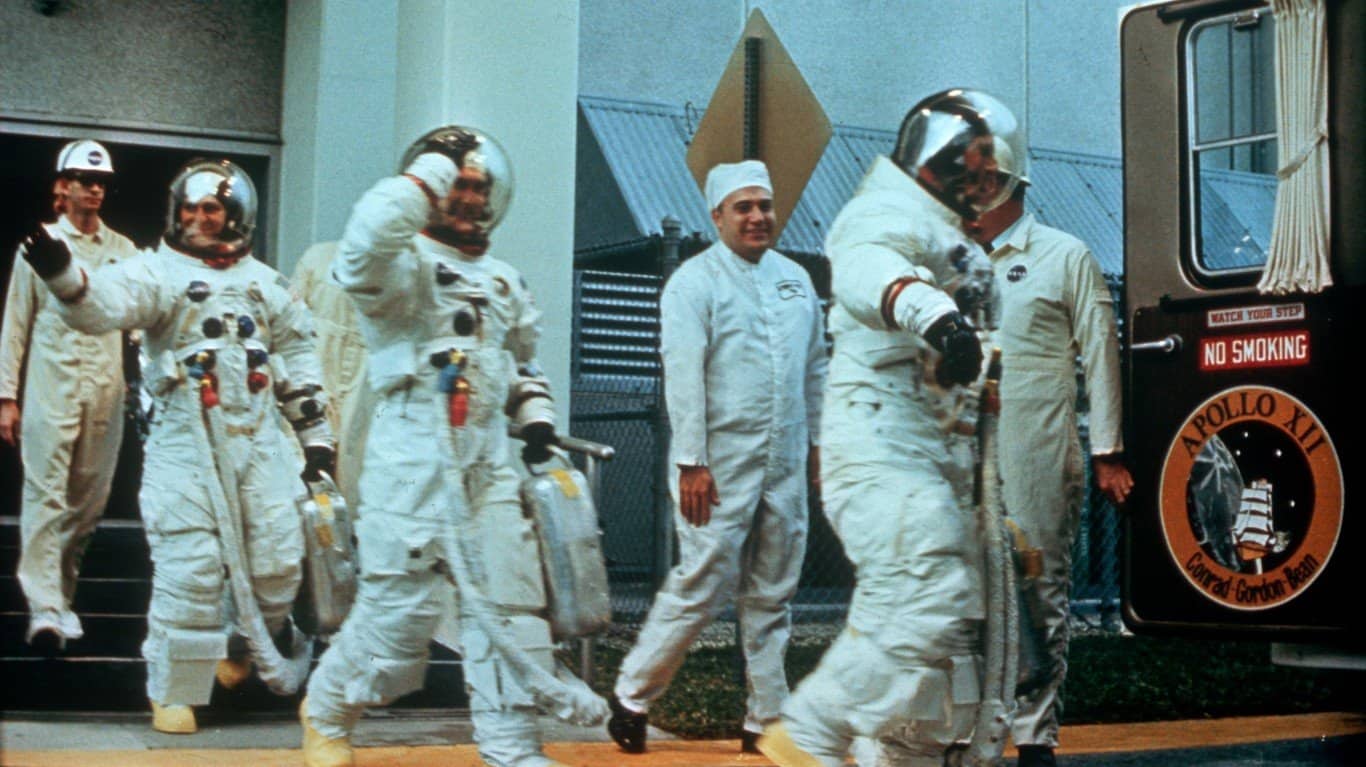
- Astronauts: Charles Conrad Jr., Alan L. Bean, Richard F. Gordon Jr.
The Apollo 12 mission reunited Charles Conrad and Richard Gordon. They had flown together on the Gemini 11 in 1966, a mission that set a then-record human space flight altitude of 853 miles. Conrad had flown into space twice before the Apollo 12 mission.
Nov. 14-24, 1969: Apollo 12

- Astronauts: Charles Conrad Jr., Alan L. Bean, Richard F. Gordon Jr.
The Apollo 12 space shot would be Alan Bean’s first space fight. He would later fly on Skylab 3. The Apollo 12 crew spent almost three times as long outside the lunar module than their Apollo 11 predecessors.
1969: Apollo 12
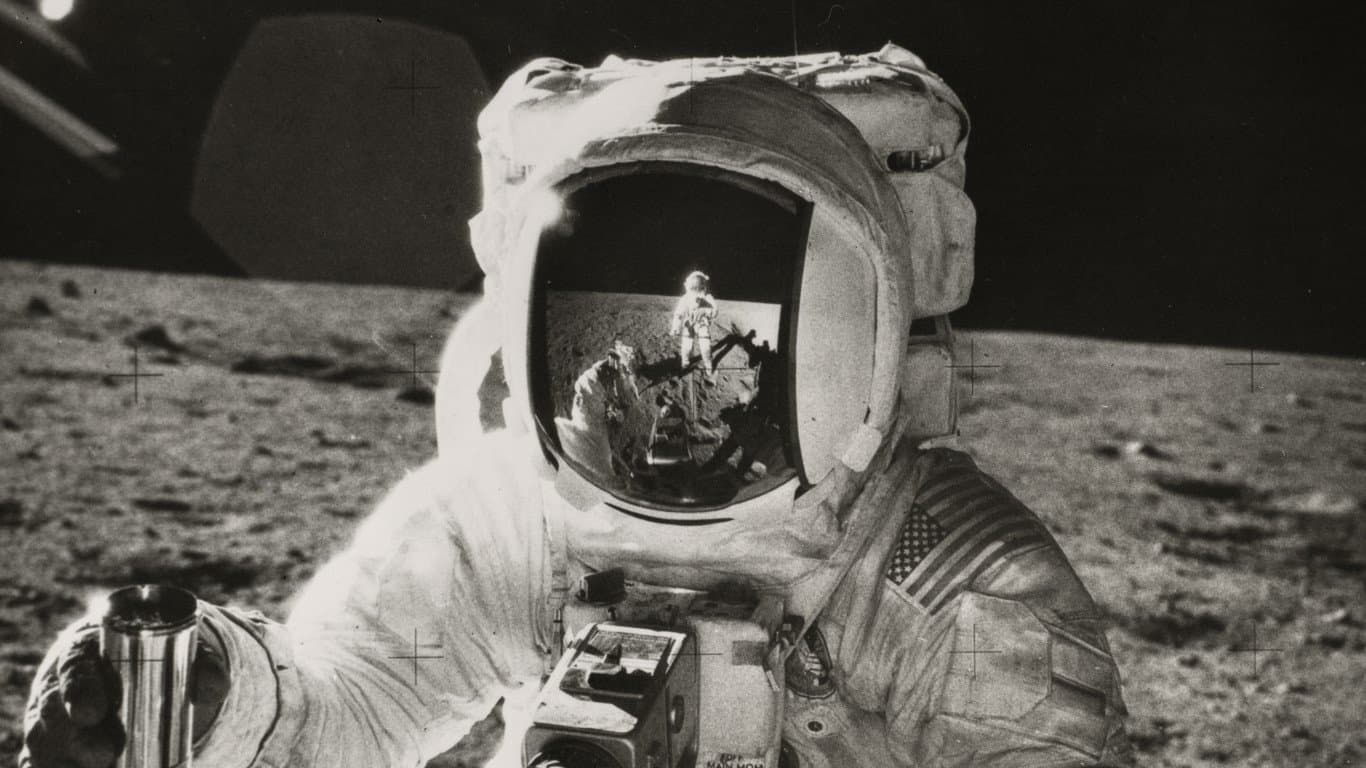
- Mission goals: Explore the lunar surface; set up seismic, scientific, and engineering experiments; size up possible landing areas for future missions; retrieve remains of the Surveyor III spacecraft that had landed on the moon on April 20, 1967.
Jan. 31-Feb. 9, 1971: Apollo 14

- Astronauts: Alan B. Shepard Jr., Edgar D. Mitchell, Stuart A. Roosa
The Apollo 14 mission marked Alan Shepard’s return to space after becoming the first American to leave the earth’s atmosphere 10 years earlier. Shepard set a distance record by walking more than 9,000 feet on the moon, pulling a cart of tools, and collecting lunar samples.
Jan. 31-Feb. 9, 1971: Apollo 14

- Astronauts: Alan B. Shepard Jr., Edgar D. Mitchell, Stuart A. Roosa
He and Edgar Mitchell spent a record 33 hours and 31 minutes on the lunar surface and collected 94 pounds of material. Stuart Roosa, the pilot on the mission, would later lead NASA’s space shuttle program.
1971: Apollo 14
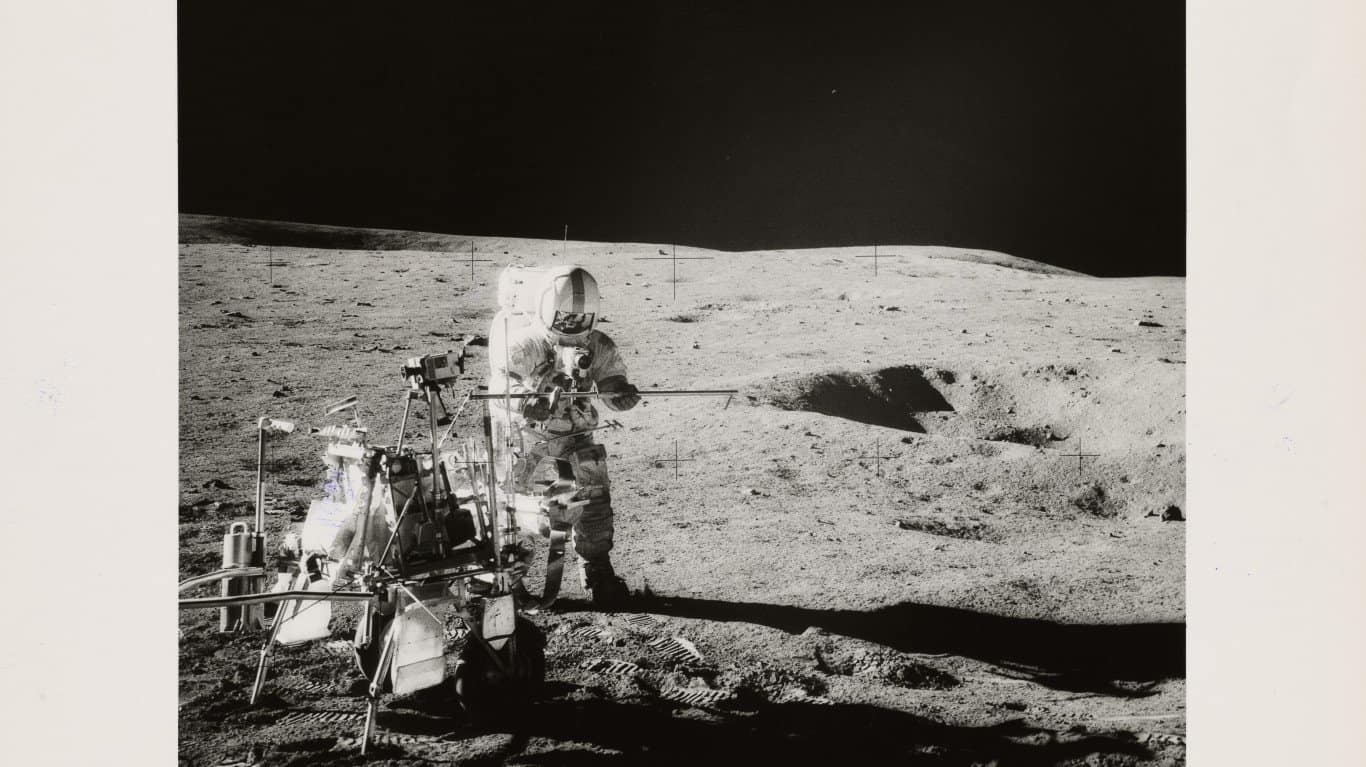
- Mission goals: Explore the Fra Mauro region of the moon; deploy lunar surface scientific experiments; conduct geologic investigations; photograph potential future landing sites and deep-space phenomena, such as zodiacal light.
July 26-Aug. 7, 1971: Apollo 15
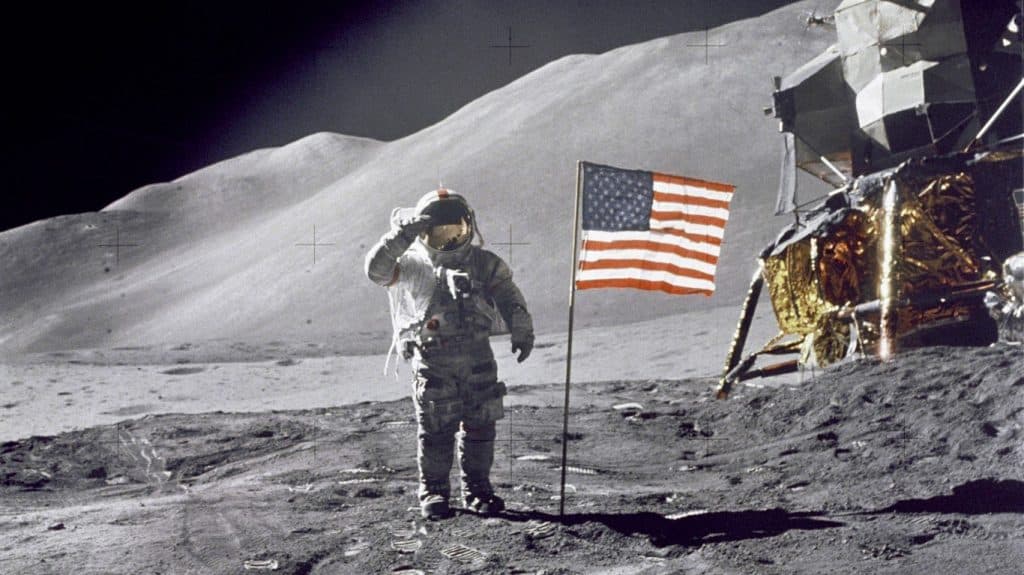
- Astronauts: David R. Scott, James B. Irwin, Alfred M. Worden
David Scott had already flown on the Gemini 8 and Apollo 9 space shots before Apollo 15. Scott accumulated more than 546 hours in space during his astronaut career. He and James Irwin spent almost three days on the lunar surface, exploring the Hadley Rille and Apennine Mountains regions.
July 26-Aug. 7, 1971: Apollo 15

- Astronauts: David R. Scott, James B. Irwin, Alfred M. Worden
They drove their Lunar Rover 1 (the first lunar roving vehicle) for 18 miles (the longest distance traveled on the moon) and collected 180 pounds of lunar samples. During the return flight to Earth, pilot Alfred Worden took a spacewalk. He was deeply moved by his experiences and published a book of poetry about them in 1974.
1971: Apollo 15

- Mission goals: Explore the Hadley-Apennine area; activate lunar surface scientific experiments; perform lunar orbital experiments and various photographic tasks; launch a subsatellite into lunar orbit designed to investigate the moon’s mass and gravitational variations.
April 16-27, 1972: Apollo 16

- Astronauts: John W. Young, Charles M. Duke Jr., Thomas K. Mattingly II
John Young was the first American astronaut to make six space flights. He participated in both the Gemini and Apollo programs. He was the copilot with Virgil Grissom on Gemini 3, the first U.S. two-man spaceflight, in 1965. Young and Charles Duke were on the moon for 71 hours and spent 21 hours in extravehicular activities, gathering 211 pounds of lunar materials.
April 16-27, 1972: Apollo 16

- Astronauts: John W. Young, Charles M. Duke Jr., Thomas K. Mattingly II
After retiring from NASA, Duke became an entrepreneur, minister, and author, publishing his autobiography, “Moonwalk,” in 1990. Thomas “Ken” Mattingly was set to be the pilot for the aborted Apollo 13 but was removed 72 hours before launch because he’d been exposed to German measles. He got into space as the pilot of Apollo 16. He would later be the commander of the last orbital test flight of the Space Shuttle Columbia in 1982 and the commander of the Discovery three years later.
1972: Apollo 16
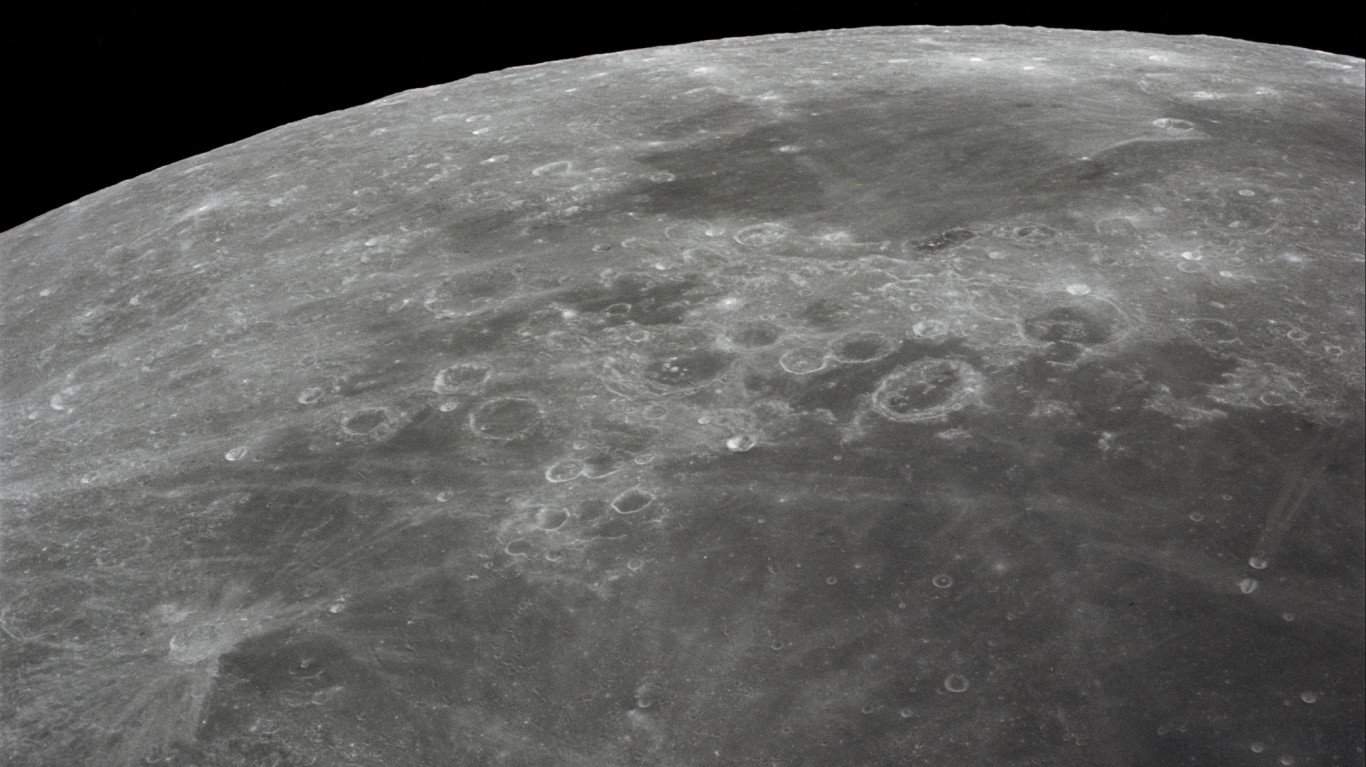
- Mission goals: Sample materials at the unexplored Descartes region; activate surface experiments; conduct in-flight experiments and photographic tasks from lunar orbit; perform experiments involving zero gravity.
Dec. 7-19, 1972: Apollo 17
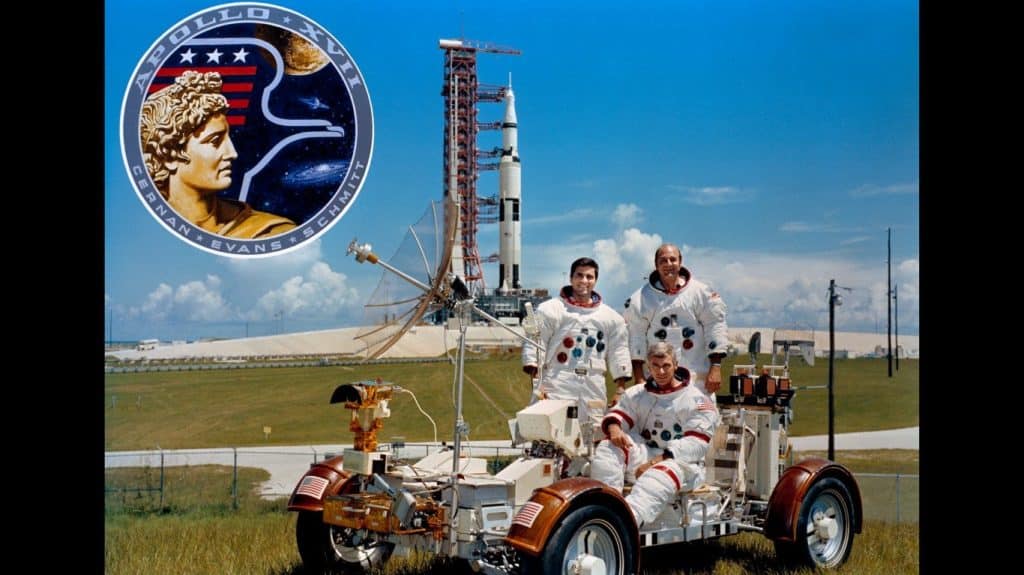
- Astronauts: Eugene A. Cernan, Harrison H. Schmitt, Ronald E. Evans
Eugene A. Cernan and Harrison H. Schmitt were the last people to leave their footprints on the moon. Cernan had flown in two prior space flights. He was the second American to walk in space during the Gemini 9 flight in 1966 and he was the pilot of the Apollo 10 mission, the last space shot before the historic moon landing by Apollo 11.
Dec. 7-19, 1972: Apollo 17

- Astronauts: Eugene A. Cernan, Harrison H. Schmitt, Ronald E. Evans
Schmitt, a geologist, was the only astronaut to have walked on the moon without a military background. He later became a U.S. senator from New Mexico and wrote the book “Return to the Moon: Exploration, Enterprise, and Energy in the Human Settlement of Space.” Command module pilot Ronald E. Evans walked in space for an hour and six minutes during the return flight to Earth.
Apollo 17 established the following records in lunar exploration: longest manned lunar landing flight (301 hours and 51 minutes); longest lunar surface extravehicular activities (22 hours and four minutes); and largest lunar sample return (an estimated 249 pounds).
1972: Apollo 17
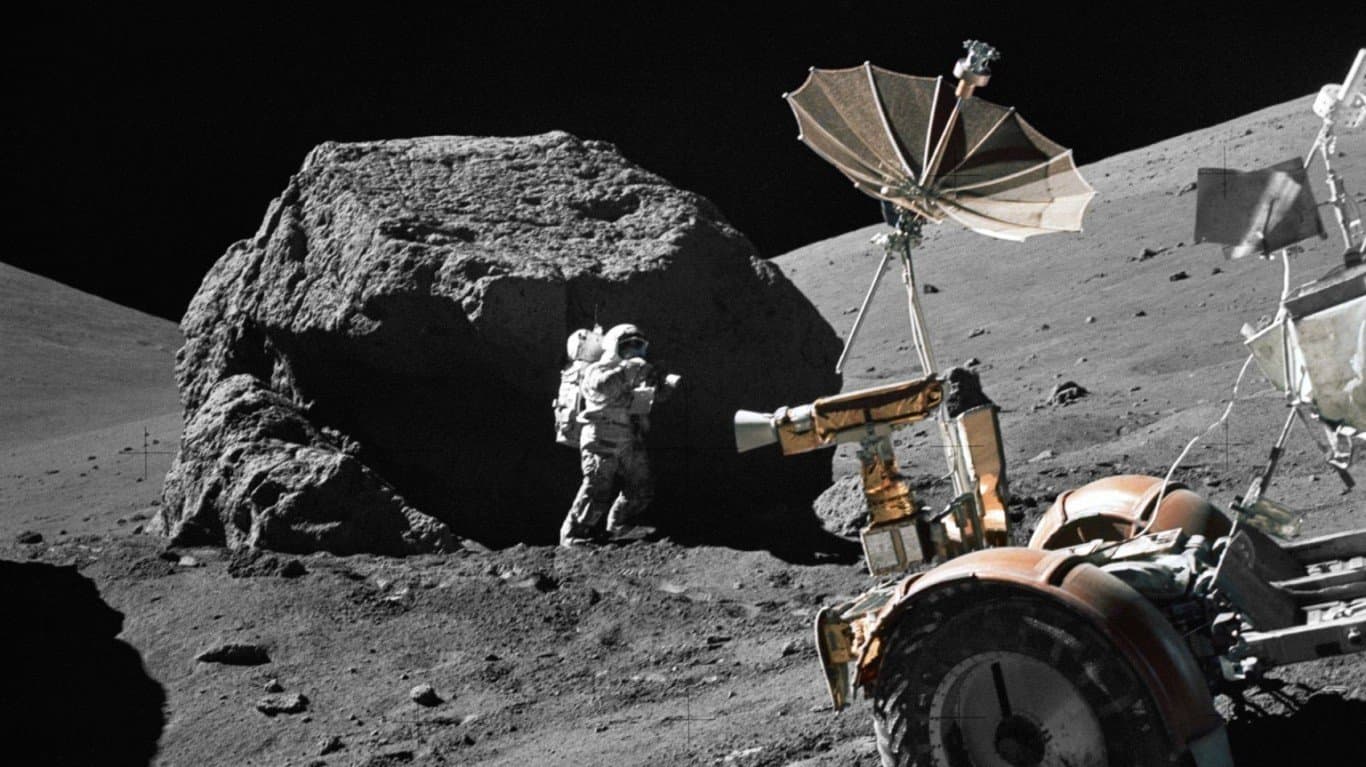
- Mission goals: Conduct geological surveying and material sampling in the Taurus-Littrow area; build on previous scientific experiments and conduct heat-flow and biomedical tests.