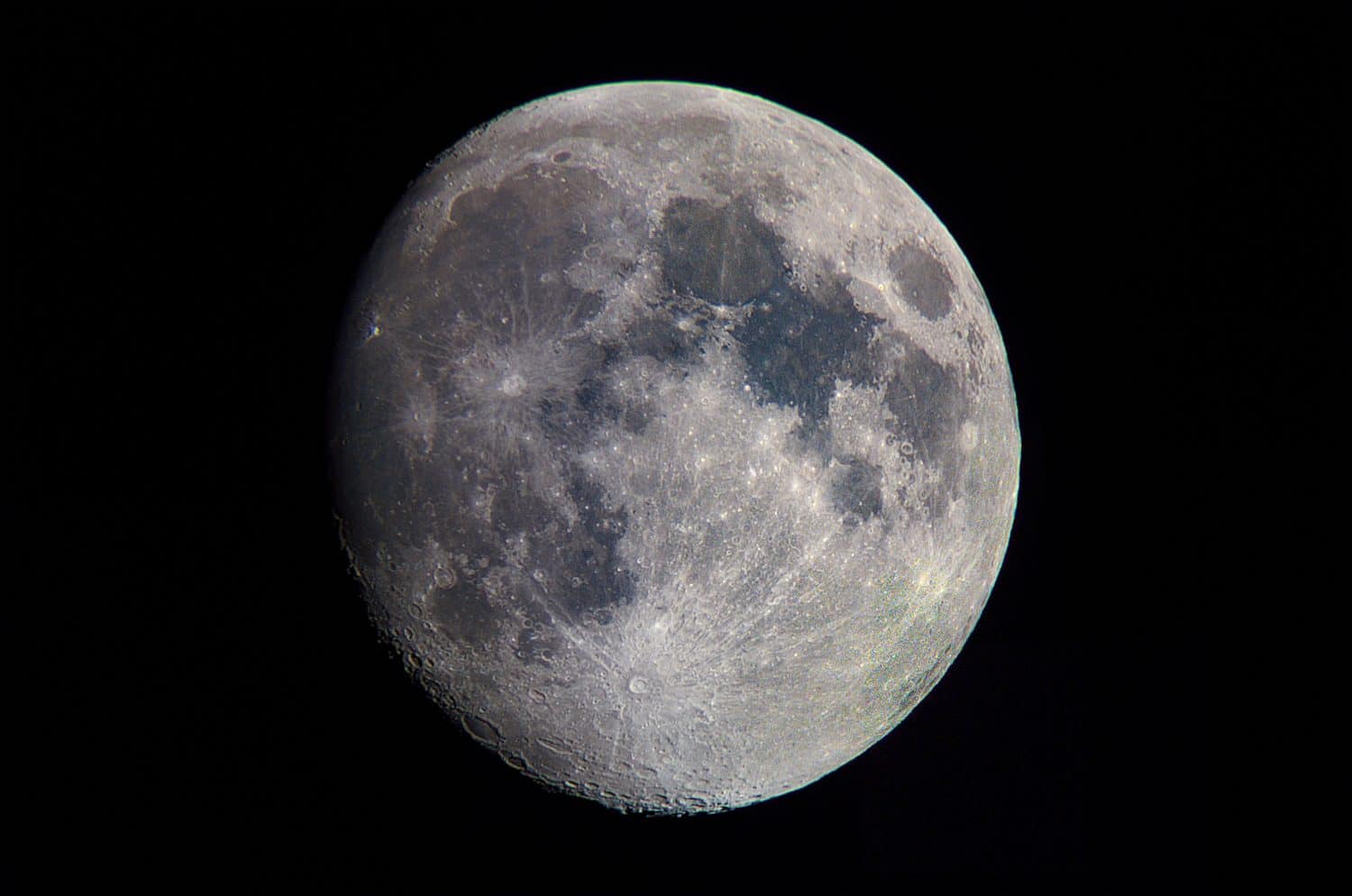
Did you know there is an international day for the Moon? Considering there is also an international day for the sun, it isn’t too surprising.
When people refer to the Moon, they usually mean Earth’s moon, which is what the international day celebrates. On this day, we remember and learn about space, the Moon, and previous Moon landings.
International Moon Day falls on July 20 and is a relatively new international day. The United Nations General Assembly designated this day as International Moon Day in 2021.
So, why was this day chosen? International Moon Day is celebrated on July 20, as that is the day humans first set foot on the Moon on Apollo 11. This wasn’t the last time, either!
To celebrate International Moon Day, click through the slideshow for previous moon landings. The information on each slideshow is general information. To celebrate the legacy of the Moon, research the Moon landings in-depth, including other space travel.
About the Moon

Before we talk about the many Moon landings, let’s discuss facts about the Moon. The Moon orbits the Earth about 238,854 miles away. The Moon is a mystery, like the rest of space. However, experts estimate it’s about 4.35 billion years old.
What about its size? The Moon has a radius of 1,080 miles. According to NASA, this makes the Moon less than a third of the width of Earth.
The First Moon Landing (Apollo 11)

The first Moon landing, also known as Apollo 11, ran from July 16 to July 24, 1969. The spaceflight launched at the Kennedy LC‑39A with three crew members, including Neil A. Armstrong, Michael Collins, and Edwin E. Aldrin Jr. Neil Armstrong and Buzz Aldrin walked on the Moon, while Michael Collins flew in lunar orbit. They brought back 47.5 pounds of lunar material and remained on the surface of the Moon for 21 hours and 36 minutes.
So, what about before this? Had we landed on the Moon yet or gone to space?
First Human to Enter Space

The first human to enter space was Yuri Gagarin from the Soviet Union. He went to space on April 12, 1961. Bravely, Yuri completed one orbit of Earth while on Vostok 1. His flight lasted 108 minutes. It was one of the biggest first wins of the Space Race between the United States and the Soviet Union.
Other Crewed Moon Landings

Although exciting, Moon landings weren’t forever. The last mission was in 1972. Click through the slideshow for more information on other Moon landings, including why we stopped going to the Moon.
Apollo 12

The next successful Moon landing mission was Apollo 12, which lasted from November 14 to 24, 1969. It was launched by NASA from the Kennedy Space Center in Florida. The crew members on this mission included Charles Conrad Jr., Richard F. Gordon Jr., and Alan L. Bean.
Apollo 14

Although the third mission to land on the Moon, Apollo 14 was also the first to land in the lunar highlands. The mission ran from January 31 to February 9, 1971. Originally, this mission was supposed to launch in 1970; however, it was postponed after Apollo 13 failed (although successfully). On the Apollo 14 were Alan B. Shepard Jr., Stuart A. Roosa, and Edgar D. Mitchell.
Apollo 15

Apollo 15 was the next successful Moon landing mission. It launched on July 26, 1971, and returned 12 days later on August 7. This was the first mission to use a Lunar Roving Vehicle. Like the other moonwalks, this one included a crew of three: David R. Scott, Alfred M. Worden, and James B. Irwin.
Apollo 16

Next is Apollo 16, which launched on April 16, 1967. This is the tenth crew mission but only the fifth successful one. It landed back on Earth on April 27, 1967. On the mission were the crew members John W. Young, Thomas K. Mattingly II, and Charles M. Duke Jr.
Apollo 17

Last but not least is Apollo 17, the final Apollo mission. It’s also the last time a human touched the Moon. The mission went on from December 7, 1972, to December 19, 1972. During this mission, Gene Cernan and Harrison Schmitt walked on the Moon while Ronald Evans orbited above. Fun Fact: Schmitt was the first and only professional geologist to land on the Moon.
Why Haven’t We Been Back to the Moon?

Even though our space technology is better and more advanced, we haven’t set foot on the Moon since 1972; why? The short answer is money. It’s so expensive to carry out a mission. Going to the Moon cost about $20 billion, although the Kennedy’s government estimated it at $7 billion.