Billboard Archive

Kevin Winter / Getty Images Entertainment via Getty Images

Michael Ochs Archives / Michael Ochs Archives via Getty Images

Scott Gries / Getty Images

momento mori from Kuala Lumpur, Malaysia, CC BY 2.0

Michael Ochs Archives / Getty Images

Frank Micelotta / Getty Images Entertainment via Getty Images

Fixed in Silver / BY-SA 2.0

Yahoo Inc / BY 2.0
aresauburn™ / BY-SA 2.0

jus10h / BY 2.0

Promotional portrait of the British rock band Def Leppard, circa 1985. L-R: Steve Clark, Rick Savage, Joe Elliott, Pete Willis, Rick Allen. (Photo by Mercury Records/Hulton Archive/Courtesy of Getty Images)
BulsaraAndDeacon, Public domain, via Wikimedia Commons

Michael Ochs Archives / Michael Ochs Archives via Getty Images

Masahiro Sumori, CC BY-SA 3.0

Michael Ochs Archives / Getty Images

Stefan Brending (2eight) / BY-SA 3.0

John Pratt / Hulton Archive via Getty Images

NBStwo on Flickr / BY 2.0

Tilly antoine, CC BY-SA 4.0

Jason Kempin / Getty Images Entertainment via Getty Images

Photograph by Paul Hernandez, Public domain, via Wikimedia Commons

Claude-Étienne Armingaud - Claudé / BY 2.5

Tim Lambert / BY-SA 4.0






23 Now Popular Bands That Had Different Names Before Fame
Imagine walking into a record store and asking for the latest album by the Quarrymen, Atomic Mass, or Mr. Crowe's Garden. Those names might not sound familiar today, but the bands that grew out of them became some of the biggest acts in music history.
Plenty of famous bands started with names that were eventually abandoned. Sometimes the original name was too similar to another group's. Other times, a change in sound, lineup, or musical direction made a fresh identity seem like a good idea. And occasionally, the first name was simply terrible.
These 23 bands all have interesting histories involving earlier names, short-lived identities, or predecessor groups. Not every case was a straightforward rebranding: Some musicians left one band and formed another with a related name. From classic rock legends to more recent alternative and metal acts, here's what some familiar names were called before they became famous.
Linkin Park
- Earlier names: Xero and Hybrid Theory
- Origin: Agoura Hills, California, 1996
- Notable albums: Hybrid Theory, Meteora, and From Zero
- Key members: Mike Shinoda, Chester Bennington, Brad Delson, Joe Hahn, Dave Farrell, Emily Armstrong, and Colin Brittain
Linkin Park's story began with a high school band called Xero. After singer Chester Bennington joined in 1999, the group adopted the name Hybrid Theory before switching to Linkin Park to avoid confusion with another act. The earlier name lived on as the title of their massively successful 2000 debut album. Following Bennington's death in 2017, the band went on hiatus before returning publicly in September 2024 with new co-vocalist Emily Armstrong, drummer Colin Brittain, and the album From Zero.
Bee Gees
- Earlier names: The Rattlesnakes; Wee Johnny Hayes and the Blue Cats
- Origins: Manchester, England, followed by Redcliffe, Australia, in the late 1950s
- Notable albums: Main Course, Children of the World, and Spirits Having Flown
- Core members: Barry Gibb, Robin Gibb, and Maurice Gibb
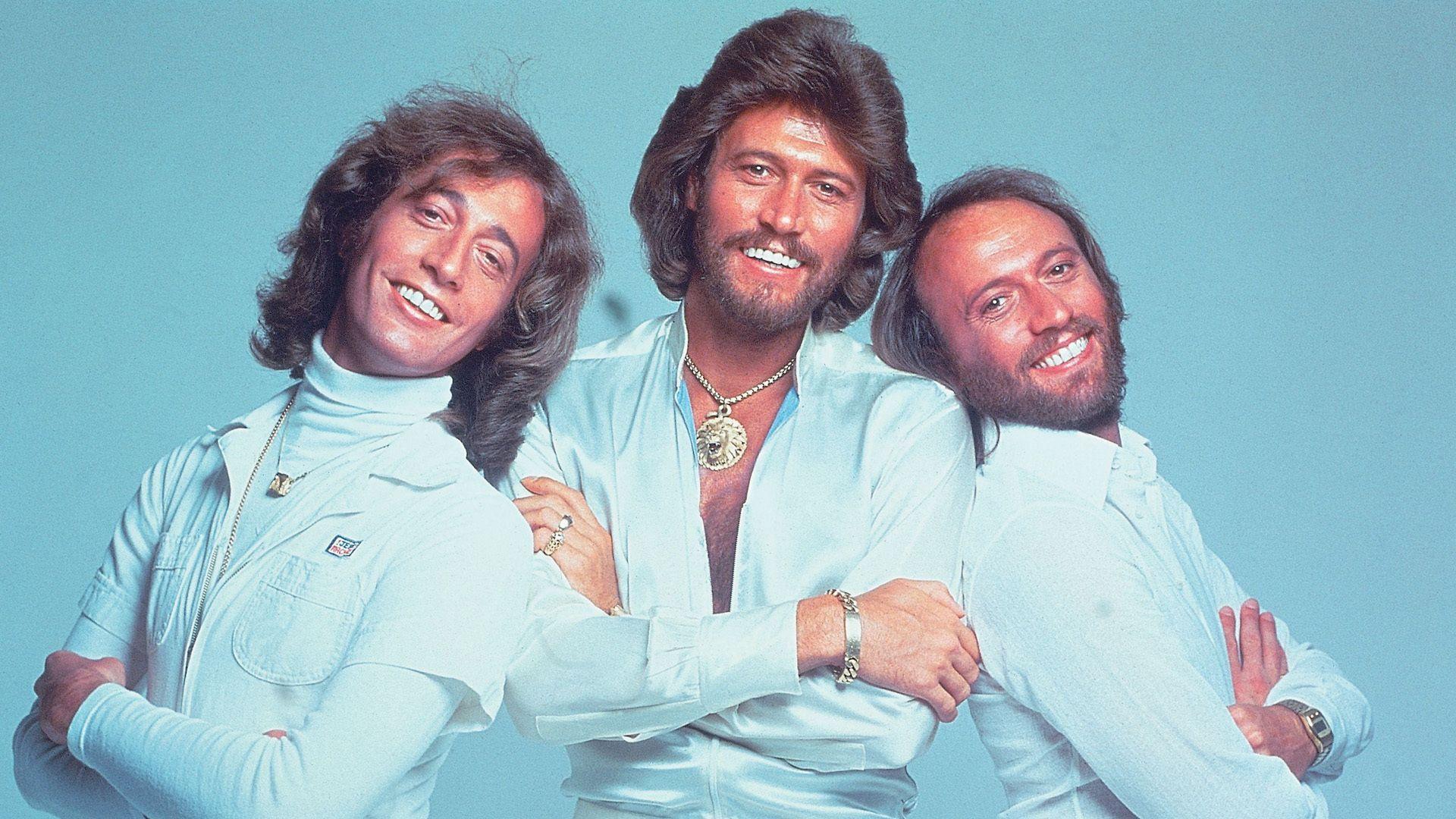
Long before becoming disco royalty, brothers Barry, Robin, and Maurice Gibb performed together as children in England. Their early groups included the Rattlesnakes and Wee Johnny Hayes and the Blue Cats. After the family moved to Australia in 1958, the brothers developed a performing act that eventually became the Bee Gees. Their career later stretched from 1960s pop hits to the disco explosion fueled by the Saturday Night Fever soundtrack. Not bad for three brothers who started out singing for pocket money.
Creed
- Earlier name: Naked Toddler
- Origin: Tallahassee, Florida, 1994
- Notable albums: My Own Prison, Human Clay, and Weathered
- Key members: Scott Stapp, Mark Tremonti, Brian Marshall, and Scott Phillips
Creed nearly entered the music world with one of the strangest names imaginable: Naked Toddler. Guitarist Mark Tremonti reportedly suggested it after seeing a newspaper story, but the name wasn't particularly popular with the people around the band. Bassist Brian Marshall eventually suggested Creed, inspired by his previous group, Mattox Creed. That's an important distinction: Mattox Creed was a separate band, not another name used by Stapp and Tremonti's group. The shorter name certainly worked out better, and Creed became one of the biggest rock acts of the late 1990s.
The Cure
- Earlier names: Malice and Easy Cure
- Origin: Crawley, England, 1976
- Notable albums: Disintegration, Wish, and Songs of a Lost World
- Key members: Robert Smith, Lol Tolhurst, Simon Gallup, and Roger O'Donnell
Robert Smith's early musical career included a group called Malice, which evolved into Easy Cure during the late 1970s. By 1978, the musicians had dropped the word "Easy," leaving a shorter name that suited their increasingly distinctive sound. The Cure went on to become one of alternative rock's most influential bands, moving between gloomy post-punk, atmospheric rock, and surprisingly catchy pop. More than four decades after their debut, the group released Songs of a Lost World in November 2024, proving there was still plenty of life in the name.
Journey
- Earlier name: Golden Gate Rhythm Section
- Origin: San Francisco, California, 1973
- Notable albums: Escape, Frontiers, and Raised on Radio
- Key members: Neal Schon, Gregg Rolie, Steve Perry, Ross Valory, Jonathan Cain, and Arnel Pineda
Journey was originally assembled as the Golden Gate Rhythm Section, a group intended to provide musical backing for other San Francisco-area performers. Its early lineup included musicians with ties to Santana, but the backup-band idea didn't last. The musicians decided to become an act in their own right and adopted the name Journey in 1973. Their early progressive rock sound eventually gave way to the arena-rock anthems that made them famous, particularly after Steve Perry became lead vocalist in 1977. "Don't Stop Believin'" remains one of rock's most enduring singalong hits.
Destiny's Child
- Earlier name: Girl's Tyme
- Origin: Houston, Texas, early 1990s
- Notable albums: The Writing's on the Wall, Survivor, and Destiny Fulfilled
- Key members: Beyoncé Knowles, Kelly Rowland, Michelle Williams, LaTavia Roberson, and LeToya Luckett
Before Beyoncé became a global superstar, she was a young singer performing with a Houston girl group called Girl's Tyme. The group competed on Star Search and went through several lineup changes before adopting the name Destiny's Child in the late 1990s. Their breakthrough came with hits such as "No, No, No," "Say My Name," and "Bills, Bills, Bills." The lineup changed again before Beyoncé, Kelly Rowland, and Michelle Williams became the group's best-known trio. By then, Destiny's Child had already established itself as one of the era's defining R&B acts.
Absu
- Earlier names: Dolmen, Azathoth, Eternus, and Necrotic
- Origin: Dallas area, Texas, 1989
- Notable albums: Barathrum: V.I.T.R.I.O.L., The Sun of Tiphareth, and Tara
- Key members: Proscriptor McGovern, Shaftiel, and Equitant Ifernain
Texas metal band Absu went through more name changes before its first major releases than most groups experience in an entire career. Formed as Dolmen in 1989, the act subsequently used Azathoth, Eternus, and Necrotic before settling on Absu in 1991. Its name comes from ancient Mesopotamian mythology, which also helped shape the band's dark, elaborate musical themes. Absu's history includes several lineup changes and extended breaks. After dissolving in 2020, the project was revived in 2024, while frontman Proscriptor McGovern also pursued a related project called Proscriptor McGovern's Apsû.
Coldplay
- Earlier names: Starfish; Big Fat Noises was used for early recordings
- Origin: London, England, 1997
- Notable albums: Parachutes, A Rush of Blood to the Head, and Viva la Vida or Death and All His Friends
- Core members: Chris Martin, Jonny Buckland, Guy Berryman, and Will Champion
Chris Martin and Jonny Buckland met at University College London in 1996 and began making music together shortly afterward. Their early recordings circulated under the name Big Fat Noises, while Starfish was the name used for the group's early live performances in 1998. They eventually settled on Coldplay, a name borrowed with permission from another group that had decided not to use it. The original article also listed Los Unidades, but that was a later side-project identity used in 2018, not an earlier Coldplay name. The band went on to become one of the world's most successful pop-rock acts.
Kiss
- Predecessor band: Wicked Lester
- Origin: New York City, 1973
- Notable albums: Kiss, Alive!, and Destroyer
- Original lineup: Paul Stanley, Gene Simmons, Peter Criss, and Ace Frehley
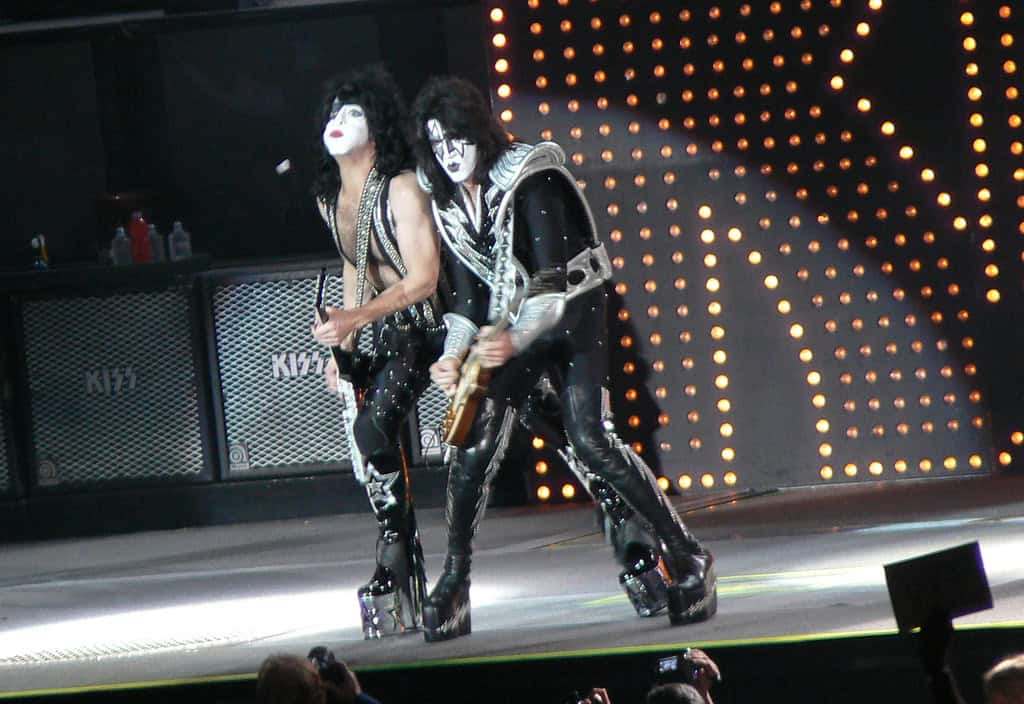
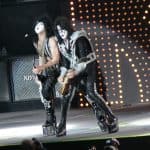
Before the face paint, towering boots, and pyrotechnics, Paul Stanley and Gene Simmons were members of a New York rock band called Wicked Lester. That group recorded an album that went unreleased, and the two musicians eventually decided to start over with a different sound and image. They recruited drummer Peter Criss and guitarist Ace Frehley, forming Kiss in 1973. Technically, this was a new band rather than a simple renaming of Wicked Lester. Kiss later became one of rock's most theatrical acts and concluded its major farewell tour in December 2023, although the musicians have made subsequent appearances.
10,000 Maniacs
- Earlier names: Still Life and Burn Victims
- Origin: Jamestown, New York, 1981
- Notable albums: In My Tribe, Blind Man's Zoo, and Our Time in Eden
- Key members: Natalie Merchant, Robert Buck, Dennis Drew, Steve Gustafson, John Lombardo, Jerry Augustyniak, and Mary Ramsey
The alternative rock band that became 10,000 Maniacs began in 1981 under the name Still Life. The musicians briefly changed it to Burn Victims before deciding on 10,000 Maniacs, a name inspired by the low-budget horror film Two Thousand Maniacs! Singer Natalie Merchant helped establish the group's distinctive sound during the 1980s, particularly on In My Tribe. After she departed in 1993, Mary Ramsey became the primary vocalist. The band continued performing and recording through numerous lineup changes and celebrated its 45th anniversary in 2026.
Def Leppard
- Earlier name: Atomic Mass
- Origin: Sheffield, England, 1977
- Notable albums: Pyromania, Hysteria, and Adrenalize
- Key members: Joe Elliott, Rick Savage, Rick Allen, Phil Collen, Vivian Campbell, and Steve Clark
Def Leppard started as a Sheffield band called Atomic Mass, founded by bassist Rick Savage and other young musicians in the late 1970s. When singer Joe Elliott joined, he brought along a name he had imagined for a fictional band: Deaf Leopard. The spelling was eventually changed to Def Leppard, and the new identity stuck. The band also occasionally used the joke name Ded Flatbird decades later, including for special performances in Las Vegas, but that wasn't an earlier band name. With albums like Pyromania and Hysteria, Def Leppard became one of the biggest arena-rock acts of the 1980s.
Aqua
- Earlier name: Joyspeed
- Origin: Copenhagen, Denmark, mid-1990s
- Notable albums: Aquarium, Aquarius, and Megalomania
- Original members: Lene Nystrøm, René Dif, Søren Rasted, and Claus Norreen
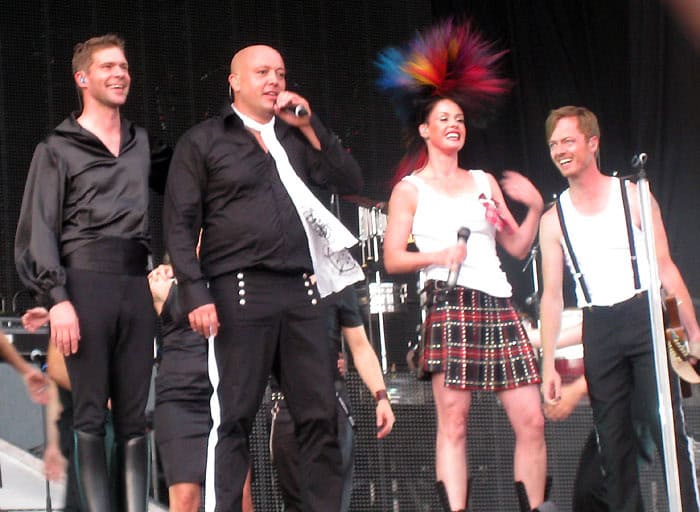
Before "Barbie Girl" became an international phenomenon in 1997, the Danish-Norwegian pop group Aqua performed under the name Joyspeed. The quartet released a novelty dance version of "Itsy Bitsy Spider" in 1995, but it failed to establish them as a major act. After adopting the name Aqua, the group developed the exaggerated, colorful Europop sound that made its debut album Aquarium a worldwide success. The name change was accompanied by a complete reinvention of the group's musical image, proving that sometimes the second attempt works a whole lot better than the first.
Led Zeppelin
- Earlier name: The New Yardbirds
- Origin: London, England, 1968
- Notable albums: Led Zeppelin II, Led Zeppelin IV, and Physical Graffiti
- Members: Jimmy Page, Robert Plant, John Paul Jones, and John Bonham
When guitarist Jimmy Page's previous band, the Yardbirds, fell apart in 1968, he assembled a new lineup to fulfill remaining performance commitments. The musicians initially performed as the New Yardbirds, but it quickly became obvious they were creating something entirely different. They adopted the name Led Zeppelin before releasing their debut album in 1969. The famous name was inspired by a remark about a proposed supergroup going down like a lead balloon. The shorter spelling avoided confusion over pronunciation, and Led Zeppelin went on to become one of the most influential hard-rock bands of all time.
The Dixie Cups
- Earlier name: The Meltones
- Origin: New Orleans, Louisiana, 1963
- Notable songs: "Chapel of Love," "People Say," and "Iko Iko"
- Original members: Barbara Ann Hawkins, Rosa Lee Hawkins, and Joan Marie Johnson
The Dixie Cups began as a New Orleans vocal trio called the Meltones, formed by sisters Barbara and Rosa Lee Hawkins and their cousin Joan Marie Johnson. Before settling on their famous name, they also considered the rather elaborate Little Miss and the Muffets. Fortunately, they went with the Dixie Cups before releasing their debut single, "Chapel of Love," in 1964. The song reached No. 1 on the Billboard Hot 100, becoming one of the defining girl-group hits of the decade. Their later recording of "Iko Iko" helped introduce another New Orleans musical tradition to a wider audience.
Black Sabbath
- Earlier names: Polka Tulk Blues Band and Earth
- Origin: Birmingham, England, 1968
- Notable albums: Paranoid, Master of Reality, and Heaven and Hell
- Key members: Ozzy Osbourne, Tony Iommi, Geezer Butler, Bill Ward, and Ronnie James Dio
Black Sabbath wasn't always associated with horror-inspired imagery and heavy metal. The group initially performed as the Polka Tulk Blues Band before shortening its name and then adopting Earth in 1968. After discovering another band was using that name, the musicians became Black Sabbath in 1969, borrowing the title of a song inspired by the horror film of the same name. The new identity suited the darker sound they were developing. The original lineup reunited for a final performance in Birmingham on July 5, 2025, just 17 days before Ozzy Osbourne's death.
Falling in Reverse
- Earlier name: From Behind These Walls
- Origin: Las Vegas, Nevada, 2008
- Notable albums: The Drug in Me Is You, Fashionably Late, and Popular Monster
- Key members: Ronnie Radke, Derek Jones, Jacky Vincent, and Ryan Seaman
Falling in Reverse was created by former Escape the Fate singer Ronnie Radke in 2008. The new project initially used the name From Behind These Walls, but legal concerns involving that name eventually prompted a change to Falling in Reverse. The band's debut album, The Drug in Me Is You, arrived in 2011 and established its blend of post-hardcore, metalcore, and theatrical rock. Radke later incorporated elements of rap and electronic music, particularly on the 2024 album Popular Monster. Despite numerous lineup changes, the group has maintained a strong following.
The Beatles
- Earlier names: The Quarrymen, Johnny and the Moondogs, the Beatals, and the Silver Beetles
- Origin: Liverpool, England, with roots dating to 1957
- Notable albums: Rubber Soul, Revolver, and Abbey Road
- Famous lineup: John Lennon, Paul McCartney, George Harrison, and Ringo Starr
Before becoming the Beatles, John Lennon played in a skiffle group called the Quarrymen. Paul McCartney and George Harrison joined, and the evolving band experimented with several names, including Johnny and the Moondogs, the Beatals, and the Silver Beetles. By August 1960, the musicians had settled on the Beatles. Their early lineups also included Stuart Sutcliffe and drummer Pete Best, who was replaced by Ringo Starr in 1962. The group went on to redefine popular music during the 1960s, making its early identity experiments a fascinating footnote in rock history.
Flyleaf
- Earlier name: Passerby
- Origin: Belton, Texas, early 2000s
- Notable albums: Flyleaf, Memento Mori, and New Horizons
- Key members: Lacey Sturm, James Culpepper, Sameer Bhattacharya, Jared Hartmann, Pat Seals, and Kristen May
Flyleaf began as Passerby, an alternative metal group formed by singer Lacey Sturm and drummer James Culpepper. The band spent its early years building a following across Texas before adopting the name Flyleaf in 2004. Its self-titled debut album arrived the following year, eventually producing hits such as "I'm So Sick" and "All Around Me." Sturm left in 2012 and was replaced by Kristen May, but the original singer later reunited with the group. In 2026, Flyleaf launched a 20th-anniversary tour celebrating the music that first brought the band national attention.
Accept
- Earlier name: Band X
- Origin: Solingen, West Germany, roots dating to 1968
- Notable albums: Restless and Wild, Balls to the Wall, and Metal Heart
- Key members: Udo Dirkschneider, Wolf Hoffmann, Peter Baltes, Stefan Kaufmann, and Mark Tornillo
German heavy metal band Accept traces its origins to a group called Band X, formed in the late 1960s with singer Udo Dirkschneider. The musicians adopted the name Accept during the early 1970s, although the familiar lineup didn't fully take shape until later in the decade. Their aggressive riffs and distinctive vocals helped influence the development of speed and thrash metal, particularly through songs such as "Fast as a Shark" and "Balls to the Wall." After several breaks and reunions, Accept returned in 2009 with vocalist Mark Tornillo and has continued recording and touring.
Maroon 5
- Earlier names: Kara's Flowers and, briefly, Maroon
- Origin: Los Angeles, California, 1994
- Notable albums: Songs About Jane, Overexposed, and Love Is Like
- Key members: Adam Levine, Jesse Carmichael, James Valentine, Mickey Madden, and Ryan Dusick
Adam Levine, Jesse Carmichael, Mickey Madden, and Ryan Dusick formed Kara's Flowers while attending high school in Los Angeles. The teenage band released an album in 1997 but struggled to find commercial success. After a period of musical experimentation, they returned with a more soulful, pop-oriented sound and recruited guitarist James Valentine. The group briefly used the name Maroon before becoming Maroon 5 in 2001. Their 2002 album Songs About Jane transformed them into international stars. More than two decades later, the band remained active, releasing Love Is Like in 2025.
Alice in Chains
- Related earlier bands: Sleze, Alice N Chains, and Diamond Lie
- Origin: Seattle, Washington, 1987
- Notable albums: Facelift, Dirt, and Black Gives Way to Blue
- Key members: Layne Staley, Jerry Cantrell, Sean Kinney, Mike Starr, Mike Inez, and William DuVall
Alice in Chains has a slightly more complicated naming history than most bands on this list. Singer Layne Staley previously fronted a Seattle glam-metal group called Sleze, which became Alice N Chains. Guitarist Jerry Cantrell, meanwhile, played in a different group called Diamond Lie. Those earlier bands dissolved before Cantrell, Staley, Sean Kinney, and Mike Starr came together to form the Alice in Chains that became famous. The name was inspired by Staley's earlier project, but this wasn't simply the same band with a new spelling. The group emerged as one of the leading acts of Seattle's grunge movement.
The Black Crowes
- Earlier name: Mr. Crowe's Garden
- Origin: Atlanta, Georgia, 1984
- Notable albums: Shake Your Money Maker, The Southern Harmony and Musical Companion, and A Pound of Feathers
- Key members: Chris Robinson, Rich Robinson, Steve Gorman, and Sven Pipien
Brothers Chris and Rich Robinson founded their Atlanta rock band in 1984 under the name Mr. Crowe's Garden. The group initially experimented with a mixture of alternative rock and Southern influences before embracing the bluesy, roots-rock sound that became its trademark. In 1989, the band adopted the Black Crowes name and released its debut album, Shake Your Money Maker, the following year. Songs such as "Hard to Handle" and "She Talks to Angels" helped establish the brothers as major rock stars. After several breakups and reunions, the group released A Pound of Feathers in March 2026.
Ice Nine Kills
- Earlier name: Ice Nine
- Origin: Boston, Massachusetts, 2000
- Notable albums: Every Trick in the Book, The Silver Scream, and The Silver Scream 2: Welcome to Horrorwood
- Key members: Spencer Charnas, Jeremy Schwartz, Ricky Armellino, and Joe Occhiuti
Ice Nine Kills started in 2000 as Ice Nine, a name inspired by the fictional substance in Kurt Vonnegut's novel Cat's Cradle. The early group played a much lighter mix of ska and punk before gradually moving toward post-hardcore and metalcore. In 2006, it adopted the expanded name Ice Nine Kills. The band's reputation eventually became tied to elaborate horror-inspired songs, music videos, and theatrical live performances. Albums such as The Silver Scream and its sequel used famous horror movies as inspiration, giving the group one of the most distinctive identities in modern metal.