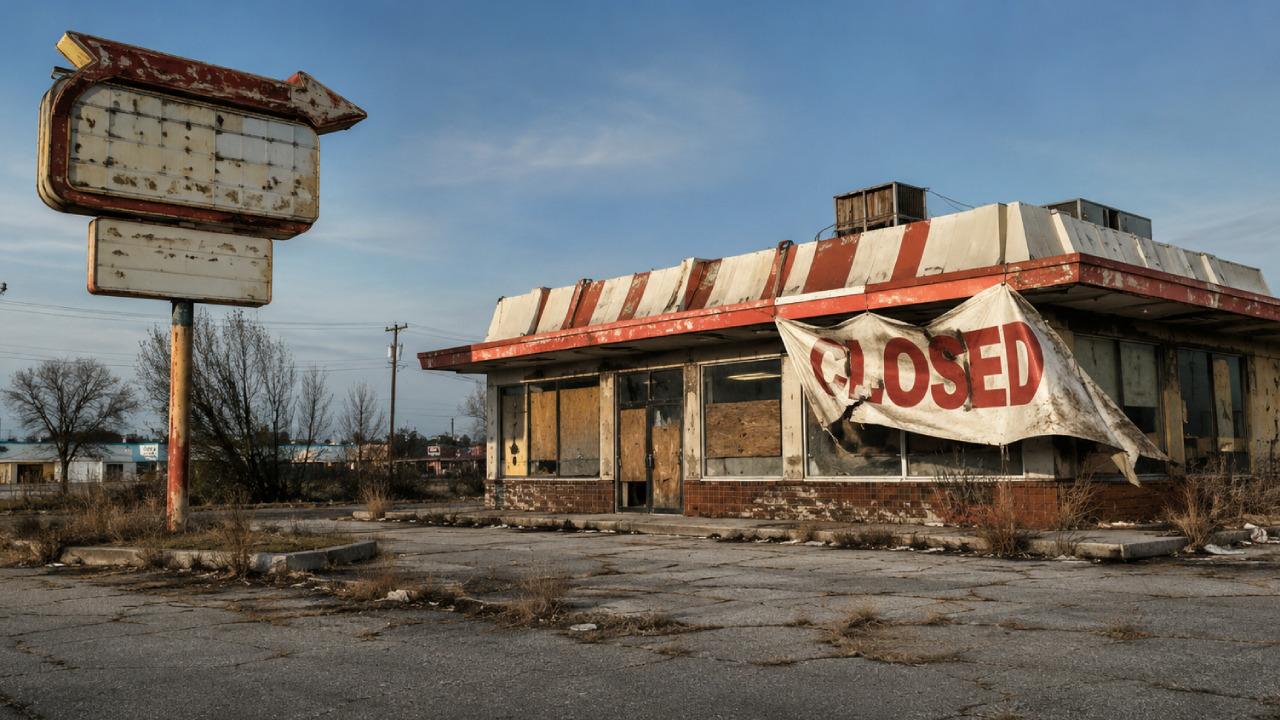
Some restaurant chains close their doors with plenty of fanfare. The headlines announce bankruptcy, longtime customers share memories, and the final location may even get a farewell interview with a loyal franchisee who stayed until the end. But that kind of dramatic ending is actually unusual. Most restaurant chains do not disappear all at once. They gradually shrink, lose entire markets, change owners, and fade over years or even decades before finally going extinct.
That is how most of the restaurants on this list vanished. They did not always go out with a major announcement. Instead, they slowly disappeared from phone books, highway signs, shopping centers, and local maps. One location closed here, another market was abandoned there, and the chain kept getting smaller until almost no one noticed it was gone. Eventually, someone brings the restaurant up at a family dinner, only to discover that half the table has no idea what they are talking about.
Today, some of the restaurant chains people once loved are completely gone. Others survive through a single remaining location, a revived name, or a product that has little connection to the original restaurant. At one point, these chains were packed with customers, advertised everywhere, and seemed like permanent fixtures of American dining. These are 12 restaurant chains that were once all the rage but have now vanished, probably for good.
Henry’s Hamburgers
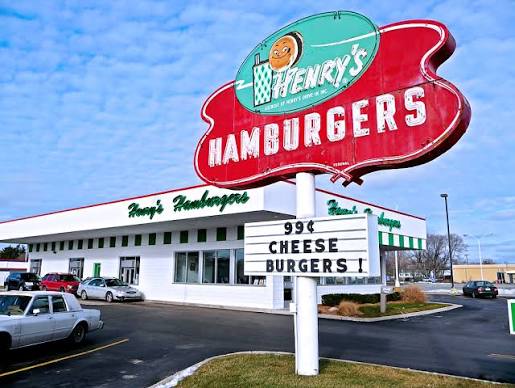
During the 50s and 60s, Henry’s Hamburgers was a fast-growing franchise that ran neck and neck with McDonald’s. For a while, Henry’s even surpassed the number of restaurants McDonald’s had in America. Henry’s served dime hamburgers from walk-up windows scattered across the Midwest and Northeast regions, and by the early 1960s, there were already more than 200 locations in the U.S.
Henry’s didn’t adapt to drive-through culture or expand its menu the way its competitors did, and restaurants began closing slowly but surely throughout the 70s and 80s. Currently, there is only one restaurant of Henry’s left. It’s in Benton Harbor, Michigan. This business runs mostly on locals’ nostalgia. They remember the days when there was a Henry’s in every town.
Farrell’s Ice Cream Parlour
Farrell’s turned dessert into a spectacle. Servers wearing straw boater hats would sing while serving sundaes, while a piano was played in the corner. There was even a 12-scoop sundae challenge known as the “Pig’s Trough” that came with a corny badge if you finished it.
The chain peaked at 130 restaurants in the 1970s under Marriott’s ownership, and then spent the next four decades declining and shutting down outlets. The chain would revive and shrink again over the years under new ownership, but to no avail. The last Farrell’s in Brea, California, shut down in 2019.
Victoria Station
Victoria Station’s identity revolved around the train car itself. Customers entered through a British telephone booth, sat down in box cars turned into dining areas, and drank from a caboose bar, while the whole place was decorated with vintage railroad memorabilia. The idea, conceived by three Cornell Hotel School graduates, debuted in San Francisco in 1969 and quickly spread, with roughly 100 units by 1978, spanning from California to Massachusetts, including a location in Los Angeles that once became the highest-grossing restaurant in the nation. Johnny Cash even recorded a train-themed album titled “Destination Victoria Station” that was only available in the restaurants.
The good times were not meant to last. Following a failed strategy of shifting their focus to hamburgers, along with mounting debts, Victoria Station filed for Chapter 11 bankruptcy in 1986 and shut down about 40 outlets. The chain has since been unable to recover.
Another owner was able to keep a few outlets open using the brand name until the early 1990s, but the chain was effectively closed in the U.S. by 1992. One holdout restaurant in Salem, Massachusetts limped along for another two decades until it, too, closed down in 2017.
While Victoria Station does legally exist as a small restaurant chain in Japan, it is now long dead in America.
Lum’s
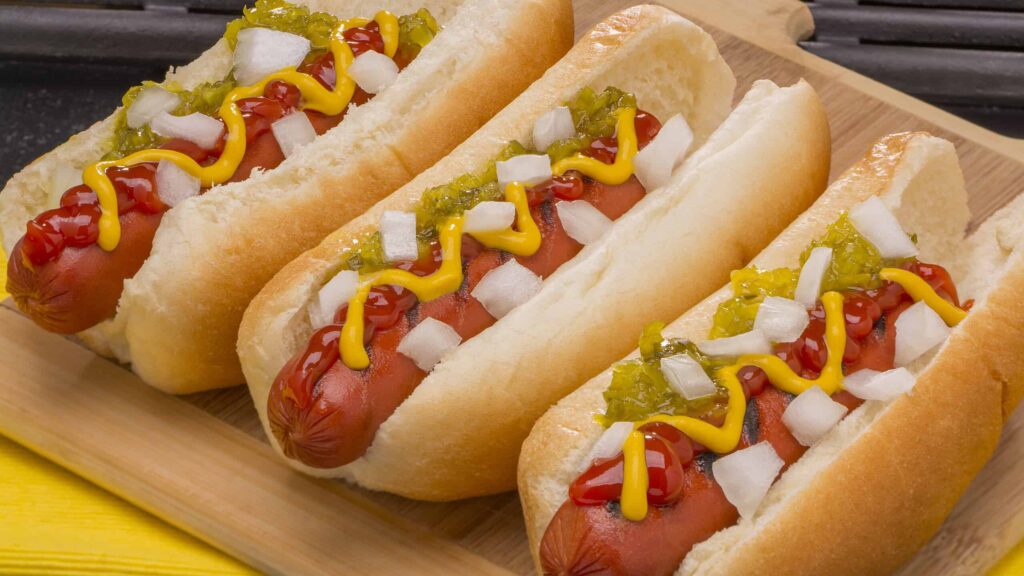
From its humble beginnings in Miami as a simple hot dog stand, Lum’s evolved into a nationwide chain of roughly 400 locations, built around one strange signature dish. Hot dogs steamed in beer. They also served Ollieburger, Lum’s signature burger, named after Ollie Gleichenhaus.
For one short time in the early 1970s, the chain even had John Y. Brown, formerly of Kentucky Fried Chicken, as its owner. That didn’t stop its decline. By 1982, it went bankrupt, and within a couple of years, most locations closed, taking the beer-steamed hot dogs down with them.
Mr. Steak
Mr. Steak got its start in Colorado Springs back in 1962, offering bargain-basement, no-frills steak dinners. It eventually ballooned to around 280 restaurants. Its mistake was to attempt to become all things to all people, with chicken, fish, and salad offerings that made customers wonder where the original concept went.
The chain filed for bankruptcy in 1987 and had dwindled down to 57 restaurants in 1992 when a new owner bought what remained for $140,000. Its flashy relaunch never caught on, and the last remaining Mr. Steak restaurant, in St. Charles, Missouri, closed in 2009.
Horn & Hardart
Before the modern-day fast food joint, there was the automat. Horn & Hardart opened up its first coin-operated restaurant in Philadelphia in 1902, and brought the concept to New York a decade later, going on to serve hundreds of thousands of meals a day from the little compartments behind the glass walls by mid-century. Put your nickel in, turn the knob, and a fresh slice of pie or plate of baked beans would be waiting for you, no waiter required.
The emergence of hamburgers at drive-thrus in the 1950s and 1960s turned the concept of the sit-down automat obsolete. During the 1970s, the chain turned most of its old automats into Burger King and Arby’s stores, while those remaining kept closing quietly, one by one, throughout the next twenty years.
The last Automat closed its doors on April 8, 1991 in Manhattan on East 42nd Street. A company has recently revived the Horn & Hardart name as a brand of coffee, but the automats themselves, and the restaurant chain that built them, are gone for good.
Chicken Delight

“Don’t cook tonight, call Chicken Delight” was their slogan and they did exactly that, being one of the first chains that delivered fried chicken to your door. Chicken Delight started operating in Illinois in 1952 and expanded to almost 1,000 outlets by the mid-1960s.
In 1971, an antitrust suit, along with increasing competition from KFC, gutted the company’s U.S. business within a few years. A handful of outlets are still open today, mostly in Canada, but the chain that once blanketed America is gone from it.
White Tower
White Tower ran for almost a hundred years with its trademark miniature square-shaped burgers sold through gleaming-white buildings. It bore an obvious resemblance to White Castle, the rival it was clearly built to copy. Both offered their customers nickel burgers during the Great Depression.
White Castle successfully sued White Tower for this similarity way back in the 1930s and won. White Tower’s presence gradually dwindled over the decades, until the very last location, in Toledo, Ohio, was destroyed by a fire in 2022.
Bugaboo Creek Steak House
Bugaboo Creek offered a Canadian hunting lodge fantasy. The restaurants’ interiors were made in the style of mountain log cabins, while the walls were packed with animatronic wildlife rigged to talk and sing. They would even startle unsuspecting diners mid-meal. Kids who came there on their birthdays used to kiss the moose for good luck, a tradition that an entire generation of diners from the Northeast still bring up, along with Moose Juice, a drink made from vodka-soaked pineapple.
Founded in 1993 in Rhode Island, the chain later spread to six states, but it declared bankruptcy in 2010. New ownership tried a full relaunch in 2011 with a new menu and its own house beer, and for a moment it looked like Bugaboo Creek might pull off a real comeback. It didn’t stick. One location after another was closed in the following years until Bugaboo Creek was gone by 2016, along with its good luck moose.
Don Pablo’s
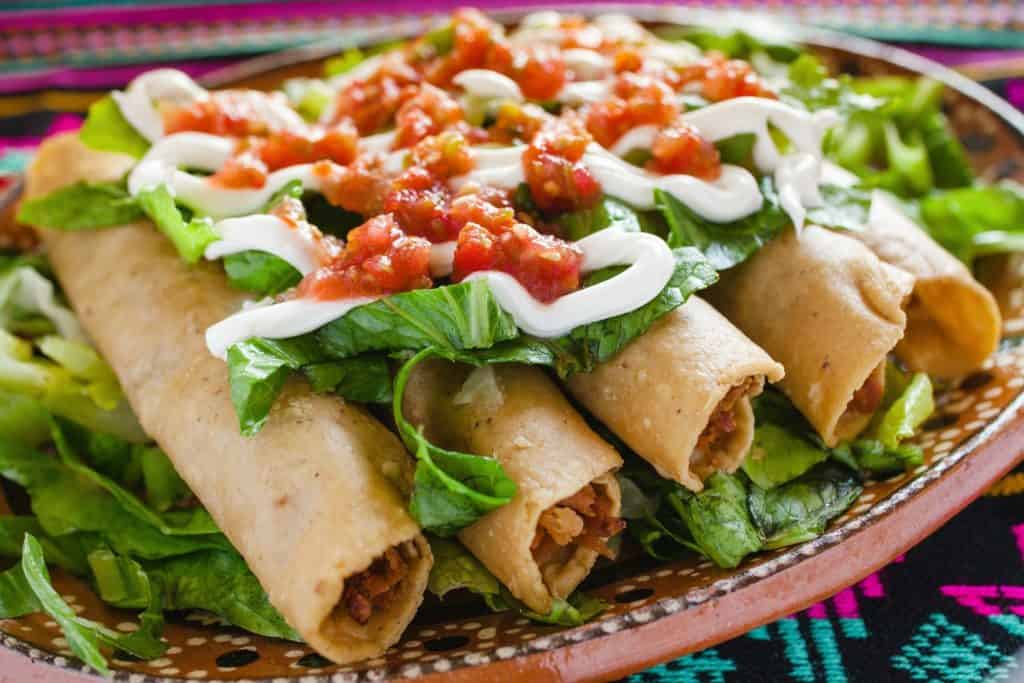
For a brief time in the 1990s, Don Pablo’s was the number two Mexican chain in the United States, just behind Chi-Chi’s. Hand-made tortillas pressed in front of customers and a menu that leaned into Tex-Mex comfort food rather than fast-casual speed set Don Pablo’s apart.
After its prime, the chain was bought and sold over ten years, declaring bankruptcy at various points, whittling it down almost invisibly, until there were just 34, then 12, then 6, and finally 3 restaurants left standing. The last remaining Don Pablo’s was located in Deptford, New Jersey, and it closed in June of 2019. Unlike some of its old rivals, nobody has tried to bring it back.
Lone Star Steakhouse & Saloon
Lone Star Steakhouse leaned heavily into its Texas theme, even though the chain was founded in North Carolina. The formula was memorable: big steaks, cold drinks, Western décor, and buckets of peanuts that left shells scattered across the floor. Customers embraced the roadhouse atmosphere, helping Lone Star grow to about 265 restaurants by the end of the 1990s.
The chain’s momentum stalled as the casual-steakhouse market became crowded and costs climbed. A proposed 2002 buyout collapsed, and the Great Recession later accelerated years of closures and ownership changes. By early 2017, only 16 locations remained. Today, nearly the entire chain has all but vanished. The lone surviving Lone Star Steakhouse operates in Tamuning, Guam, keeping the once-massive brand alive far from the mainland.
Kenny Rogers Roasters
Kenny Rogers Roasters is a restaurant chain that may have disappeared from American streets, but continues living happily in another part of the world. The rotisserie chicken chain was created back in 1991 by Kenny Rogers himself, along with John Y. Brown. The chain exploded to more than 350 U.S. locations within four years, and it even “landed” a starring role in a famous 1996 “Seinfeld” episode, where Kramer is convinced that the neon sign next door is invading his apartment.
Despite its success, Kenny Rogers Roasters filed for Chapter 11 bankruptcy in 1999, and Nathan’s Famous bought what was left, reducing the number of outlets to approximately 40 by 2000. In 2008, Nathan’s Famous sold its international brand rights to an Asian franchise group, and that’s where the chain thrives today.