
Andrew Clemente

Farknot Architect / Shutterstock.com

PeopleImages / Shutterstock.com

MariaTsygankova/Shutterstock.com

Olga Donchuk / Shutterstock.com

Arturo Verea / Shutterstock.com

New Africa / Shutterstock.com

ViDI Studio / Shutterstock.com

Kirkam / Shutterstock.com

archimede / Shutterstock.com

Unai Huizi Photography / Shutterstock.com








10 U.S. Towns With Bans That Sound Completely Made Up
Local governance has always been highly valued in America. Local communities have a right to establish their laws, which can seem perfectly reasonable to the people who enacted them. However, if one travels a couple of miles in any direction, he or she may come across a situation where something that earns a fine in one place is completely normal in another.
Sometimes, these laws are downright weird and have been on the books of local communities for decades because the process of repealing such ordinances is no less laborious than the process of passing them. Here are 10 places where something completely ordinary became, technically, illegal.
Gainesville, Georgia: Eating Fried Chicken With a Fork
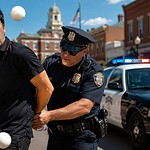
Gainesville is the self-proclaimed Poultry Capital of the World, and it's not just a name. Back in 1961, the city council enacted an ordinance stating that fried chicken must be eaten using only the hands. No forks, no knives. The ordinance was intended as a publicity stunt meant to highlight the thriving chicken business in Gainesville, but it went onto the books and stayed there.
An incident back in 2009 made the local law even more notorious. A 91-year-old woman visiting the town for her birthday was ceremonially "arrested" by local officials for eating her chicken with a fork. The woman later received a pardon from the mayor in a public ceremony that made national news. The law has never led to a real citation, but it’s still technically enforceable, which means every diner in Gainesville is, in some technical sense, one utensil away from a violation.
Lawrence, Kansas: Upholstered Furniture on Porches
In the majority of the nation, sitting down on a couch placed on the porch during a summer evening is something that takes place without much hesitation. It’s just something you do. In Lawrence, Kansas, it could cost you a minimum of $100. The city has enacted an ordinance that prohibits all upholstered furniture from being placed on porches and patios, and the fines apply regardless of whether the sofa was there for a month or just a single day.
The law came out of complaints about permanent outdoor sofas turning into eyesores, but it’s so broad that it can apply to anyone who just wants to sit outside in a comfortable position for an hour or two. Lawrence is far from the only city with this kind of restriction. College town residents throughout the nation have discovered it applies to them when a neighbor complained.
Beech Grove, Indiana: Watermelon in Parks
Eating watermelon in a park on a summer day is probably one of the most refreshing things a person can do. In Beech Grove, Indiana, it's against the law. Watermelons have been prohibited from the city's parks since the authorities found out that workers had a hard time picking up watermelons as their rinds kept punching right through garbage bags, creating messes that were harder to clean up than expected. The solution: just ban the fruit entirely.
Officials admit that no one was ever cited under this ordinance, and there is little appetite to start enforcing it now. However, the ordinance is still in effect, and removing it would require going through the same process as passing any other law, so there it sits. If you’re planning to spend the day at the park in Beech Grove, just leave your watermelon at home.
Mobile, Alabama: Silly String
Silly String is available in every party supplies store across the nation and is used at birthday parties and graduation ceremonies without much hesitation. In Mobile, Alabama, the use of the colorful foam spray is illegal inside city limits. The prohibition covers public spaces throughout the city and not just during specific events.
The use of confetti has been illegal in Mobile for years due to how much garbage it created during large public events, especially during Mardi Gras. Silly String joined the list when it became a recurring problem at city events because of the way it stains clothing and creates slippery surfaces. If you bring a can to a Mobile birthday party and end up outside, you're technically on the wrong side of the law.
Hood River, Oregon: Juggling Without a License
For most people, juggling is nothing more than a hobby. You learn it for fun and perform it at talent shows or in your driveway without ever thinking that you should have some kind of governmental permission to do so. In the city of Hood River, Oregon, you need a license to juggle legally. That puts juggling in the same general category as running a business and driving a car.
Although the law exists, it’s not really enforced. No one from Hood River has ever been cited for practicing unlicensed juggling, and no one seems to know exactly what prompted this ordinance in the first place. The requirement just appeared at some point, which is how a lot of strange local laws survive: quietly, without drama.
Aspen and Severance, Colorado: Throwing Snowballs
In both Aspen and Severance, Colorado, snowballs fall under the category of missiles, along with things thrown out of catapults and slingshots. At least according to the local law. In a state where several feet of snow falls every winter, a ban on snowball fights is like banning sand castles on the beach. The ban is there regardless, and in 2018, a nine-year-old tried to have it repealed in Severance.
The child came before the city council arguing that kids should be allowed to throw snowballs without breaking the law. The council was sympathetic but ultimately kept the restriction in place. The ordinance doesn't usually carry any penalties unless someone is injured or property is damaged.
The act of throwing a snowball remains technically illegal, but during most winters, kids in both cities manage to break this particular law and get away scot-free.
Carmel-by-the-Sea, California: High Heels Without a Permit
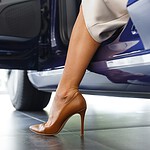
It is against the law for anyone to wear high heels in the streets and sidewalks of Carmel-by-the-Sea unless they get a permit from the city hall first. That law has been on the books since 1963 and it restricts people from wearing shoes with heels more than two inches tall and less than one square inch wide at the base. That includes most stiletto heels and a good deal of high-heeled dress shoes. The city attorney who wrote this law wanted to keep the city from being sued by visitors who kept tripping on sidewalks warped by tree roots.
The permit is free of charge, obtainable from city hall, and only requires an ID with a photograph. No ticket has ever been written for violation of the law since it was enacted. The permit law turned into a kind of tourist attraction, where visitors will drop by to receive their high-heel permit while the city staff signs them with a straight face.
Indianola, Iowa: Ice Cream Trucks
An American summer rarely goes by without the iconic ice cream truck music making its rounds through neighborhoods. Indianola, Iowa, has not heard that sound since 1967, when the city enacted a ban on ice cream trucks after a tragedy occurred when a child was struck and killed by a car after getting ice cream from the truck. The ban also covers stationary ice cream stands. Entrepreneurs in the city have tried to overturn this ban numerous times, but to no avail. Indianola remains one of the few places in the country where ice cream trucks are strictly prohibited.
Honolulu, Hawaii: Looking at Your Phone While Crossing the Street
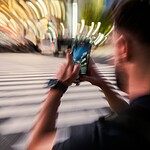
Most cities remind their pedestrians to stay alert when crossing the road. Honolulu goes further. It’s one of the only cities in the entire country that imposes fines on pedestrians who look at their phones while crossing the street. The Distracted Walking Law came into effect in October 2017, banning pedestrians from looking at any mobile electronic device while crossing a road. It includes small devices like mobiles and tablets and larger ones like video game devices and laptops. The only exception made is for 911 calls.
The law was passed by Mayor Kirk Caldwell following Honolulu recording one of the highest rates of pedestrians struck in crosswalks among major American cities. First-time offenders will receive a fine of $15 to $35, but repeat offenders may face penalties of up to $99. Unlike many other laws on this list, this one is actively enforced.
Lynden, Washington: Dancing in Any Bar or Restaurant
In most of the country, dancing and drinking usually go together like peas and carrots. In Lynden, Washington, however, the two activities have been legislatively separated for more than forty years now.
In 1981, the city council enacted an ordinance making it illegal to dance in any establishment serving alcoholic beverages. Period. The owners of one local restaurant, who were not happy with this decision, appealed their case all the way to the Washington State Supreme Court. The court declined to rule, and the ban stood.
One of the council members described dancing as being "evil" and warned that it could encourage improper social mixing. The ordinance received nationwide attention, and some have even argued that it may have been one of the inspirations behind the movie "Footloose," released in 1984.
In 1995, Lynden revised the rules slightly and permitted alcohol-free venues to hold public dances without a permit; however, restaurants and bars are not allowed to have a dance floor. Lynden currently maintains a permit requirement for dances, imposes a 1 a.m. curfew (12 a.m. on Saturdays), and prohibits what is considered "immoral or indecent dancing" according to city code. You can have a drink in Lynden, and you can dance. Just not at the same time, in the same place.