
Studio Romantic / Shutterstock.com

New Africa / Shutterstock.com

Public Domain

PeopleImages / Shutterstock.com

united photo studio / Shutterstock.com

Andrey_Popov / Shutterstock.com
GameStop

hang_in_there / BY 2.0
Facebook / Meta

JU.STOCKER / Shutterstock.com
Meta / FB










10 Incredible Stories of People Who Made Millions in the Market
Most people who become wealthy through investing do it slowly, adding money year after year and waiting for it to grow. A fortunate few have watched one decision, one company, or one remarkable streak change their lives almost beyond recognition.
These stories begin in some unlikely places: a gas station in Vermont, a secretary's desk, a swimming-pool construction site, and the paint-covered walls of Facebook's first office. They feature ordinary workers, self-taught traders, and professionals who placed enormous faith in ideas that sounded improbable at the time.
Luck played a part in several of these fortunes. So did patience, nerve, timing, and a willingness to hold on while almost everyone else doubted the outcome. Their results are anything but typical, which is exactly what makes these 10 stories so difficult to forget.
10. The Secretary Who Turned $180 Into a Lasting Legacy
Grace Groner spent most of her adult life working as a secretary for Abbott Laboratories. In 1935, when she was 25, she paid $180 for three shares of company stock. Then she held on. Reinvested dividends and repeated stock splits quietly multiplied that small purchase over the next 75 years. Groner continued living in a modest one-bedroom cottage, bought clothes at rummage sales, and gave few outward signs that she had become wealthy. When she died in 2010 at age 100, her Abbott holdings were worth about $7 million. She left the money to Lake Forest College, where it created a foundation supporting internships, international travel, and other opportunities for students. Her patience turned three shares into a gift that would outlive her.
9. The Janitor With a Secret $8 Million Fortune
Friends knew Ronald Read as a quiet Vermont man who pumped gas for 25 years and later worked as a JCPenney janitor. He drove an aging Toyota, wore a coat fastened with safety pins, and lived so modestly that almost nobody guessed he was a millionaire. Read regularly bought shares in established companies, favored stocks that paid dividends, and kept many of them for decades. When he died in 2014 at age 92, his estate was valued at nearly $8 million and reportedly included at least 95 stocks. His will contained an even bigger surprise. Read left $4.8 million to his local hospital and $1.2 million to the town library. A lifetime of ordinary paychecks had quietly produced two of the largest gifts either institution had ever received.
8. The Engineer Who Bet His Future on Tesla
Jason DeBolt began buying Tesla stock in 2013, when the electric-car company still looked like a risky experiment to many observers. The cloud engineer kept adding shares through years of dramatic rises and painful drops. Eventually, Tesla represented virtually his entire portfolio. In January 2021, DeBolt publicly shared that his holdings were worth roughly $11.5 million and announced plans to retire at 39. He also said that about $100,000 in pretax contributions to his 401(k) had grown to around $5 million. Those figures were self-reported and reflected the value of his shares during a powerful Tesla rally, rather than money safely locked away in cash. His fortune could rise or fall by more than $1 million in a single day, making the emotional cost of his all-in strategy nearly as remarkable as the reward.
7. The Pool Builder Who Caught the Dot-Com Wave
Before becoming famous for his stock charts, Dan Zanger worked as a contractor and swimming-pool builder. He sold his Porsche to help fund a trading account just as technology stocks began soaring in the late 1990s. Zanger studied recurring shapes in stock charts and used them to identify companies that appeared ready to surge. His timing was extraordinary. Trading records and a 1999 tax return reviewed by Fortune showed that he turned roughly $10,775 into $18 million in about 18 months. Zanger later said the account climbed as high as $42 million, though that larger figure was not included in the same verification. His spectacular run arrived during the dot-com bubble, when fortunes appeared and disappeared with startling speed. He caught the boom at precisely the right moment and managed to preserve a life-changing share of the winnings.
6. The Retired IRS Auditor With a $22 Million Secret
Anne Scheiber retired from the IRS in 1944 with a $5,000 nest egg and the conviction that discrimination had kept her from advancing during her career. She redirected her formidable attention to the stock market. Scheiber researched companies, reinvested her dividends, and rarely sold anything. A $10,000 investment in drugmaker Schering-Plough made in 1950 eventually grew through stock splits into 60,000 shares worth about $4 million. Yet she continued living alone in a rent-controlled Manhattan studio, wearing old clothes and visiting the library to read financial newspapers for free. When Scheiber died in 1995 at age 101, the woman many neighbors barely noticed left an estate worth approximately $22 million. Most of it went to Yeshiva University to fund scholarships for women, giving her quietly accumulated fortune a purpose she never publicized during her lifetime.
5. The Man Behind GameStop's Most Famous Bet
Long before GameStop became the center of a national frenzy, Keith Gill believed the struggling video-game retailer had been written off too soon. Beginning in 2019, the financial educator known online as Roaring Kitty assembled a position worth about $53,000 and shared his reasoning on YouTube and Reddit. In January 2021, waves of individual investors rushed into GameStop while traders who had bet against the company scrambled to escape. The share price exploded. Screenshots posted by Gill showed that his position was briefly worth nearly $48 million. That figure represented a high point rather than a completely realized profit, and the value changed sharply as the stock swung. Gill was also more financially experienced than many of the newcomers who followed the drama. Still, his once-obscure investment became the defining personal fortune of the meme-stock era.
4. The Doctor Who Saw the Housing Crash Coming
Years before the movie The Big Short made him famous, Michael Burry sat alone reading the details of thousands of American mortgages. The former doctor noticed that many borrowers had received risky loans whose payments were likely to become unaffordable. He became convinced that the seemingly unstoppable housing market would collapse. Burry persuaded major banks to create financial contracts that would pay him if selected mortgage bonds failed. For years, the wager cost money. His clients protested, demanded withdrawals, and questioned whether he had lost touch with reality. Burry refused to abandon his conclusion. When the housing market finally broke apart, he earned about $100 million personally and approximately $725 million for the investors who stayed. His fortune came from recognizing a disaster hidden in paperwork almost everyone else had ignored.
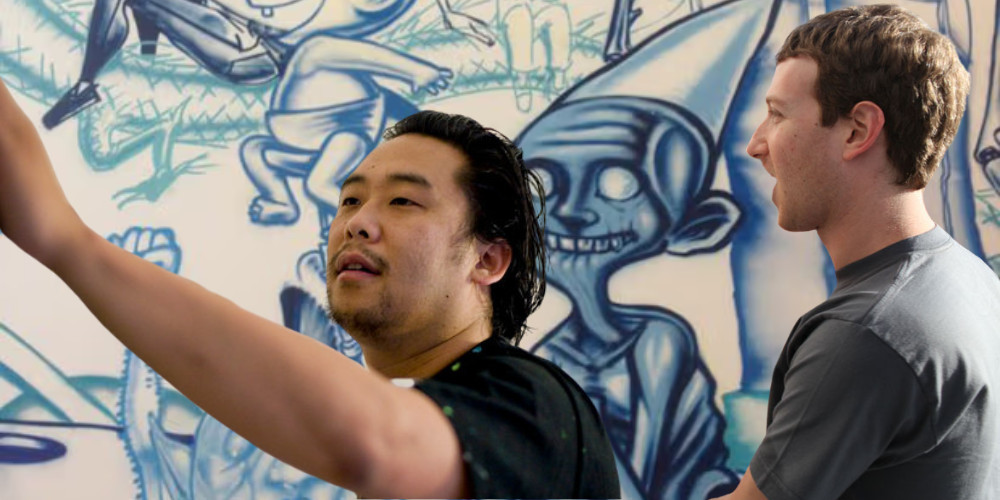
3. The Artist Who Took Facebook Stock Instead of Cash
Street artist David Choe faced an unusual payment choice after painting murals inside Facebook's first offices in 2005. He could reportedly take about $60,000 in cash or accept stock in the young social network. Choe chose the shares, even though he later joked that he considered Facebook's business idea ridiculous. The eccentric decision became legendary seven years later, when the company prepared to go public. News organizations estimated that Choe's stake was worth roughly $200 million around the time of the initial public offering. How much he eventually collected has never been publicly confirmed, which means the famous total should be understood as an estimated value rather than a documented cash payment. Even with that qualification, his story remains astonishing: an assignment to decorate an office may have become one of the most valuable art commissions in history.
2. The Investor With a $264 Million Retirement Account
Ted Weschler's retirement account contained $70,384 at the end of 1989. What happened over the following decades would eventually astonish even experienced investors. Weschler bought publicly traded stocks, focused heavily on companies he considered overlooked or misunderstood, and was willing to wait in cash when nothing appealed to him. The account had reached about $131 million by 2012, when he converted it to a Roth IRA and paid approximately $29 million in federal taxes using money from elsewhere. By the end of 2018, tax information obtained by ProPublica placed its value at $264.4 million. Weschler was far from an amateur—Warren Buffett hired him to help manage Berkshire Hathaway's investments in 2011. Even so, transforming a five-figure retirement balance into a nine-figure fortune ranks among the most extraordinary personal investment records ever revealed.
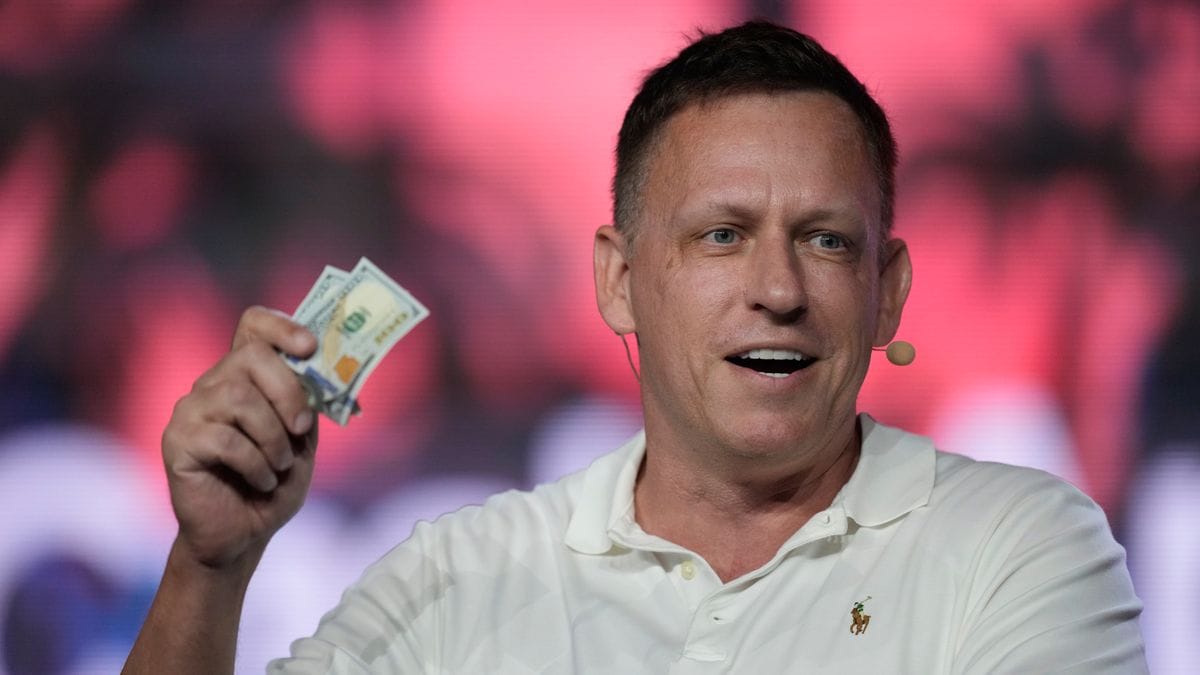
1. Facebook's First Outside Investor Made More Than $1 Billion
Facebook was still a small social network for college students when Peter Thiel became its first major outside investor in 2004. The PayPal co-founder provided $500,000 for a stake of roughly 10 percent. At the time, there was no guarantee that the website would survive, much less become one of the most powerful companies on the internet. Facebook's audience and advertising business grew at a breathtaking pace. When the company went public in 2012, Thiel sold shares during the offering and most of his remaining holdings after a required waiting period ended. Contemporary reports placed his total proceeds at more than $1 billion in cash. Ownership changes and earlier sales make the full calculation more complicated, but the outcome remains staggering: a $500,000 bet on a fledgling website produced roughly 2,000 times that amount in about eight years.