© "Hugo Gernsback wearing his Isolator -- 1925" by JFGryphon is licensed under CC0 1.0.
© "Radithor" by BlueShift 12 is licensed under BY 2.0.
© Wikipedia
© "Hugo Gernsback wearing his Isolator -- 1925" by JFGryphon is licensed under CC0 1.0.
© Wikimedia Commons
© Cans Creative/Shutterstock.com

© "The De Lackner HZ-1 Aerocycle 1956" by army.arch is licensed under BY 2.0.
© "A CueCat" by denn is licensed under BY-SA 2.0.
© "Segway parking, Segway tour, Chiang Mai, Thailand" by David McKelvey is licensed under BY 2.0.

© "Virtual Boy @ Artefact" by artefactgroup is licensed under BY-ND 2.0.
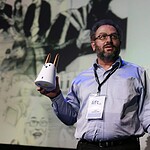
© "Rafi Haladjian with his invention" by Robert Scoble is licensed under BY 2.0.

10 Bizarre Products People Once Thought Were the Future
Predicting the future has always been risky business. People can spot certain trends early, but the version of tomorrow they imagine is usually shaped by the technology, fears, comforts, and habits of their own time. That is why so many old “future of life” predictions now look strange, funny, or wildly off base.
The same is true of products. Every era has had inventions that promised to change how people lived, worked, traveled, cooked, cleaned, or communicated. Some sounded practical at the time. Others were sold with slick ads, confident slogans, and serious money behind them. Looking back, though, many of these so-called breakthroughs seem less like the future and more like a snapshot of what people once misunderstood about daily life.
That is part of what makes these products so fascinating. They were not all random gimmicks or small-time experiments. Many had real marketing campaigns, corporate backing, government interest, or public excitement behind them. They were presented as useful, modern, and inevitable.
But the future had other plans. Some failed because the technology was not ready. Others were too expensive, too awkward, too dangerous, or simply too disconnected from what people actually wanted. Today, they stand as reminders that innovation is not just about imagining what could exist. It is also about understanding what people will truly use.
Radithor (1920s)
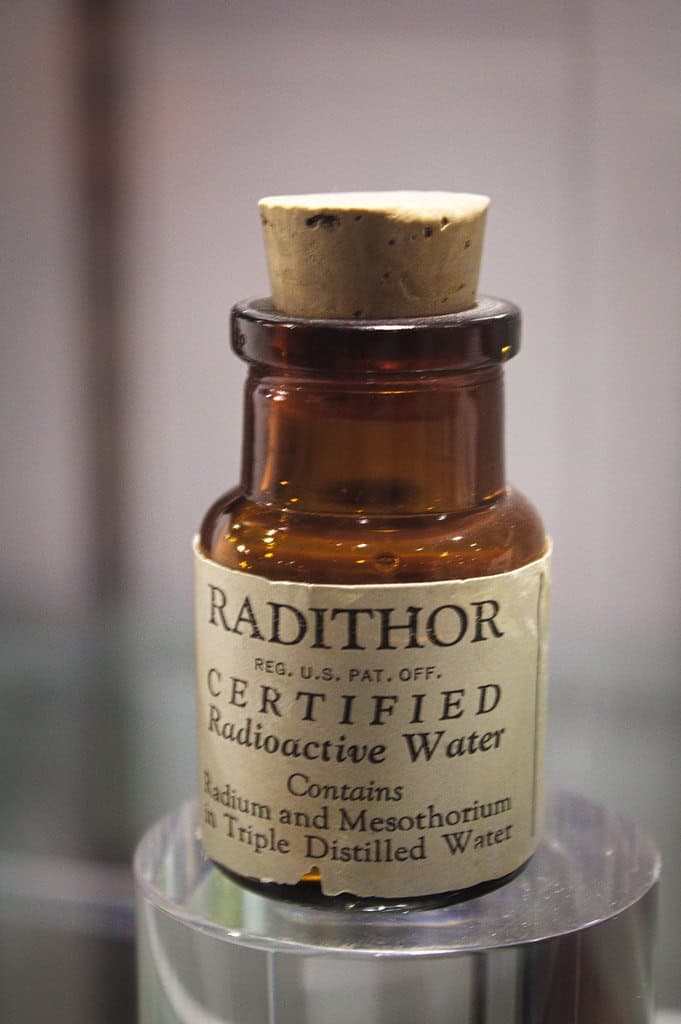
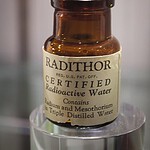
In the 1920s, radium was advertised as being energetic and energy was synonymous with health. That chain of reasoning was enough to launch an entire line of products. Radithor was created by William J.A. Bailey, who claimed the title of "Dr. Bailey" despite having no medical qualifications.
Radithor was distilled water containing small amounts of the radioactive isotopes radium-226 and radium-228, sold in half-ounce bottles at $1 each and marketed as a cure for over 150 ailments including impotence, arthritis, and fatigue.
Pittsburgh businessman Eben Byers consumed around 1,400 bottles between 1927 and 1931. It was first prescribed to him by his doctor. By 1931, his jaw had to be surgically removed. He died in 1932. The Wall Street Journal ran his obituary under the headline "The Radium Water Worked Fine Until His Bones Fell Apart," a product review that was as morbid as it was accurate.
The Dynasphere (1932)
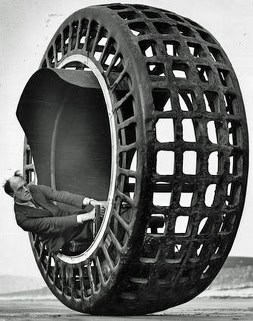
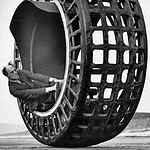
The Dynasphere was a vehicle built by Dr. J.A. Purves in 1932. It was a single giant iron wheel with an internal cabin where the driver would sit and steer by shifting his own body weight. An engine propelled the whole structure forward at speeds of up to 30 mph. Purves called it "the high-speed vehicle of the future" and "the logical simplification of all motor-driven transport."
While it looked like something out of a sci-fi movie, the Dynasphere actually got some traction. It appeared on the cover of Popular Science. It was also featured on a newsreel filmed at Brooklands, Britain's famous motor racing circuit. The main engineering challenge, beyond the obvious ones, was a phenomenon known as "gerbiling." When braking, the interior cabin would spin freely inside the moving wheel, rotating the driver independently of the vehicle's direction. The Dynasphere never took off and Purves disappeared from public record shortly after 1935.
The Isolator (1925)
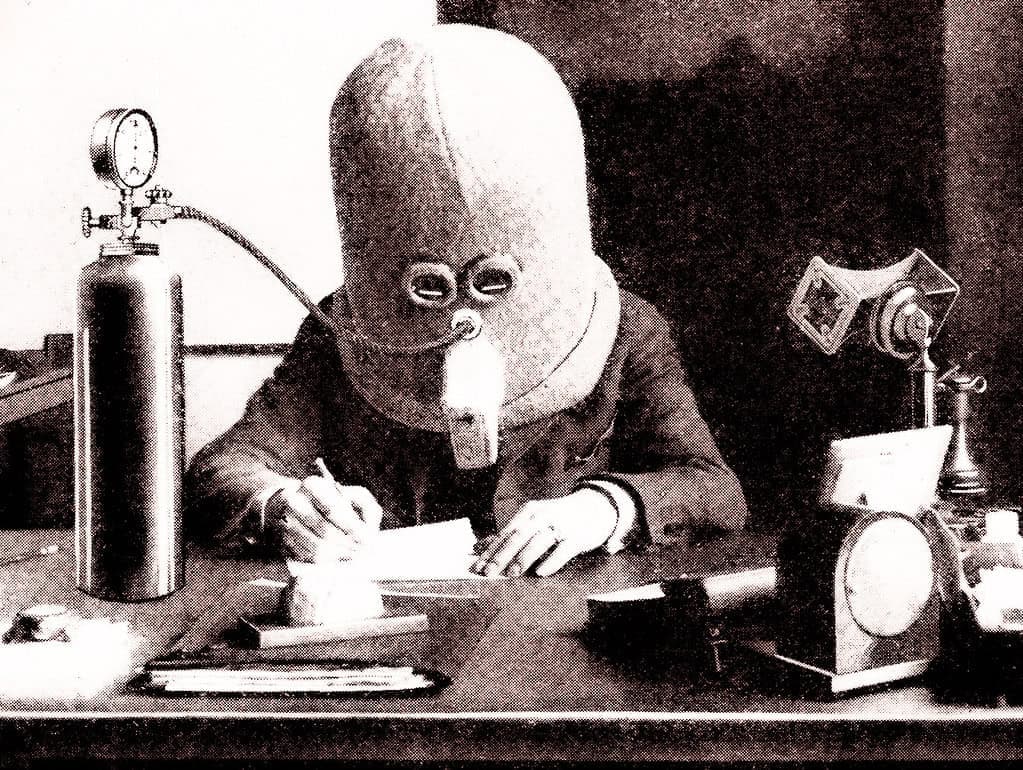
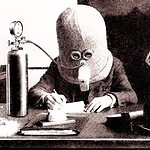
Hugo Gernsback was a science fiction pioneer and publisher, founder of the famous Amazing Stories magazine, and responsible for coining the term "scientifiction." He was also an inventor with a gift for solving problems no one had asked him to solve. In July 1925, he published his design for the Isolator in his magazine Science and Invention.
The Isolator was a dystopian invention to say the least. It was a wooden helmet lined with cork and felt that completely enclosed the wearer's head while delivering oxygen through a tube. It reduced ambient noise by approximately 95 percent and restricted vision to a narrow horizontal slit just wide enough to see a sheet of paper. Its intended purpose was office productivity.
Gernsback wore it at his desk and even photographed himself doing so, but the design was not 100% efficient, according to Gernsback himself. Apparently, sitting in an oxygen-fed sensory deprivation helmet is still not enough to keep people focused on their work.
The Max Factor Beauty Micrometer (1932)
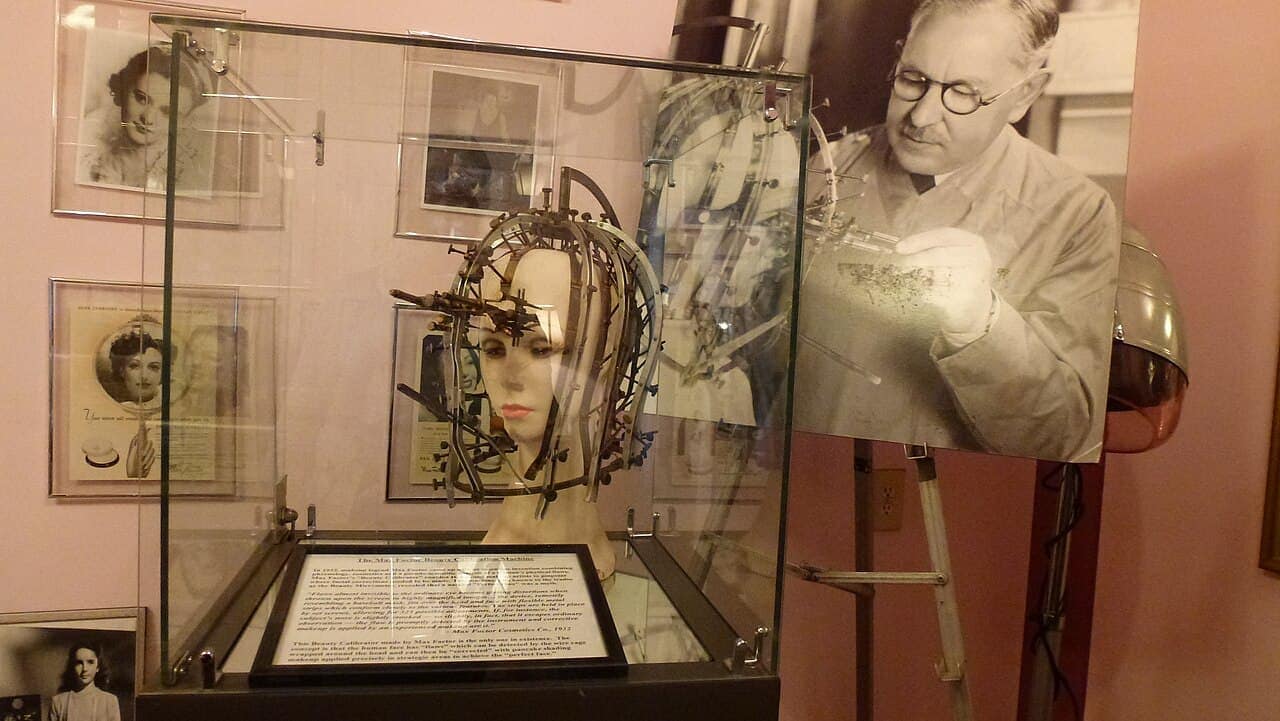
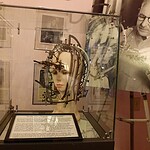
Max Factor was a Hollywood make-up artist who coined the term "makeup" and developed the cosmetics industry into what it is today. He also invented the Beauty Micrometer in 1932. It was a machine that employed flexible metal rods, set screws, and 325 individually calibrated measuring points to detect facial flaws with an accuracy of one-thousandth of an inch.
The Beauty Micrometer, or Beauty Calibrator as it was known at the time, was worn around the head and calibrated to map all deviations from what Factor considered to be the perfect proportions. According to these standards, the nose should equal the forehead in height, and the eyes should be one eye-width apart. The flaws detected by the machine could then be corrected with make-up.
The machine appeared in Popular Science in February 1933 and in Modern Mechanix in 1935. Factor wanted to install the machines in beauty parlors across the world, but only one was ever built.
Smell-O-Vision and the iSmell (1960 / 1999)
Created by Hans Laube, the Smell-O-Vision premiered in the theatrical debut of Scent of Mystery in 1960. The system released 30 distinct scents through multiple tubes connected to theater seats when triggered by audio cues in the film. According to a Variety review, the smells were delivered with an audible hissing noise, and audience members sitting in the balcony received their scents several seconds after the corresponding event in the movie had already passed. The movie was panned. Smell-O-Vision was never tried again.
Four decades later, during the dot-com boom, the startup company DigiScents raised $20 million to develop the iSmell, a shark-fin-shaped peripheral device plugged into the computer's USB port, holding 128 basic scents, which would be released whenever the user logged on to a website or read an email. DigiScents managed to get partnerships with Sony, Microsoft, Procter & Gamble, and Unilever before going bust in late 2001. Later, PC World listed it among the worst tech products ever invented, observing that not many products "literally stink," but this one did.
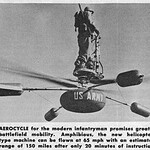
The de Lackner HZ-1 Aerocycle (1955)
In the 50s, the U.S. Army believed that tactical nuclear weapons would soon be used alongside ground forces in combat. Their vision of what was called the atomic battlefield was one where soldiers would have the ability to fly individually without being qualified pilots. They would sweep across the terrain where other means of transportation were not viable.
The de Lackner HZ-1 Aerocycle was supposed to make that vision come true. Soldiers would stand atop an open deck directly above two counter-rotating rotor blades, with no protection from said blades except the soles of their shoes. The soldiers controlled the aerocycle's movements by shifting their body weight.
The Aerocycle was designed to be flown after 20 minutes of training and it was meant to be used for reconnaissance missions. Twelve units were ordered. During trials at Fort Eustis however, the rotor blades intermeshed and shattered in two separate mid-air crashes. Other tests also showed that at higher speeds, the craft became impossible to control. The whole project was scrapped in 1956, perhaps the least surprising outcome of one of the most bizarre experiments in military aviation history.
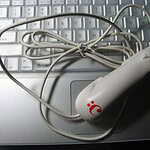
The :CueCat (2000)
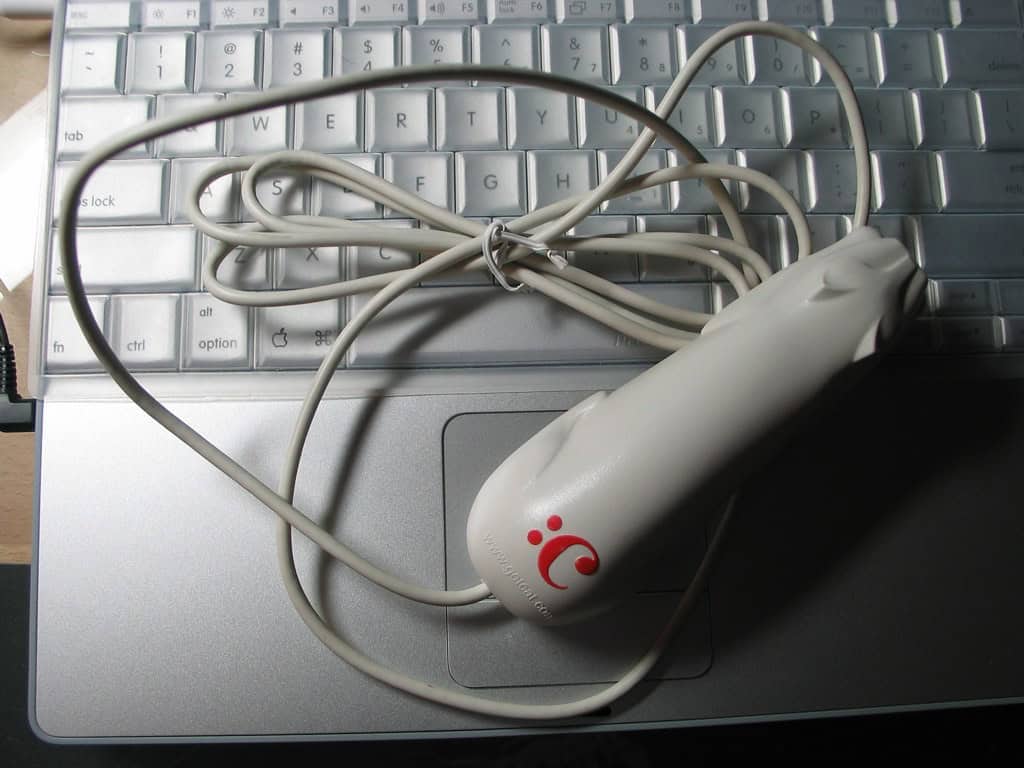
The :CueCat (with the colon being part of the official brand name) was a plastic barcode reader shaped like a cat. It was distributed free to internet users by Digital Convergence Corporation in 2000. The idea was that people reading magazines would keep the device on their desk and scan barcodes found in magazine ads, being taken directly to the corresponding web page instead of having to type the URL manually.
The :CueCat was distributed through Radio Shack and embedded in magazines such as Forbes, Wired, and The Dallas Morning News. Despite the company having received $185 million in funding from investors and having secured significant partnerships, the :CueCat quickly fell out of use.
Walt Mossberg of The Wall Street Journal said that it "fails miserably" on the core principle of convenience. By 2001, it became clear that the barcodes were no longer being distributed and that searches were returning no results. Today, the :CueCat sits on a pedestal in the Museum of Failure in Helsingborg, Sweden, where it is labeled an "epic dot-com failure," as close to a legacy as it has.
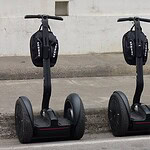
The Segway (2001)
Until it was released to the public in December 2001, the device was known only by its codename "Ginger," and speculation had grown to a fever pitch. Steve Jobs predicted that it would be "as big a deal as the PC." Jeff Bezos stated that it was one of the "most famous and anticipated product introductions of all time." Meanwhile, venture capitalist John Doerr believed that the product would achieve billions of dollars in revenue faster than any company before it.
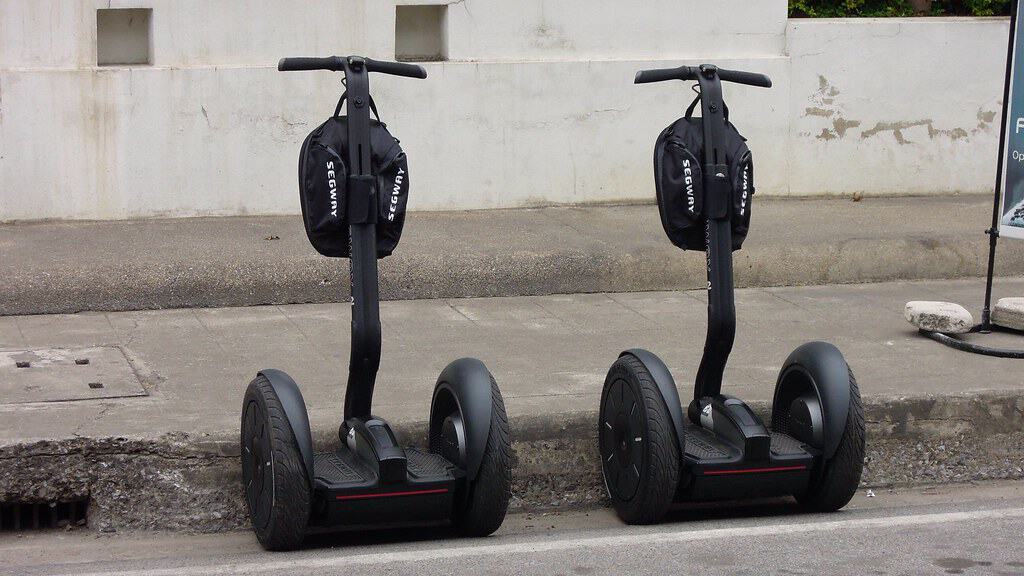
What they got was the Segway, a self-balancing two-wheeled scooter that sold for $5,000. It was too fast for sidewalks and too slow for roads. Over time, the Segway became synonymous with mall security guards and tourists wearing unflattering helmets. Jimi Heselden, the British entrepreneur who purchased the company in December 2009, died nine months later after losing control of his off-road Segway and falling into the River Wharfe.
The Nintendo Virtual Boy (1995)
Nintendo released the Virtual Boy in July 1995 in Japan and August 1995 in North America. This device was promoted as the first video game system with stereoscopic 3D graphics. Users of the Virtual Boy placed their heads into a binocular eyepiece mounted on a tabletop platform and stared at moving graphics in black-and-red colors. The red color was chosen simply because red LEDs were cheaper than other colors. According to Nintendo's instructions, players were advised to take breaks every 15 to 30 minutes due to eye fatigue and headaches.
The concept was similar to modern virtual reality headsets, but it was constrained by a tabletop design. The device had to be anchored to a surface, forcing users into a fixed seated position with their head locked into the eyepiece. This made it uncomfortable to use for extended periods and gave the system a bulky, awkward appearance. The Virtual Boy was withdrawn from the Japan market in December 1995, only five months after its launch, and discontinued in North America shortly after. Total sales across both markets reached approximately 770,000 units.
In February 2026, Nintendo relaunched the device as a Switch peripheral featuring new games and new hardware. It was priced at $99 and sold out instantly, suggesting that the concept was sound, but the timing in 1995 was not.
Nabaztag (2005)
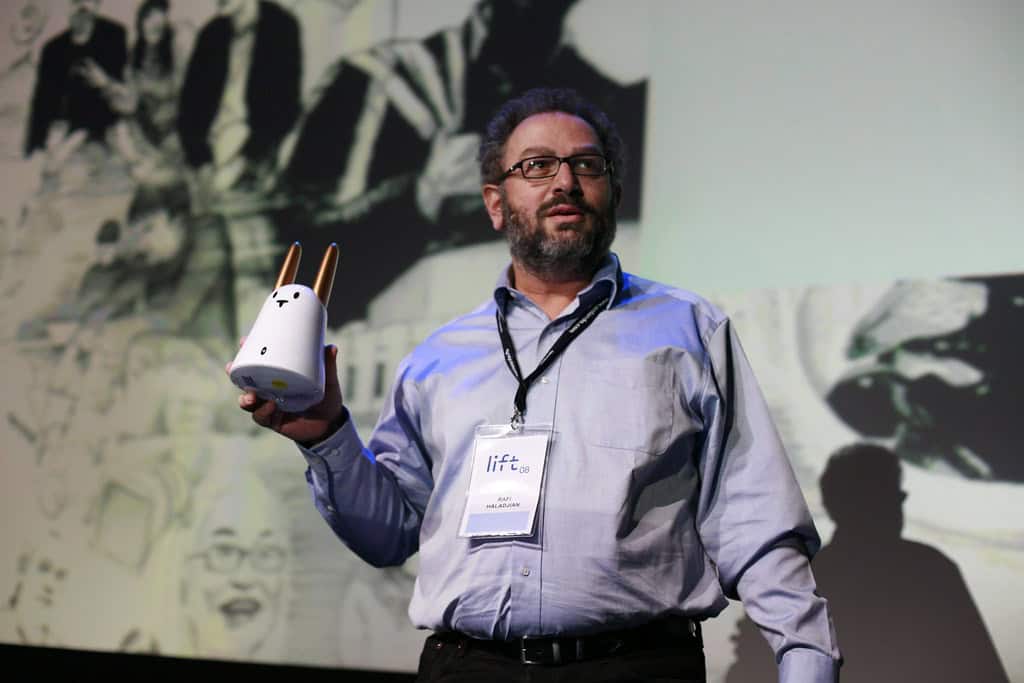
The Nabaztag was a 9-inch-tall Wi-Fi enabled plastic rabbit. It had a computer-generated voice that delivered email updates, stock quotes, weather forecasts, and RSS feeds. It came complete with rotating ears and light-emitting diodes that changed color depending on the type of update.
The device was developed by the French company Violet and released to the public in 2005. It was marketed as the first ambient home assistant and one of the early iterations of the Internet of Things (IoT). It sold out its initial run of 5,000 units within 10 days, and Violet went on to develop three versions of the device over seven years.
The Nabaztag gradually fell out of use, and in 2011 the company decided to shut down its servers. From that moment onward, every Nabaztag became a lifeless white plastic statue sitting idly on someone's shelf.