David Eulitt / Getty Images

Public Domain / Wikimedia Commons
Jamie Squire / Getty Images


Roy Rochlin / Getty Images Entertainment via Getty Images
Jamie Squire / Getty Images Sport via Getty Images

Kent Nishimura / Getty Images Sport via Getty Images

Jamie Squire / Getty Images Sport via Getty Images
Doug Pensinger / Getty Images Sport via Getty Images
Sean M. Haffey / Getty Images Sport via Getty Images
Jeff Bottari / Getty Images Sport via Getty Images

Jeff Vinnick / Getty Images Sport via Getty Images

Lance King / Getty Images Sport via Getty Images





These Sports Teams Defy Calls to Change Controversial Names
Sports teams across all platforms have been criticized for their outdated use of controversial team names in recent history. These names often reflect other cultures and depict them in negative ways, particularly the Native American community, which many consider to be dehumanizing and ethnic stereotyping. While numerous organizations have changed their names and mascots, others still refuse to budge.
Since 2005, some NCAA athletic programs have removed Native American-themed names and symbols after the collegiate sports association said it would ban this imagery from postseason tournaments. The NCAA has said teams using generic terms like "tribe" and "braves" are acceptable as long as they aren't paired with native imagery. They also allow athletic programs to use names of specific local tribes if the schools have obtained permission from them.
24/7 Tempo gleaned information from archived news articles to compile a list of sports teams with names that have come under fire over the years for various reasons, including cultural appropriation. Teams who have already changed names, such as the Washington Commanders, were excluded.
Here are college sports teams that continue to use controversial names.
This post was updated June 16th, 2025, to reflect additional information.
Alcorn State Braves and Lady Braves
- Sport/League: College Basketball
- Location: Alcorn State University, Alcorn, Mississippi
This historically black college is a holdout against the 2005 NCAA ban on the use of Native American mascots, nicknames, and related images in postseason tournaments. Local sports writers have often referred to the college campus as "the reservation." The college stopped calling its arena the "Scalpin' Grounds" in 1993, however, and no longer uses an Indian-head logo similar to the one used by the since-renamed Washington Redskins football team until 2020.
Atlanta Braves
- Sport/League: MLB
- Location: Atlanta, Georgia
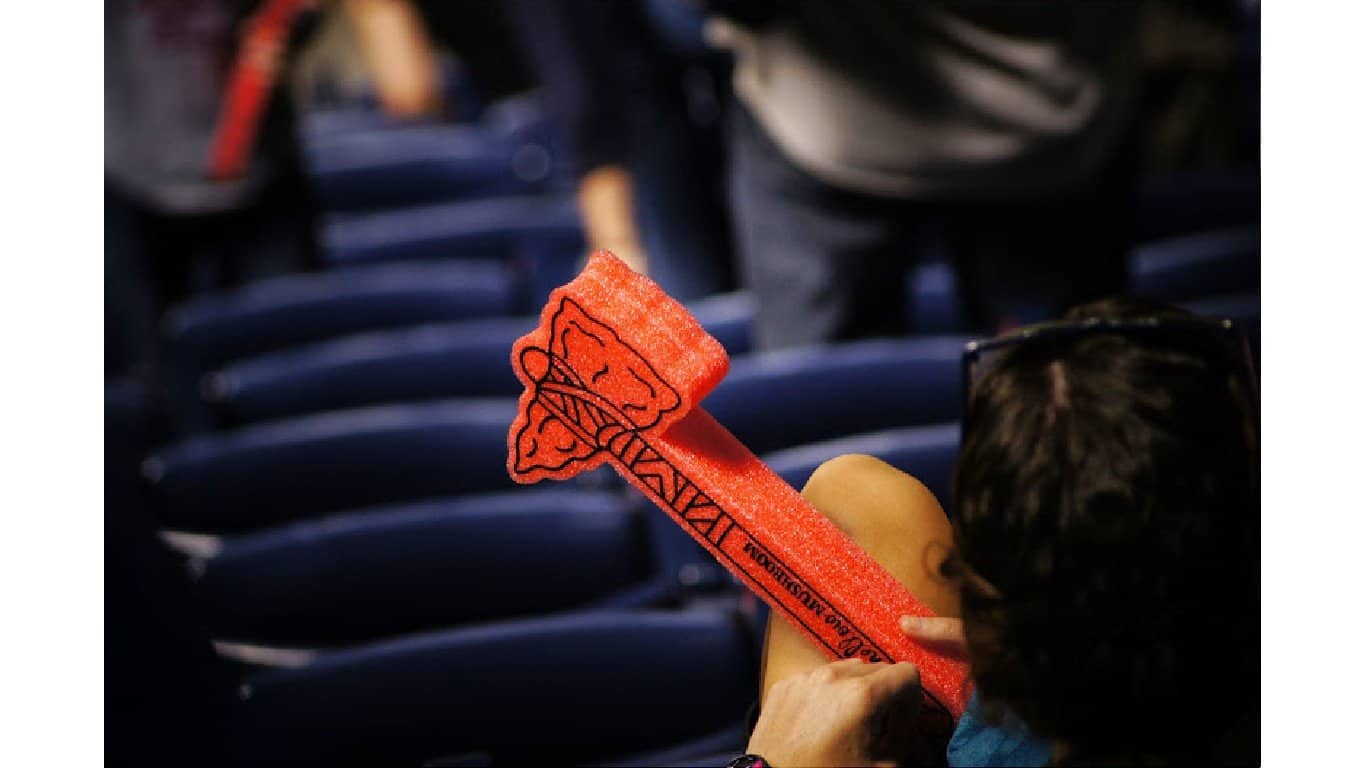
The Atlanta Braves have decided not only to keep their name and logo but also support the "tomahawk chop" celebratory cheer and gesture that Atlanta fans copied from fans of the Florida State University Seminoles football team. MLB Commissioner Rob Manfred defended the decisions, citing the team's "phenomenal job with the Native American community," according to USA Today. In 1985, the Atlanta Braves retired Chief Noc-A-Homa, an "Indian" mascot who used to reside in a teepee in the bleachers.
Bradley Braves
- Sport/League: College Basketball
- Location: Bradley University, Peoria, Illinois
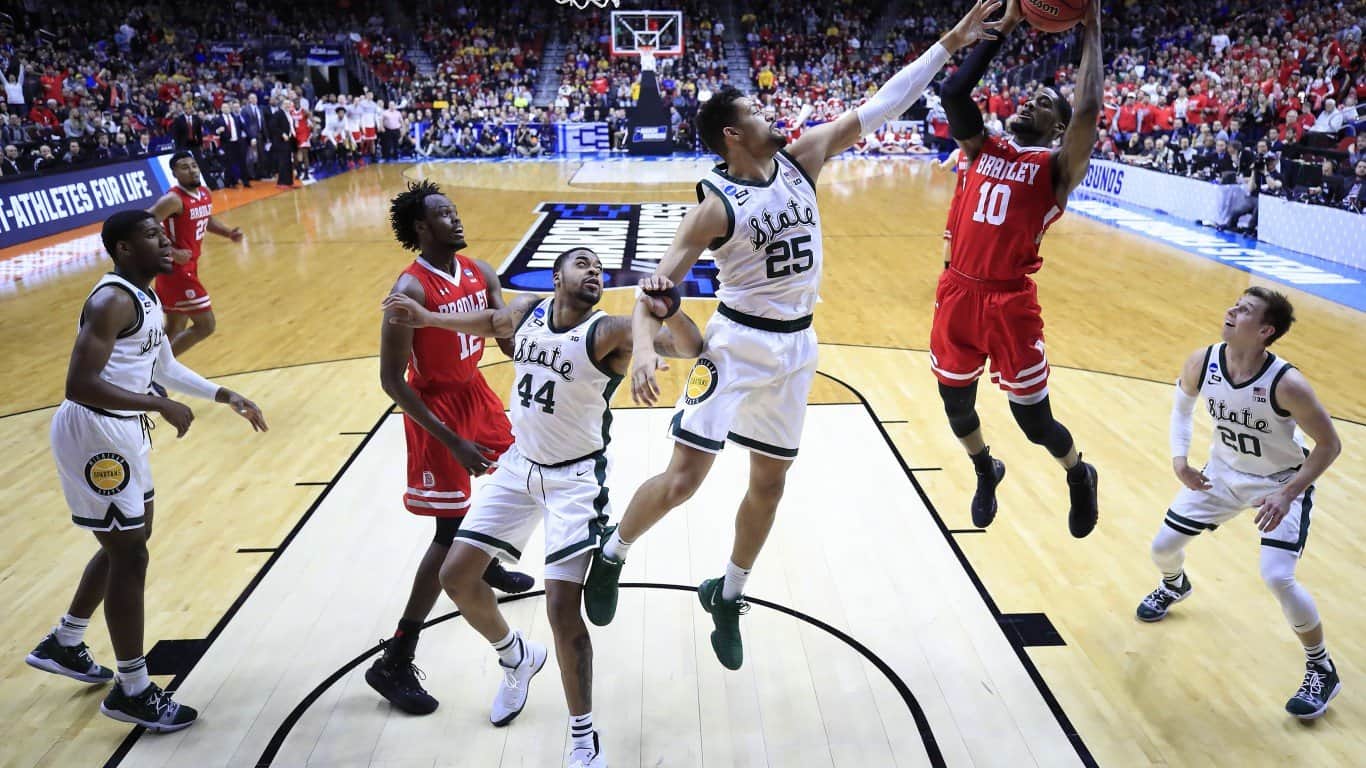
In 1992, according to the university's website, Bradley University removed all Native American imagery from its athletic program. It changed its mascot to a bobcat, but that never gained traction with its fans, so in 2014, it introduced a gargoyle mascot – a nod to the stone statues that decorate the college's signature building – named Kaboom!, a reference to a local sports announcer's oft-used phrase. Bradley says it has kept the "Braves" name, however, claiming that it's "non-specific to a particular tribe" and is not "hostile or abusive."
Catawba Indians
- Sport/League: College Football
- Location: Catawba College, Salisbury, North Carolina
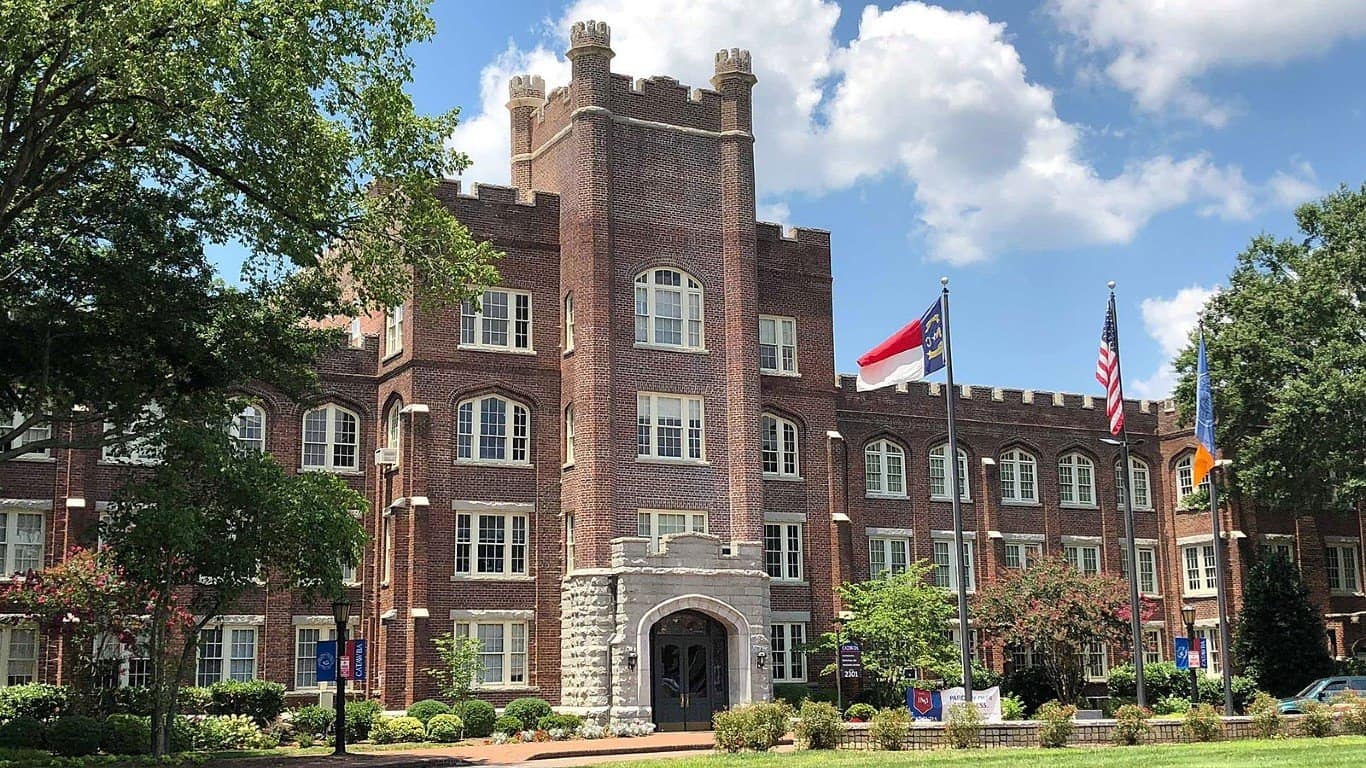
Catawba College is named after a local Native American tribe, which doesn't object to the use of its name. The NCAA accepts "Indian" so long as the tribal name is included but there is still reportedly some disagreement among tribal leaders about the use of the term "Indians." NCAA senior vice president Bernard Franklin told the Associated Press that the NCAA "recognizes that a Native American tribe is a distinct political community." The college changed its logo to remove images of feathers, a common symbol used to represent Native Americans.
Chicago Blackhawks
- Sport/League: NHL
- Location: Chicago, Illinois
The Chicago Blackhawks hockey team has defended the use of its nickname because it refers to and honors a historical figure from the Illinois Sac & Fox tribe. Chief Black Hawk was a warrior who sided with the British in the War of 1812, leading attacks against settlers in what is now Illinois and Wisconsin. The team didn't take the nickname directly from the warrior chief, however.
According to CNN, it was the nickname of the 86th Infantry Division during World War II, in which the team's original owner, Frederic McLaughlin, served as a commander.
DePaul Blue Demons
- Sport/League: College Basketball
- Location: Chicago, Illinois, DePaul University
DePaul University is one of two schools on this list that mulled removing a name due to religious objections to naming a team after minions of Satan. In 1998, the university was poised to rebrand teams but backed off after an outpouring of support for the name, its devil logo, and its demon mascot. According to the New York Times, another reason why the university considered the change was to rebrand the basketball team amid a late-90s losing streak.
Duke Blue Devils
- Sport/League: College sports
- Location: Durham, North Carolina, Duke University
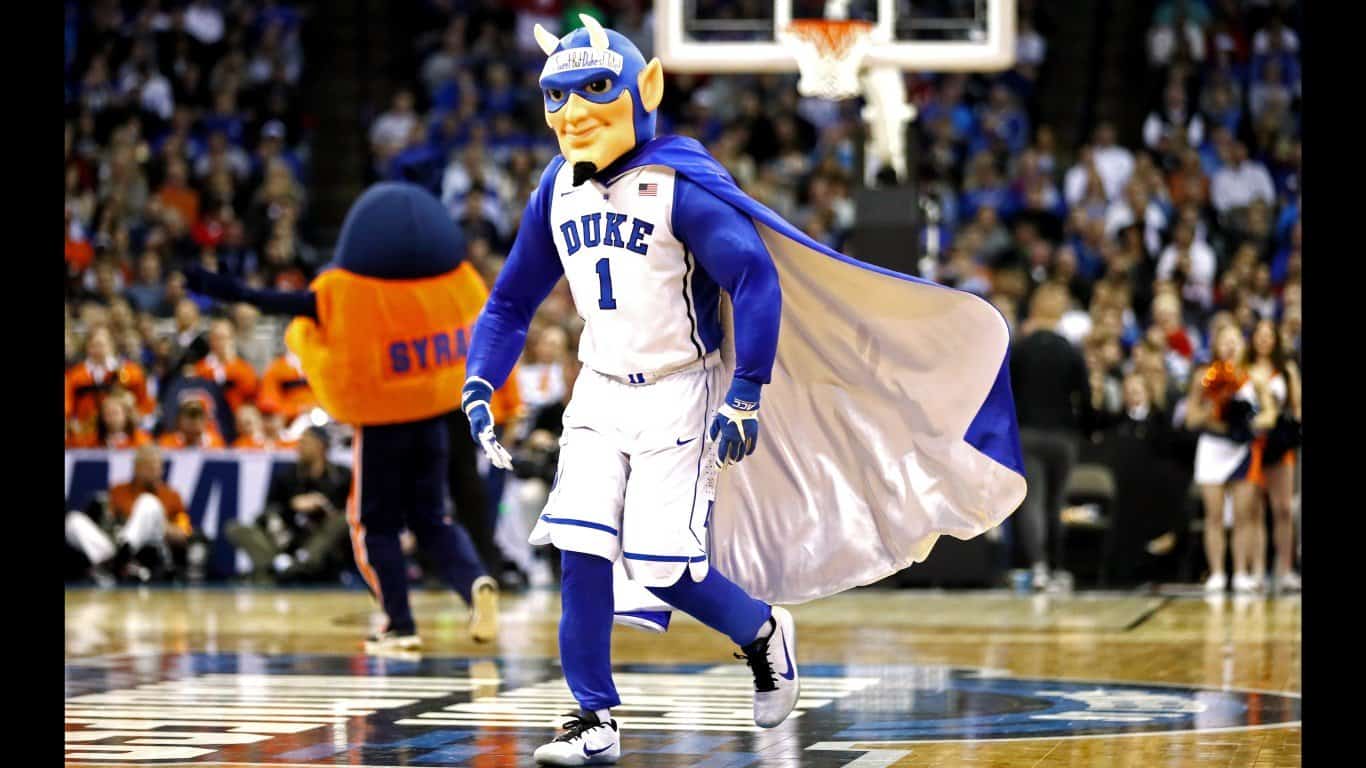
Like DePaul University's Blue Demons, Duke's Blue Devils have seen their mascot become the subject of religious-based objections. An international Christian Group called The Resistance said in 2008 that the school should not use devil imagery in its athletic program. "If the team were named the Blue Nazis would that be ok?" asked the group's spokesperson Mark Dice at the time. "There would be outrage across the country."
Hawaii Rainbow Warriors
- Sport/League: College Football
- Location: University of Hawaiʻi at Mānoa, Honolulu, Hawaii
In 2000, the university removed "Rainbow" from its football team, pointing to the rainbow as a gay pride symbol (the nickname originated in 1923 when a rainbow appeared over the field during an upset victory against Oregon State). "That logo really put a stigma on our program," Hugh Yoshida, who was head of the university's athletic program at the time, told the Washington Post. The decision angered local gay rights advocates. In 2013 the university backed away from removing "Rainbow" from all of its men's teams.
Illinois Fighting Illini
- Sport/League: College Basketball
- Location: University of Illinois Urbana-Champaign, Champaign, Illinois
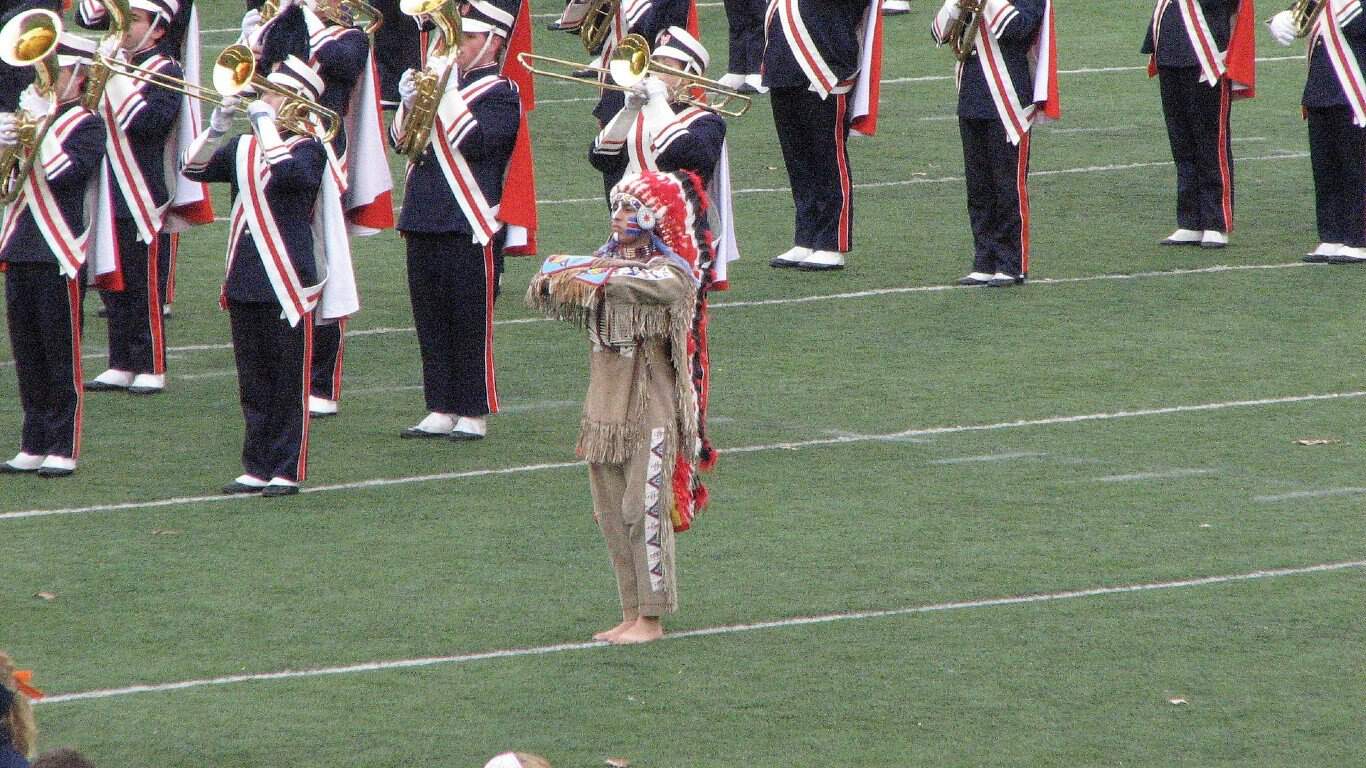
The word "Illini" is shorthand for "Illiniwek," referring to the Illinois Confederation of Algonquin tribes that lived in present-day Illinois. According to the sports news website FanSided, the name first appeared in a university newspaper in the early 1870s, though its exact origin is unknown. The school's sports teams began using the term in 1907 and the term "fighting Illini" was first used in a basketball game in March 1911.
In 2007, the university scrapped its Chief Illiniwek logo, depicting a Native American wearing an elaborate feather headdress.
Kansas City Chiefs
- Sport/League: NFL
- Location: Kansas City, Missouri
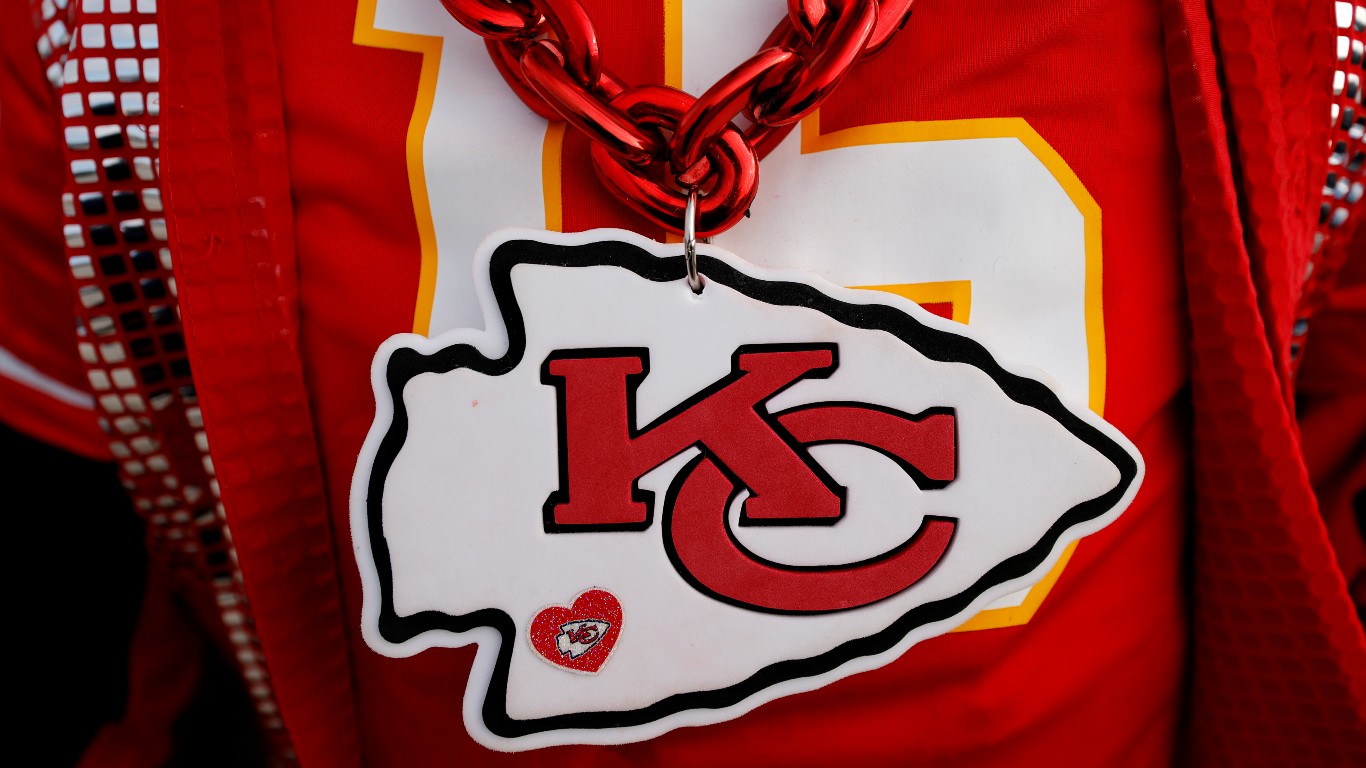
Like fans of the Florida State University Seminoles and the Atlanta Braves baseball team, Kansas City Chiefs fans have adopted the "tomahawk chop" celebratory cheer. Akin to the Braves, the Chiefs continue to use a name that some indigenous activist groups and their supporters say is cultural appropriation. The team's name and use of Native American imagery have enabled local businesses to follow suit.
The Kansas City Indian Center said, "Our youth are subjected to advertisements on radio, TV, and marketing displays in every grocery store, including pork chops advertised as the 'tomahawk chop' and 'Can't Stop the Chop' ads featuring football fans singing the stereotypical song." In 2021, the Chiefs removed Warpaint, the team's horse mascot, and banned fans from wearing Native American costumes.
Ole Miss Rebels
- Sport/League: College sports
- Location: University of Mississippi, Oxford, Mississippi
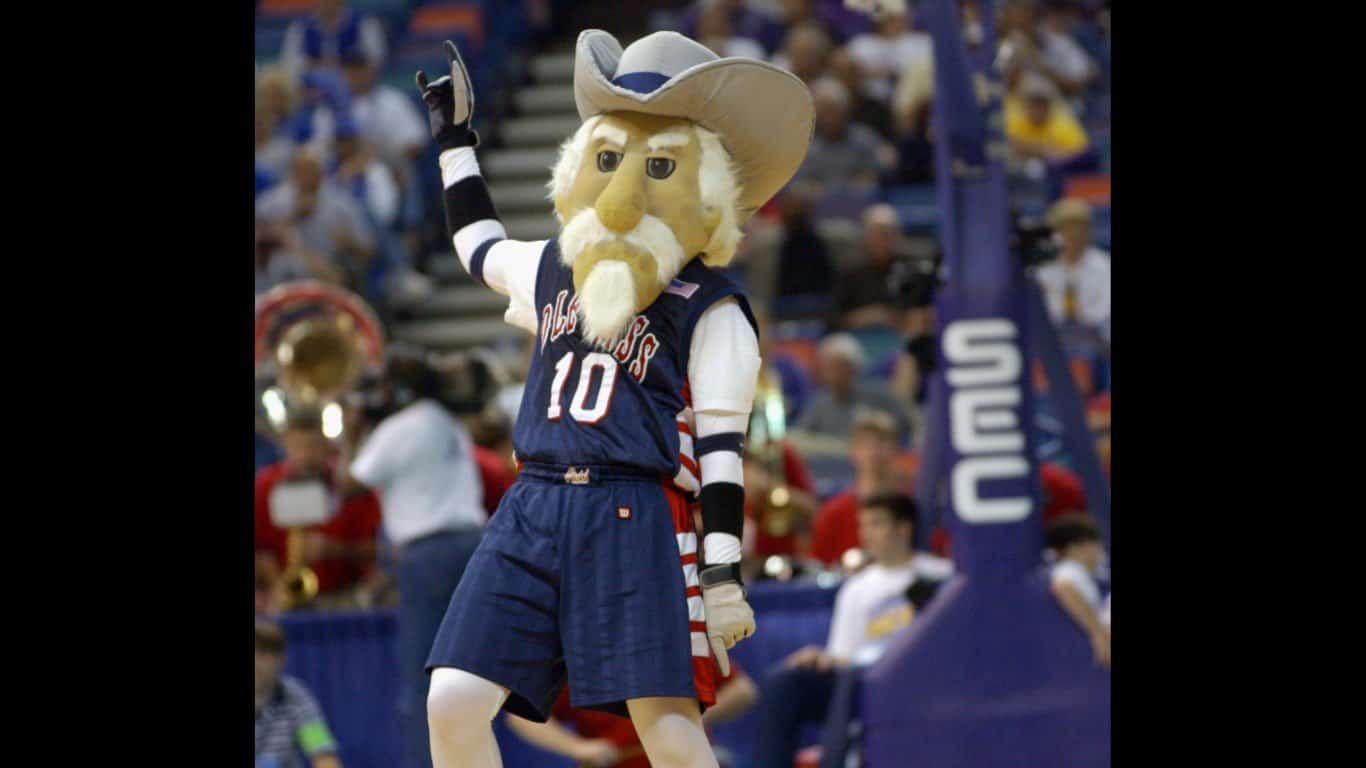
For more than a century, the University of Mississippi's main campus has been called "Ole Miss." While it seems like a harmless shorthand for "Old Mississippi," the term originated as a nickname used by slaves to refer to a slave master's wife. The university's team nickname "Rebels" is a nod to the Confederate secessionist soldiers of the Civil War.
USA Today sports columnist Dan Wolken wrote in 2020 that Ole Miss fans should think about the future when "this country finally and uniformly treats the losers of the Civil War as losers." In the 1990s, the university banned the Confederate Flag and in 2003 it dropped the Colonel Reb mascot that depicted a caricature of a Southern plantation owner.
San Diego Padres
- Sport/League: MLB
- Location: San Diego, California
After the Washington Redskins changed its name to the Washington Commanders in 2020, other teams with problematic names were targets of debate, including the San Diego Padres baseball team. Padre is Spanish for "father," but also refers to a Catholic priest. Some of these religious men set up missions and schools across the American Southwest, at which indigenous peoples were often forcibly converted and otherwise mistreated.
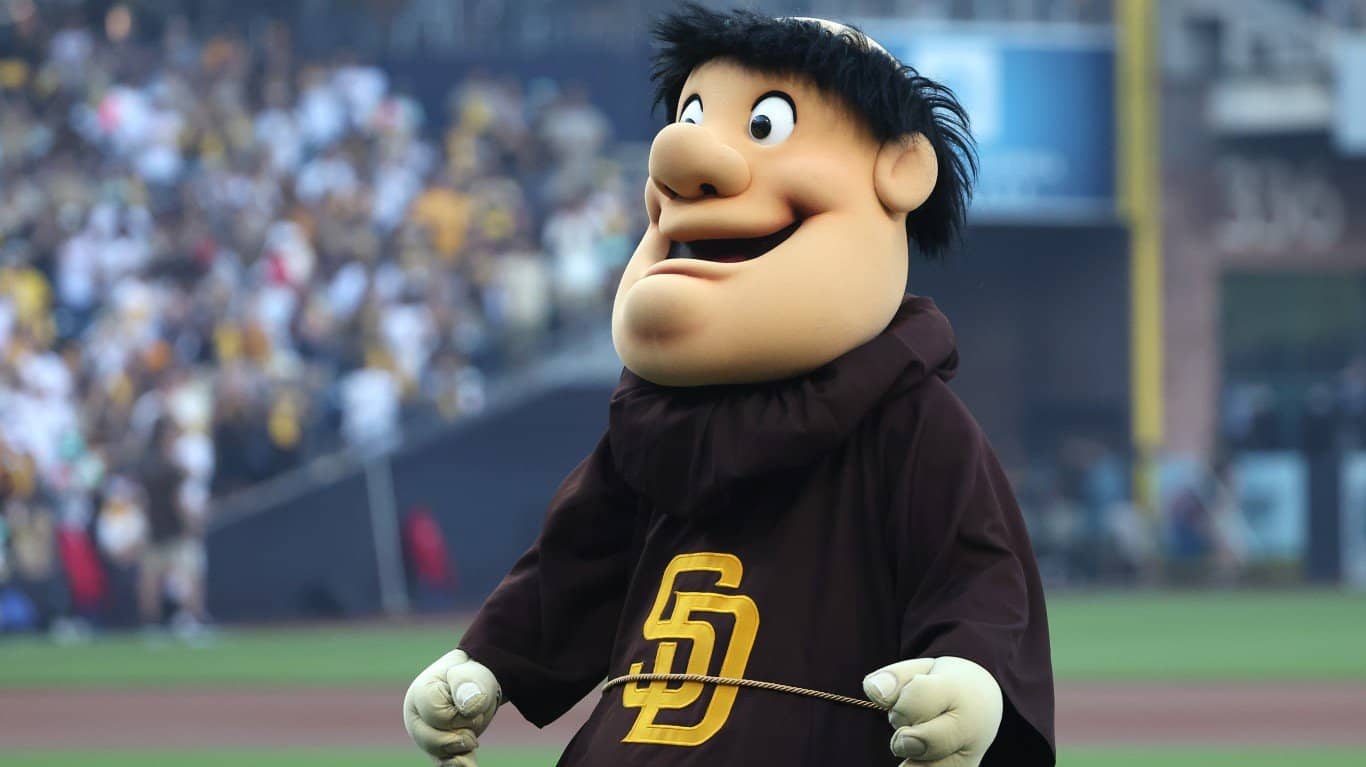
A group of Catholic leaders called for a name change in 2020 and asked the team to scrap the "Swinging Friar" mascot, a caricature of a robed friar with a tonsure haircut.
San Diego State Aztecs
- Sport/League: College sports
- Location: San Diego, California, San Diego State University
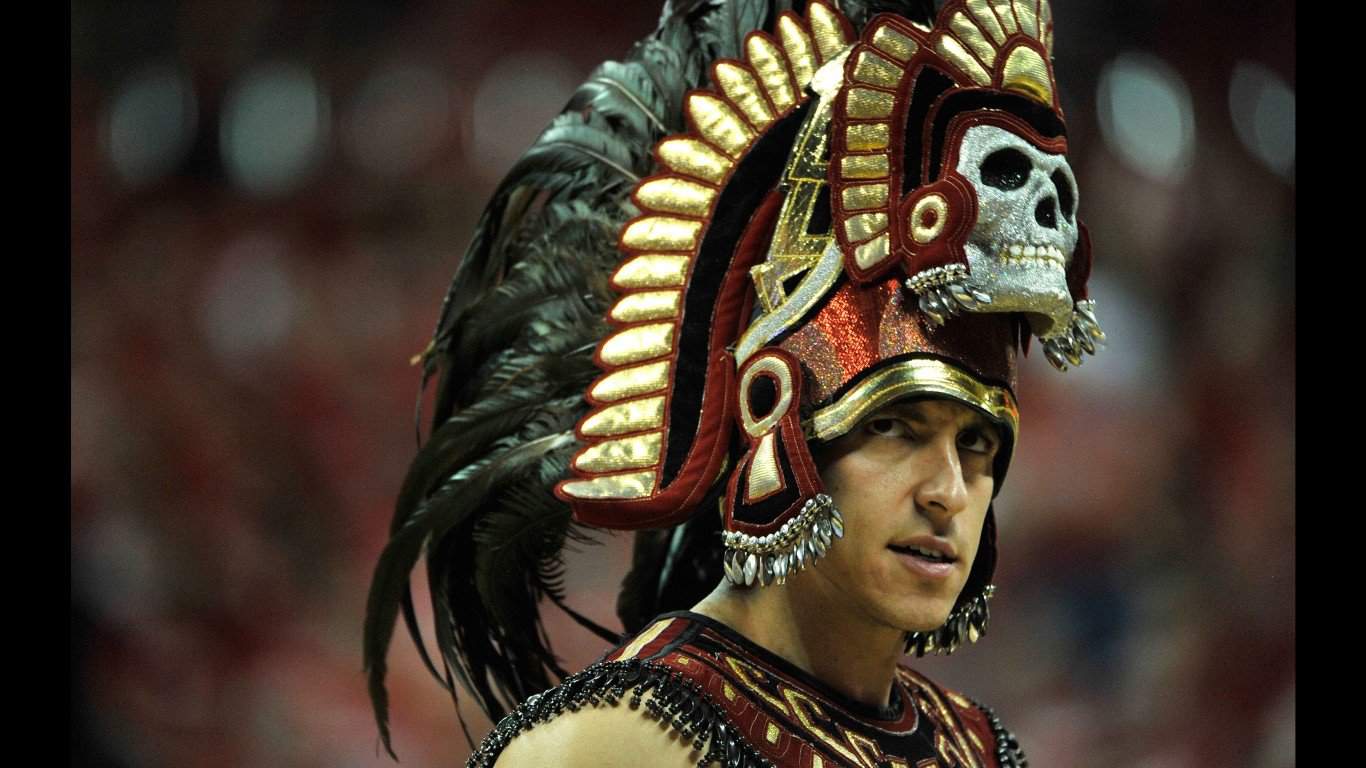
The San Diego Aztecs have been subject to similar criticisms for using the name of the pre-Columbian Native American ethnic group of Central Mexico, as well as a fight song referencing Montezuma II, the Aztec king killed by Spanish soldiers during the conquest of Mexico in the early 16th century. The university has mulled banning the Aztec Warrior, an unofficial mascot consisting of a student dressed in a traditional Aztec costume, but the SDSU website says it will retain it as a "spirit leader," but will "not refer to the Aztec Warrior as a 'mascot'."
Vancouver Canucks
- Sport/League: NHL
- Location: Vancouver, Canada
The Canucks main logo depicts a killer whale in the artistic style of the Haida, an Indigenous group whose traditional homeland is on islands off the coast of British Columbia known for their totem poles and other wood carvings. The whale logo has been the team's brand since 1997, but it has been criticized by some for cultural appropriation and for the fact that the team did not consult with indigenous groups before adopting it.
"As a Canucks fan and a historian of Indigenous-settler relations in BC, the orca logo is, without a doubt, cultural appropriation," tweeted Sean Carleton, a University of Manitoba history professor, in 2020. (In addition, the term "Canuck," while often used affectionately to describe Canadians and especially French Canadians, is sometimes considered derogatory.)
William & Mary Tribe
- Sport/League: College Basketball
- Location: College of William & Mary, Williamsburg, Virginia
In 2004, the NCAA requested that William & Mary and other schools determine if Native American imagery or nicknames were hostile or abusive. While the NCAA ruled that the use of "tribe" was not offensive, it said the school should stop using feathers in its athletic logo. William & Mary unsuccessfully appealed the decision and has since replaced that logo, but it has kept the "Tribe" name.
Feathers hold particular spiritual significance to many Native groups, roughly similar to the symbolism of a Christian cross or other religious iconography.