














The 7 Most Powerful Hurricanes Ever Recorded
Hurricanes are some of the most destructive forces on the planet, with the ability to reshape entire coastlines in a matter of hours. While many storms cause damage, a handful have reached levels of intensity that set them apart from the rest.
From extreme wind speeds to catastrophic impacts, these hurricanes pushed the limits of what these storms can do. Their strength, timing, and location all played a role in how devastating they became.
Here are seven of the most powerful hurricanes ever recorded and what made them so significant.
Fueling Factors
Several factors contribute to a hurricane growing larger and more destructive. Warm ocean water is the primary fuel for hurricanes; the higher the sea surface temperature, the more energy the storm can draw, intensifying its strength. Low wind shear, which is the variation in wind speed and direction with altitude, allows the storm to grow without disruption. High humidity in the mid-troposphere also supports storm development by maintaining the moisture needed for cloud formation.
Additionally, the Coriolis effect, due to the Earth's rotation, helps the storm to spin and maintain its structure. Lastly, the presence of favorable atmospheric conditions, such as a well-established outflow channel, aids in the efficient release of built-up energy, allowing the hurricane to expand and become more powerful.
Hurricane Fifi of 1974
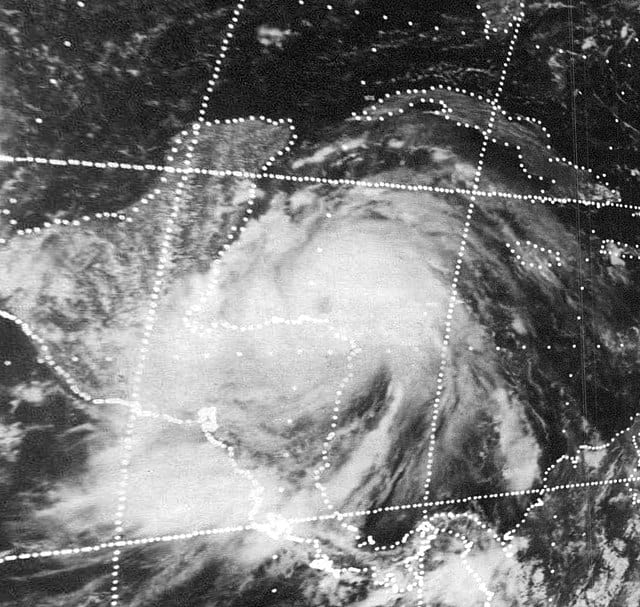
Hurricane Fifi, subsequently named Hurricane Orlene, killed more than 8,000 in Honduras in 1974. The 1780 hurricane and Hurricane Mitch were deadlier. Fifi is the first billion-dollar hurricane that missed the U.S. On September 14th, a strong tropical wave swept through the eastern Caribbean. Fifi formed on September 16th off of Jamaica.
The next day, the storm became a hurricane. On September 18th, it was a powerful Category 2 storm. Fifi impacted Honduras as a hurricane. The next day, it hit Belize. The storm rapidly lost strength and became a depression on September 20th. As the former hurricane proceeded west, it interacted with an eastern Pacific system and became Tropical Storm Orlene storm on September 22nd.
Fifi affected nine nations, killing 8,200 and causing $1.8 billion in 1974 dollars ($9.89 billion in 2022 dollars) in damage. The hurricane's 24 inches of rain caused flash flooding and deadly mudslides in Honduras.
Hurricane Mitch
With nearly 11,000 deaths in Central America in 1998, Hurricane Mitch ranks as the second deadliest Atlantic hurricane ever. While Mitch was dubbed "the deadliest Atlantic hurricane" in more than 200 years, the country hit the worst was Honduras. Mitch halted economic growth for 50 years. Around 1.5 million people, or almost 20% of the population, were left homeless due to the storm, which destroyed another 50,000 homes.
Mitch caused $1.8 billion in indirect expenditures and $2.005 billion in direct losses. Crop destruction accounted for a 9.4% decrease in 1999 cash crop exports. Highways and bridges accounted for 70% of the damaged transportation infrastructure. The storm caused widespread power outages and widespread water shortages. A massive landslide destroyed three communities and created a dam in Tegucigalpa.
Hurricane Mitch (cont.)
Honduras asked for aid from other countries, which came to $2.8 billion over several years. By the end of 1998, over 11,000 people were still missing. However, at least 11,374 individuals were confirmed deceased due to severe flooding. Additionally, the hurricane caused almost 2.7 million people to become homeless. The hurricane was projected to have caused $6 billion in total losses (1998 USD).
Great Hurricane of 1780
The deadliest Atlantic hurricane on record was the Great Hurricane of 1780. During the storm's passage through the Lesser Antilles from October 10 to October 16, an estimated 22,000 people perished there. Since the official Atlantic hurricane database only goes back to 1851, specifics regarding the hurricane's path and intensity are unknown.
When the hurricane passed through Martinique, Saint Lucia, and Sint Eustatius, it made landfall there, likely as a Category 5 hurricane with winds estimated to reach almost 200 mph—the highest in recorded Atlantic basin history. Thousands of people died on those islands as a result of the hurricane. The storm, which struck during the American Revolution, damaged the British fleet vying for control of the region and significantly weakened British power over the Atlantic.
The Great Hurricane caused more fatalities than several decades' worth of Atlantic hurricanes combined. The hurricane occurred in October, along with two other deadly storms that were a part of the dreadful 1780 Atlantic hurricane season.
Hurricane Maria
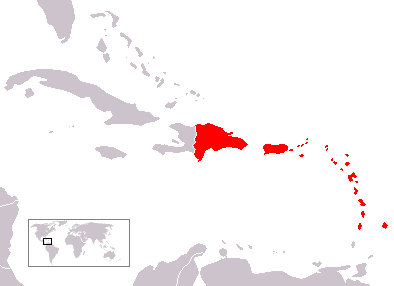
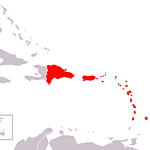
In September 2017, Hurricane Maria struck Dominica, Saint Croix, and Puerto Rico. It was a category five hurricane. It is the worst natural disaster ever to hit those islands. The 2017 Atlantic hurricane season saw Maria become the 13th named storm, the eighth in a row, the fourth significant, and the second Category 5 hurricane. Since Mitch in 1998, Maria was the worst Atlantic storm.
It is the third most expensive tropical cyclone, with most of it affecting Puerto Rico. On September 16th, Maria began to build east of the Lesser Antilles. It quickly turned into a Category 5 storm before making landfall on Dominica, with winds reaching 175 mph. Before it reached Puerto Rico on September 20th, Maria was weakened by an eyewall replacement cycle. Maria weakened and lost strength north of the Bahamas before dissipating on October 2nd.
Hurricane Maria (cont.)
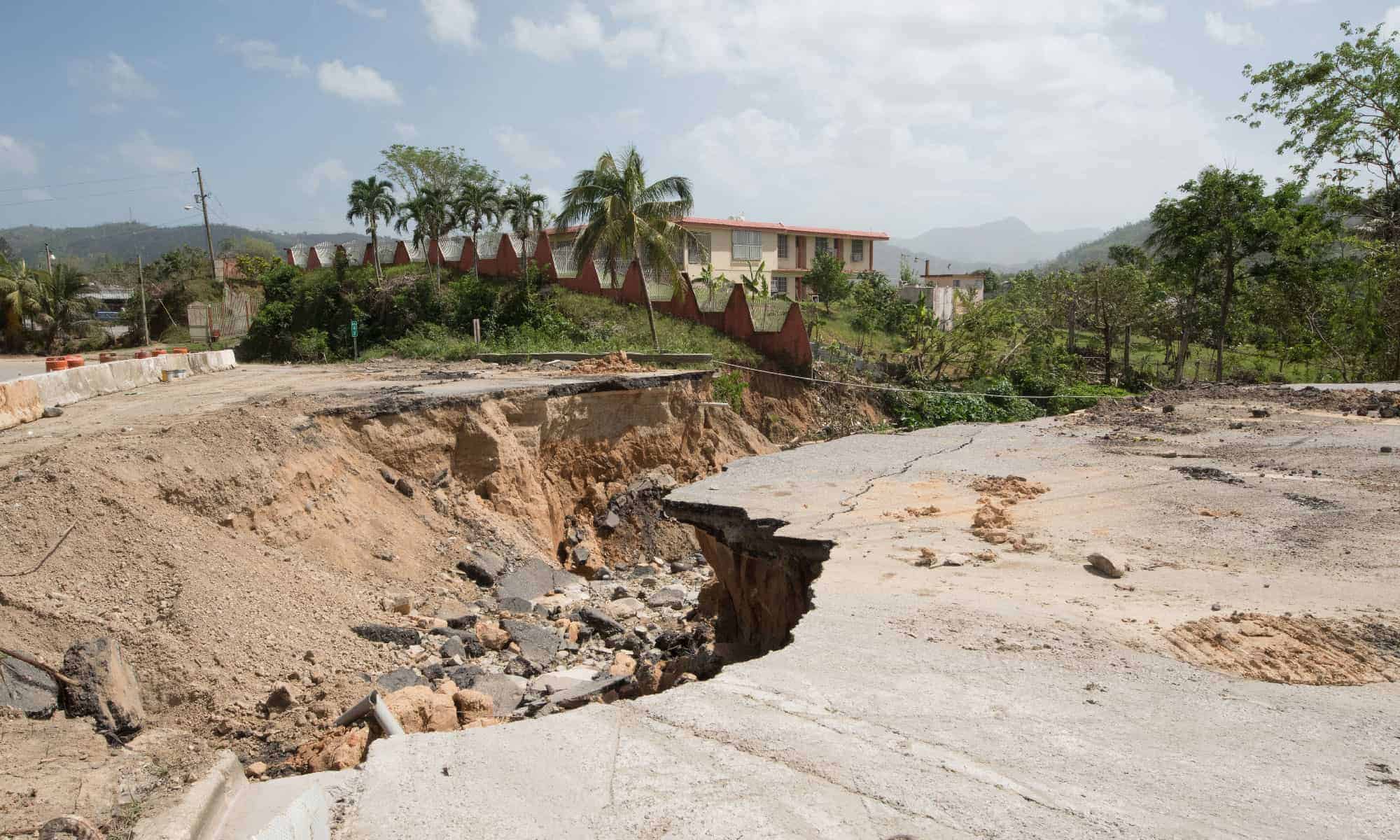
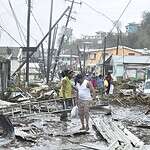
Dominica's housing stock, infrastructure, and vegetation were all damaged by Maria. Martinique and Guadeloupe both experienced water, roof damage, and uprooted trees. Most of Puerto Rico's population experienced flooding, resource shortages, and a slow recovery process. In US history, the storm caused the most prolonged blackout. Total losses are likely to be more than $91.61 billion (2017 USD), making it the third-costliest tropical cyclone on record.
Hurricane Harvey
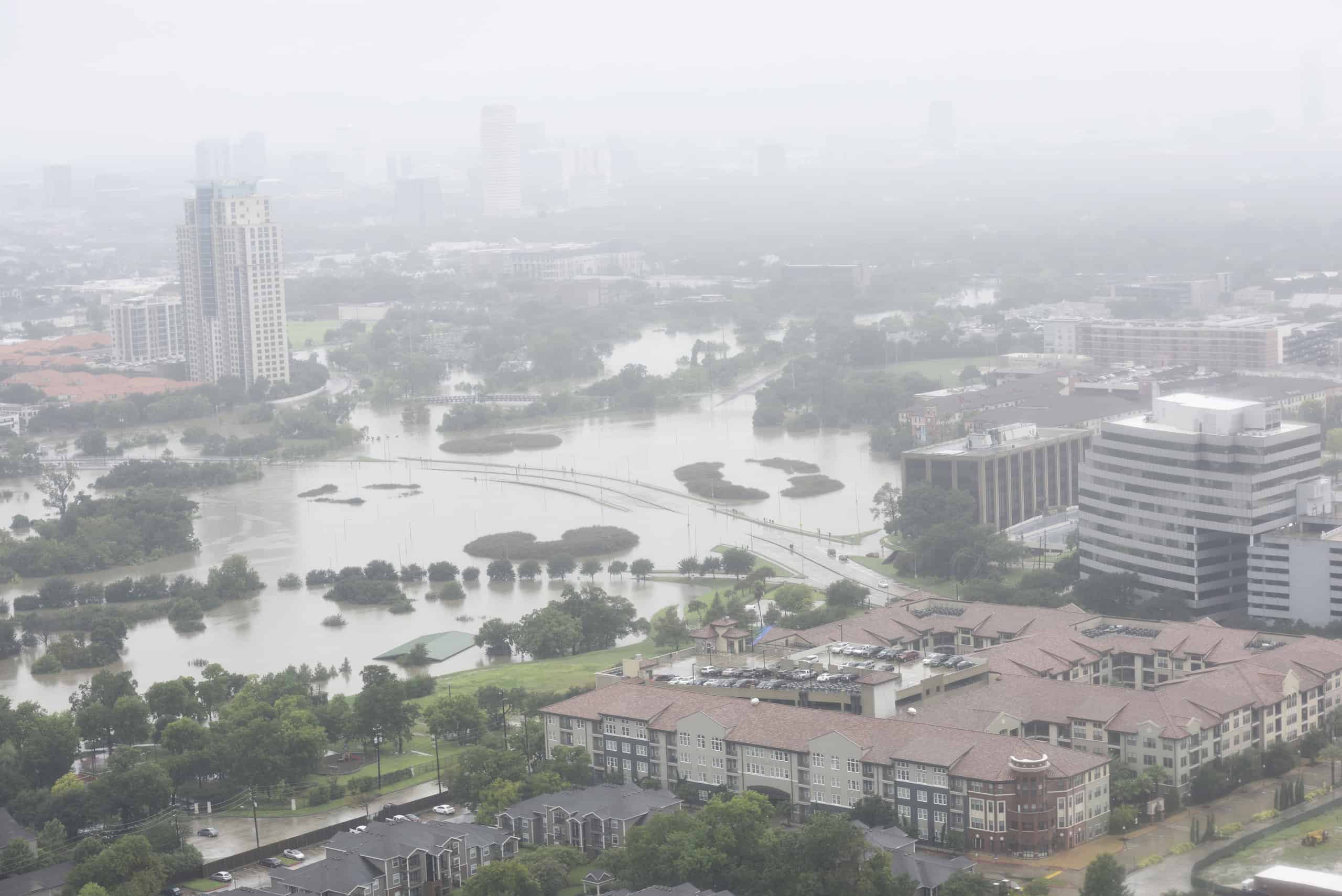
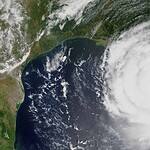
In August 2017, Hurricane Harvey, a deadly Category 4 hurricane, struck Texas and Louisiana, bringing catastrophic floods and more than 100 fatalities. With $125 billion (2017 USD) in damage, primarily from catastrophic rainfall-induced flooding in Houston and Southeast Texas, it is tied with Hurricane Katrina from 2005 as the most expensive tropical cyclone ever.
The storm was also the most costly natural disaster ever to occur in Texas. It ended a record 12-year period in which no hurricanes made landfall with the intensity of a major hurricane across the nation. As the system drifted slowly across eastern Texas and nearby waters over four days. Many regions had over 40 inches of rain, which caused historic flooding.
Hurricane Harvey (cont.)
Harvey set a record for being the wettest cyclone in the history of the United States, with peak accumulations of 60.58 in (1,539 mm) in Nederland, Texas. The flooding caused more than 30,000 people to be forced to leave their homes and more than 17,000 rescue operations.
Hurricane Katrina
In late August 2005, Hurricane Katrina, a powerful and deadly Category 5 Atlantic hurricane, devastated the region, particularly New Orleans and the surrounding areas, with over 1,800 fatalities and $125 billion in damage. It currently shares the title with Hurricane Harvey of 2017 as the most costly tropical cyclone ever recorded.
The storm was the fifth major hurricane and the fourth most intense Atlantic hurricane to hit land in the United States during the 2005 Atlantic hurricane season. The cyclone caused substantial economic damage. The Bush Administration requested $105 billion for repairs and reconstruction in the region, which did not account for the economic damage caused by a potential oil supply disruption, wrecked Gulf Coast roadway infrastructure, or grain exports.
Hurricane Katrina (cont.)
Katrina damaged or destroyed 30 oil platforms and nine refineries; overall shut-in oil production from the Gulf of Mexico. It was about 24 percent of yearly production in the six months following Katrina, and shut-in gas production was roughly 18 percent. The Mississippi woods were destroyed on 1.3 million acres. The forestry business lost $5 billion as a result of Hurricane Katrina. Thousands of residents were out of work. This hurricane caused a lot of damage with its 175 mph wind.
Typhoon Tip
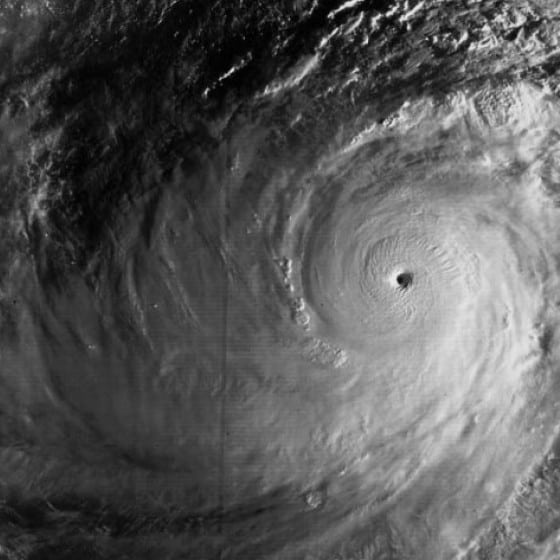
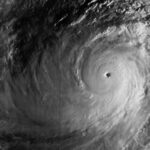
This storm didn't cause as much damage or claim as many lives, but it was the biggest one recorded on the earth. Typhoon Tip, sometimes referred to as Typhoon Warling in the Philippines was the most significant and most powerful cyclone ever seen. Tip formed on October 4th near Pohnpei, Micronesia, from a disturbance within the monsoon trough. Tropical Storm Roger first hampered the formation and motion of Tropical Storm Tip to the northwest, but as the storm moved farther north, Tip was able to intensify.
After crossing Guam, Tip quickly accelerated and, on October 12th, set a record-low sea level pressure of 870 hPa (25.69 inHg) for the whole planet. It also attained peak sustained winds of 190 mph. With a wind circumference of 1,380 miles, or almost the size of Australia, Tip was the most significant tropical cyclone ever recorded at the height of its force.
Typhoon Tip (cont.)
Tip was one of the most intensively watched tropical cyclones thanks to the 60 weather reconnaissance missions conducted by American Air Force planes into the typhoon. At the Combined Arms Training Center, Camp Fuji, in the Japanese region of Shizuoka, rain from Tip indirectly started a fire that claimed the lives of 13 Marines and injured 68 others. The storm also produced significant flooding in other parts of the nation, which resulted in 42 deaths; offshore shipwrecks also left 44 people dead or missing.