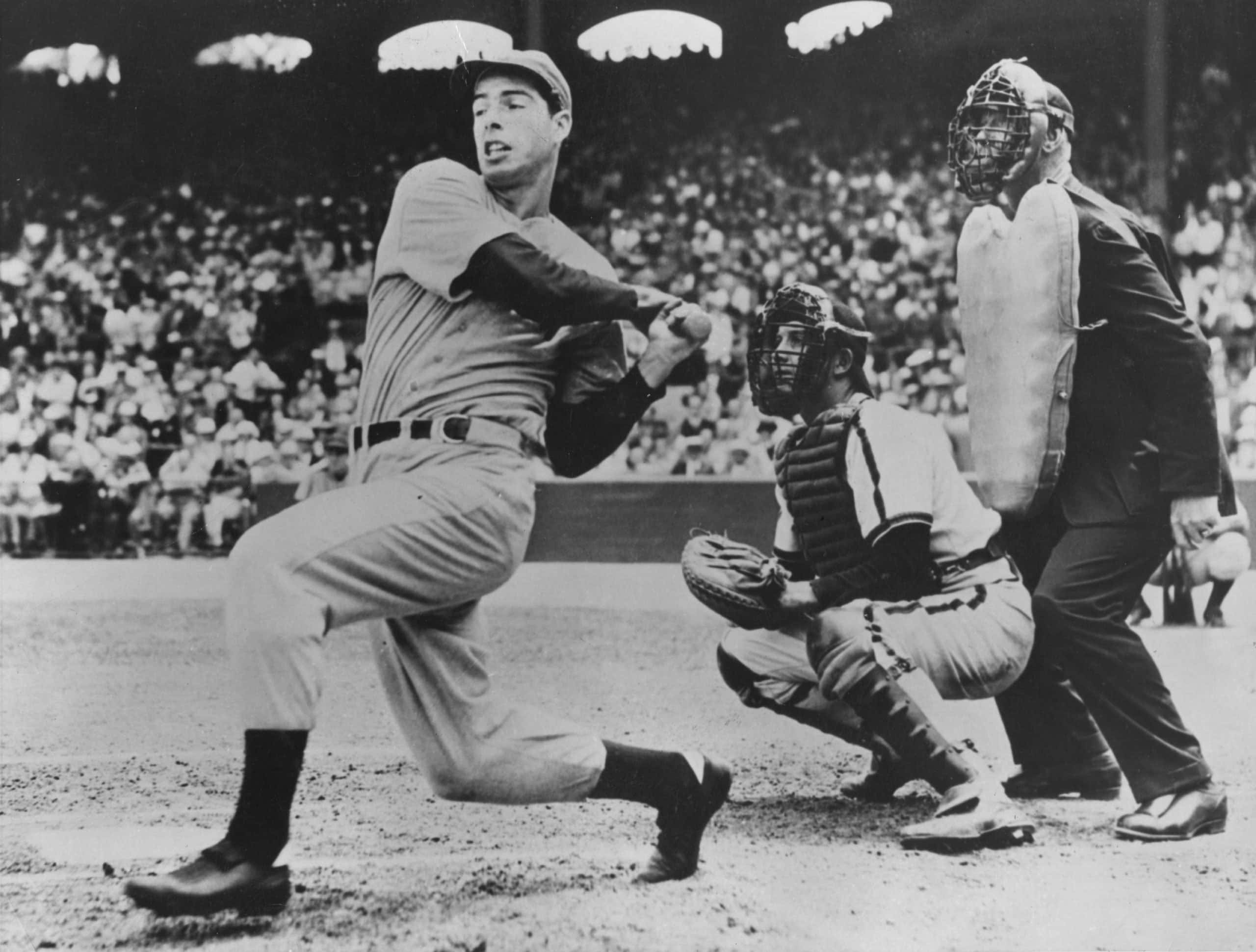
Few baseball players have left a mark on the game quite like Joe DiMaggio. Known as the Yankee Clipper and Joltin’ Joe, the legendary center fielder spent his entire 13-season Major League Baseball career with the New York Yankees, winning nine World Series championships and three American League MVP awards. He also produced one of baseball’s most remarkable achievements in 1941, recording a hit in 56 consecutive games. More than eight decades later, that record still stands.
Born in California to Italian immigrant parents, DiMaggio made his major league debut in 1936 at just 21 years old. His career lasted through 1951, although he missed three seasons while serving in the U.S. Army Air Forces during World War II. He was inducted into the National Baseball Hall of Fame in 1955 and received the Presidential Medal of Freedom from President Gerald Ford in 1977.
But DiMaggio was more than a baseball player. His marriage to Marilyn Monroe, his famously reserved personality, and his place in American popular culture made him one of the most recognizable public figures of the 20th century. While he wasn’t necessarily known for giving elaborate interviews, he left behind some memorable observations about baseball, hard work, competition, and life outside the ballpark.
We’ve collected 15 quotes attributed to Joe DiMaggio, drawing on historical reporting, the National Baseball Hall of Fame, Baseball Almanac, and other published accounts. Some were recorded in contemporary interviews and speeches, while others have been preserved through later recollections or quotation collections. Together, they offer an interesting look at the man behind one of baseball’s most enduring legends.
“I’d like to thank the good Lord for making me a Yankee.”

There are plenty of baseball players who would give just about anything to spend their careers wearing Yankee pinstripes. Joe DiMaggio actually got to do it, and apparently, he never took the opportunity for granted. He delivered this memorable line during a ceremony at Yankee Stadium on October 1, 1949, when the team honored him with Joe DiMaggio Day.
Interestingly, DiMaggio didn’t grow up in New York dreaming of playing for the Yankees, as some accounts suggest. He was raised in the San Francisco Bay Area and began his professional career with the San Francisco Seals of the Pacific Coast League. The Yankees acquired him before the 1936 season, and the rest is baseball history. Over 13 seasons, DiMaggio became one of the franchise’s defining players, helping New York win nine championships while establishing himself as one of the game’s greatest center fielders. His remark was both a reflection of that success and an acknowledgment of the opportunity he’d been given. Considering how things turned out, I doubt the Yankees had many regrets about bringing him aboard.
“I’ll finally get to see Marilyn.”

Joe DiMaggio’s relationship with Marilyn Monroe remains one of Hollywood’s most famous romances, although their marriage was considerably more complicated than the photographs of the smiling couple might suggest. The two married in January 1954, bringing together one of baseball’s greatest stars and one of Hollywood’s most recognizable actresses. Unfortunately, the marriage lasted only about nine months. Their relationship was troubled by differences over Monroe’s career and public image, along with DiMaggio’s jealousy and controlling behavior. They divorced later that year but eventually reestablished a friendship.
When Monroe died in August 1962, DiMaggio helped arrange her funeral and reportedly continued sending roses to her crypt for roughly 20 years. Decades later, his longtime attorney, Morris Engelberg, told Vanity Fair that DiMaggio’s final words before his death on March 8, 1999, were about seeing Monroe again. The account was published in 2000 and widely repeated afterward. However, the words come from Engelberg’s recollection rather than an independently documented recording, so they should be understood as a reported final statement. Whether or not those were his exact last words, his relationship with Monroe clearly remained an important part of his personal history long after their marriage ended.
“There is always some kid who may be seeing me for the first time. I owe him my best.”

For all the attention Joe DiMaggio received during his career, he understood something that can be easy to overlook when talking about professional athletes. To a player, it might be another Tuesday afternoon at the ballpark. To a young fan sitting in the stands, it could be the most exciting day of their childhood. DiMaggio reportedly offered this explanation when asked why he continued playing so hard, even during games that didn’t have much riding on the outcome.
The remark was recorded in The Sporting News in April 1951 and has been repeated in numerous accounts of DiMaggio’s career. It also appeared in a slightly different form, mentioning a child who might be seeing him for the first or last time. The sentiment is particularly meaningful considering how fans experienced baseball during his era. Radio broadcasts and newspapers were the primary ways most people followed their favorite players, and attending a major league game was something many families did only occasionally. DiMaggio recognized that every appearance might be someone’s only opportunity to watch him play in person. Whether he was chasing down a fly ball or stepping into the batter’s box, he believed those fans deserved his best effort.
“You always get a special kick on Opening Day, no matter how many you go through.”

There’s something about baseball’s Opening Day that makes even the most pessimistic fans believe their team might actually have a shot this year. The standings are clean, nobody has been eliminated, and even the worst teams from the previous season get another opportunity to start fresh. For many Americans, it’s also one of those unofficial signs that spring has finally arrived. Apparently, even someone who had already won multiple World Series championships could still appreciate that feeling.
DiMaggio discussed the excitement of Opening Day in an account published by The Saturday Evening Post in 1952. He compared the anticipation to the feeling of looking forward to a birthday party as a child, when something wonderful might happen. That was a particularly revealing observation from a player who had spent so much of his career under enormous expectations. By the time he retired, DiMaggio had experienced 13 Opening Days as a Yankee, along with ten American League pennants and nine World Series titles. Yet the start of another season apparently never lost its appeal. It’s a reminder that even professional athletes, whose lives revolve around competition, can still experience the same excitement that makes fans fall in love with sports in the first place.
“I’m just a ballplayer with one ambition, and that is to give all I’ve got to help my ball club win.”

It’s easy to look at Joe DiMaggio’s individual accomplishments and assume that breaking records was always his primary motivation. After all, the man finished his career with a .325 batting average, 361 home runs, and one of the most famous hitting streaks in sports history. Those are numbers that would make just about any player proud. However, DiMaggio consistently emphasized winning as the standard by which he measured his success, and this quote provides a pretty good explanation of that attitude.
DiMaggio played for a Yankees organization where winning championships was an expectation rather than a pleasant surprise. During his 13 seasons, New York reached the World Series ten times and won nine of them. That’s an almost ridiculous level of success, particularly considering how competitive professional baseball can be. Of course, DiMaggio was hardly indifferent to his individual performance or reputation. He was a fiercely competitive player who cared deeply about his accomplishments and his place in baseball history. But his emphasis on helping the team win was genuine. Even after retiring, he frequently pointed to the Yankees’ championship record as one of the achievements that mattered most to him.
“When baseball is no longer fun, it’s no longer a game.”

This might be one of DiMaggio’s most meaningful observations about baseball, particularly when you understand the circumstances surrounding it. He wasn’t simply offering a motivational quote about enjoying your work. The statement came on December 11, 1951, when DiMaggio announced his retirement from professional baseball. At 37 years old, he had just completed the most difficult season of his major league career, batting .263 while dealing with the physical effects of years spent playing at the highest level.
By then, DiMaggio had accomplished just about everything a baseball player could reasonably hope to achieve. He had won nine World Series championships, earned three MVP awards, and secured his place among the sport’s legends. But his body was no longer cooperating the way it once had, and the daily demands of professional baseball had become increasingly difficult. According to the National Baseball Hall of Fame, he explained that playing had become a chore rather than the experience he once enjoyed. Instead of continuing simply because he was famous enough to remain on the roster, he decided it was time to walk away. Considering how difficult retirement can be for accomplished athletes, there was something admirable about recognizing when the game had stopped being enjoyable and leaving on his own terms.
“I’m a ballplayer, not an actor.”

One of the interesting things about Joe DiMaggio was that he became an enormous celebrity without ever seeming particularly comfortable with the attention. During the height of his career, he was among the most recognizable athletes in America. Newspapers followed his every move, fans wanted autographs, and his private life became a subject of public fascination. His later marriage to Marilyn Monroe only increased that attention. Yet DiMaggio was famously reserved, and he didn’t always enjoy the expectation that being a public figure meant constantly entertaining people.
His simple declaration that he was a ballplayer rather than an actor captured that attitude. DiMaggio’s reputation was built on his performance on the baseball field, not elaborate public appearances or a particularly outgoing personality. That doesn’t mean he completely avoided commercial opportunities after retiring. He appeared in advertisements, including his well-known work promoting Mr. Coffee machines, and remained a recognizable celebrity for decades. Still, he was never quite the sort of personality who seemed interested in turning every moment of his life into a performance. In an era when athletes are often expected to maintain a constant public presence, his attitude feels almost refreshingly old-fashioned.
“Now I’ve had everything except the thrill of watching Babe Ruth play.”
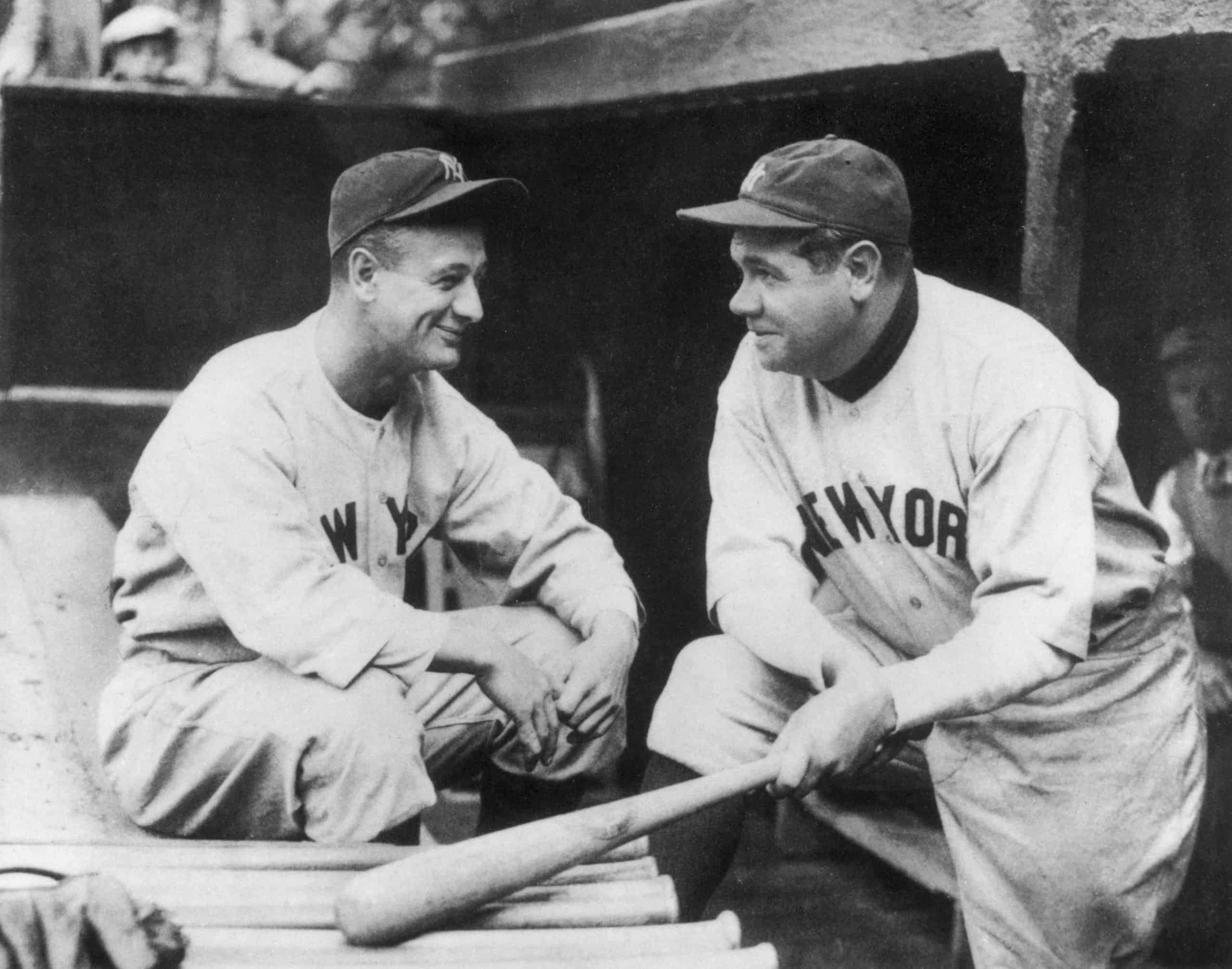
Imagine being considered one of the greatest baseball players in history and still wishing you could have watched another legend play. That’s essentially what DiMaggio expressed during his induction into the National Baseball Hall of Fame in 1955. He had already won nine World Series championships and produced some of the most impressive individual statistics of his era, but he still regretted missing the opportunity to see Babe Ruth perform in person.
The timing makes sense. Ruth played his final season with the Yankees in 1934 before finishing his major league career with the Boston Braves in 1935. DiMaggio didn’t arrive in New York until 1936, so the two never played together as Yankees. Ruth had already established himself as baseball’s greatest power hitter, finishing his career with 714 home runs, a record that stood until Hank Aaron surpassed it in 1974. Ruth was also an accomplished pitcher earlier in his career with the Boston Red Sox, making his transformation into a legendary slugger even more remarkable. For DiMaggio, who had followed Ruth into the Yankees’ lineup and helped maintain the franchise’s championship tradition, the chance to see the Babe in his prime would have been something special. Even baseball legends have their own heroes.
“A person always doing his or her best becomes a natural leader, just by example.”

Some people become leaders because they’re given a title. Others earn that reputation simply by showing up every day and demonstrating what they’re capable of doing. This observation, widely attributed to DiMaggio in published quotation collections, reflects the kind of leadership he demonstrated throughout his career. Although the original occasion on which he made the remark isn’t firmly established, the sentiment is consistent with how teammates and observers described his approach to baseball.
DiMaggio wasn’t known for being the loudest person in the Yankees’ clubhouse, nor was he someone who relied on dramatic speeches to motivate his teammates. His leadership came primarily through preparation, consistency, and an expectation that he would perform at a high level whenever he took the field. That approach certainly produced results. In addition to his nine World Series championships, DiMaggio was selected as an All-Star in every season of his major league career. His famous 56-game hitting streak in 1941 remains one of baseball’s most celebrated records. There’s a pretty good lesson in that for just about any profession. You don’t necessarily have to be the person making the most noise to earn the respect of the people around you. Sometimes being consistently good at what you do speaks for itself.
“There’s nobody taking center from me until I give it up.”

For someone who often appeared calm and reserved, Joe DiMaggio could be fiercely protective of his place on the baseball field. This remark, preserved in published collections of his quotations, captures that competitive side of his personality. DiMaggio had spent more than a decade establishing himself as one of the greatest center fielders in baseball history. He wasn’t particularly interested in surrendering that position simply because another talented player happened to arrive.
The issue became especially relevant in 1951, when a young Mickey Mantle joined the Yankees. Mantle was an extraordinarily talented prospect who would eventually become one of the greatest players in franchise history, but DiMaggio remained New York’s center fielder during his final season. Mantle primarily played right field that year before taking over in center following DiMaggio’s retirement. In hindsight, the transition seems almost perfectly scripted: one legendary Yankees center fielder making way for another. At the time, however, DiMaggio was still focused on doing his job and helping the Yankees win another championship. His competitiveness was part of what made him so successful, even if it occasionally made things uncomfortable for the people waiting for their opportunity.
“I think there are some players born to play ball.”
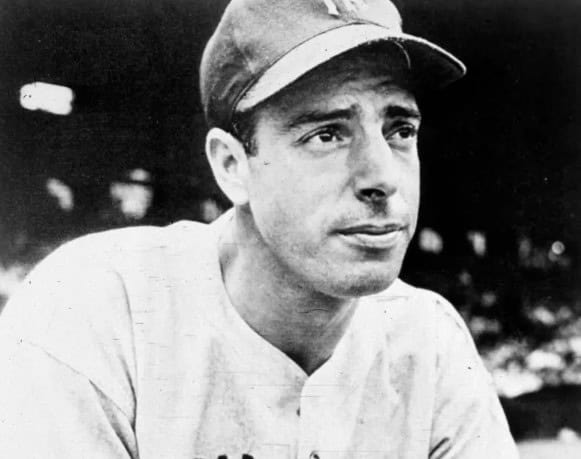
Professional baseball players spend years developing their skills, but anyone who has ever tried hitting a fastball knows that some people seem to possess abilities the rest of us can only dream about. Recognizing a pitch, deciding whether to swing, and making solid contact with a small ball traveling at tremendous speed requires extraordinary coordination. DiMaggio believed certain players possessed natural gifts that helped separate them from everyone else, even among professional athletes.
Of course, natural ability alone doesn’t guarantee a successful baseball career. Players still need countless hours of practice, good instruction, and the discipline to continue improving. DiMaggio certainly benefited from all three. He grew up playing baseball in California before establishing himself with the San Francisco Seals, where he recorded a remarkable 61-game hitting streak in 1933. His accomplishments eventually helped him reach the Yankees, where he finished his major league career with a .325 batting average. For perspective, a .300 hitter records hits in 30% of official at-bats, although that doesn’t mean he fails to reach base the other 70% of the time. Walks and other ways of reaching base are measured separately. Hitting a baseball consistently remains one of the most difficult tasks in professional sports, and DiMaggio made it look considerably easier than it actually was.
“All pitchers are born pitchers.”

DiMaggio spent his career facing some of the best pitchers in baseball, so he certainly understood how difficult their job could be. This observation, attributed to him in George Plimpton’s book Out of My League, suggests that pitching requires a particular combination of physical ability and temperament. Some players naturally have the arm strength, coordination, or competitive instincts that make them better suited to standing on the mound than playing another position.
That doesn’t mean great pitchers emerge from the womb knowing how to throw a curveball. Developing into an effective major league pitcher requires years of training, mechanical adjustments, and experience against increasingly talented hitters. Pitchers need to control their deliveries, understand opposing batters, and recover mentally when a mistake sends a baseball sailing over the outfield fence. They also need to manage the physical demands that come with throwing hundreds or even thousands of competitive pitches. DiMaggio’s comment reflects a familiar sports debate about how much success comes from natural talent and how much is developed through practice. Whatever the answer, he certainly spent enough time facing elite pitchers to appreciate the differences between an ordinary arm and an exceptional one.
“I can remember a reporter asking me for a quote, and I didn’t know what a quote was. I thought it was some kind of soft drink.”
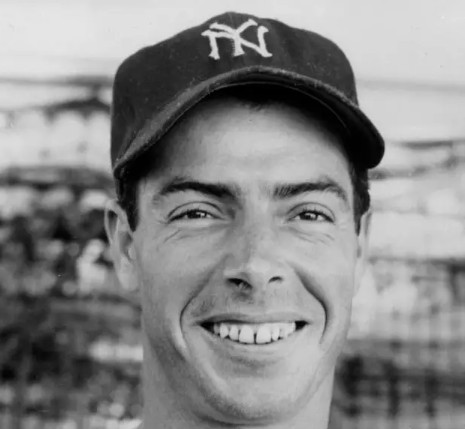
It’s easy to forget that Joe DiMaggio didn’t grow up surrounded by professional publicists, television cameras, and reporters waiting for him to say something memorable. He came from a working-class family in the San Francisco Bay Area, where his father worked as a fisherman. DiMaggio left school as a teenager and held various jobs before his baseball career began taking shape. When he first entered professional baseball, dealing with the press was an entirely new experience.
According to accounts of his early career, DiMaggio’s older brother Vince helped him get an opportunity with the San Francisco Seals in 1932. Joe initially played shortstop, a position that didn’t suit him particularly well, before moving to the outfield and developing into an outstanding prospect. By 1933, he was already attracting attention with his remarkable 61-game hitting streak. Within a few years, he would become one of the biggest stars in American sports, with reporters following practically everything he did. That makes his recollection about not understanding what a reporter meant by asking for a quote particularly amusing. It’s a reminder that even people who eventually become household names usually begin their careers having absolutely no idea how to handle being famous.
“A ball player has to be kept hungry to become a big leaguer.”
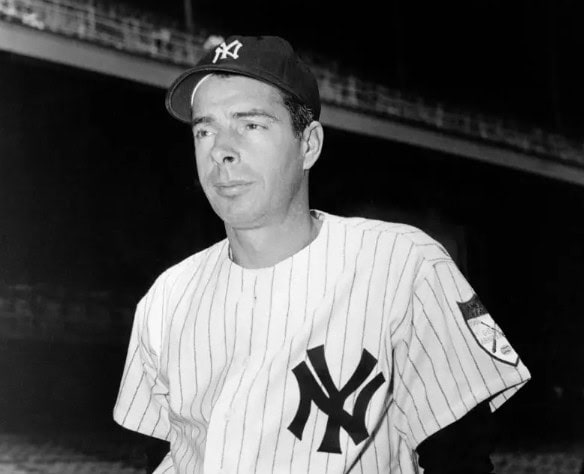
DiMaggio understood the challenges of working your way into professional baseball because he had experienced them himself. Growing up in a large working-class family, he didn’t have the luxury of assuming a successful athletic career would simply happen. His path to the major leagues began with local baseball games, opportunities in the Pacific Coast League, and years of developing the skills that eventually attracted the Yankees’ attention. By the time he reached New York in 1936, he had already established himself as one of the most promising young players in the country.
DiMaggio made this observation in an interview published by The New York Times on April 30, 1961. The full remark went further, suggesting that players from wealthy families lacked the hunger necessary to reach the major leagues. That’s a sweeping claim that certainly doesn’t hold up as a universal rule. Plenty of successful athletes have come from financially comfortable backgrounds, while others have overcome significant economic obstacles. What does remain relevant is the importance of motivation and determination. Natural talent can open doors, but maintaining the discipline to improve year after year is another matter entirely. DiMaggio’s own career demonstrated how far that combination could take someone, even if his broader observation about wealth and athletic success was overly simplistic.
“If anyone wants to know why three kids in one family made it to the big leagues they just had to know how we helped each other and how much we practiced.”
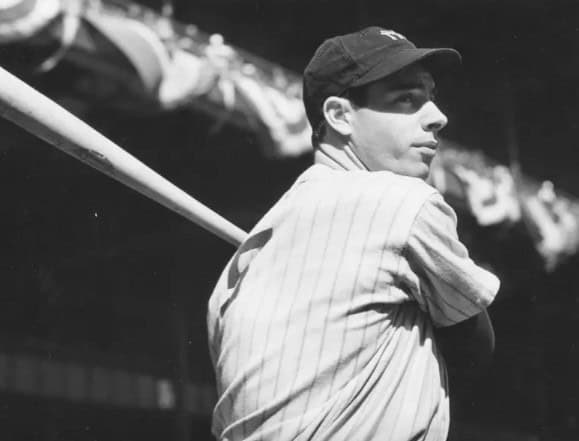
Producing one major league baseball player is a remarkable accomplishment for any family. Producing three is something else entirely. Yet that’s exactly what happened in the DiMaggio household, where brothers Vince, Joe, and Dom all reached the major leagues. Joe became the most famous of the three, but his brothers built successful professional careers of their own. Vince played for several National League teams, including the Pittsburgh Pirates, while Dom spent his entire major league career with the Boston Red Sox, becoming a seven-time All-Star and one of the American League’s most respected center fielders.
Joe credited much of the brothers’ success to the amount of time they spent playing baseball together while growing up in California. Rather than treating their accomplishments as three completely separate stories, he recognized how much they had influenced and challenged one another. Competition between siblings can certainly get intense, especially when all three are talented enough to pursue the same profession. But having someone to practice with, learn from, and measure yourself against can also be a tremendous advantage. The brothers eventually found themselves competing at the highest level of professional baseball, sometimes even facing one another on the field. Their careers weren’t identical, and each developed his own reputation, but their shared beginnings remain one of the more remarkable family stories in baseball history.