History's Mysteries

Dignity100 / Shutterstock.com

Public Domain / Wikimedia Commons

Public Domain / Wikimedia Commons

Public Domain / Wikimedia Commons

Public Domain / Wikimedia Commons

ElenaR/ Shutterstock
Public Domain / Wikimedia Commons

Public Domain / Wikimedia Commons

Public Domain / Wikimedia Commons

Public Domain / Wikimedia Commons

Public Domain / Wikimedia Commons


History’s Most Mysterious People Nobody Can Explain
History is filled with famous people whose lives have been documented down to the smallest detail. Then there are the people who seem to have slipped through the cracks, leaving behind strange clues, unanswered questions, and identities that remain uncertain decades or even centuries later.
Some vanished without a trace. Others lived under names that may not have been their own. A few became the center of stories so strange that separating fact from legend is part of the mystery. Here are some of history's most puzzling people and the questions that still surround them.
The Isdal Woman
On November 29, 1970, hikers discovered the badly burned body of an unidentified woman in Isdalen near Bergen, Norway. An autopsy found barbiturates in her system along with carbon monoxide poisoning, while soot in her lungs showed she had been breathing while the fire burned. Labels and identifying marks had been removed from many of her belongings. Investigators ultimately could not determine with certainty whether her death was suicide, an accident, or involved another person.
The Isdal Woman's Secret Identity
The mystery deepened when investigators linked two suitcases at Bergen railway station to the woman. Inside were wigs, foreign currency, glasses, travel information, and a notebook containing coded entries. Police discovered that she had traveled using several false names and identities. Later forensic work has provided clues about where she may have grown up, but it has not produced a confirmed name. More than half a century later, both her identity and the complete circumstances surrounding her death remain unresolved.
The Zodiac Killer
The killer who called himself Zodiac terrorized Northern California in 1968 and 1969 and has been linked to five confirmed murders and attacks that left two additional victims alive. He became notorious for sending newspapers letters, threats, and coded messages. One of his most famous puzzles, the 340-character cipher, was finally cracked by private codebreakers in 2020 and the solution was verified by the FBI. Unfortunately, it contained no revelation of the killer's identity. Despite decades of suspects and theories, no one has been conclusively identified as the Zodiac Killer.
Count Saint Germain
During the 18th century, a sophisticated man calling himself the Count of Saint Germain moved through Europe's royal courts. Contemporary accounts described him as educated, multilingual, musically talented, and unusually secretive about his origins. Nobody has conclusively established where he was born or even his original name. Stories later transformed Saint Germain into an alchemist, magician, and supposedly immortal figure, although those claims belong more to legend than documented history. Records indicate that the historical Saint Germain died in Eckernförde on February 27, 1784, but the mystery of who he really was before appearing in European high society remains.
D. B. Cooper
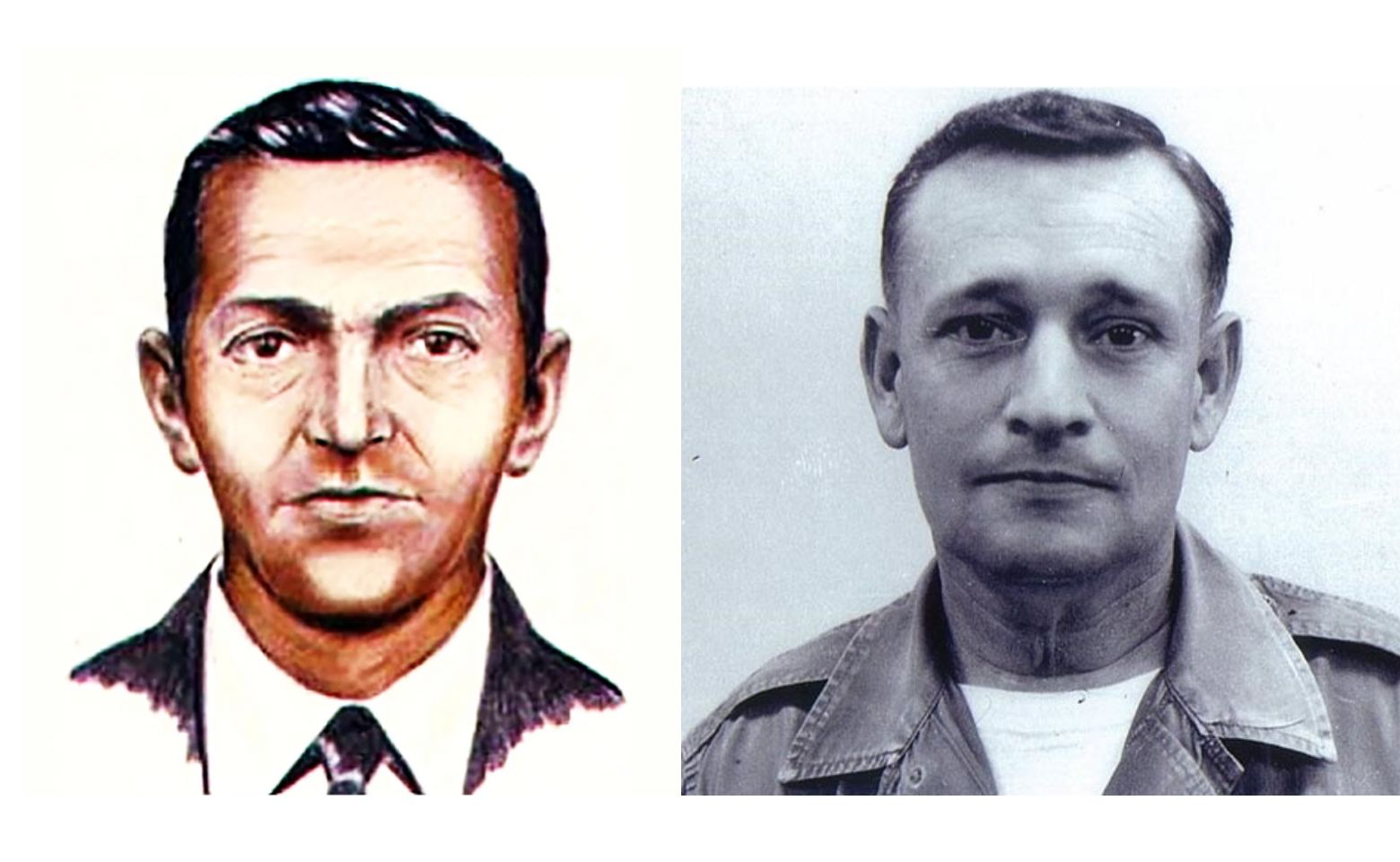
On November 24, 1971, a man calling himself Dan Cooper bought a one-way ticket from Portland to Seattle aboard Northwest Orient Flight 305. During the flight, he told a flight attendant he had a bomb and demanded $200,000 in $20 bills and four parachutes. After landing in Seattle, Cooper released the 36 passengers in exchange for the money and parachutes. The plane took off again with instructions to head toward Mexico City. Somewhere between Seattle and Reno, Cooper lowered the Boeing 727's rear stairs, jumped into the night with the ransom money, and disappeared.
D. B. Cooper's Disappearance
The FBI investigated hundreds of suspects but never established Cooper's real identity or even whether he survived the jump. In 1980, an 8-year-old boy found $5,800 of the ransom money along the Columbia River, but the discovery did little to solve the case. Cooper also left a black clip-on tie aboard the plane, which later yielded a DNA sample. Interestingly, the FBI has said the evidence suggests Cooper was probably not an experienced parachutist. The bureau redirected resources away from the case in 2016, although his identity and fate remain unknown.
Shanti Devi
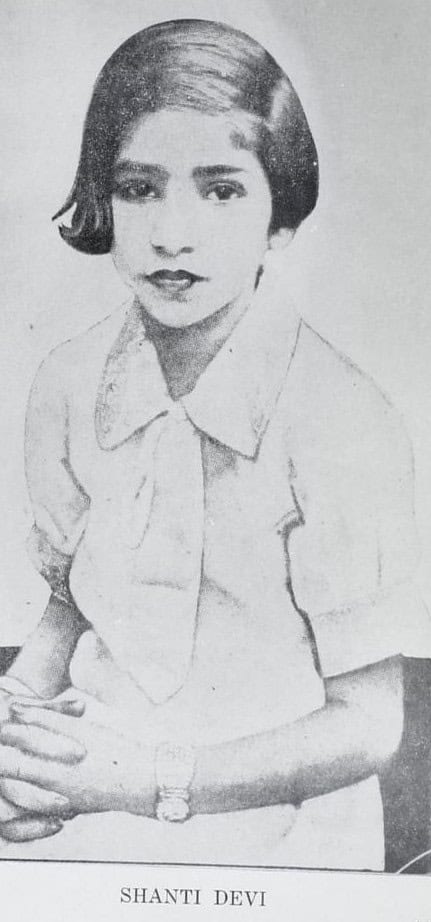
Born in Delhi in 1926, Shanti Devi became famous as a child after claiming to remember the life of another woman, Lugdi Devi, who had lived in Mathura. Her statements attracted widespread attention, including interest from Mahatma Gandhi. A committee traveled with Shanti to Mathura in 1935 and reported that she recognized people and places connected with Lugdi's life. Critics later challenged how strongly those observations supported reincarnation, and the case never produced scientific proof of a previous life. What happened remains a fascinating and heavily debated historical case rather than a confirmed example of reincarnation.
B. Traven
B. Traven wrote several novels set in Mexico, most famously The Treasure of the Sierra Madre, which became the basis of the acclaimed 1948 Humphrey Bogart film. Traven spent much of his life deliberately concealing his background. Evidence now strongly establishes that he had previously lived in Europe under the name Ret Marut, a German actor, writer, and anarchist. That only moves the mystery back another step, because Marut itself appears to have been an assumed identity. Researchers have proposed other birth names, but Traven's complete origins remain disputed.
The Unknown Woman of the Seine
For generations, the story of L'Inconnue de la Seine held that an unidentified young woman was pulled from the Seine in Paris during the late 1800s and that a cast was made of her unusually peaceful face. There is a problem: historians have found little documentation proving that the famous mask actually came from a drowned woman at all. The true identity of its model may therefore be an even bigger mystery than the original story suggests. What is certain is that the face became famous across Europe and later inspired the design of Resusci Anne, the CPR training manikin introduced in 1960.
Jerome of Sandy Cove
On September 8, 1863, a young boy discovered a badly injured stranger on the beach near Sandy Cove, Nova Scotia. Both of the man's legs had been amputated above the knees, and the wounds appeared to have been treated before he was abandoned. The stranger spoke very little and never provided a clear account of who he was or where he had come from. Locals eventually began calling him Jerome, and area families cared for him for decades. He died in 1912 without revealing his true identity, leaving behind one of Canada's strangest unsolved personal mysteries.
The Leatherman
For decades during the 1800s, a mysterious traveler known only as the Leatherman followed a remarkably consistent route through Connecticut and New York. Dressed in a handmade leather outfit, he walked a roughly 365-mile circuit that he reportedly completed about every 34 days. He rarely spoke, accepted food from people along the route, and usually slept in caves and other outdoor shelters. Various stories attempted to give him a name and a European background, but none has been firmly established. When he died in 1889, his real identity remained unknown.