IMDB

IMDB
Harris & Ewing, Public domain, via Wikimedia Commons
Gage Skidmore / BY-SA 2.0

Steve Morley / Staff / Getty Images

Mike F. Campbell / BY 2.5

Georges Biard / BY-SA 3.0

Courtesy of Paramount Pictures

Capitol Records, Public domain, via Wikimedia Commons

Alan Light / BY 2.0

Public Domain / Wikimedia Commons

John Mathew Smith & www.celebrity-photos.com / BY-SA 2.0

Spudgun67 / BY-SA 4.0

watchwithkristin / BY-SA 2.0

MPI / Archive Photos via Getty Images

Alan Light / BY 2.0

Public Domain / Wikimedia Commons

Michael Ochs Archives / Michael Ochs Archives via Getty Images
IMDB

General Artists Corporation (management), Public domain, via Wikimedia Commons

Insomnia Cured Here / BY-SA 2.0

Alan Light / BY 2.0

Caribou Records, Public domain, via Wikimedia Commons

MGM, Public domain, via Wikimedia Commons

Courtesy of CBS Television, Public domain, via Wikimedia Commons
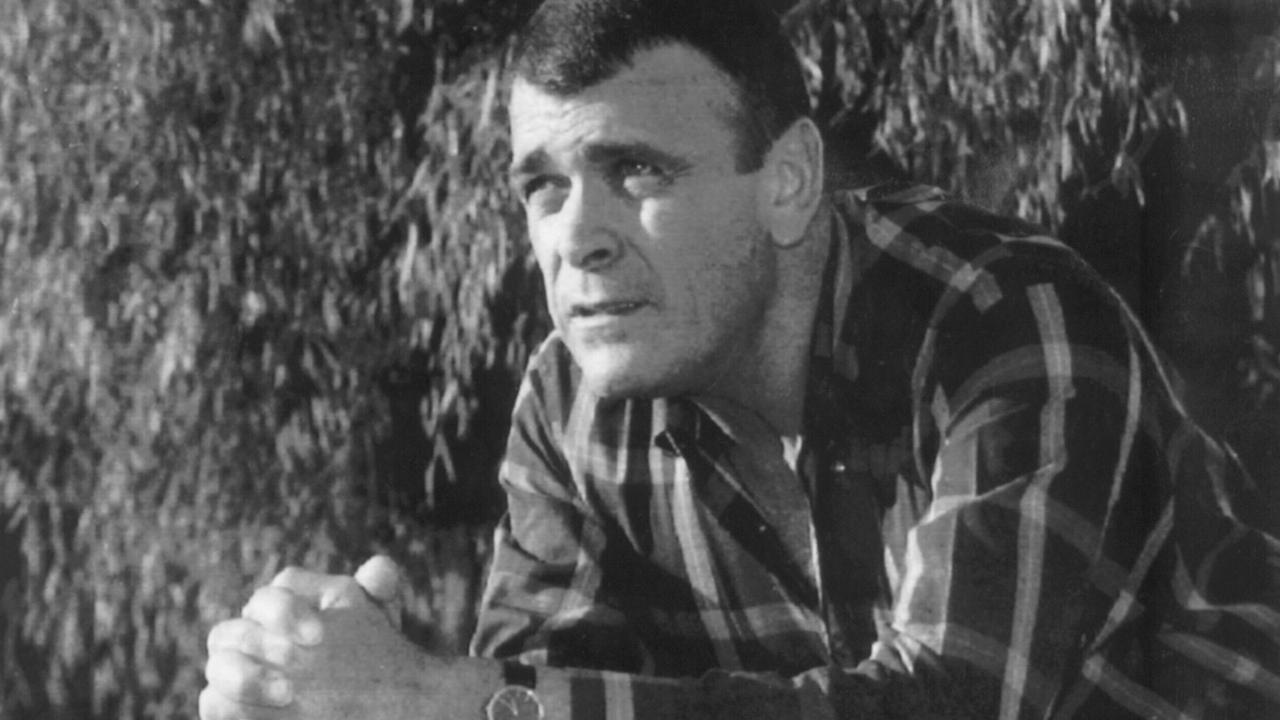
Wikimedia







25 Famous People Whose Deaths Were Linked to Smoking
Cigarettes once seemed inseparable from celebrity culture. Movie stars posed with them, singers lit up onstage, and athletes even appeared in tobacco advertisements. That image has aged badly. Researchers have since documented the damage smoking can do to the lungs, heart, blood vessels, and several other organs.
The people in this list are not all examples of the same illness. Some died of lung or throat cancer, others struggled with chronic lung disease, and a few experienced heart problems or other consequences in which smoking may have been one of several risk factors. A diagnosis alone does not prove what caused a particular person's illness, and some of the historical accounts require more caution than the original version gave them.
These 25 stories include Hollywood stars, musicians, athletes, and public figures, from classic entertainers to those we lost in 2026. Several spoke openly about their smoking histories or became anti-smoking advocates. Their work deserves to be remembered on its own terms, even as their health struggles tell an important story about an addiction that was once sold as glamorous.
Tim Curry
Tim Curry spent decades stealing scenes in The Rocky Horror Picture Show, Clue, and the television adaptation of It. He also spoke openly about his history with cigarettes. In a 2025 interview, Curry recalled smoking three packs of Marlboro Reds the day before a major stroke in 2012, an event that left him with lasting mobility problems. The actor died on August 25, 2026, at age 80. His death certificate identified coronary artery disease as the cause, with his earlier stroke and kidney cancer listed as contributing conditions. Smoking is a major risk factor for cardiovascular disease, but his death was not medically attributed to smoking alone. That distinction matters, even when the broader health warning is clear.
Walt Disney
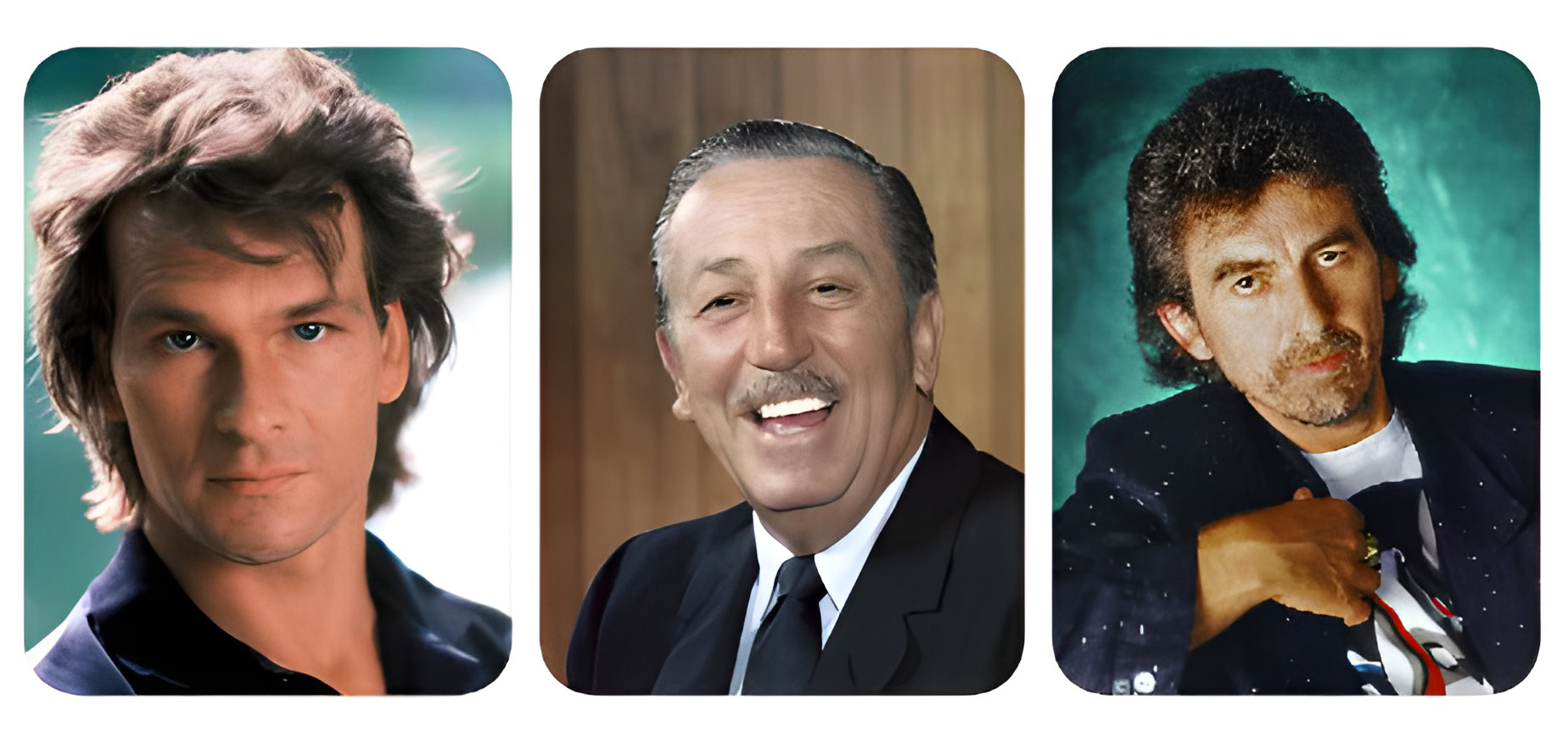
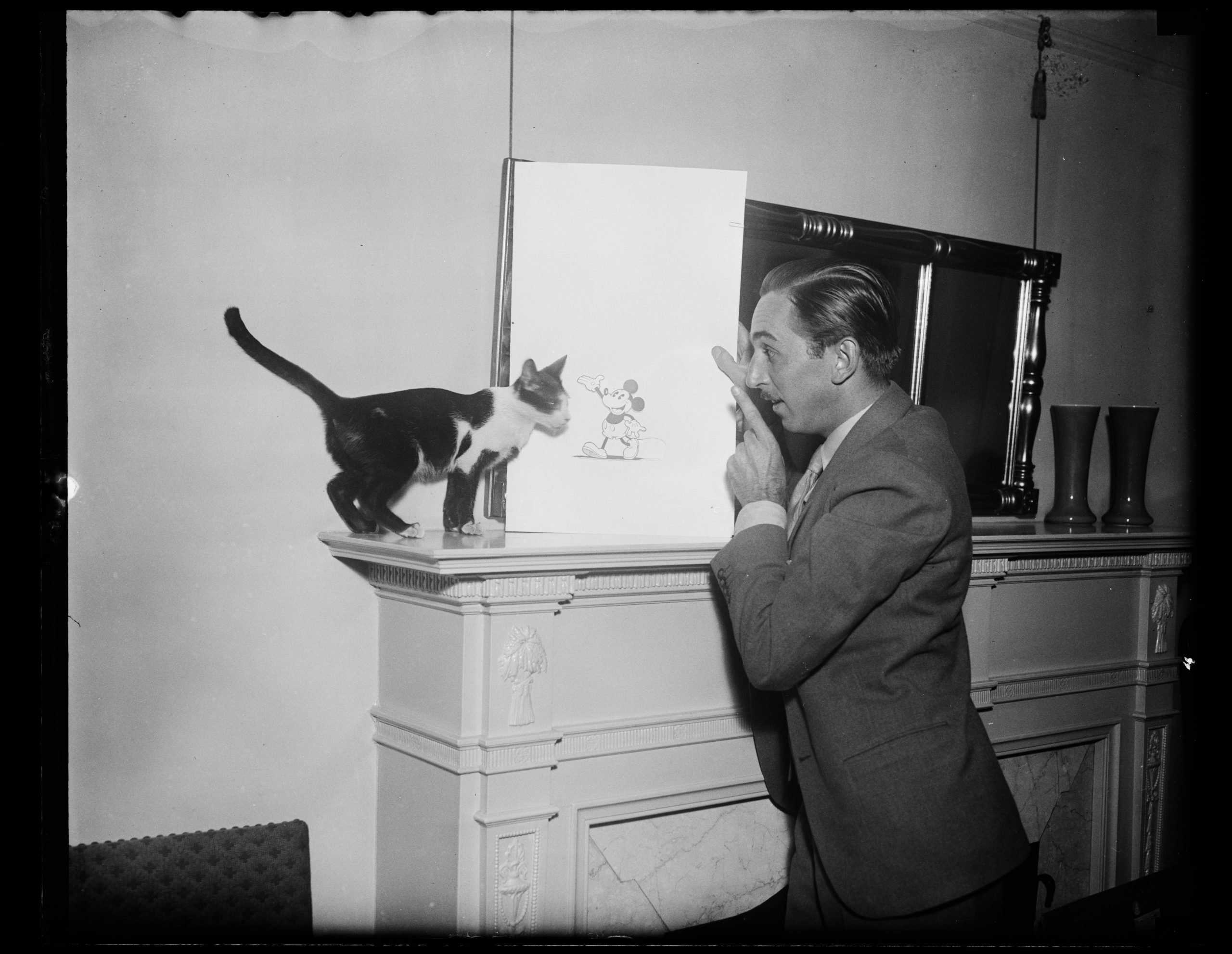
The man whose name became synonymous with family entertainment was also a longtime cigarette smoker. Walt Disney reportedly developed the habit as a young man and was frequently seen smoking during his years running the studio. In November 1966, doctors discovered lung cancer. He underwent surgery, but the illness progressed quickly, and Disney died on December 15, 1966, shortly after his 65th birthday. The company he created was already a cultural powerhouse, and Walt Disney World in Florida was still years away from opening. His story is an especially striking reminder that the cheerful public image of midcentury entertainment often existed alongside a smoking culture whose health consequences were becoming increasingly difficult to ignore.
Leonard Nimoy
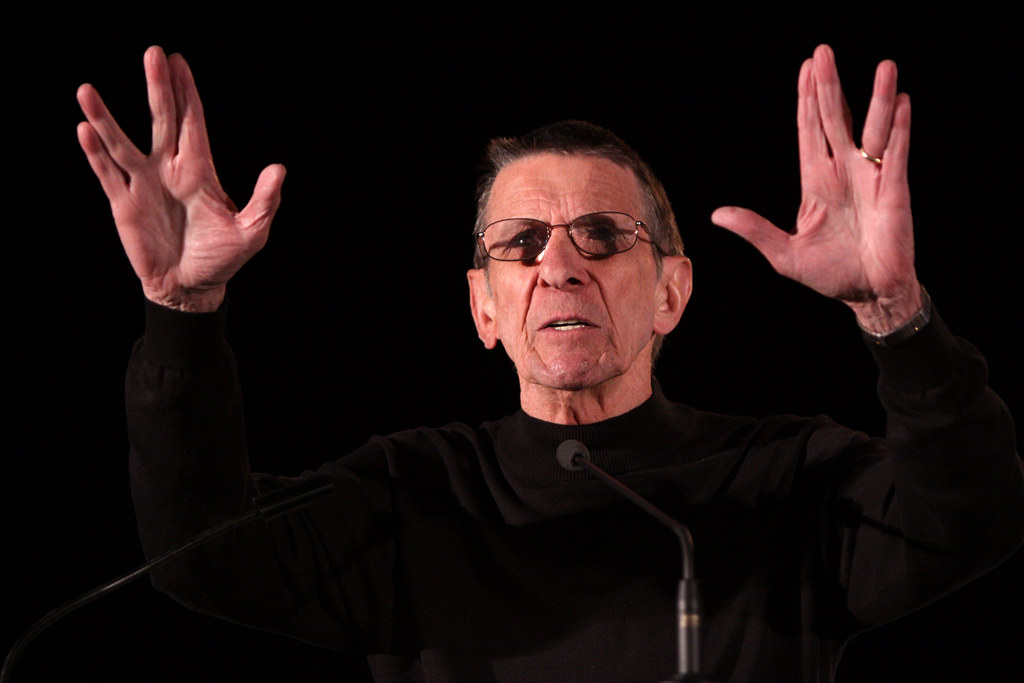
For generations of Star Trek fans, Leonard Nimoy will always be Mr. Spock. In his later years, however, he became an unusually direct voice about the dangers of cigarettes. Nimoy quit smoking roughly three decades before publicly revealing in 2014 that he had chronic obstructive pulmonary disease, or COPD. He warned followers that he had stopped too late to escape the damage already done. Nimoy died on February 27, 2015, at age 83, from complications of the disease. His family subsequently worked with the Centers for Disease Control and Prevention on an anti-smoking campaign explicitly connecting his smoking history to his COPD and death. It's one of the clearest documented cases on this list.
George Harrison
George Harrison survived the Beatles' extraordinary rise, built a successful solo career, and helped organize the landmark Concert for Bangladesh. But the guitarist also spent years as a smoker. In 1997, he underwent treatment for throat cancer, and later reports documented lung cancer and a brain tumor. Harrison died on November 29, 2001, at 58. He was remembered as the quiet Beatle, although his musical influence was anything but small. His medical history shouldn't be flattened into a simple one-cause story: cancer develops through complex processes. Still, tobacco use is an established risk factor for several of the cancers involved, making his illness part of a broader history of smoking's toll on the music world.
John Candy
John Candy was only 43 when he died of a heart attack on March 4, 1994, while filming the comedy Wagons East in Mexico. Best remembered for Planes, Trains and Automobiles, Uncle Buck, and Cool Runnings, Candy had spoken about health concerns, and contemporaneous reporting described him as a heavy smoker. His weight and family history were also part of the discussion surrounding his death. Cigarette smoking increases the risk of cardiovascular disease, but there is no sound basis for saying it was the sole cause of Candy's heart attack. That nuance doesn't make his loss any less sad. He was one of those rare comic actors who could get a laugh and break your heart in the very same scene.
David Lynch
David Lynch created strange, unforgettable worlds in Blue Velvet, Mulholland Drive, and Twin Peaks. Smoking was also woven into his daily routine for much of his life. In 2024, Lynch publicly said years of smoking had caused his emphysema, a form of COPD, and that the disease had severely limited his ability to leave home or direct on location. He died in January 2025 at 78. His death certificate listed cardiac arrest with COPD as the underlying cause, along with dehydration as another significant condition. Lynch's own acknowledgment of what tobacco had done to his lungs makes this more than a retrospective guess about a celebrity's habits. He had already become an outspoken warning about the consequences.
Patrick Swayze
Patrick Swayze seemed almost indestructible on screen, whether he was dancing in Dirty Dancing or facing down trouble in Road House. Off screen, he was a longtime smoker who acknowledged continuing the habit after a pancreatic cancer diagnosis in 2008. Swayze died on September 14, 2009, at 57. Smoking is a recognized risk factor for pancreatic cancer, but it would be inaccurate to claim that any single exposure definitively caused his disease. What is clear is that Swayze kept working during treatment, appearing in the series The Beast while confronting a serious illness. His determination made an already difficult story even more memorable for fans.
Nat King Cole
Nat King Cole's smooth voice helped make songs such as “Unforgettable” and “Mona Lisa” standards. Behind that polished sound was a longstanding cigarette habit. Cole was widely reported to be a heavy smoker, and he was diagnosed with lung cancer in late 1964 after suffering symptoms that included persistent pain. He died on February 15, 1965, at only 45. It happened at the height of a career that had already broken major barriers in American entertainment, including his own national television program. Tobacco's dangers were known to researchers by then, but smoking remained common in performance, advertising, and everyday life. Cole's early death shows just how much talent was lost while that culture was still firmly in place.
Michael Landon
Michael Landon was a familiar face in American living rooms for decades, from Bonanza to Little House on the Prairie and Highway to Heaven. In April 1991, the actor revealed he had pancreatic cancer, and he died on July 1 of that year at age 54. Landon had been known to smoke cigarettes, and tobacco use is a well-established risk factor for pancreatic cancer. But that medical association isn't proof that smoking caused his particular illness. His diagnosis drew enormous public attention, partly because he spoke candidly about his condition in the short time he had left. By then, viewers had spent years watching him play reassuring, larger-than-life figures, which made the sudden loss feel especially personal.
Humphrey Bogart
Few classic Hollywood actors were photographed with a cigarette as often as Humphrey Bogart. The Casablanca and The Maltese Falcon star turned a hard-boiled screen persona into an icon, and smoking became part of that image. Bogart was diagnosed with esophageal cancer in the 1950s and died on January 14, 1957, at 57. Cigarette smoking and heavy alcohol use are recognized risk factors for this form of cancer, although his individual case can't be reduced to a single explanation. Watching Bogart's old movies today is a reminder of how thoroughly tobacco was embedded in the visual language of Hollywood, long before studios began treating cigarettes as something more complicated than a stylish prop.
Joe DiMaggio
Joe DiMaggio's 56-game hitting streak remains one of baseball's most famous records. The Yankees legend was also a longtime cigarette smoker and appeared in tobacco advertising during an era when sports stars were regularly used to sell the habit. Later in life, DiMaggio developed lung cancer and underwent treatment that included surgery. He died on March 8, 1999, at age 84, after a lengthy decline in health. His story captures an uncomfortable part of sports history: endorsements that once seemed ordinary now sit beside a far better understanding of the risks. Baseball fans remember the Yankee Clipper for his extraordinary consistency at the plate, not the advertisements that helped normalize smoking.
Graham Chapman
Graham Chapman could play the straight-faced king in Monty Python and the Holy Grail or deliver a punch line with absolute conviction. A trained physician as well as a comedian, Chapman was also known to smoke a pipe. In 1989, doctors found cancer affecting his tonsil, and later reports described cancer elsewhere in his body. He died on October 4, 1989, at 48. Tobacco use raises the risk of cancers in the mouth and throat, although the cause of an individual cancer is not always established. Chapman died just as the comedy troupe's 20th anniversary was being celebrated, making his loss particularly poignant for the millions who had grown up with Python's wonderfully ridiculous humor.
Kathryn Joosten
Kathryn Joosten had a second career most actors would envy. Viewers loved her as Mrs. Landingham on The West Wing and Karen McCluskey on Desperate Housewives. She also spoke publicly about a history of smoking and her experience with lung cancer. Joosten was first diagnosed in 2001, quit smoking, and faced a separate lung cancer in 2009. She died on June 2, 2012, at age 72. Rather than hide her diagnosis, the two-time Emmy winner became an advocate for people living with the disease. Her experience also illustrates an important point: quitting smoking brings meaningful health benefits, but it cannot instantly erase damage accumulated during earlier years.
Babe Ruth
Babe Ruth is remembered for towering home runs, legendary appetites, and a personality nearly as large as baseball itself. His public image also included cigars and other tobacco products. In the 1940s, doctors diagnosed him with cancer in the nasopharynx, an area behind the nose and above the throat. Ruth underwent experimental treatments for the era, but died on August 16, 1948, at age 53. Tobacco use is associated with several head and neck cancers, though historians and medical accounts don't establish smoking as the sole cause of Ruth's disease. The Sultan of Swat remained an enormous public figure until the end, and thousands of fans came to pay their respects at Yankee Stadium.
Sammy Davis Jr.
Sammy Davis Jr. could sing, dance, act, and command a room with seemingly effortless confidence. Behind that talent was a longtime heavy smoking habit. In 1989, doctors diagnosed him with throat cancer. Reports from the period described difficult choices over treatment, including concern about losing the voice that had shaped his career. Davis underwent radiation therapy and died on May 16, 1990, at age 64. Tobacco use is a major risk factor for cancers of the throat and larynx, although individual medical histories can involve several factors. For an entertainer whose voice was central to his identity, the illness was especially devastating. His performances with the Rat Pack remain a defining part of American show-business history.
Dean Martin
Dean Martin made a casual cigarette look like part of the act. As a singer, comedian, and member of the Rat Pack, he cultivated an unhurried style that was instantly recognizable. Smoking was common in his nightclub and television appearances, and later accounts described longstanding lung problems. Martin died on Christmas Day in 1995 at 78; his publicist identified acute respiratory failure as the cause. Some accounts discuss emphysema and other conditions, but the available reporting does not establish smoking as the sole cause of death. What it does illustrate is how firmly tobacco was tied to the entertainment image of the time, even as the medical consequences of long-term smoking became more widely understood.
Yul Brynner
Yul Brynner's commanding presence in The King and I made him a theater and movie legend. He began smoking young and continued heavily for many years before quitting. In the 1980s, Brynner was diagnosed with inoperable lung cancer. He died on October 10, 1985, at 65, after continuing to perform for as long as he could. His final message may be as memorable as any of his roles: an anti-smoking public service announcement recorded while he was ill aired after his death and urged viewers not to start smoking. That decision gave his experience a direct public-health purpose. Brynner wasn't simply a famous name on a list; he deliberately used his final public appearances to warn others.
Victor French
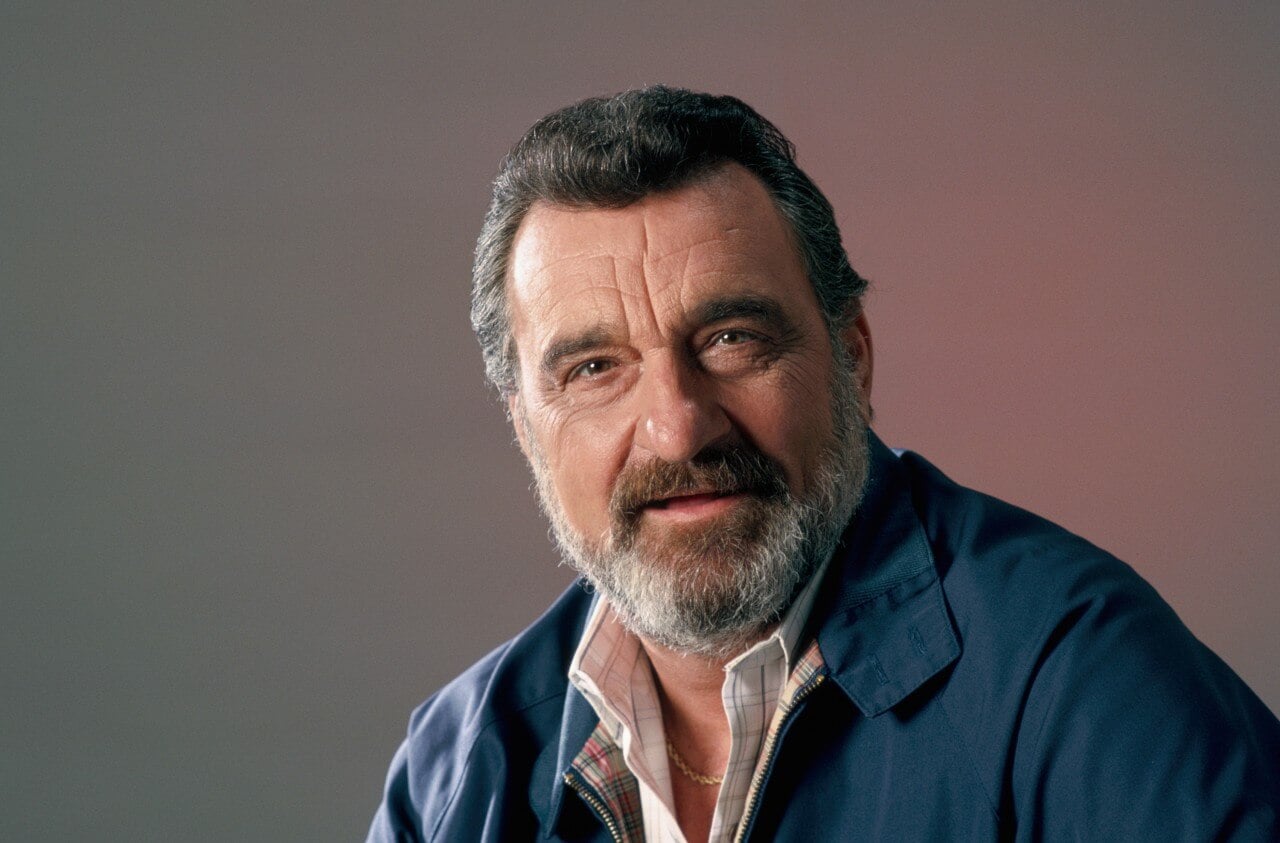
Victor French became a dependable presence on television through Gunsmoke, Little House on the Prairie, and Highway to Heaven, often working with Michael Landon. Off camera, he had a reputation as a heavy smoker. French was diagnosed with lung cancer in 1989 and died on June 15 of that year at age 54. Fans knew him for playing gruff but fundamentally decent characters, a quality he carried through several long-running shows. His death came while Highway to Heaven was still fresh in viewers' memories. Lung cancer has many possible risk factors, but cigarette smoking is by far its leading cause. French's illness belongs to a long list of tragedies among performers from an era when smoking was routine on and off set.
Desi Arnaz
Desi Arnaz helped transform television as both an actor and producer, most famously playing Ricky Ricardo opposite Lucille Ball in I Love Lucy. The Cuban-born entertainer also smoked cigarettes and cigars for years. He developed lung cancer in the 1980s and died on December 2, 1986, at age 69. Arnaz's importance goes well beyond his on-screen chemistry with Ball: the production methods used by Desilu helped shape the modern television sitcom. His long smoking history is relevant to the illness he faced, but the clearest verified facts are the diagnosis, the years of tobacco use, and his death from the disease. The more sensational details in retellings of his final months aren't needed to explain the story.
Betty Grable
Betty Grable was among Hollywood's biggest box-office draws in the 1940s, and her pinup image became especially famous during World War II. Like many performers of her generation, she was a smoker. She was diagnosed with lung cancer and died on July 2, 1973, at age 56. Grable's glamorous publicity photographs reflect an entertainment industry in which cigarettes could appear as ordinary accessories, rarely accompanied by health warnings. Her life, of course, was far bigger than that image: she starred in a string of popular musicals and remained a familiar American celebrity long after her biggest hits. The disease that ended her life is one for which smoking remains the leading risk factor.
Vincent Schiavelli
Vincent Schiavelli had one of Hollywood's most memorable faces and turned brief appearances into scenes audiences remembered. His credits ranged from One Flew Over the Cuckoo's Nest to Ghost and Fast Times at Ridgemont High. Schiavelli died of lung cancer on December 26, 2005, at age 57, after spending his later years in Sicily. Reports also describe him as a smoker. The illness cut short a career that had made him a favorite character actor rather than a conventional leading man. It also underscores why lists about smoking and celebrity deaths should distinguish between what is documented—a smoking history and a cancer diagnosis—and what no writer can independently prove about the origin of one person's cancer.
Carl Wilson
Carl Wilson was the steady musical center of the Beach Boys, providing lead vocals on some of the group's most beloved recordings and helping keep the band together through difficult years. The guitarist and singer developed lung cancer in 1997, and his illness later involved his brain. Even while undergoing treatment, Wilson joined the group's summer tour that year. He died on February 6, 1998, at age 51. Accounts of his life also describe a longstanding smoking habit. There is no need to embellish the medical details: the diagnosis and the way he kept performing are striking enough. Fans still hear his voice every time a classic Beach Boys recording comes on the radio.
Patrick O'Neal
Patrick O'Neal built a career on stage, television, and film, appearing in productions ranging from The Night of the Iguana to crime dramas and character roles. He also co-founded a successful New York restaurant. O'Neal died on September 9, 1994, at age 66. His wife told the Los Angeles Times that respiratory failure followed illnesses involving tuberculosis and cancer. Later biographies identify lung cancer among his conditions, and the original version of this list described him as a smoker. Still, the available obituary does not establish cigarettes as the direct cause of death. This entry is best read as a qualified account of respiratory illness in a public figure with a reported smoking history, not a definitive medical finding.
Jack Cassidy
Jack Cassidy's story is different from the cancer diagnoses on this list. The Tony-winning actor and singer died in a fire at his West Hollywood apartment on December 12, 1976, when he was 49. Investigators at the time said a discarded or smoldering cigarette was a possible cause of the blaze; the death was treated as accidental. The precise sequence was not established in every contemporaneous report, so it would be wrong to present it as an undisputed fact that Cassidy fell asleep with a lit cigarette. But the possibility itself is a reminder that smoking hazards extend beyond long-term illness. Cassidy was known for Broadway work and television roles, including appearances that showcased his distinctive charm and timing.
Wayne McLaren
Wayne McLaren's experience delivered one of the most direct anti-smoking messages of the 1990s. A rodeo performer, stuntman, and model, he appeared in Marlboro advertising and smoked for roughly 25 years. After developing lung cancer, McLaren began warning others about the dangers of tobacco. He died in July 1992 at age 51. In interviews near the end of his life, he spoke bluntly about the physical toll of his disease, and his family continued his message. Unlike many celebrities whose smoking-related deaths are reconstructed from fragmentary biographies, McLaren publicly connected his own smoking history with his illness. His story is a reminder that the advertising image of a rugged, carefree smoker came with consequences the ads never showed.