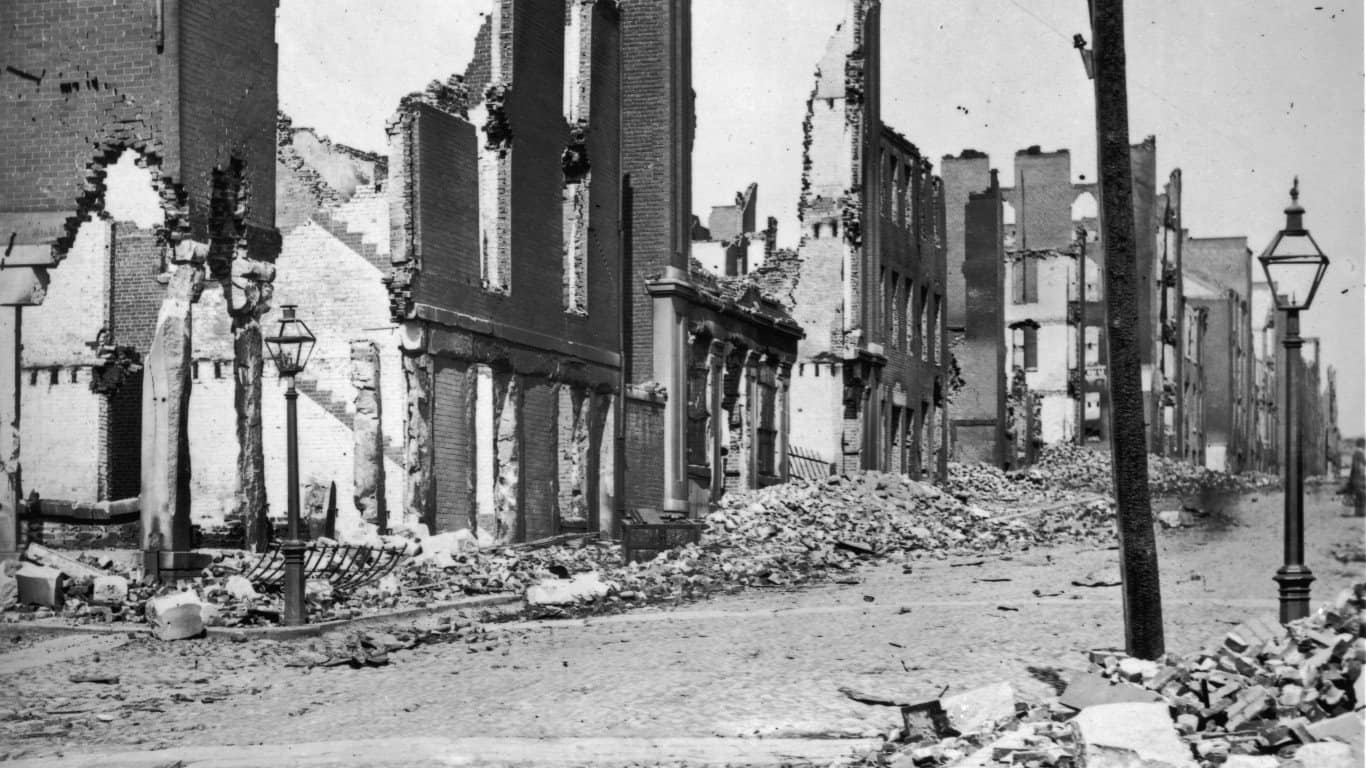
It’s hard for Americans today to imagine a war fought on American soil, not to mention a war pitting fellow Americans against each other. Battles raged for four years as the fighting devastated the country, demolished southern towns, and caused the loss of life for over 620,000 people, plus over one million injured. (Also see the cities and towns demolished during the Civil War)
24/7 Tempo reviewed historical archives from Getty Images and Wikimedia Commons to assemble a collection of chilling images from the American Civil War. The scope of images ranges from horrifying battlefield pictures to chronicles of everyday life during the war. The photographers represented here – Matthew Brady, Alexander Gardner, and George Barnard – each contributed to recording images of the war. Gardner published a two-volume Photographic Sketch Book of the War (1866), while Barnard published Photographic Views of Sherman’s Campaign (1866).
Besides shooting portraits of Union soldiers, President Abraham Lincoln on horseback, and officers weighing strategy in tents, they also photographed the war in all its hellish fury. At Brady’s New York gallery, “The Dead of Antietam” exhibition featured photos of dead soldiers on the battlefield in the aftermath of the Battle of Antietam (1862). These photos shocked the public. One picture was chosen by Time magazine as one of the most influential images of all time.
This post was updated on October 26, 2025 to clarify the number of injuries during the Civil War, names of photographers’ published works, “The Dead of Antietam” exhibit, year and timing of A Rebel Bunker, the needed success of the Battle of Mobile Bay, and Russell’s involvement of the Potomac Creek photograph.
Here are chilling images from the American Civil War:
Union troops drilling
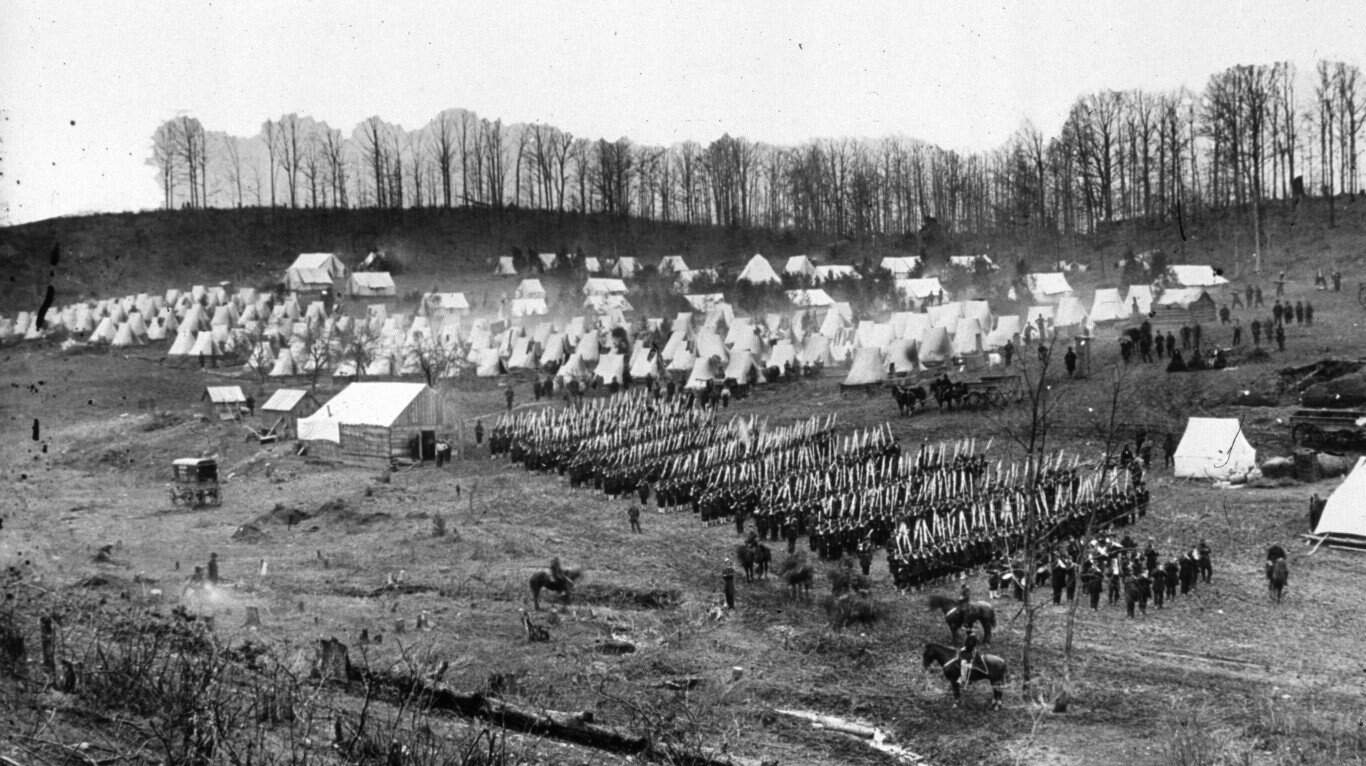
- Date: March 1862
- Location: near Washington, D.C.
Troops of the 96th Regiment, Pennsylvania Infantry, drill at Camp Northumberland near Washington, D.C. Tasked with defending the nation’s capital until March 1862, they would later participate in the major battles of Antietam and Gettysburg, among other engagements.
The Confederate flag over Fort Sumter
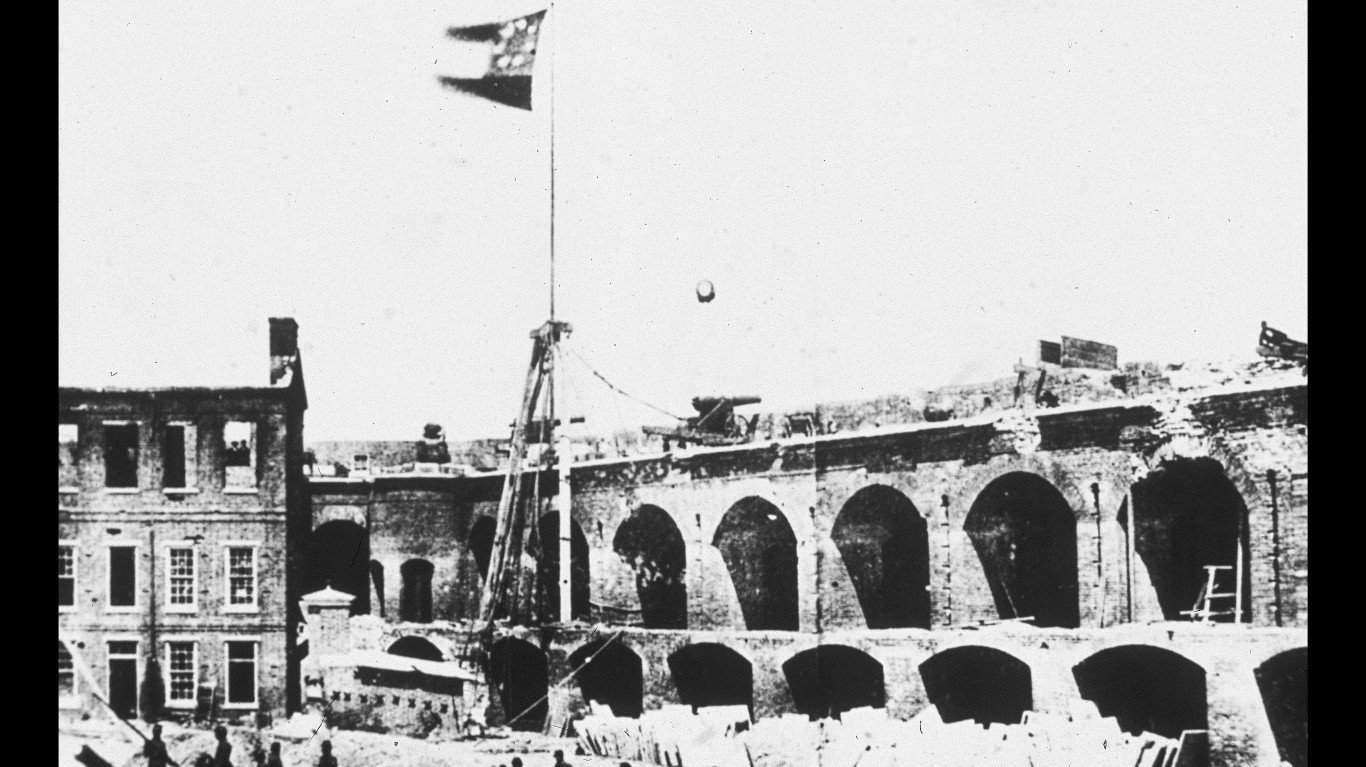
- Date: 1861
- Location: South Carolina
The First National Flag of the Confederacy – as opposed to the familiar X-crossed banner commonly called the Confederate flag – flies over this Union stronghold in Charleston Harbor after it surrendered to the Rebels following bombardment by the South Carolina Militia, in what is considered the first shots of the Civil War.
A Rebel bunker
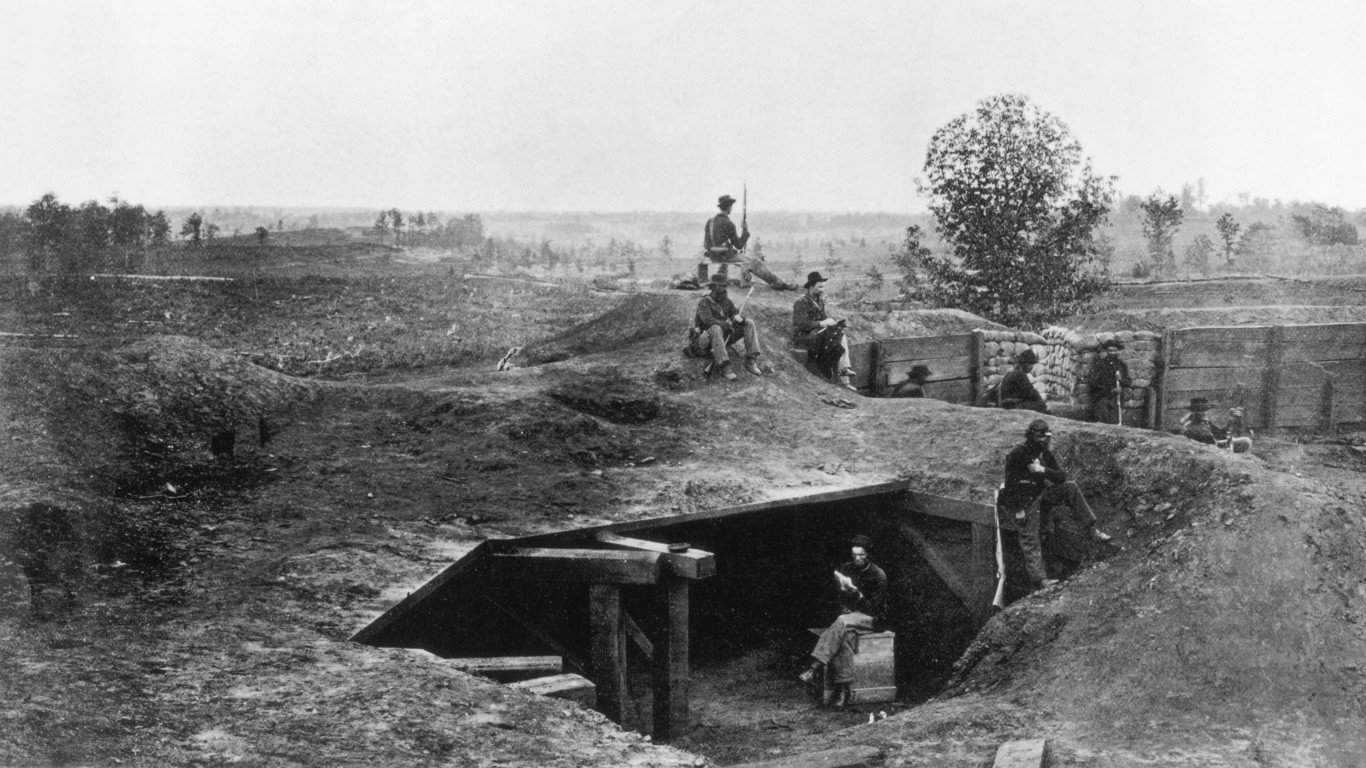
- Date: 1864
- Location: Outside Atlanta (post-capture occupation of defenses)
Union troops occupied Confederate bunker defenses outside Atlanta, a vital transportation and manufacturing hub for the Rebels.
Union dugouts
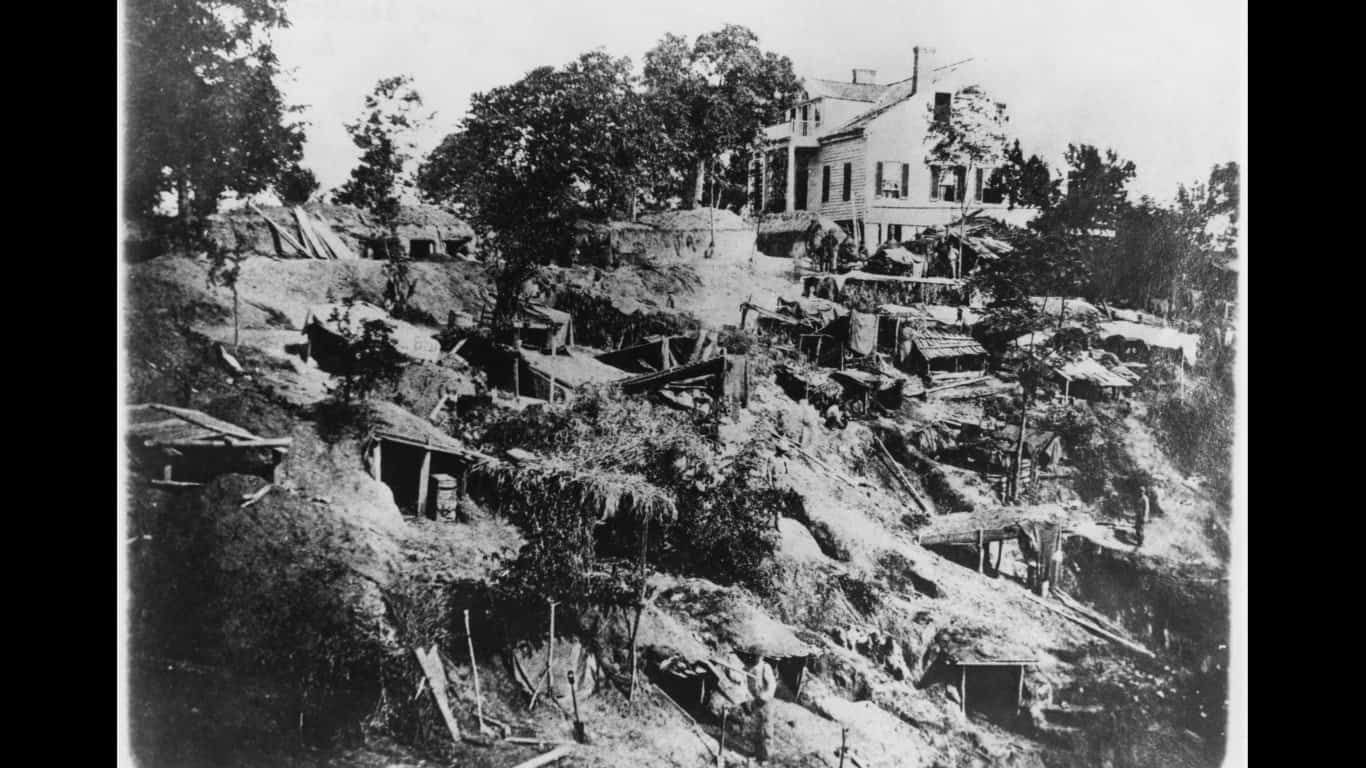
- Date: 1863
- Location: Mississippi
The Union Army in fortified positions on a hillside during the siege of Vicksburg.
Standing guard
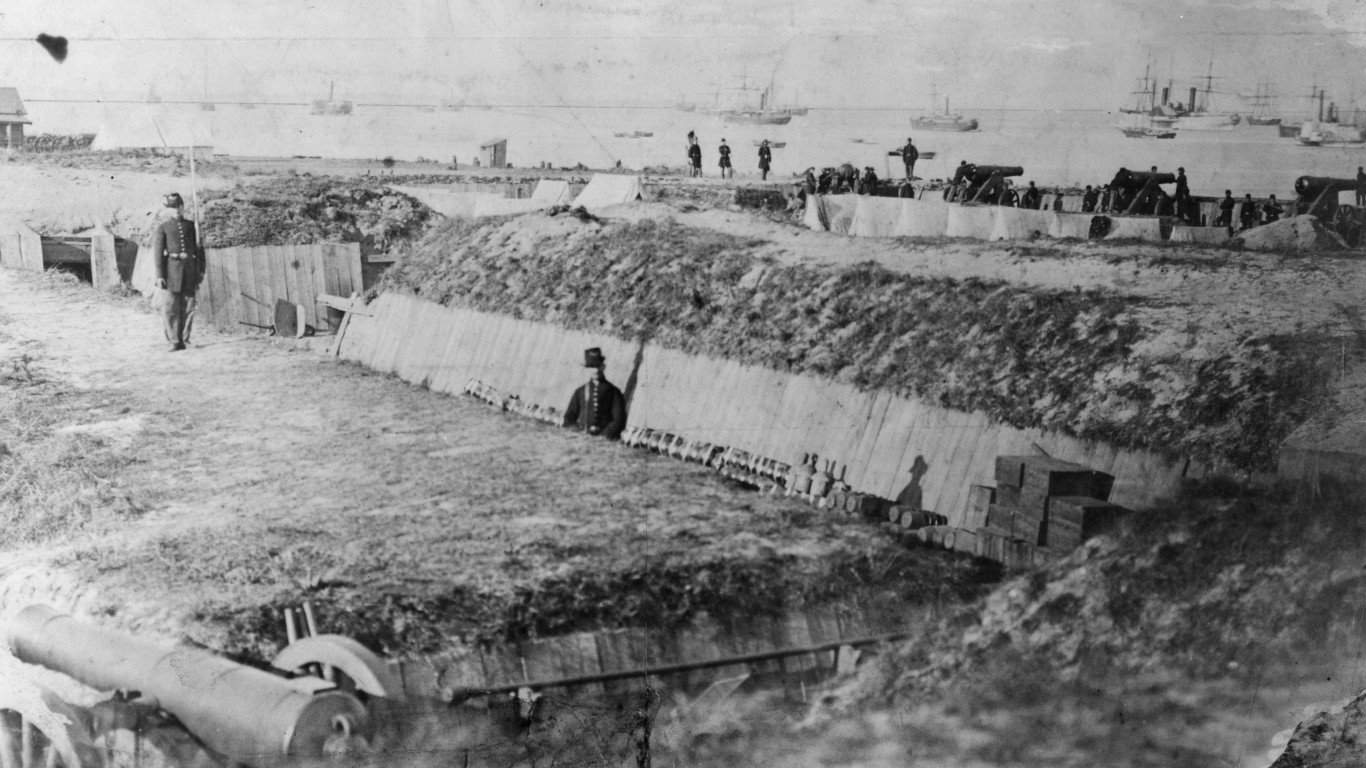
- Date: 1861
- Location: South Carolina
Confederate soldiers standing guard at Fort Walker on Hilton Head. It was a fort hastily built by slave labor to guard the entrance to Port Royal Sound.
Working on a stockade
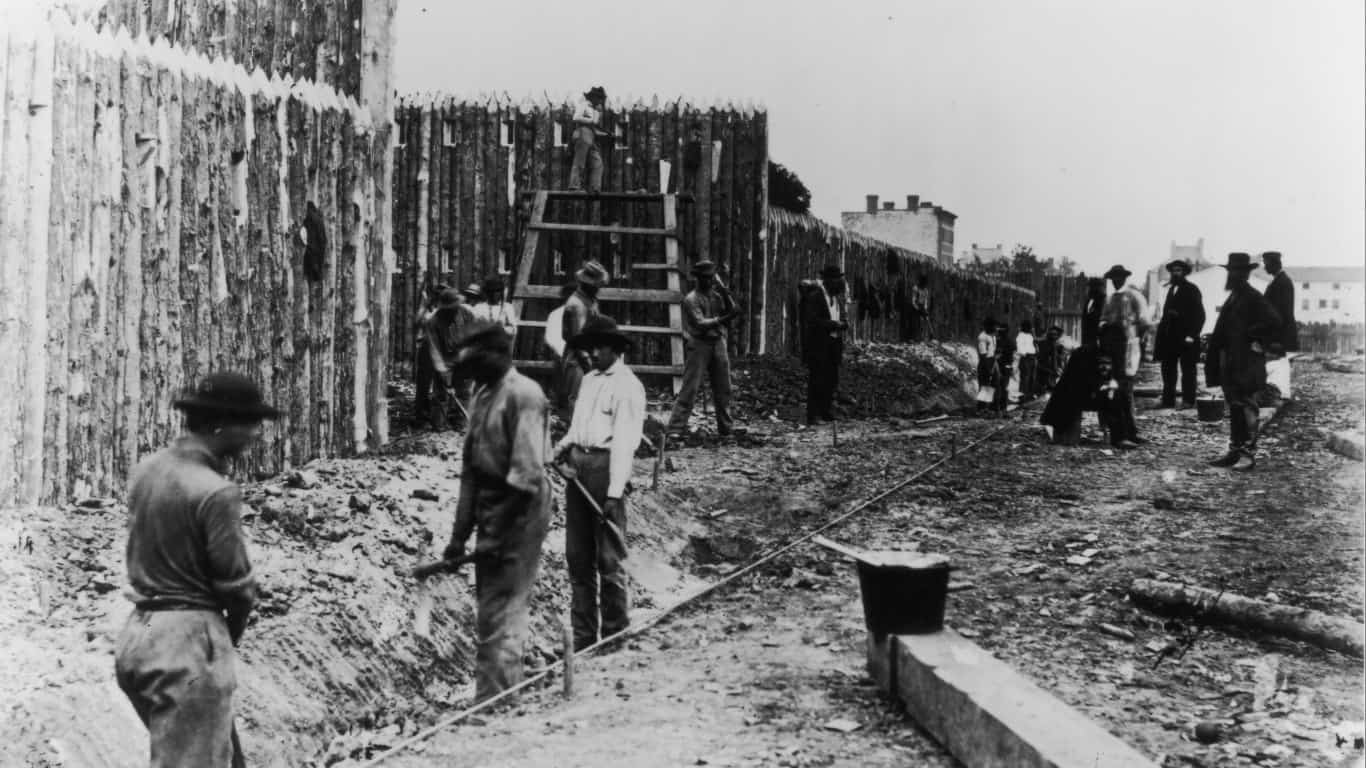
- Date: circa 1864
- Location: Virginia
Black laborers digging a trench in front of a new stockade in Alexandria, possibly formerly enslaved men who’d fled there after the city was occupied by Union troops and found paid work.
Damaged lighthouse
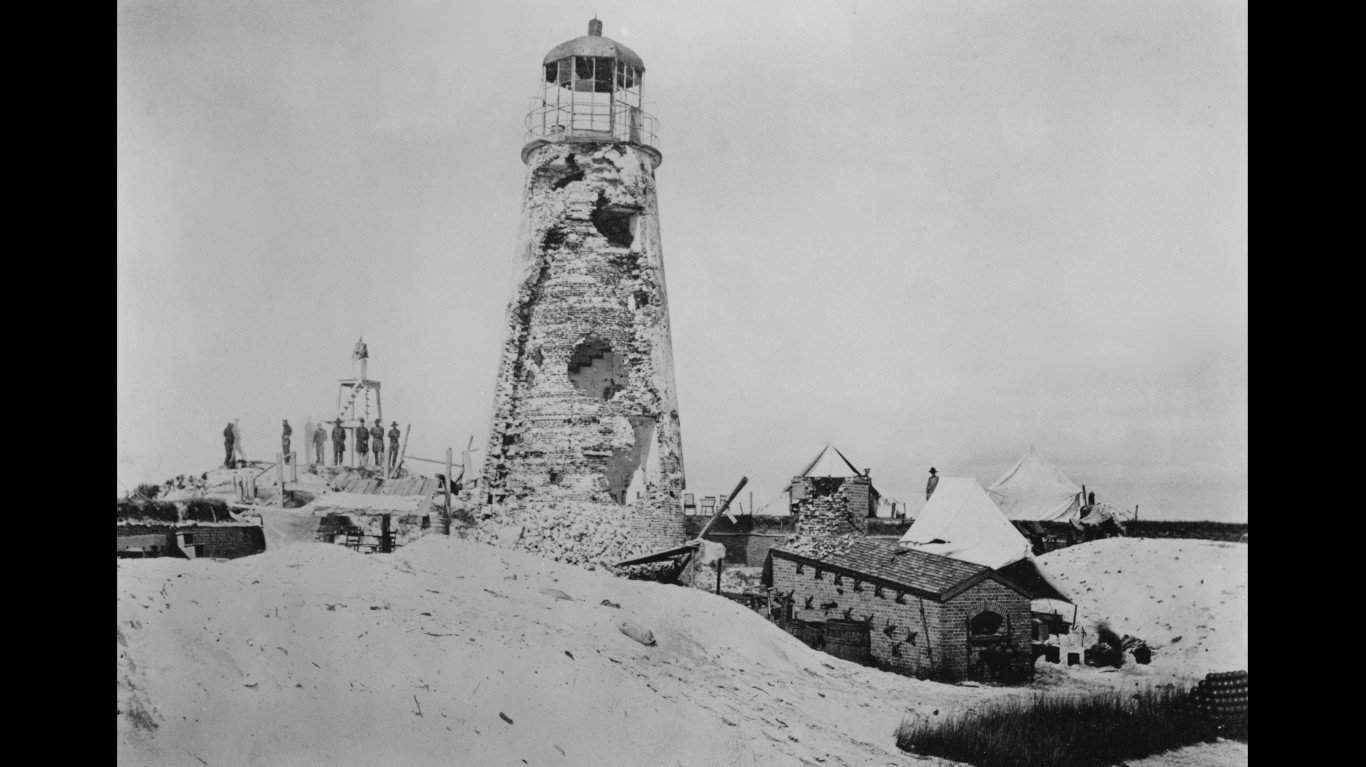
- Date: August 5, 1864
- Location: Alabama
The ruins of a lighthouse in the aftermath of the Battle of Mobile Bay. This battle was considered a decisive victory that closed Mobile as a Confederate port; the city fell in 1865.
Richmond in ruins
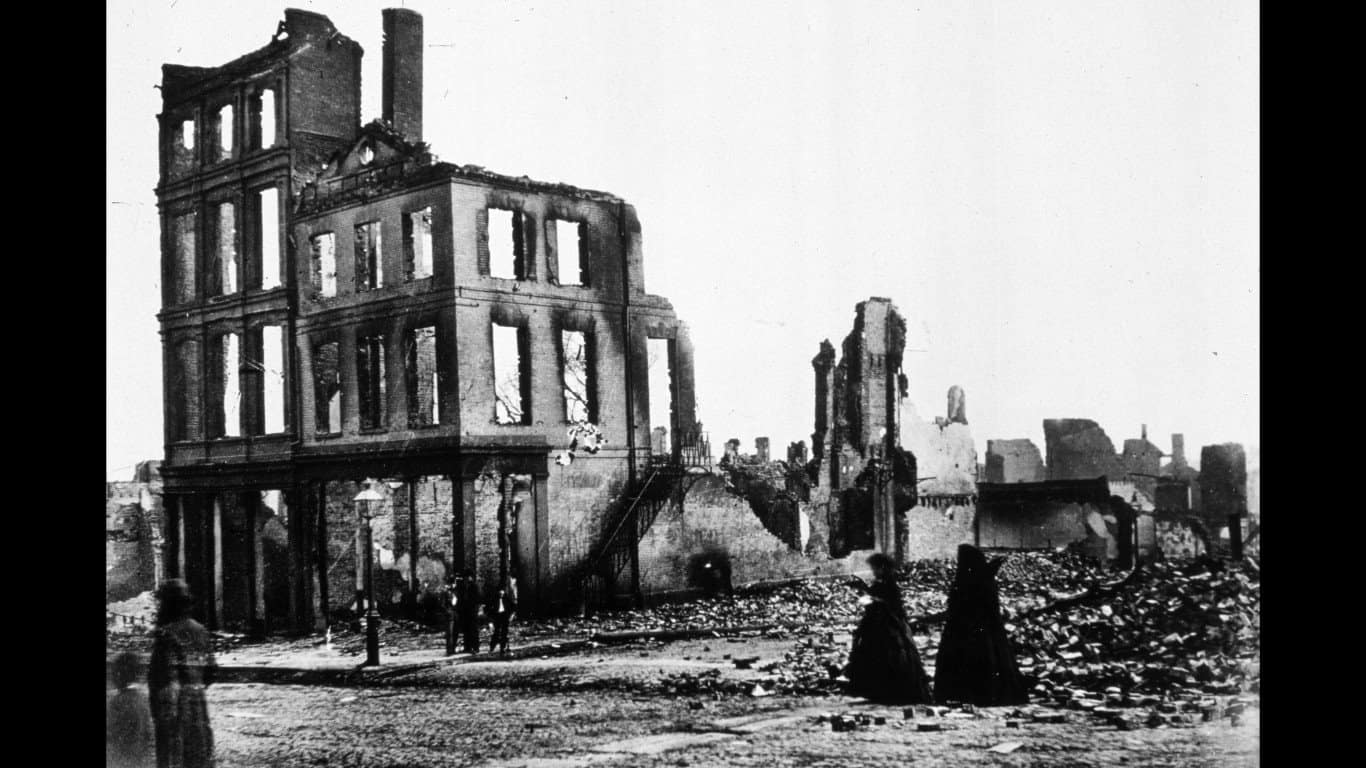
- Date: 1865
- Location: Virginia
Burnt-out and demolished buildings in Richmond, the capital of the Confederacy.
Hanging a Confederate war criminal
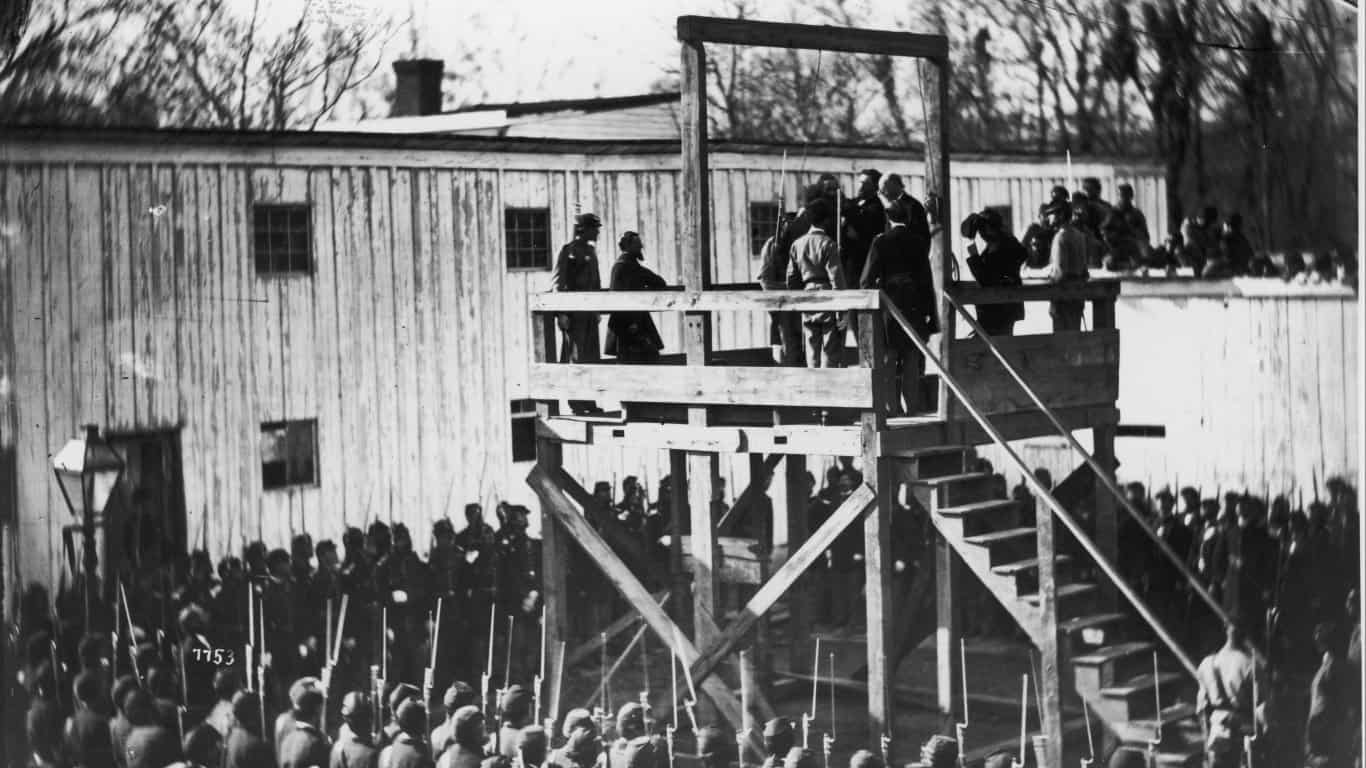
- Date: November 10, 1865
- Location: Washington, D.C.
Heinrich (Henry) Wirz commanded the infamous Confederate prison camp in Andersonville, in which nearly 13,000 Union soldiers died under horrific conditions. He was hanged in Washington, D.C. for conspiracy and murder.
The Potomac Creek Bridge
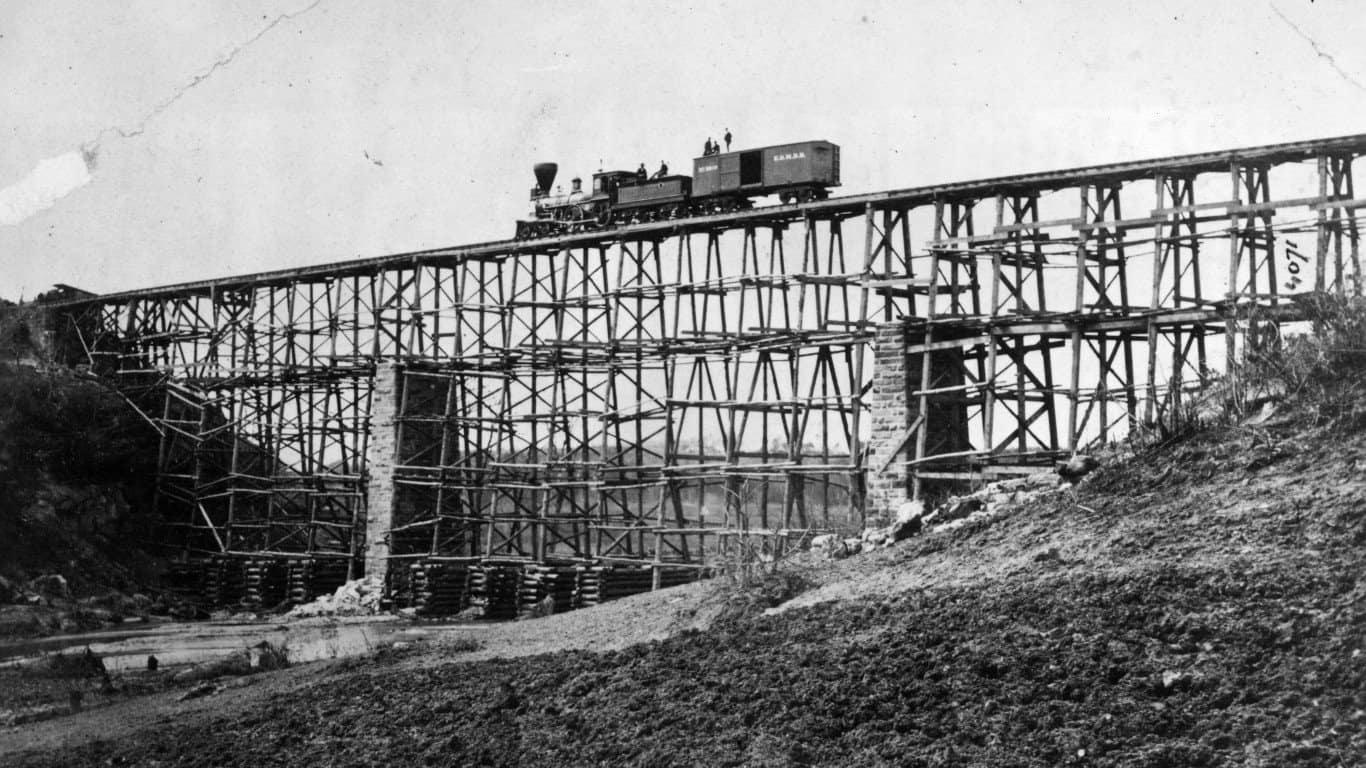
- Date: May 1862
- Location: Virginia
The Potomac Creek Bridge in Stafford County was built in nine days by Union troops under the supervision of engineer Herman Haupt. This photograph was taken by legendary photographer Mathew Brady and comes from Andrew J. Russell / Brady studio.
Washington Arsenal
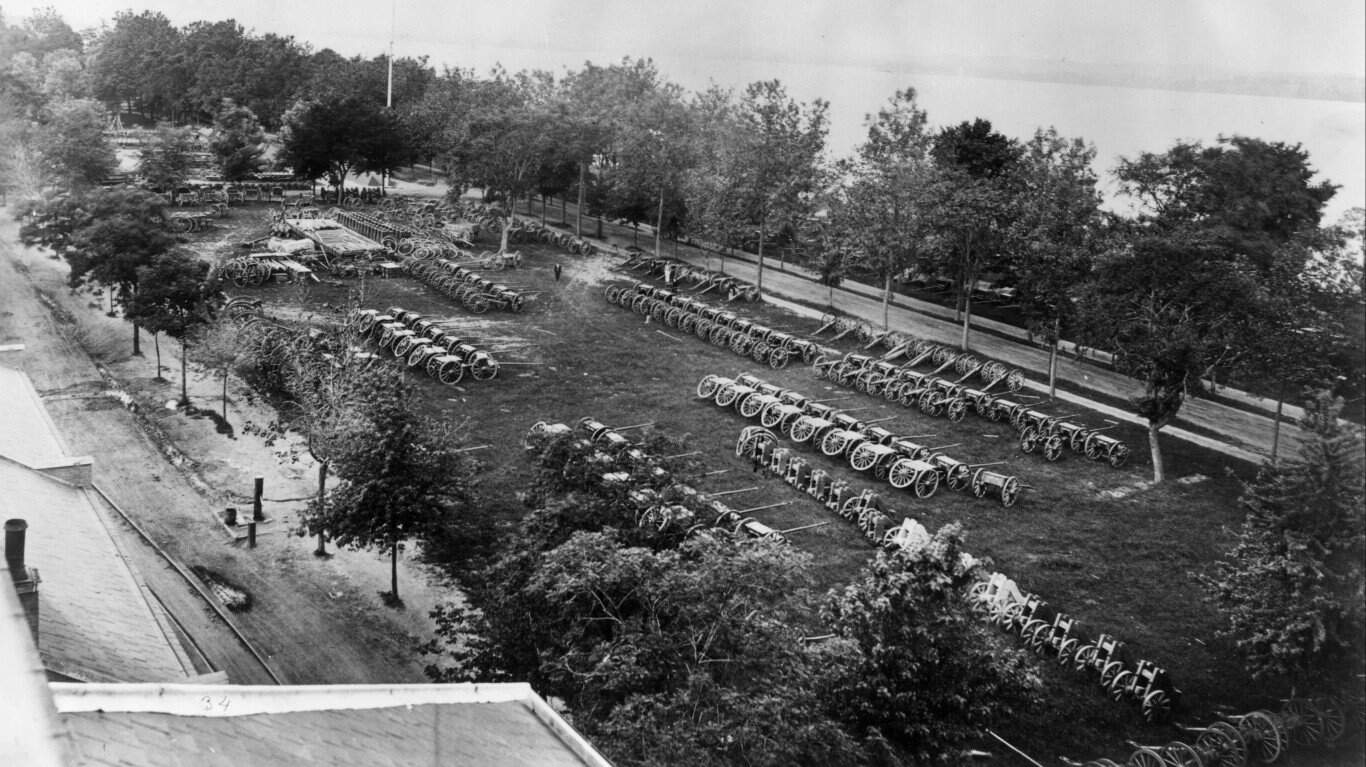
- Date: circa 1861
- Location: Washington, D.C.
Washington Arsenal (now Fort Lesley J. McNair) on Greenleaf Point, near the junction of the Anacostia River and the Washington Channel in the nation’s capital.
Slave cells
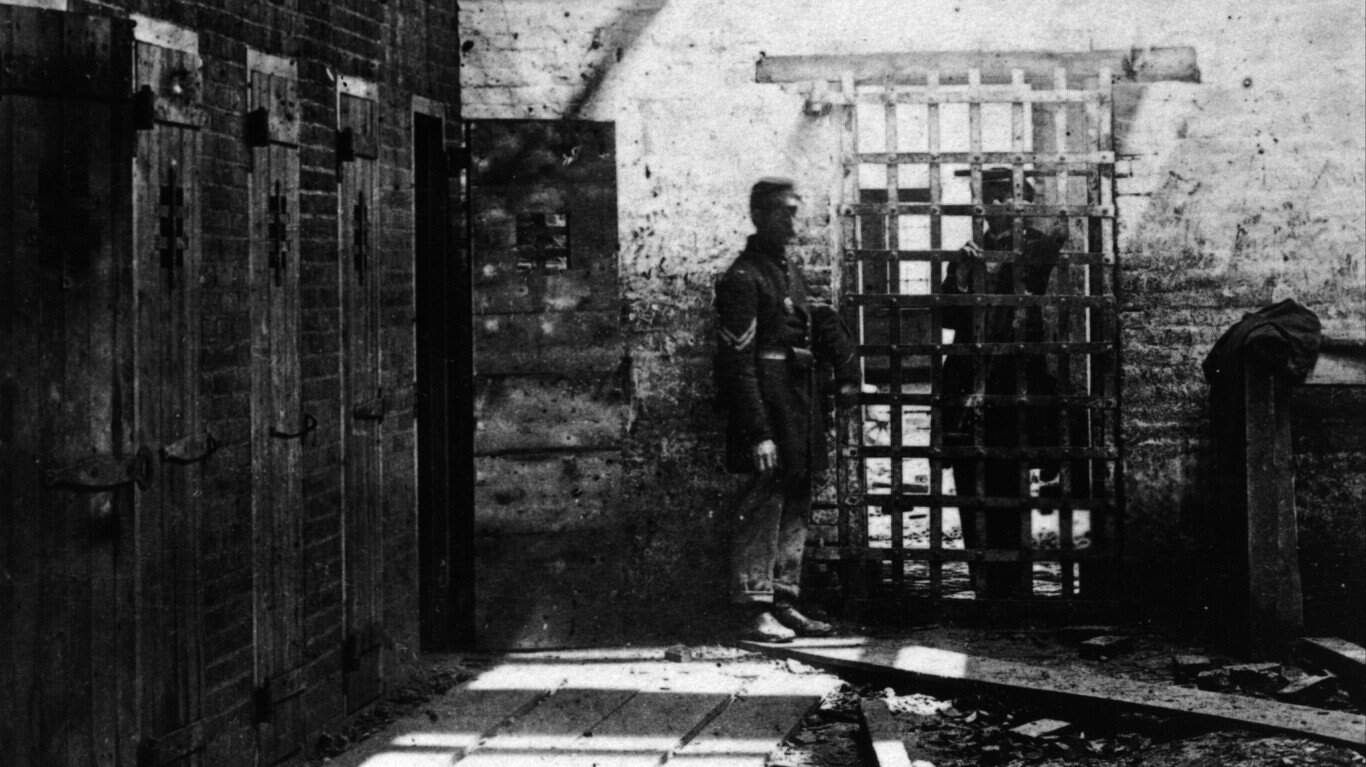
- Date: circa 1861
- Location: Virginia
Two Union soldiers stand beside slave pen cells in Alexandria, a major slave trafficking center before the Civil War and the first Southern city taken by Union troops.
Battle of Fredericksburg
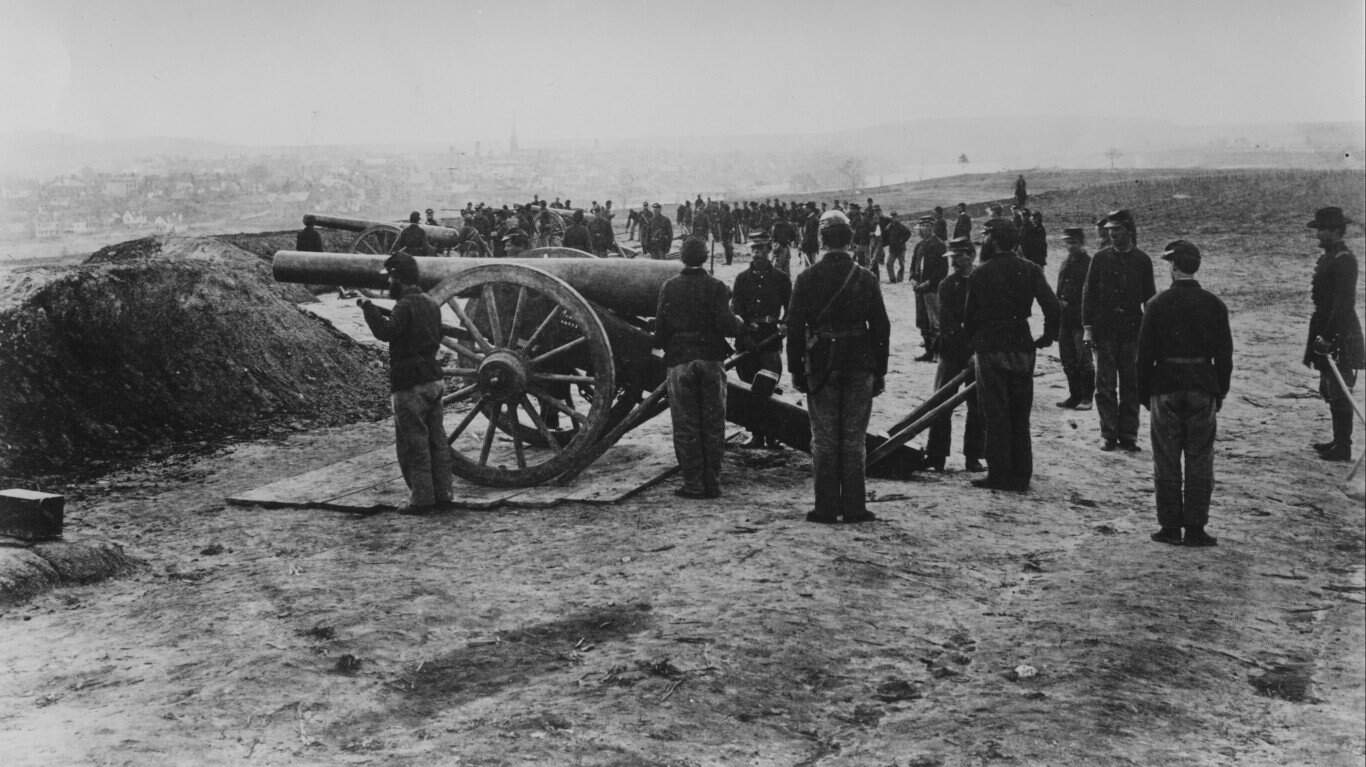
- Date: December 1862
- Location: Virginia
A Union Army battery makes final preparations on the day before the Battle of Fredericksburg, which proved to be one of the most disastrous defeats for the Union during the Civil War.
A barracks turned prisoner of war camp
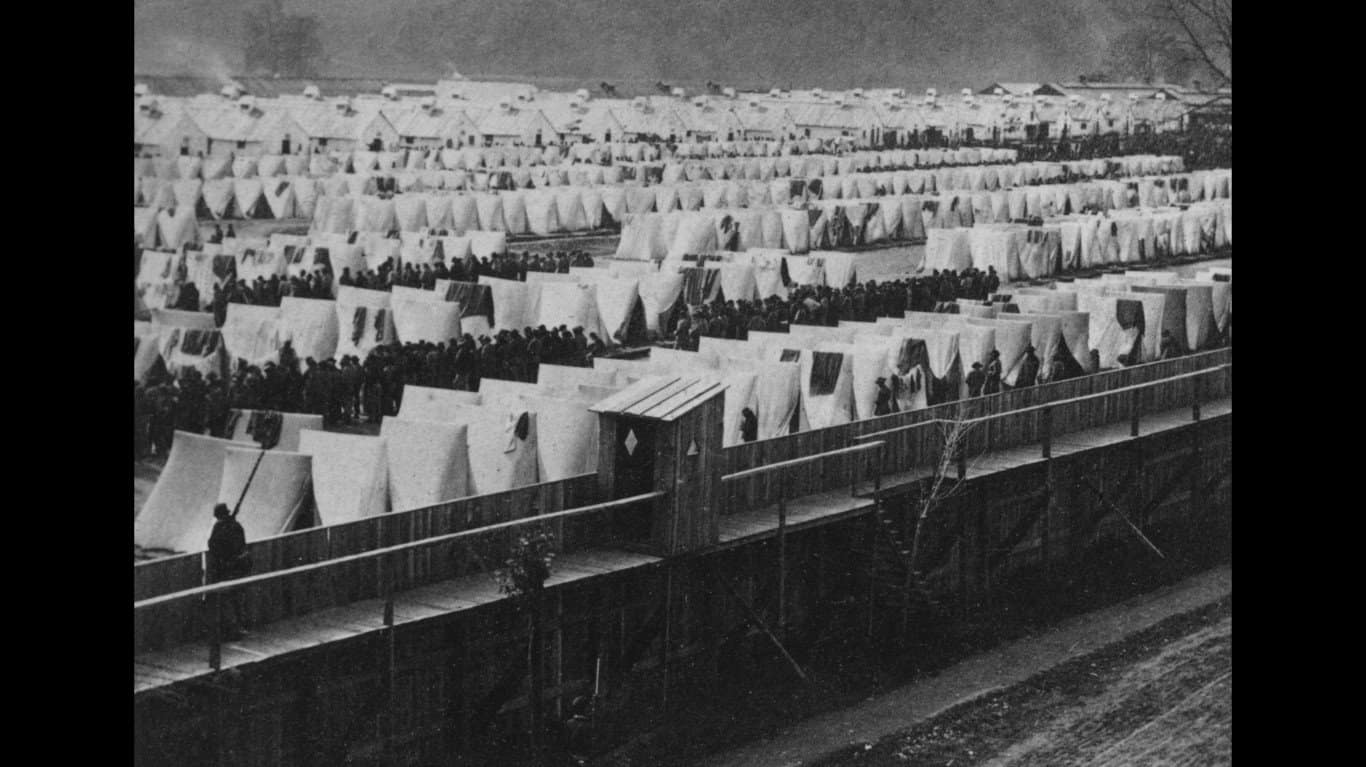
- Date: Summer 1864
- Location: New York
The one-time Camp Rathbun in Elmira fell into disuse as a training center as the war progressed and became a prison camp for captured Confederates.
A broken cartwheel
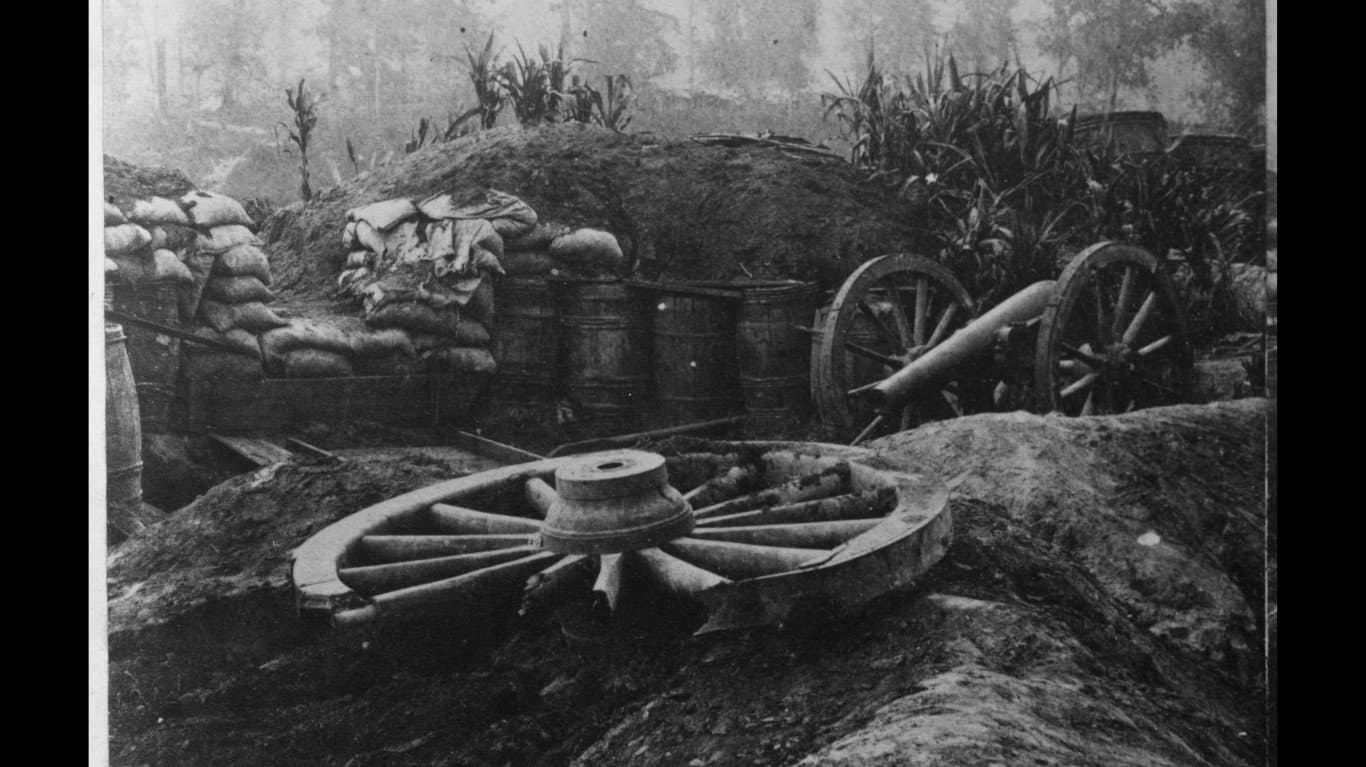
- Date: 1863
- Location: Unknown
A broken cartwheel with an abandoned cannon nearby on a battlefield.