
Courtesy of American Movie Classics (AMC)

NEW YORK, NY – DECEMBER 07: Actress Cameron Diaz attends the “Annie” World Premiere at Ziegfeld Theater on December 7, 2014 in New York City. (Photo by Theo Wargo/Getty Images)

DFree / Shutterstock.com

Michael Mattes / Shutterstock.com

Kathy Hutchins / Shutterstock.com

Kathy Hutchins / Shutterstock.com

Monica Schipper/Getty Images

Denis Makarenko / Shutterstock.com

Kathy Hutchins / Shutterstock.com

Fred Duval / Shutterstock.com

Noam Galai/Getty Images
Denis Makarenko / Shutterstock.com

Frederick M. Brown/Getty Image

s_bukley / Shutterstock.com

: DFree / Shutterstock.com

Phil Stafford / Shutterstock.com


15 Fictional Educators Who Should Have Been Fired
Most teachers are trying to help their students survive algebra, write a decent essay, or at least make it through class without setting anything on fire. Fictional schools, apparently, have a much more questionable hiring process.
Movies and television have given us teachers who lie, manipulate students, abuse their authority, break laws, and occasionally make ordinary classroom incompetence look downright wholesome. Some are villains. Others are supposed to be lovable characters whose teaching methods would still have human resources sprinting down the hallway.
From Hogwarts to Bikini Bottom, here are 15 fictional educators who probably should have been asked to clean out their desks.
Elizabeth Halsey, Bad Teacher
Cameron Diaz's Elizabeth Halsey makes almost no attempt to hide the fact that teaching ranks somewhere near the bottom of her priority list. She lets students watch movies while she checks out mentally, smokes marijuana on school property, and spends much of the movie trying to raise money for cosmetic surgery. Her fundraising methods include skimming money and manipulating parents, but she goes considerably further when she steals a state exam so her class can score high enough for her to earn a teacher bonus. There are bad teachers, and then there are teachers whose lesson plan apparently includes fraud.
Ezra Fitz, Pretty Little Liars
Ezra Fitz begins a relationship with Aria Montgomery while serving as her high school English teacher, which was already an enormous professional boundary violation. The story becomes even worse later. Early episodes make it seem as though Ezra did not know who Aria was when they first met at a bar. Season 4 reveals that he actually knew her identity beforehand because he was researching her missing friend Alison for a book. That means the convenient "I didn't know" explanation falls apart. Even members of the show's cast and creative team have since acknowledged how inappropriate the teacher-student relationship looks through modern eyes.
Tamara Jacobs, Dawson's Creek
Tamara Jacobs is an English teacher who becomes involved with her 15-year-old student Pacey Witter during the first season of Dawson's Creek. Pacey may aggressively pursue her, but Tamara is the adult and the teacher, making responsibility for maintaining that boundary entirely hers. Rumors about the relationship eventually spread through school, and the scandal forces Tamara to end it and leave Capeside. The storyline was framed with far more romantic ambiguity in the late 1990s than a similar teacher-student relationship likely would be today.
Rachel Carr, Gossip Girl
Rachel Carr arrives at Constance Billard as a young teacher who initially seems determined to hold wealthy students accountable. Then her professional judgment falls apart. Rumors spread that she is involved with student Dan Humphrey, and although the initial accusation is false, Rachel kisses Dan after believing she has been fired. The school later reinstates her, but the relationship does not end. Dan eventually admits that they continued seeing each other while Rachel was back on staff. When one of your students has to remind you that you are the adult in the situation, the faculty evaluation probably isn't going well.
Dewey Finn, School of Rock
Dewey Finn eventually becomes exactly the kind of teacher his students need. There is just one small administrative problem: he isn't actually their teacher. After answering a phone call intended for his roommate Ned Schneebly, Dewey impersonates Ned and fraudulently takes a substitute teaching job at Horace Green. He initially does almost no conventional teaching, then discovers the children can play music and reorganizes the class into a rock band so he can enter a competition. Inspirational? Absolutely. Something the school district would approve? Absolutely not. Apparently "stolen identity but excellent guitar curriculum" was not covered in the employee handbook.
Coach Carr, Mean Girls
Coach Carr's health class in Mean Girls is deliberately one of the worst sex-education lessons imaginable. Instead of offering useful information, he tries to frighten students into abstinence by telling them that sexual activity will lead to chlamydia and death. His credibility somehow gets even worse later when the Burn Book reveals that he has been involved inappropriately with students Trang Pak and Sun Jin Dinh. Principal Duvall's response makes clear that this isn't merely another North Shore rumor. Maybe don't put that guy in charge of health class.
Dolores Umbridge, Harry Potter
Hogwarts employs its share of questionable teachers, but Dolores Umbridge manages to make most of them look reasonable. As the school's Defense Against the Dark Arts professor, she refuses to let students practice defensive magic and gradually imposes increasingly authoritarian rules on the school. Her detentions are considerably worse. Umbridge forces Harry to write lines with a magical black quill that uses his own blood as ink and cuts the words into his hand. Even by Hogwarts standards, where student safety has always been something of a flexible concept, that's a fairly clear sign the hiring process has failed.
Mrs. Puff, SpongeBob SquarePants
To be fair to Mrs. Puff, teaching SpongeBob how to drive might break almost anyone. She has endured countless crashes, destroyed boats, and repeated failures while trying to get one student through boating school. Eventually, though, frustration crosses a fairly dramatic line. In the episode "Demolition Doofus," Mrs. Puff enters SpongeBob in a demolition derby hoping the experience will finally get rid of him. When SpongeBob survives, she decides to take matters into her own hands and personally chases him in a demolition vehicle. Losing patience with a student is understandable. Entering him in vehicular combat is generally frowned upon.
Will Schuester, Glee
Will Schuester is often presented as the inspirational teacher at the center of Glee, which makes his behavior in the very first episode especially wild. After hearing football player Finn Hudson sing, Will wants him in the glee club badly enough to plant marijuana in Finn's locker and threaten him with serious consequences unless he joins. Will later admits what he did, but by then the teacher-student relationship has somehow survived. The series gives him plenty of genuinely caring moments, but blackmailing a teenager with drugs you planted yourself is a difficult item to bury on an annual performance review.
Jessca, Abbott Elementary
Jessca, spelled without the "i," temporarily takes over Janine's classroom while Janine is working for the school district. Played by comedian Sabrina Brier, the substitute wins over the children largely because her philosophy is the opposite of Janine's structured approach. Jessca treats basic academic expectations as optional and operates the classroom with an almost anything-goes attitude. She's nowhere near the darkest educator on this list, but she represents a different kind of nightmare: the substitute who becomes incredibly popular because the regular lesson plan has apparently ceased to exist.
Walter White, Breaking Bad
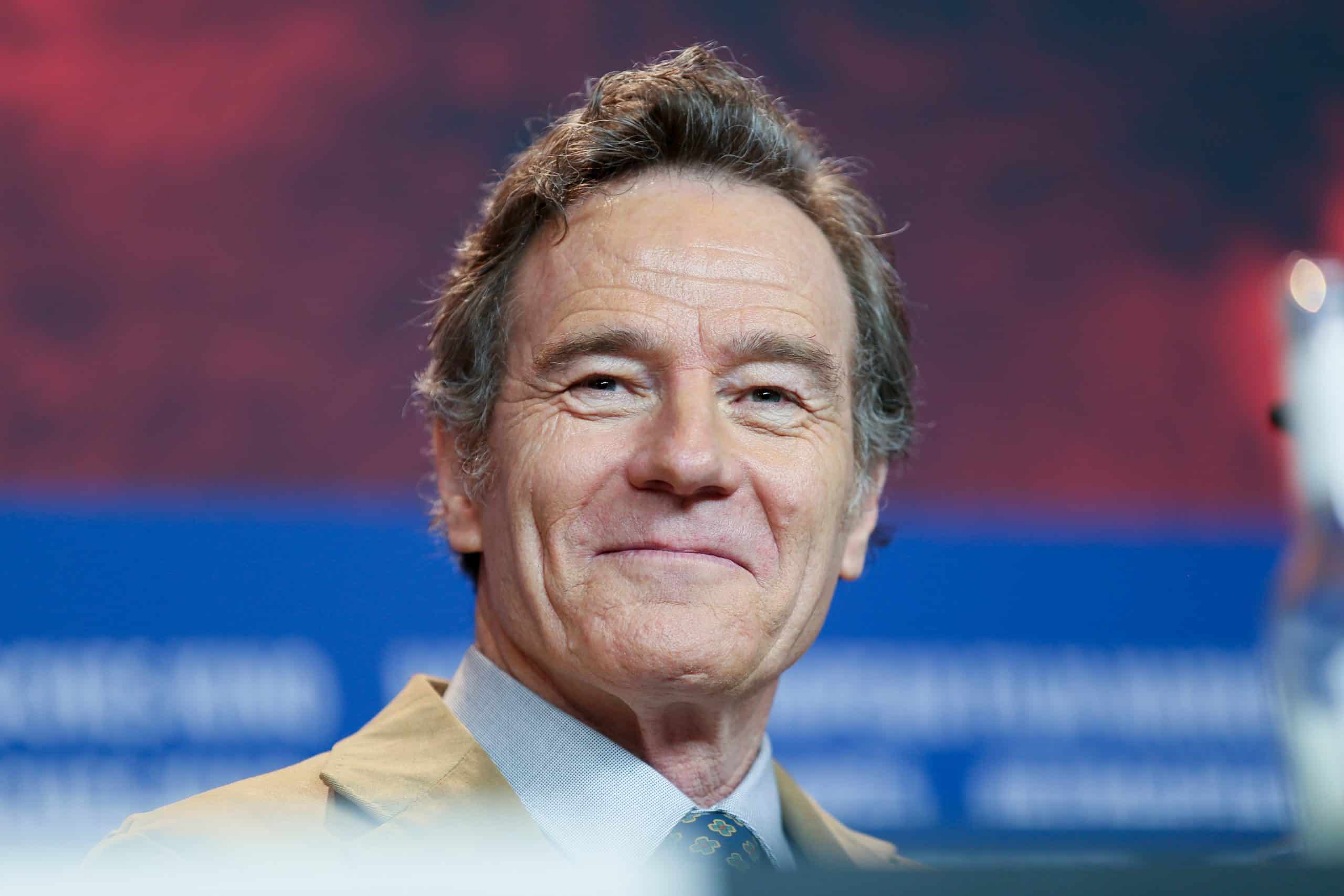
Walter White begins Breaking Bad as an underpaid high school chemistry teacher who discovers he has cancer. His solution to his family's financial problems is considerably less conventional than picking up some tutoring hours. Walt reconnects with former student Jesse Pinkman and uses his chemistry expertise to manufacture methamphetamine. What begins as a desperate attempt to leave money behind eventually turns into an enormous criminal enterprise as Walt becomes increasingly consumed by power and ego. Few fictional teachers have ever put their subject-area expertise to more spectacularly inappropriate use.
Geraldine Grundy, Riverdale
Riverdale reinvented Miss Grundy as a much younger music teacher involved with student Archie Andrews. The series eventually reveals that "Geraldine Grundy" is an assumed name and that her real name is Jennifer Gibson. Whatever sympathy viewers might have for the circumstances surrounding her changed identity does not excuse the relationship with Archie. Once his parents and Alice Cooper discover what has been happening, Grundy resigns and leaves Riverdale. Later episodes reveal that she continues crossing the same kind of boundary with another student after relocating to Greendale, making the Archie situation look less like one terrible decision and more like a pattern.
Denzel Crocker, The Fairly OddParents
Mr. Crocker technically has a teaching job, but educating children regularly takes a back seat to his true obsession: proving that fairy godparents exist. Unfortunately for Timmy Turner, Crocker is completely correct about that part. He spends enormous amounts of time and energy spying on Timmy, building fairy-detection equipment, setting traps, and dragging students into whatever scheme might finally prove his theory. Paramount even describes an episode in which Crocker becomes a teacher at the Fairy Academy so he can steal the students' magic. Most teachers have hobbies. Crocker's hobby just happens to involve using his students as evidence in a supernatural conspiracy investigation.
Annalise Keating, How to Get Away With Murder
Annalise Keating is unquestionably brilliant, which makes her inclusion here a little different. Viola Davis's character is a criminal law professor and defense attorney who selects a handful of students to work directly for her firm. Unfortunately, their practical education soon involves considerably more than research and courtroom strategy. The students become tangled in lies, coverups, investigations, and crimes that repeatedly blur any reasonable boundary between professor, employer, mentor, and accomplice. ABC itself described Annalise as brilliant and passionate but also unpredictable and dangerous. Excellent lawyer? Often. Healthy faculty mentorship model? Perhaps not.
Martin Harris, Cruel Summer
Martin Harris is technically an assistant principal rather than a classroom teacher, but leaving him off a list of terrible fictional educators would feel like a loophole. In the first season of Cruel Summer, Martin initially presents himself as a caring and approachable school administrator. He gradually abuses that position of trust with student Kate Wallis, isolates her, and ultimately holds her captive in his home. Freeform's own episode descriptions refer directly to Kate's time in Martin's captivity. Compared with lazy substitutes and eccentric teachers, Martin belongs in an entirely darker category of fictional educator.