ESPN Classic

Milos Stojanovic / Shutterstock.com
Marie C Fields / Shutterstock.com

Brocreative / Shutterstock.com
Robert Nyholm / Shutterstock.com

claudiodivizia / iStock / Getty Images Plus

Red Herring / Shutterstock.com

Master1305 / Shutterstock.com
Volodymyr Maksymchuk / Shutterstock.com

BigTunaOnline / Shutterstock.com

eurobanks / Shutterstock.com
JoeSAPhotos / Shutterstock.com

PeopleImages.com - Yuri A / Shutterstock.com



12 Fascinating Facts About Sports Referees
Everybody remembers a bad call. One disputed strike, a late whistle, or a flag at the worst possible moment can turn an official into the most unpopular person in the stadium. But it's easy to forget how much goes into the job before anyone blows a whistle or calls a batter out.
Professional referees and umpires have to know intricate rulebooks, keep up with athletes who are considerably younger, and make split-second decisions with thousands of people watching. Some spend months on the road. Others review film for hours or perform the same crouching motion hundreds of times in a single game. And yes, the salaries can be substantial, although the exact numbers aren't always public.
From the NFL's seven-person officiating crews to the surprisingly detailed statistics MLB keeps on its umpires, here are 12 facts about the people entrusted with keeping professional sports fair.
1. NFL Games Have Seven On-Field Officials
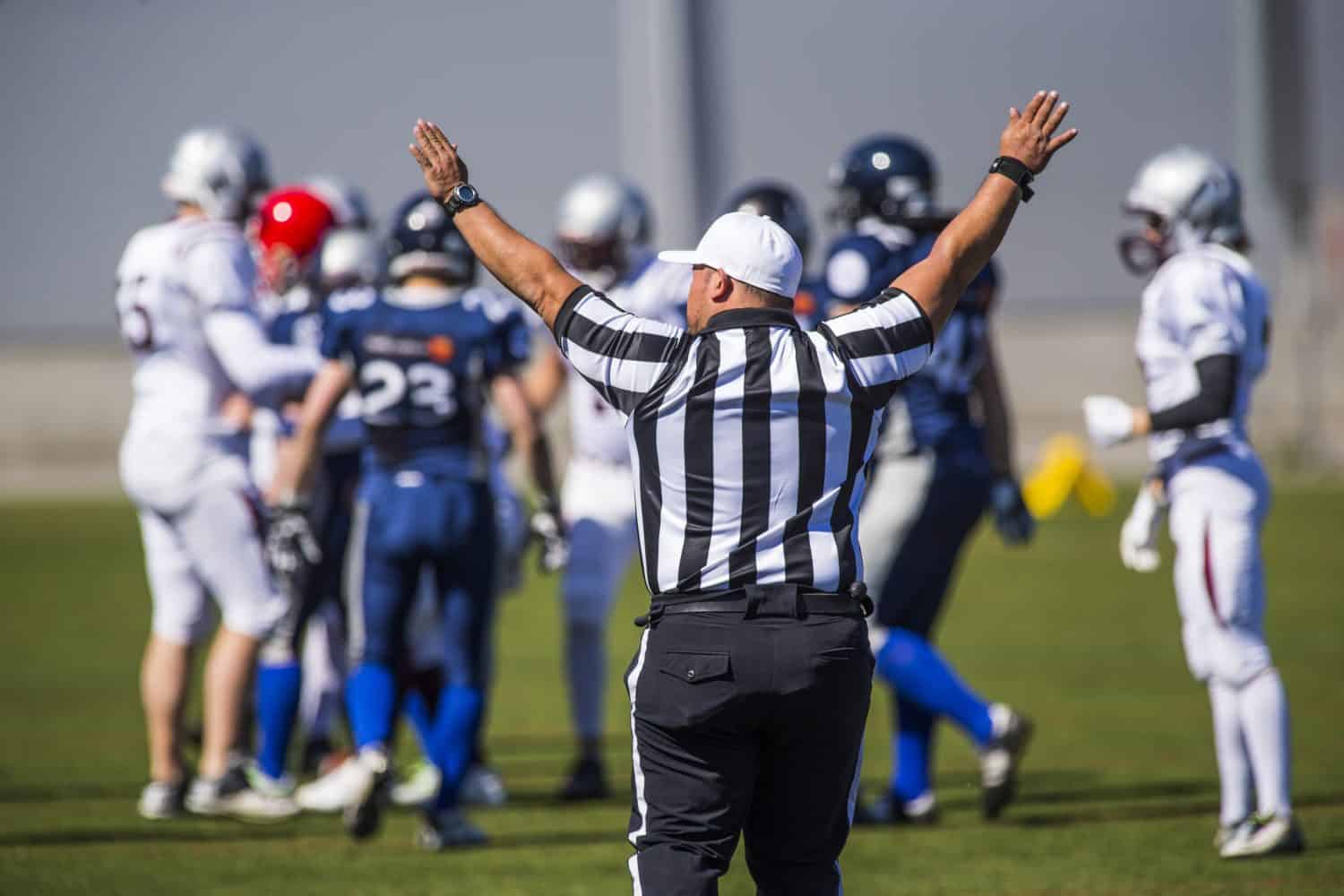
When somebody yells at "the referee" during an NFL game, they're usually blaming one person for a decision involving an entire crew. A standard NFL game has seven on-field officials, and only one of them holds the specific title of referee. That's the crew leader, recognizable by the white cap, who announces penalties and has final authority on rule interpretations. The other six officials have distinct assignments, which means no one person is expected to watch every block, catch, and step along the sideline.
The umpire monitors much of the action around the offensive and defensive lines. The down judge and line judge work the line of scrimmage and sidelines, while the field judge, side judge, and back judge focus on deeper areas of the field, including coverage and certain timing duties. There are also replay officials working off the field, but they aren't an eighth member of the seven-person on-field crew. It's organized chaos, with a surprisingly careful division of labor.
2. Getting Hired Takes Years of Experience
There isn't a shortcut from calling Little League games to working the World Series. MLB's current development route begins with free one-day umpire camps, where promising candidates can be selected for a four-week prospect program in Vero Beach, Florida. Those who earn professional positions work their way through Minor League Baseball. A call-up to a Major League game is another step, not an automatic promotion to a permanent big-league job.
The other leagues have their own pipelines. The NFL expects candidates to have at least 10 years of football officiating experience, including five at the varsity college or minor professional level. The NBA scouts officials from other basketball leagues and uses training and G League assignments to develop future NBA and WNBA referees. Knowing the rules is essential, but positioning, judgment, communication, and the ability to handle pressure all have to be demonstrated over time.
3. NBA Referee Salaries Are Not Publicly Disclosed
NBA referees can earn a very good living, but anyone quoting a precise leaguewide average should come with a source and a healthy dose of skepticism. The NBA and the National Basketball Referees Association agreed to a seven-year labor deal covering the 2022-23 through 2028-29 seasons. The league announced the agreement but did not release the financial terms, so there is no publicly verified NBA salary chart showing exactly what every referee earns.
Outside estimates generally put NBA officiating pay in the six figures, with senior officials potentially earning considerably more than newcomers. Experience, assignments, and postseason work can affect compensation, but numbers repeated online are still estimates rather than confirmed contracts. And the paycheck comes with plenty of strings attached: officials must maintain their conditioning, study constantly changing points of emphasis, travel extensively, and accept that an entire arena might question their judgment several times a night.
4. NFL Officiating Pay Comes With a Big Asterisk
Being an NFL official is a paid professional assignment, even though the league's on-field officials generally aren't full-time employees in the same way players and coaches are. Their earnings are also less transparent than many headlines suggest. One widely cited figure dates to 2019, when compensation was reported at roughly $205,000 under an earlier labor agreement. That's useful historical context, not a verified salary for an NFL official in 2026.
In May 2026, the NFL and its officials' union announced a new seven-year collective bargaining agreement running through the 2032 season. The announcement confirmed that compensation and accountability were part of the negotiations, but it did not provide a current public pay table. Claims that referees automatically collect a particular five-figure Super Bowl bonus are similarly difficult to verify. In other words, officiating the biggest game of the year may be prestigious and lucrative, but the internet's neat dollar figures aren't official records.
5. MLB Umpires Can Earn Six-Figure Salaries
Major League Baseball umpires work a long season, and the pay reflects the experience required to get there. The league and the Major League Baseball Umpires Association ratified a collective bargaining agreement covering the 2025 through 2029 seasons, but an individual salary schedule hasn't been released for public inspection. Published estimates commonly place MLB umpire salaries somewhere from the low six figures to around $450,000 for long-serving officials. Those are reported ranges, not a guaranteed starting salary or an official league average.
Seniority and assignments matter, especially when it comes to leadership roles and postseason opportunities. It's also misleading to divide an estimated annual salary by 162 and call that an umpire's per-game rate: teams play 162 regular-season games, but umpires rotate assignments, travel with crews, and receive time off. Whatever the exact paycheck, the job demands concentration across a staggering number of pitches, fair-or-foul calls, replay situations, and arguments with people who are convinced they saw the play better.
6. Even Officials Have Had Their Numbers Retired
Athletes aren't the only people who can be honored with a retired uniform number. In 2014, the NFL retired No. 70 in recognition of Jerry Seeman, a longtime official who later supervised the league's officiating department. Seeman worked two Super Bowls as a referee and helped oversee changes in how officials were trained and evaluated. The number retirement was a rare acknowledgment that an official could leave a major mark on a sport without ever scoring a point.
Baseball has a slightly stranger version of the tradition. MLB recognizes earlier honors for umpires such as Bill Klem, whose No. 1 was retired by the National League, and Al Barlick, associated with No. 3. But those honors did not permanently remove the numbers from circulation after the American and National League umpiring staffs were unified in 2000. Their accomplishments are still recognized, even though later umpires have worn those digits. So yes, umpire numbers have been retired—just not always in the way fans expect.
7. Soccer Referees Can Cover Miles in One Match
The next time a soccer referee sprints toward a breakaway, remember that there's no substitution waiting on the sideline. A top-level referee may have to cover roughly 9 to 12 kilometers, or about 5.6 to 7.5 miles, during a full match. A 2025 systematic review of high-level officiating studies found similarly demanding distances, with repeated bursts of high-intensity running mixed into the constant movement needed to follow play.
Referees don't simply chase the ball in a straight line. They change direction, accelerate, slow down, and adjust their viewing angle so they can catch fouls without blocking a pass or colliding with a player. Assistant referees have different duties along the touchlines. And contrary to the original article's claim, there isn't a universal rule requiring the center referee to stay within 20 yards of the ball at all times. Good positioning depends on the situation. If extra time is needed, that only makes a physically demanding evening longer.
8. Officiating Requires More Fitness Than You Might Think
A referee doesn't have to outrun the fastest athlete in the league, but being badly out of position can mean missing the play entirely. The physical demands vary dramatically by sport. Soccer officials need stamina and repeat sprint ability. Basketball referees constantly transition between ends of the court. Hockey officials skate in traffic and must stay balanced while avoiding players, sticks, and a puck moving at serious speed. Baseball umpires spend hours standing, moving into position, and, behind home plate, repeatedly crouching to judge pitches.
The NFL specifically lists excellent physical condition among its requirements for prospective officials. Elite soccer officiating also involves fitness testing, while professional leagues use training and evaluations to keep officials prepared. That doesn't mean every referee follows the same workout plan as the athletes. It means they need enough endurance, mobility, and alertness to make the right call late in a game—when everyone, including the official, would probably prefer to sit down.
9. NBA Referees Spend a Lot of Time Away From Home
The NBA calendar isn't particularly friendly to anyone who likes sleeping in the same bed every night. Referees are assigned to games in different cities throughout the regular season, with travel, hotel stays, preparation meetings, and frequent schedule changes to manage. The original article's claim that an official is away 25 days every month isn't supported as a universal rule, and neither is the idea that every referee works exactly 65 to 70 games each season.
In a 2026 interview, veteran NBA referee Jonathan Sterling described working about 50 to 65 games a season and sometimes spending 10 consecutive days on the road before a brief stop at home. Individual assignments can vary, and postseason games go to selected officials. The travel matters for more than comfort: changing time zones and working on limited rest make preparation and routine particularly important. Players at least tend to travel with their teammates. A referee's itinerary is its own demanding season-long puzzle.
10. The NBA Publicly Reviews Close-Game Calls
Sometimes a referee misses a call, and sometimes the television replay proves that the angry crowd was wrong. The NBA's Last Two Minute Reports exist to distinguish between those possibilities in close games. The league reviews relevant calls and material non-calls from the final two minutes of the fourth quarter—and overtime when applicable—if the score was within three points at any point during the applicable closing stretch. The reports identify decisions judged correct and incorrect, rather than simply publishing a list of mistakes.
These are league assessments, not individual report cards that every referee personally files or receives after every game. The NBA also has broader internal evaluation processes, film study, and feedback beyond the public report. A published missed-call finding won't rewind the clock and change the final score, but it can explain what the rule required and provide a measure of accountability. For fans who have spent the last 24 hours arguing about a whistle, that's at least something concrete to examine.
11. MLB Really Has a “Squats Crown”
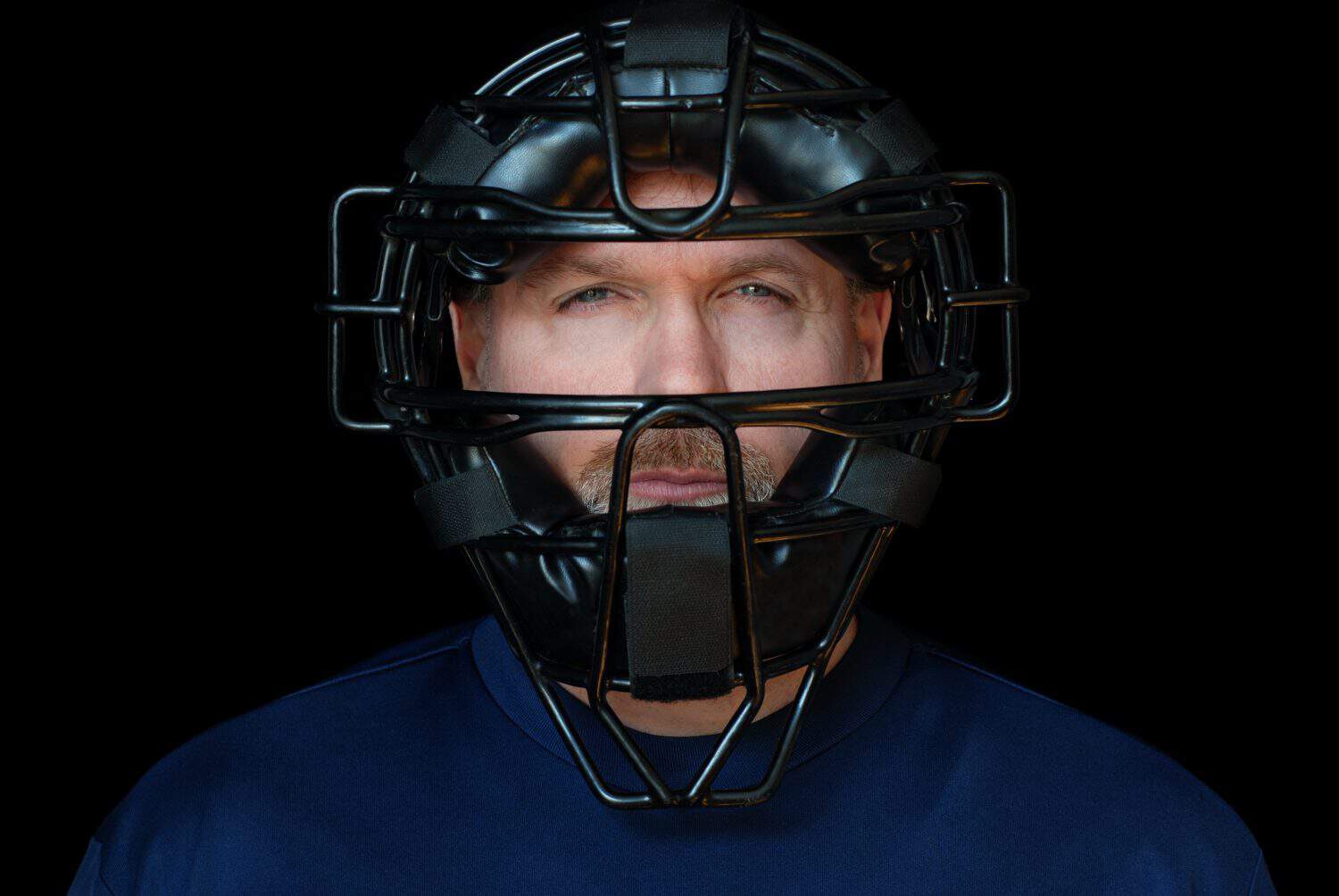
The home-plate umpire might have the most repetitive workout in professional sports. Before pitch after pitch, the umpire settles into a crouch behind the catcher, then straightens or repositions before the next delivery. MLB has actually tracked this work with an annual statistic informally called the "squats crown," based on the number of pitches an umpire calls from behind the plate. That's not an estimate of gym squats, but it does give you a sense of how often the motion is repeated.
The record cited in MLB's own reporting belongs to Tim McClelland, who called 11,417 pitches in 2009. The source article incorrectly put that achievement in 2019, years after McClelland had retired. MLB has also documented how the cumulative total across plate umpires reaches hundreds of thousands of crouches in a season. Add protective gear, foul tips, long summer games, and the need to judge pitches consistently, and suddenly standing behind the catcher doesn't look nearly as comfortable as it seems on television.
12. The Home-Plate Umpire Checks the Baseballs, Too
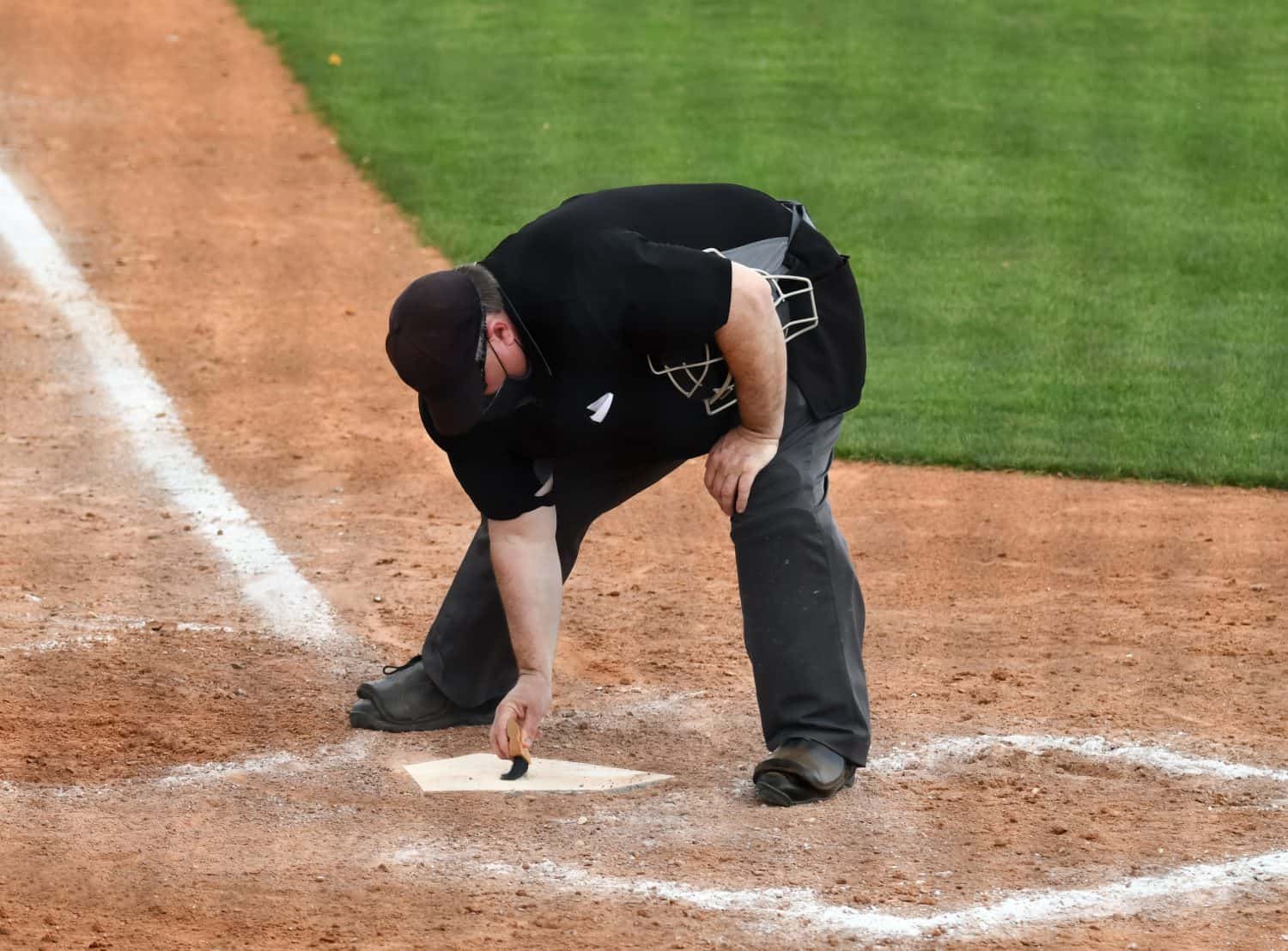
Before the first pitch, the home-plate umpire has a job that fans rarely see: making sure the baseballs are ready to be used. Under MLB's rules, the umpire-in-chief is the judge of whether the supplied balls are fit for play. That includes checking that the home club has provided enough regulation baseballs, that their gloss has been properly removed, and that replacements are available when balls are damaged, lost, or taken out of play.
The role continues once the game starts. Balls are swapped out frequently, and the umpire must have replacements on hand instead of holding up an inning every time a foul ball disappears into the stands. Since 2026, MLB has also used an automated ball-strike challenge system, but that doesn't eliminate the plate umpire: human officials still call pitches, with eligible calls subject to a challenge. The next time you see an umpire casually hand a fresh baseball to the catcher, remember that keeping those baseballs in circulation is part of the job description.