
Athletes compete with the expectation that their opponents are playing by the rules. While the end result of any competition may be uncertain, the effort put into training and giving it their all is not. When that basic assumption falls apart, something much harder to repair than a lost game gets damaged.
That’s part of what makes sports scandals hit differently than other kinds of public disgrace. Fans invest years in teams, athletes, rivalries, and unforgettable moments, often long before they learn something wasn’t right. That kind of dedication can make a scandal feel like it changes what came before. If an actor turns out to be a fraud, the movies stay the same. But if a pitcher throws games or a cyclist admits his biggest victories were fueled by doping, suddenly the record books themselves come into question. That’s a different kind of loss, and it tends to linger.
Some of the scandals below tarnished the legacies of great athletes. Others damaged the credibility of entire leagues. And years later, people are still arguing about them.
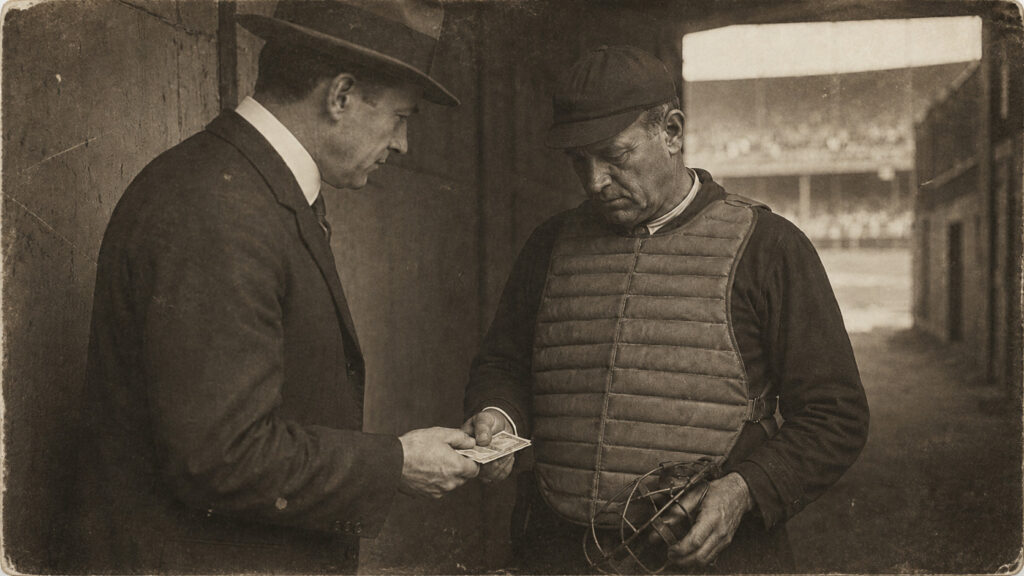
The 1919 Black Sox World Series Fix
Eight members of the Chicago White Sox were accused of conspiring with gamblers to throw the 1919 World Series against the Cincinnati Reds. The fix became public in 1920, and the players were acquitted at a criminal trial in 1921. Newly installed Commissioner Kenesaw Mountain Landis nevertheless banned all eight, including “Shoeless” Joe Jackson, from professional baseball for life.
The scandal also helped force a major change in baseball’s governance. In 1920, team owners replaced the National Commission with a single Commissioner of Baseball and selected federal judge Kenesaw Mountain Landis for the new position, giving the office broad authority to protect the game’s integrity.
Pete Rose’s Lifetime Ban
Pete Rose remains Major League Baseball’s all-time hit leader with 4,256 career hits. He became Cincinnati’s player-manager in 1984 and continued managing after his playing career ended in 1986. An MLB investigation found that Rose bet on baseball games while managing the Reds, including games involving Cincinnati. On Aug. 24, 1989, he was placed on baseball’s permanently ineligible list. Rose publicly acknowledged betting on baseball in his 2004 autobiography, “My Prison Without Bars.”
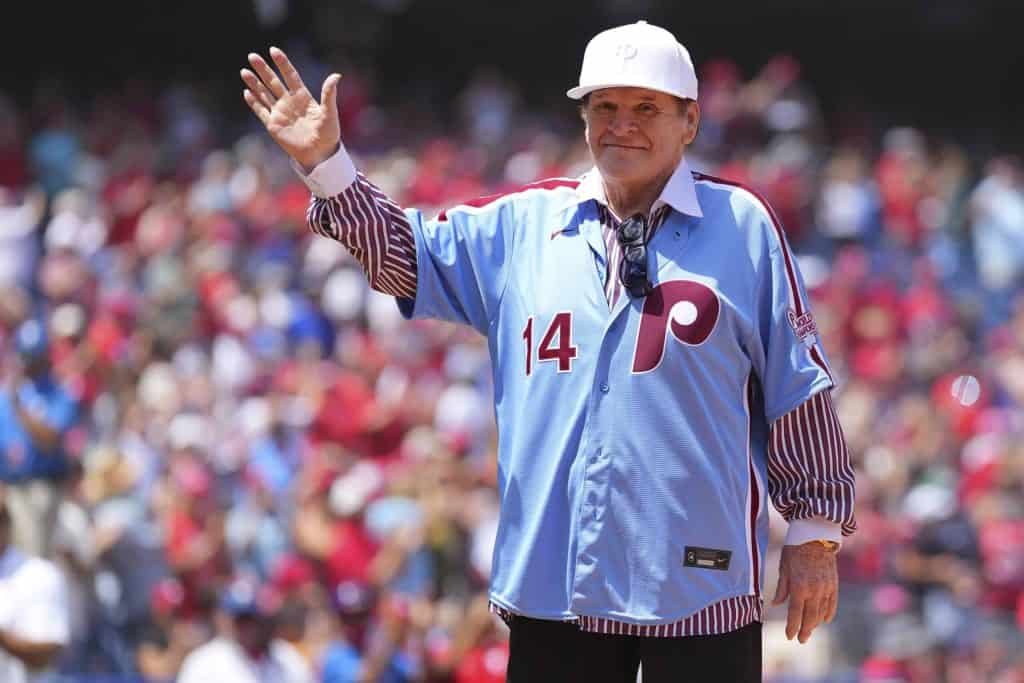
For decades, Rose’s place on MLB’s permanently ineligible list kept him from Hall of Fame consideration. Rose died on Sept. 30, 2024, at age 83. In May 2025, Commissioner Rob Manfred ruled that permanent ineligibility ends when a person dies, and MLB removed Rose from the ineligible list. The National Baseball Hall of Fame then confirmed that Rose is eligible for future consideration by its Classic Baseball Era Committee.
Ben Johnson and the Dirtiest Race in History
At the 1988 Seoul Olympics, Ben Johnson crossed first in the men’s 100-meter final in 9.79 seconds, an apparent world-record time. Three days later, he was disqualified after testing positive for stanozolol, an anabolic steroid. His gold medal and record were stripped, and runner-up Carl Lewis was elevated to Olympic champion.
Everything happened quickly. Johnson went from a world-record victory to disqualification in three days and later admitted to doping. The race became widely known as “the dirtiest race in history,” and six of the eight finalists were later linked to doping or positive drug tests at some point in their careers. Johnson became the face of a problem much larger than himself.
The Attack on Nancy Kerrigan and the Tonya Harding Scandal

The 1994 attack on figure skater Nancy Kerrigan took place on Jan. 6 after a practice session for the U.S. Figure Skating Championships at Cobo Hall in Detroit. An assailant struck Kerrigan on the right knee and fled. Investigators traced the plot to people including Tonya Harding’s ex-husband, Jeff Gillooly, and bodyguard, Shawn Eckardt. Harding denied prior knowledge of the attack but in March pleaded guilty to conspiracy to hinder prosecution.
U.S. Figure Skating stripped Harding of her 1994 national title and banned her from membership for life. Kerrigan recovered in time for the 1994 Winter Olympics in Lillehammer, where she won the silver medal.
The case dominated coverage heading into the 1994 Lillehammer Olympics and remained part of pop culture for decades. It has since been revisited in documentaries and films, including the 2017 movie “I, Tonya.”
Barry Bonds and the Steroids Era
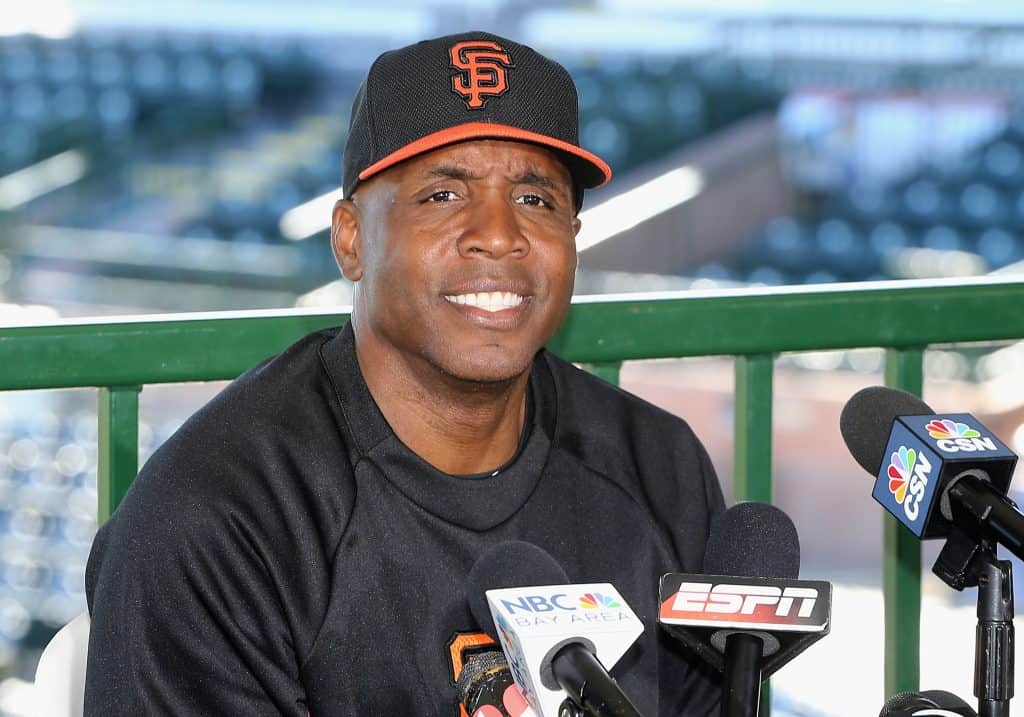
With 762 home runs, Barry Bonds remains Major League Baseball’s career home run leader. He became a central figure in the federal BALCO investigation into the Bay Area Laboratory Co-Operative and performance-enhancing drugs. In November 2007, a federal grand jury indicted him on perjury and obstruction-of-justice charges stemming from his 2003 grand jury testimony.
Bonds was convicted in 2011 on one count of obstruction of justice; the jury deadlocked on three perjury charges. In 2015, the U.S. Court of Appeals for the Ninth Circuit overturned the obstruction conviction. Bonds has not been elected to the Hall of Fame. His career records remain official, but his connection to baseball’s steroid era continues to shape how those numbers are viewed.
Tim Donaghy: The NBA Referee Who Bet on His Own Games
In August 2007, NBA referee Tim Donaghy pleaded guilty to conspiracy to commit wire fraud and conspiracy to transmit gambling information after admitting that he bet on NBA games, including games he officiated, and provided paid betting picks using nonpublic information. In July 2008, a federal judge sentenced him to 15 months in prison. From the moment the story broke, the question became whether this was an individual case of corruption or whether the league’s officiating had a wider integrity problem.
An investigation commissioned by the NBA and led by former federal prosecutor Lawrence Pedowitz found no basis to disagree with federal investigators’ conclusion that there was no evidence Donaghy intentionally made a particular ruling to improve the chances that one of his betting picks would win. Donaghy later made broader allegations about NBA officiating, which the league disputed. The case left a lasting association between Donaghy’s name and suspicions about officiating in close games.
Tiger Woods and the Collapse of a Brand
For most of the 2000s, Tiger Woods carried one of the most carefully managed images in sports: 14 major championships, major endorsement deals and a reputation for focus and control. In late November 2009, reports of extramarital affairs began dominating coverage of his private life. At about 2:25 a.m. on Nov. 27, Woods crashed his SUV near his Florida home, hitting a fire hydrant and a tree.
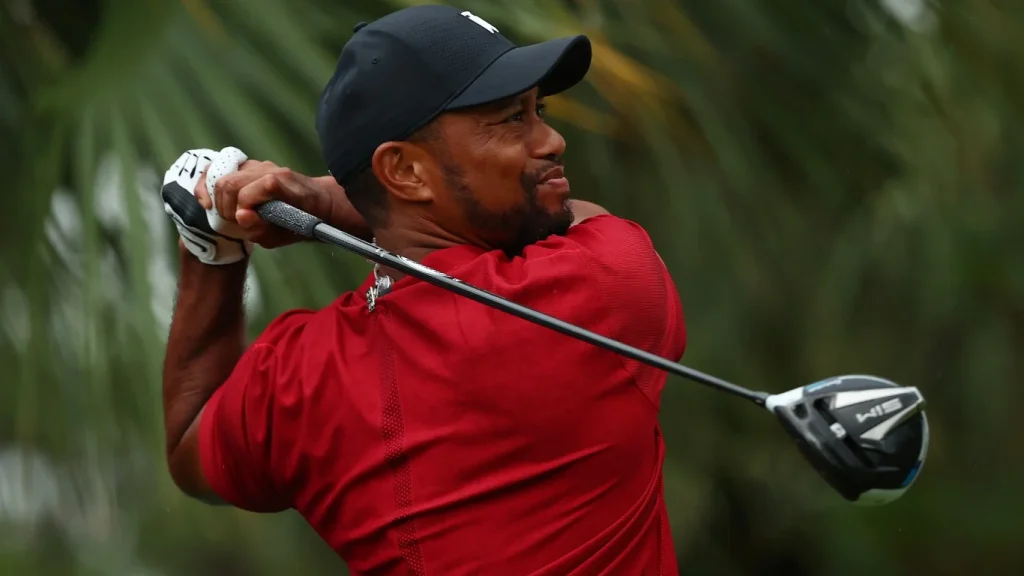
What followed over the next year was a public unraveling he couldn’t manage or contain. Accenture ended its sponsorship agreement in December 2009, and AT&T followed later that month. Gatorade ended its endorsement deal in February 2010. Gillette, which had already stopped featuring Woods in its advertising, did not renew his contract when it expired at the end of 2010.
The damage persisted for years, but Woods rebuilt his golf career and won the 2019 Masters, his 15th major championship and his first major victory in nearly 11 years.
Ray Rice and the NFL’s Domestic Violence Reckoning
In February 2014, Baltimore Ravens running back Ray Rice assaulted his then-fiancée, Janay Palmer, inside an elevator at the Revel casino in Atlantic City, New Jersey, knocking her unconscious. In July, the NFL suspended Rice for two games under its personal conduct policy, a punishment that drew widespread criticism as too lenient.
TMZ released the in-elevator footage on Sept. 8, 2014. The Ravens terminated Rice’s contract that day, and the NFL suspended him indefinitely. An independent investigation led by former FBI Director Robert Mueller later found no evidence that league executives had seen or possessed the in-elevator video before it became public, but concluded that the NFL should have done more with the information it already had and taken additional steps to obtain the footage. The league had already announced tougher domestic-violence penalties in August and later revised its personal conduct policy. In November, an arbitrator vacated Rice’s indefinite suspension, but he never played another NFL game.
Lance Armstrong’s One Big Lie
After surviving testicular cancer, Armstrong returned to professional cycling and won the Tour de France seven consecutive times from 1999 through 2005. He founded the Lance Armstrong Foundation in 1997, and its yellow Livestrong wristband became a signature symbol of the organization’s cancer-support work after its 2004 debut.
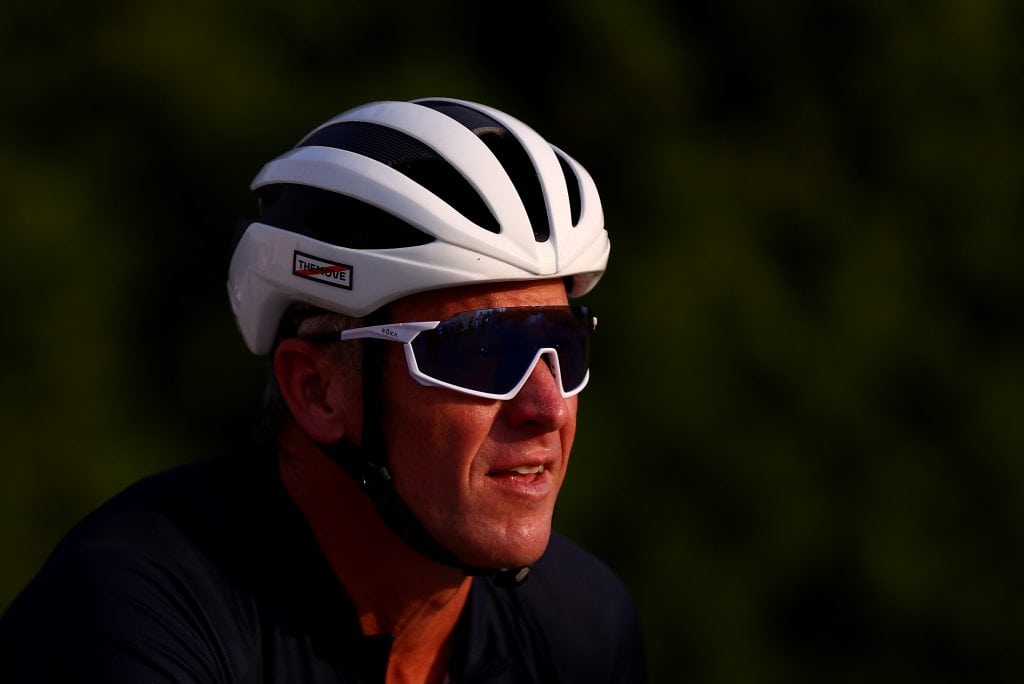
Armstrong spent years forcefully denying doping accusations and attacking the credibility of people who challenged him. He later acknowledged that he had called people liars and bullied critics while trying to protect the story around his career.
In January 2013, during an interview with Oprah Winfrey, Armstrong admitted using banned performance-enhancing drugs and blood doping during all seven of his Tour de France victories. The U.S. Anti-Doping Agency had already imposed a lifetime ban in August 2012 and disqualified all of his competitive results dating from Aug. 1, 1998, a period that covered all seven of those Tour victories.
The Houston Astros Sign-Stealing Scheme
In November 2019, former Astros pitcher Mike Fiers told The Athletic that Houston had used a center-field camera to steal opposing catchers’ signs during the team’s 2017 World Series championship season. The method was almost comically analog for a high-tech operation. MLB later found that players watched a live center-field camera feed on a monitor installed just outside the Astros’ dugout, decoded the signs and banged a nearby trash can to signal the upcoming pitch. Generally, one or two bangs indicated certain off-speed pitches, while no bang signaled a fastball.
MLB found that the trash-can system continued through the 2017 postseason. In 2018, the investigation found no evidence that players kept using the banging scheme, but replay-room staff continued decoding signs from the live center-field feed for part of the season before stopping. MLB fined the Astros $5 million, the maximum allowed under the Major League Constitution, and took away their regular first- and second-round draft picks in 2020 and 2021. Manager A.J. Hinch and General Manager Jeff Luhnow were suspended through the 2020 World Series and were fired by the Astros the same day the penalties were announced. No Astros players were disciplined, and MLB did not strip Houston of the 2017 World Series title.