
The Founding Fathers of the United States faced many diseases that are no longer a threat in this country today. Some were deadly, while others caused lifelong complications for those who survived. Thanks to modern medicine and a robust childhood vaccination schedule, most of these illnesses have been eliminated in the U.S., keeping generations of children safe and healthy. However, declining vaccination rates in some areas have allowed at least one of these once-eradicated diseases to return. Here’s a look at the diseases that America successfully eliminated.
This post was updated on October 6, 2025 to clarify local transmission vs. contraction in endemic countries, that Jenner used cowpox to target smallpox, 2023 cases of malaria in the U.S., the vaccine-derived case of polio in 2022, and elimination vs. permanent eradication.
Yellow Fever
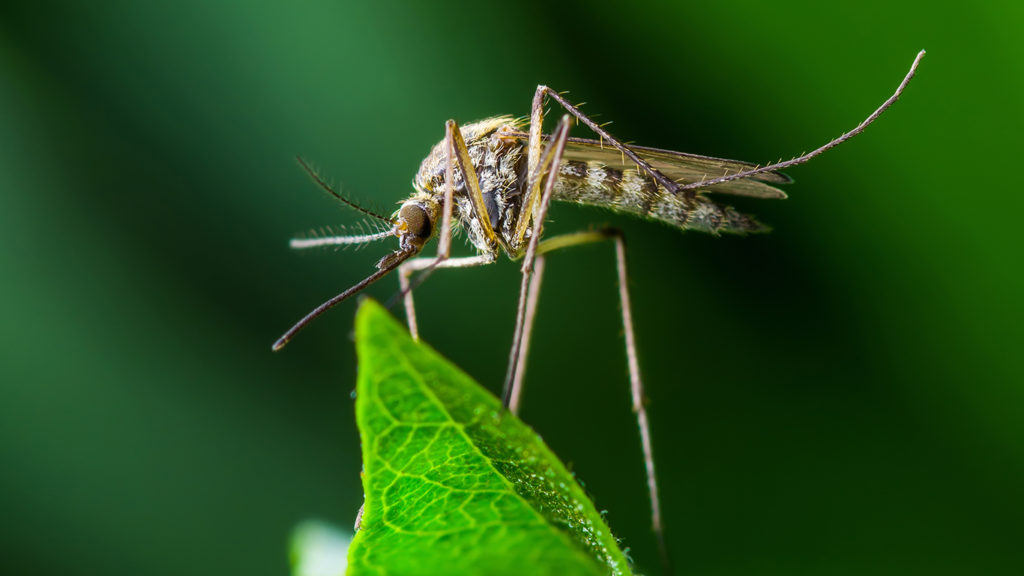
Yellow fever is a disease spread by mosquito bites that causes symptoms such as fever, chills, severe headache, nausea, and vomiting. More severe symptoms include bleeding, shock, and organ failure, as well as yellow skin or eyes (jaundice) which is how this disease got its name.
According to the American Society for Microbiology, there hasn’t been a major locally transmitted outbreak of yellow fever in the U.S. since 1905 (New Orleans). However, occasional imported cases still occur in travelers returning from endemic areas. Mosquito mitigation efforts kept the disease at bay through the early 1900s, and an extremely effective vaccine was later developed. Today, yellow fever is endemic in tropical and subtropical regions of South America and Africa.
Malaria

You’re probably aware that malaria is also spread to humans by certain types of mosquitos. The mosquitos transmit a parasite that causes symptoms from fever and chills to fatigue, confusion, seizures, and difficulty breathing. Malaria can be fatal, though it does not spread from person to person.
It might surprise you to learn that malaria was once a major problem in the United States. According to NPR, the use of insecticides, drainage ditches, and window screens helped significantly reduce mosquito bites. Malaria transmission was eliminated in the United States in 1951, confirmed by the CDC. (There are still rare cases of locally transmitted malaria in the U.S. — including small outbreaks in Florida and Texas in 2023, though these are extremely limited.)
However, malaria is still a major problem in parts of the world such as sub-Saharan Africa and has appeared in U.S. hospitals due to Americans traveling to these parts of the world. There is also a malaria vaccine, though it is only around 75% effective.
Smallpox

This is a truly incredible feat because smallpox wasn’t just eliminated from the United States — today it is eradicated worldwide. The disease is believed to have existed for at least 3,000 years, with smallpox-like rashes appearing on Egyptian mummies according to the CDC.
Smallpox caused high fever, aches, chills, and other unpleasant symptoms, but its telltale sign was the widespread rash that turned into fluid-filled blisters that would eventually burst and scab over. About 3 out of every 10 people with this disease died. Those that survived often had permanent scars and some were left blind.
Thankfully, an English doctor named Edward Jenner developed a smallpox vaccine in 1796. Jenner’s inoculation used cowpox to confer immunity. The vaccine often left a small scar on the patients’ administration site. Over many years of concentrated effort, the virus was eliminated in many countries. Eventually, it became the only virus that affects humans to be completely eradicated. There has not been a naturally occurring case since 1977 (Somalia).
Polio

Global efforts toward the elimination of polio have nearly been as successful as smallpox. Thanks to vaccination efforts, there has not been a naturally occurring case of poliomyelitis in the United States since 1979.
However, polio is still endemic to Afghanistan and Pakistan, which means that imported cases of the disease can appear in other countries as well. Some cases of polio are asymptomatic, while others cause mild symptoms such as fever and sore throat. In severe cases, polio can cause meningitis, paralysis, or death. The Global Polio Eradication Initiative works toward eradicating polio worldwide and it is very possible that this goal will one day become a reality.
It’s worth noting that vaccine-derived poliovirus (from the oral vaccine used overseas) has caused occasional U.S. detections — most notably a case of paralytic polio in New York in 2022 and traces found in wastewater.
Measles
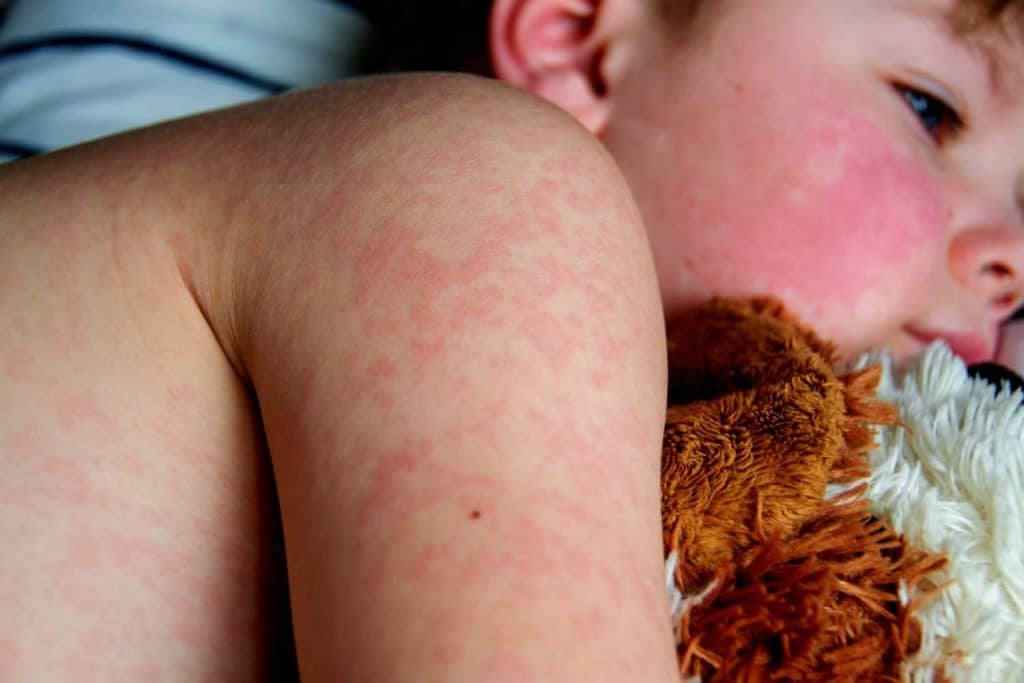
Measles is a highly contagious disease that causes a tell-tale rash, as well as high fever, cough, and runny nose. The CDC also states that the disease can cause serious health complications such as pneumonia and encephalitis, especially in children under five.
The United States licensed the MMR vaccine in 1971, which is highly effective at preventing measles, mumps, and rubella. Thanks to vaccination efforts, the CDC regarded measles as eliminated in the United States in 2000, meaning no continuous transmission for 12 months. However, the U.S. continues to see outbreaks from imported cases, especially due to under-vaccination.
Rubella

The MMR vaccine is also highly effective against rubella (sometimes known as German measles). This disease has symptoms such as low-grade fever, headache, and pink eye, as well as a rash that starts on the face and spreads to the rest of the body. Additionally, up to 70% of women who contract rubella may experience arthritis.
According to the CDC, the most serious complication from rubella is the harm it can cause to a developing baby. Rubella infections in pregnant women can cause miscarriage, death of the infant just after birth, or serious birth defects such as heart problems, loss of hearing and eyesight, intellectual disability, or liver damage. Rubella was eliminated in the United States in 2004 thanks to vaccination efforts.
Diphtheria

Unlike the other diseases on this list, diphtheria is a bacterial infection rather than a virus. Respiratory diphtheria causes symptoms such as mild fever, sore throat, swollen glands in the neck, and weakness. Deadly complications such as airway blockage can also result from respiratory diphtheria, according to the CDC.
Vaccines such as Tdap are effective in preventing diphtheria. Endemic cases of respiratory diphtheria have not been reported in the United States since 2004, though isolated imported cases still occur. The disease remains a problem in developing countries such as Haiti and the Dominican Republic.