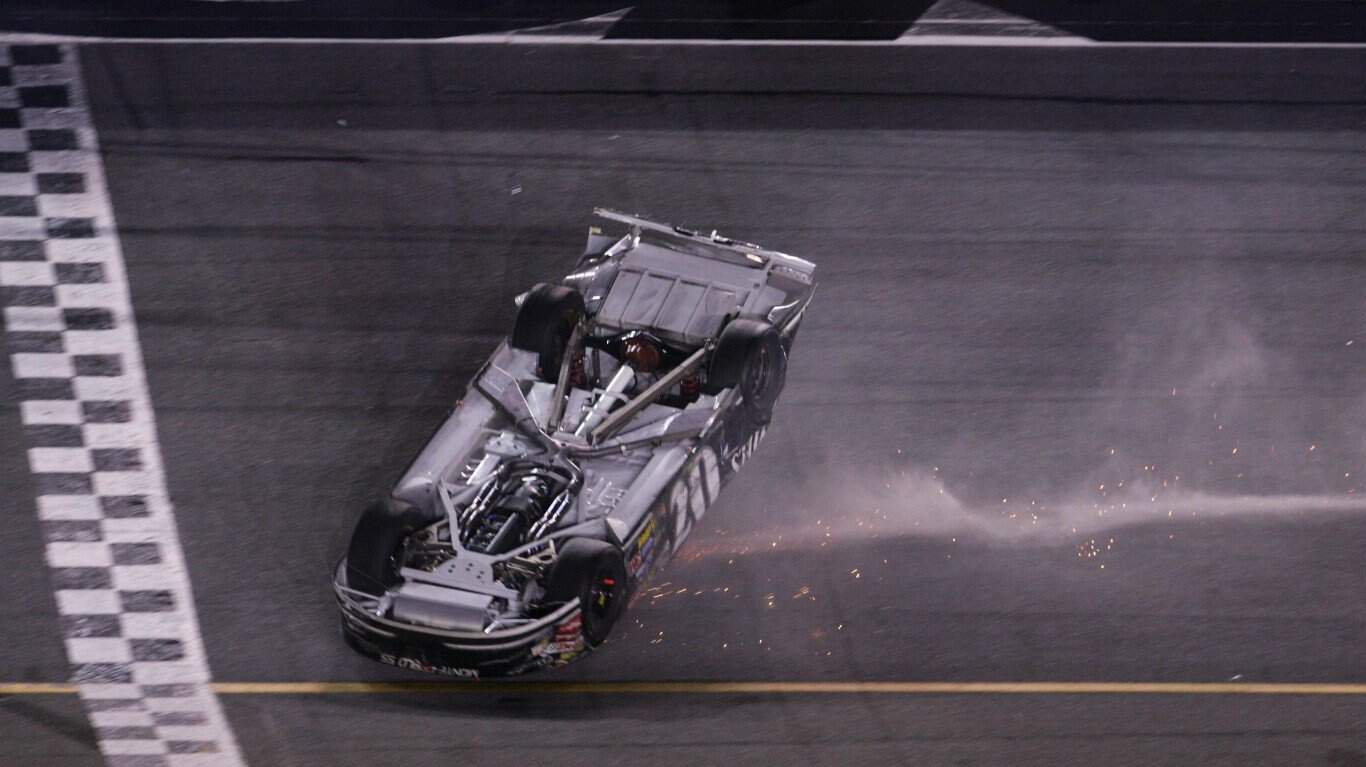
Founded in 1948 in Daytona Beach, Florida, NASCAR began as a regional motorsport rooted in the Southern United States. Over the decades, it has grown into a national phenomenon with a loyal fan base drawn to the speed, strategy, and skill required to compete at nearly 200 miles per hour.
While many spectators tune in to watch elite drivers push the limits of performance, NASCAR’s history also includes a number of severe crashes that reshaped the sport. These wrecks are far more dangerous than typical roadway accidents, involving high speeds, tightly packed fields, and vehicles built for competition rather than everyday driving.
Stock car racing traces its origins to the Appalachian region, where modified vehicles were once used by moonshiners to outrun federal agents during the Great Depression. Those high-powered cars eventually found their way onto local tracks and fairgrounds, drawing large crowds and laying the groundwork for organized racing.
As NASCAR evolved, so did its approach to safety. Massive pileups and fiery crashes led to limits on the number of cars allowed on the track, mandatory fire-resistant driver suits, and improved onboard fire-suppression systems. Over time, protective nets, reinforced vehicle structures, and speed-regulating measures were introduced to reduce the risks to drivers and fans alike.
This look back at NASCAR’s most severe crashes highlights not only the dangers of the sport, but also how hard lessons from the past helped shape the safety standards used today.
Here are the worst car crashes in NASCAR history:
1960: Daytona International Speedway

- Race: Daytona Modified Sportsman Race
It’s been called the worst wreck in NASCAR history, involving 37 cars. While there were no fatalities, several drivers were injured. The result prompted NASCAR to limit the number of cars in a race to 43, a number that has since been reduced to 40 as of 2016.
1961: Daytona International Speedway

- Race: Qualifying race
Lee Petty, father of NASCAR legend Richard Petty, was competing in a qualifying race at Daytona to determine the starting order for a major race. The chaos began when field leader Banjo Matthews spun out, leading to a chain reaction that caused Petty’s car to be clipped by another vehicle. Both drivers lost control and crashed through a guardrail, resulting in fiery wrecks. While the drivers survived, Petty was in a coma for four days and required four months of rehab to recover from his injuries.
1964: Charlotte Motor Speedway

- Race: World 600
During the World 600-mile race at Charlotte Motor Speedway, Glenn (Fireball) Roberts was involved in a three-car wreck on the seventh lap, also involving Ned Jarrett and Robert (Junior) Johnson. Jarrett and Johnson both sustained minor injuries, but Roberts later died of complications from burns he received over 75% of his body. Prior to the tragedy, the 37-year-old Roberts had been the biggest career money earner in NASCAR history, winning 32 races and about $400,000 in his 15-year career.
The tragedy compelled NASCAR to require drivers to wear fire-retardant clothing and for cars to have fire-extinguishing systems.
1970: Darlington Speedway

- Race: Rebel 400
At Darlington Speedway in South Carolina, Richard Petty, not known to be risk averse, slammed into a retaining wall during the Rebel 400. His car flipped several times, then rolled over on the straightaway before settling on its roof. All the while spectators could see Petty’s arms flapping out the window.
The incident prompted NASCAR to install protective nets in all NASCAR racing cars to keep body parts from going out the windows in the event of a crash.
1980: Pocono Raceway

- Race: Coca Cola 500
Ten years later, Richard Petty was involved in another harrowing crash. When he came out of the fearsome “Tunnel Turn” at Pocono, Petty blew a tire, and crashed into a wall. Several drivers narrowly avoided him, but Darrell Waltrip collided with Petty on the driver’s side. Petty sustained a broken neck and his career subsequently took a downturn.
1984: Daytona International Speedway

- Race: Busch Clash
The 1984 Busch Clash at Daytona saw Ricky Rudd in a potentially catastrophic accident. His Ford was bumped from behind, causing him to lose control. The carwent airborne, flew into the infield, and landed right side up beside the track. Remarkably, Rudd walked away from the crash with only a concussion.
1987: Talladega Superspeedway

- Race: Winston 500
The crash involving Bobby Allison during the Winston 500 at Talladega Superspeedway in Alabama caused NASCAR to reassess its rules. During the race, Allison, driving at 212 miles per hour, tore up a wheel, soared into the protective railing, and spun around on the track. Other cars were involved in the mishap. Even though Allison was uninjured, some racing fans were hurt by debris. Recognizing the danger of unchecked vehicle speed, NASCAR mandated restrictor plates to regulate the speed of the vehicles.
1988: Daytona International Speedway

- Race: Daytona 500
In 1988, Richard Petty faced another terrifying crash on the same track where his father had a terrible accident in 1961. The seven-time Daytona 500 winner was coming out of a turn on lap 106 when he was hit from behind. His car flipped end over end multiple times and was then hit by another driver after coming to rest. Debris scattered all over the track, and the force of the impact left Petty temporarily blind.
1990: Atlanta International Raceway

- Race: Atlanta Journal 500
Tragedy occurred during the Atlanta Journal 500 at the Atlanta International Raceway when Ricky Rudd lost control of his car and spun into Bill Elliott’s vehicle that was stopped for a tire change. Mike Rich, Elliott’s tire changer, got pinned between the two cars and was killed. His death forced NASCAR to modify the speed limits in the pit area and crew were asked to wear protective gear.
1990: Bristol Motor Speedway

- Race: Budweiser 250
During the Budweiser 250 Grand National Race at Bristol Motor Speedway in Tennessee, Michael Waltrip got into a terrifying crash. On the 170th lap, while attempting to pass Robert Pressley, their cars made contact, sending Waltrip’s vehicle into a steel gate. The collision propelled him into a concrete barrier, leaving his car nearly torn in two and upside down. Waltrip survived with several injuries.
1991: Daytona International Speedway

- Race: Daytona 500
Darrell Waltrip escaped serious injury a year after his brother Michael was nearly killed at Bristol Motor Speedway. During a scramble in the Dayton Pepsi 400, cars driven by Darrell and Joe Ruttman brushed against each other and both veered off into the infield at nearly 200 mph. Waltrip’s car flipped multiple times before ending up on its side. He sustained only minor injuries.
1993: Daytona International Speedway

- Race: Daytona 500
During the 1993 Daytona 500, Rusty Wallace was clipped from behind by two cars on the backstretch, sending him airborne. After landing, Wallace’s car flipped multiple times before finally coming to a rest upright in the infield. Fortunately, his safety cage protected him from serious injuries.
1998: Atlanta Motor Speedway

- Race: Qualifying race
Steve Park suffered serious injuries in a crash during a practice run for the Primestar 500 at the Atlanta Motor Speedway. Park’s car blew a tire and his car careened into a wall. Then the vehicle slammed into the wall several more times, slid across the infield grass, and collided with the pit road wall head on. Park sustained a broken clavicle, broken scapula, two broken front teeth, and a broken femur.
2000: Daytona International Speedway

- Race: Daytona 250 Craftsman Truck Race
During the first truck race at Daytona, a crash sent debris and flames into the grandstand, injuring nine spectators and 12 drivers, including 1986 Daytona 500 champion Geoff Bodine. On the 57th lap of the 100-lap race, Bodine was bumped from behind, causing his vehicle to slam into a wall and then collide with other trucks. The impact destroyed Bodine’s truck, which burst into flames and launche the truck’s engine block into the infield. When the smoke cleared, Bodine had sustained serious injuries, 11 other drivers were hurt, and 9 spectators were struck by flying debris.
2001: Daytona International Speedway

- Race: Daytona 500
The aggressive driving style of Dale Earnhardt, known as “The Intimidator,” helped make him one of the greatest drivers in NASCAR history. His driving career ended at the 2001 Daytona 500. On the last lap of the race, Sterling Marlin’s car touched the bumper of Earnhardt’s car, sending it spinning out of control in the middle of the track. Ken Schrader was not able to steer around the spinning vehicle, and slammed into the passenger side of Earnhardt’s car, which smashed into a wall at 155 miles per hour. Earnhardt was killed.
2001: Darlington Speedway

- Race: NASCAR Busch Series
Steve Park faced a near-fatal accident during the NASCAR Busch Series at Darlington Speedway. During the race, as part of his routine, Park pulled on his steering wheel, which unexpectedly came loose due to improper installation. This caused him to veer into the path of the oncoming Larry Foyt, causing a severe T-bone crash. Park suffered a massive brain injury and multiple broken ribs, requiring airlifting to a nearby hospital. The incident resulted in a significant downturn in his racing career.
2002: Bristol Motor Speedway

- Race: Busch Motor Series
Mike Harmon, practicing for a Busch Motor Series, experienced the same kind of crash at Bristol that Michael Waltrip had 12 years earlier, also slamming into a steel gate and crashing into a concrete barrier. Harmon’s car was split in two. Luckily for him, driver Johnny Sauter collided with the half of the vehicle Harmon was not in, and Harmon walked away from the wreck.
2002: Talladega Superspeedway

- Race: NASCAR Nationwide Series
In 2002, Johnny Sauter was involved in a NASCAR collision during a Nationwide Series race. He lost control of his car, causing it to flip and roll, triggering a massive 33-car pileup, one of the largest wrecks in NASCAR history.
2003: Talladega Superspeedway

- Race: Winston Cup
Talladega Superspeedway would bear witness to a spectacular crash one year later. On lap 181, Elliott Sadler, who was locked in an intense Winston Cup race with Dale Earnhardt, Jr., was bumped from behind by Kurt Busch. Sadler went airborne for several seconds and flipped over, slid across the grass, and flipped again when his car made contact with the pavement before it rested rightside up. A shaken Sadler was able to walk away from the wreck.
2003: Daytona International Speedway

- Race: Daytona 500
In 2003, Ryan Newman, the 2002 NASCAR Rookie of the Year, faced a dramatic start to the Daytona 500. On lap 56, he was pushed into the wall by Ken Schrader’s car, resulting in Newman’s car losing a rear tire. This sent his car then sliding into to the infield, were it went airborne, nosedived, flipped multiple times before coming to rest on its roof. Miraculously, Newman walked away without major injuries.
2008: Las Vegas Motor Speedway

- Race: NASCAR Sprint Cup Series
A crash during the NASCAR Sprint Cup Series at the Las Vegas Motor Speedway forced the raceway to improve protection barriers on the inside of the track. The crash occurred as Matt Kenseth was passing Dale Earnhardt, Jr. on lap 264 and brushed against Jeff Gordon. Gordon steered away from the field and slammed into a wall that did not have a steel and foam energy reduction barrier. The resulting crash dislodged the radiator from the chassis. Gordon later said he was responsible for the collision with Kenseth.
2008: Texas Motor Speedway

- Race: Qualifying race
During his qualifying lap for the Samsung 500 at Texas Motor Speedway, rookie driver Michael McDowell lost control while coming out of a turn at nearly 200 mph. His car crashed into a wall, flipping over multiple times, and sliding on its roof briefly before flipping again and landing upright, engulfed in flames. Despite the severity of the crash, McDowell was able to walk away with only minimal injuries.
2009: Talladega Superspeedway

- Race: Aaron’s 499 NASCAR Sprint Cup Series
Carl Edwards was leading on the final lap of the Aaron’s 499 NASCAR Sprint Cup Series race at Talladega when disaster struck. As he jostled for position with Brad Keselowski, his car got bumped and went airborne, crashing into the protective fence and spewing debris into the crowd. Edwards’ car ended up in the infield and he walked across the finish line to complete the race to the applause of spectators. The crash looked horrible, but no one was seriously injured.
2009: Autódromo

- Race: Corona Series: NASCAR Mexico
Carlos Pardo tragically lost his life following his victory in the Corona Series: NASCAR Mexico at Mexico City’s Autódromo. On lap 97, Pardo’s car was struck from behind, causing him to swerve toward a pit wall at 120 mph. The car hit the wall sideways on the passenger side and exploded. Pardo was rushed to a hospital by helicopter but eventually died. Pardo was awarded first place because his car was leading when he crashed. It was his 10th career victory in the NASCAR Mexico series.
2012: Talladega Superspeedway

- Race: Good Sam Roadside Assistance 500
The Big One, the phrase that describes a crash involving at least five or more cars in NASCAR stock car racing, happened at Talladega during the Good Sam Roadside Assistance 500. Tony Stewart was leading in the final lap when he hooked bumpers with Michael Waltrip. The entanglement caused Stewart to flip up and into oncoming cars, leading to a pileup of 25 vehicles. Matt Kenseth won the race.
2013: Daytona International Speedway

- Race: Nationwide
Rookie driver Kyle Larson was battling for position in the final laps of the Nationwide race at Daytona in 2013, the day before the Daytona 500, when he was rear-ended. The impact sent his car into the catch fence, causing it to disintegrate and sending debris flying into the stands. Tragically, 30 spectators were injured, though miraculously, the dislodged engine block did not hit anyone.
2014: Daytona International Speedway

- Race: Budweiser Duels
A pileup occurred in the final lap of the qualifying race for the 2014 Daytona 500. As drivers vied for position, Jimmie Johnson was running out of gas when he was tapped by Jamie McMurray, sending Johnson into a spin that began the massive pileup. At one one point, Clint Bowyer went airborne, flipping several times before his car hit the ground on its wheels. As many as six cars were on fire bythe end of the crash. All of the drivers involved in the wreck were unhurt.
2015: Daytona International Speedway

- Race: Dayton Coke Zero 400
Austin Dillon survived one of the most horrible crashes in Daytona Coke Zero 400 history. As the race neared its end, a series of collisions triggered a chain reaction known as the “big one.” Dillon’s car spun into a wall and flew up into the safety netting, scattering debris into the stands. Five people sustained injuries in the incident, which also involved Denny Hamlin and Clint Bowyer. Remarkably, Dillon walked away from the wreck.