
2013 Getty Images / Getty Images News via Getty Images

2023 Getty Images / Getty Images News via Getty Images

Isabeljohnson25 / Wikimedia Commons

2024 Getty Images / Getty Images News via Getty Images
PaulVinten / Getty Images
2013 Getty Images / Getty Images News via Getty Images
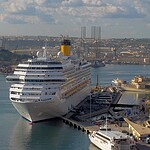
"Costa Concordia berthed at the Sea Passenger Terminal; The Grand Harbour, Valletta" by foxypar4 is licensed under BY 2.0.
IMDB

Leonid Sorokin / Shutterstock.com

PIXPECTIV / Shutterstock.com

2006 U.S. Navy / Getty Images News via Getty Images

Nok Lek Travel Lifestyle / Shutterstock.com

2017 Handout / Getty Images News via Getty Images

Rendi Okta s / Shutterstock.com

Wirestock Creators / Shutterstock.com
Getty Images / Getty Images News via Getty Images




11 Modern Maritime Disasters That Shocked the World
Modern ships have radar, satellite weather data, sophisticated navigation systems, emergency beacons, and safety rules built on lessons learned from centuries of maritime disasters. None of that makes the sea completely forgiving.
Some of the worst maritime tragedies of the modern era involved extreme weather. Others came down to design flaws, overloaded ships, poor decisions, delayed evacuations, or safety warnings that were ignored until it was too late.
From a passenger ferry carrying nearly four times its intended load to a submersible whose fatal implosion investigators later called preventable, these disasters show how quickly a voyage can turn catastrophic.
OceanGate Titan
On June 18, 2023, OceanGate's experimental Titan submersible began descending toward the wreck of the RMS Titanic with five people aboard. About an hour and 45 minutes into the dive, communication with its support ship was lost. A massive multinational search followed until wreckage was discovered on the seafloor near the Titanic site, confirming that Titan had suffered a catastrophic implosion. All five people aboard were killed.
OceanGate Titan (continued)
The story changed significantly after this article was originally written. In August 2025, the U.S. Coast Guard completed its investigation and called the disaster preventable. Investigators cited OceanGate's inadequate design, certification, maintenance, and inspection processes, along with a deeply flawed safety culture. The report also found that the company failed to properly investigate warning signs from Titan's hull after its 2022 Titanic expeditions. What initially looked like a mysterious deep-sea catastrophe ultimately became a case study in ignored engineering risk.
Bayesian Superyacht
The British-registered sailing yacht Bayesian was anchored off Porticello, Sicily, early on Aug. 19, 2024, when violent weather struck the area. There were 22 people aboard, including British technology entrepreneur Mike Lynch, members of his family, friends, lawyers, and crew. Fifteen escaped. Seven people died, including Lynch, his 18-year-old daughter Hannah, and the yacht's chef, Recaldo Thomas.
Bayesian Superyacht (continued)
Early speculation focused heavily on a waterspout, open hatches, and possible crew mistakes, but the official picture is more careful. A 2025 interim report from Britain's Marine Accident Investigation Branch found that Bayesian may have been unusually vulnerable to extreme winds and that the conditions were strong enough to knock the yacht over. Once it heeled beyond roughly 70 degrees, researchers found recovery would have been impossible. The yacht was raised from the seabed in June 2025 so investigators could examine it directly. As of 2026, the British investigation has not issued its final conclusions, so claims assigning definitive blame remain premature.
Costa Concordia
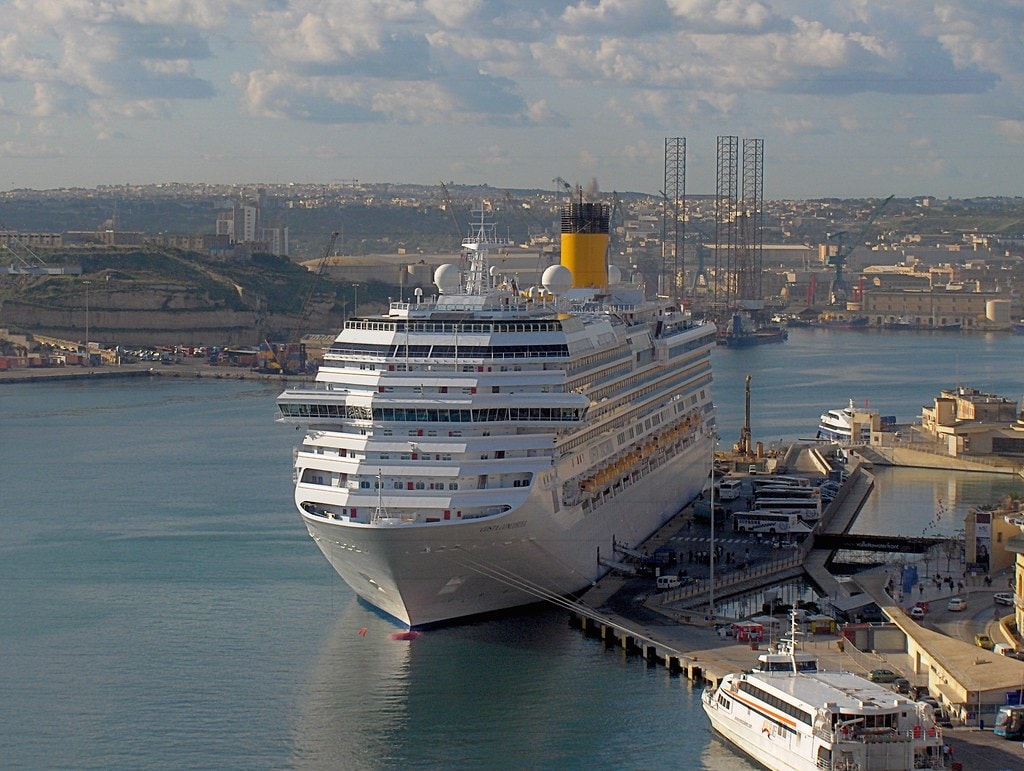
On the night of Jan. 13, 2012, Costa Concordia was carrying 3,206 passengers and 1,023 crew members when Captain Francesco Schettino took the cruise ship unusually close to the Italian island of Giglio. At about 9:45 p.m., the ship struck the Scole Rocks, ripping open its port side and allowing seawater to flood machinery spaces. Electrical power failed as the enormous vessel began listing.
Costa Concordia (continued)
The ship eventually grounded close to shore and rolled onto its starboard side. Evacuating more than 4,200 people took hours, and 32 passengers and crew members died. Schettino was later convicted of multiple manslaughter, causing a shipwreck, and abandoning passengers. Italy's highest court upheld his 16-year sentence in 2017. Costa Concordia was painstakingly righted, refloated, and towed to Genoa, where it was dismantled.
SS El Faro
The U.S.-flagged cargo ship El Faro left Jacksonville, Florida, for San Juan, Puerto Rico, in September 2015 as Tropical Storm Joaquin was strengthening in the Atlantic. By Oct. 1, Joaquin had become a powerful hurricane and El Faro was caught near the Bahamas. Flooding, a severe list, and the eventual loss of propulsion left the 790-foot ship at the mercy of the storm. It sank with all 33 people aboard.
The National Transportation Safety Board concluded that the captain failed to take sufficient action to avoid Hurricane Joaquin, relied on outdated weather information, and waited too long to muster the crew. Investigators also found problems with company oversight, bridge resource management, flooding, propulsion loss, and survival equipment. The disaster was so significant that the NTSB described it as the worst loss of a U.S. commercial vessel in decades.
MS Estonia
MS Estonia was traveling overnight from Tallinn to Stockholm when it sank in rough Baltic Sea conditions on Sept. 28, 1994. There were 989 people aboard. Only 137 survived, leaving 852 dead in one of Europe's deadliest peacetime maritime disasters.
The original international investigation concluded that wave forces caused the ship's bow visor locking system to fail. The visor separated, the bow ramp opened, and seawater poured onto the vehicle deck, rapidly destroying the ferry's stability. New examinations of the wreck decades later reignited speculation, but investigations by Estonian and Swedish authorities have found no evidence that a collision with another vessel or an explosion caused the sinking. The newer work has instead reinforced serious concerns about the ship's bow design and seaworthiness.
MV Le Joola
Le Joola was a Senegalese government ferry built in Germany to connect the southern Casamance region with Dakar. Its official passenger capacity was only about 536 people. On Sept. 26, 2002, however, roughly 1,900 passengers and crew were believed to be aboard when the ferry headed north toward Dakar.
The overloaded vessel encountered rough weather off the coast of The Gambia and capsized with startling speed. Only 64 people survived. Senegal's official death toll stands at 1,863, although the exact number may never be known because many passengers were not listed on the manifest. The scale of the overcrowding, combined with delayed rescue efforts and questions about the vessel's operation, made Le Joola one of the deadliest peacetime maritime disasters in recorded history.
Al-Salam Boccaccio 98
Al-Salam Boccaccio 98 was crossing the Red Sea from Duba, Saudi Arabia, toward Safaga, Egypt, when a fire broke out on its vehicle deck during the night of Feb. 2 into Feb. 3, 2006. The ferry was carrying 1,414 passengers and crew, many of them Egyptian workers returning home from Saudi Arabia.
The crew fought the fire with large amounts of water, but water accumulating on the vehicle deck badly damaged the ferry's stability. An Egyptian technical investigation later identified failures in fire detection, emergency procedures, cargo arrangements, and the captain's response. Only 388 people were rescued, meaning more than 1,000 died. Ship owner Mamdouh Ismail was initially acquitted but was later convicted on appeal and sentenced in absentia to seven years in prison in 2009.
MV Princess of the Stars
MV Princess of the Stars left Manila for Cebu on June 20, 2008, as Typhoon Fengshen, known locally as Frank, threatened the Philippines. The following day the huge ferry encountered severe conditions near Sibuyan Island, developed a heavy list, and capsized.
Philippine court records put 849 people aboard. Only 32 survived, while 227 were confirmed dead and another 592 were reported missing. The country's Board of Marine Inquiry concluded that operator Sulpicio Lines and senior company officials had failed to adequately assess the danger posed by the typhoon and ensure the vessel's safety. Recovery operations became even more complicated when authorities learned the wreck was carrying a large shipment of the pesticide endosulfan.
Sewol Ferry Disaster
The South Korean ferry Sewol was traveling from Incheon toward Jeju on April 16, 2014, carrying 476 passengers and crew, including hundreds of students from Danwon High School. The heavily loaded ferry made a sharp turn, developed a severe list, and eventually capsized. As the situation deteriorated, passengers were repeatedly told to remain where they were.
Only 172 people survived. The other 304 died, including 250 high school students. Video showing crew members escaping while many passengers remained trapped inside triggered enormous public anger. Captain Lee Joon-seok was ultimately convicted of murder on appeal and sentenced to life in prison. Investigations highlighted excessive cargo, changes to the ship that reduced stability, poor cargo securing, crew failures, and serious shortcomings in the emergency response.
MV Levina 1
Levina 1 was traveling from Jakarta toward Bangka Island on Feb. 22, 2007, when a fire broke out before dawn, reportedly beginning in a truck on the vehicle deck. Hundreds of people escaped by jumping into the Java Sea as nearby vessels and Indonesian rescue crews rushed to help. At least 51 people were killed in the original disaster, although uncertainty surrounding the passenger manifest made the final toll difficult to establish.
Then the wreck produced a second tragedy. Three days after the fire, journalists and investigators boarded the burned ferry while it was being examined near Jakarta. Levina 1 suddenly rolled over and sank. Later Indonesian reports said three members of the group died and one cameraman remained missing. The bizarre second sinking became almost as infamous as the original fire and raised obvious questions about why people had been allowed aboard an unstable wreck in the first place.
Conception Dive Boat
The 75-foot dive boat Conception was anchored near California's Santa Cruz Island early on Sept. 2, 2019, when a fire broke out while nearly everyone aboard was asleep. Five crew members on the upper deck escaped, but 33 passengers and one crew member sleeping below deck were trapped. All 34 died.
The National Transportation Safety Board could not determine exactly what started the fire. It did determine that operator Truth Aquatics failed to ensure a required overnight roving patrol was being maintained, allowing the fire to grow undetected. Investigators also cited inadequate escape arrangements from the bunkroom. Captain Jerry Boylan was later convicted of the federal offense commonly called seaman's manslaughter and sentenced to four years in prison in 2024. A federal appeals court upheld his conviction in March 2026.
Conception Dive Boat (continued)
The National Transportation Safety Board could not determine exactly what started the fire. It did determine that operator Truth Aquatics failed to ensure a required overnight roving patrol was being maintained, allowing the fire to grow undetected. Investigators also cited inadequate escape arrangements from the bunkroom. Captain Jerry Boylan was later convicted of the federal offense commonly called seaman's manslaughter and sentenced to four years in prison in 2024. A federal appeals court upheld his conviction in March 2026.