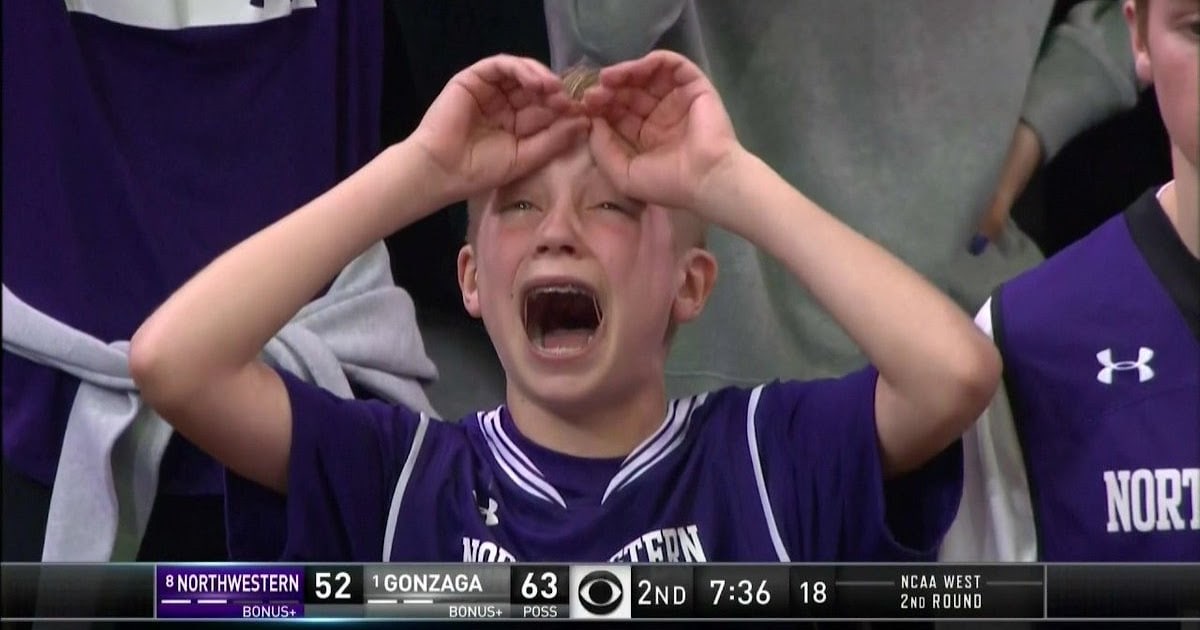
Most people love a good underdog story. There is something incredibly satisfying about watching a team or athlete get counted out, dismissed, or given almost no chance of winning, only to prove everyone wrong when it matters most. Those moments tap into one of the biggest reasons people love sports in the first place: no matter what the rankings, odds, or experts say, the outcome is never guaranteed.
Some upsets are surprising. Others are so unlikely that they become part of sports history. These are the games, matches, and performances where overwhelming favorites suddenly found themselves on the wrong side of a result almost nobody expected. In many cases, the underdog was facing a more talented opponent, longer odds, or a powerhouse that seemed nearly unbeatable.
The ten moments below are among the most memorable examples of athletes and teams overcoming those odds. On paper, some of these matchups looked hopeless. Once the competition started, however, the underdogs found a way to pull off victories that fans are still talking about years later.
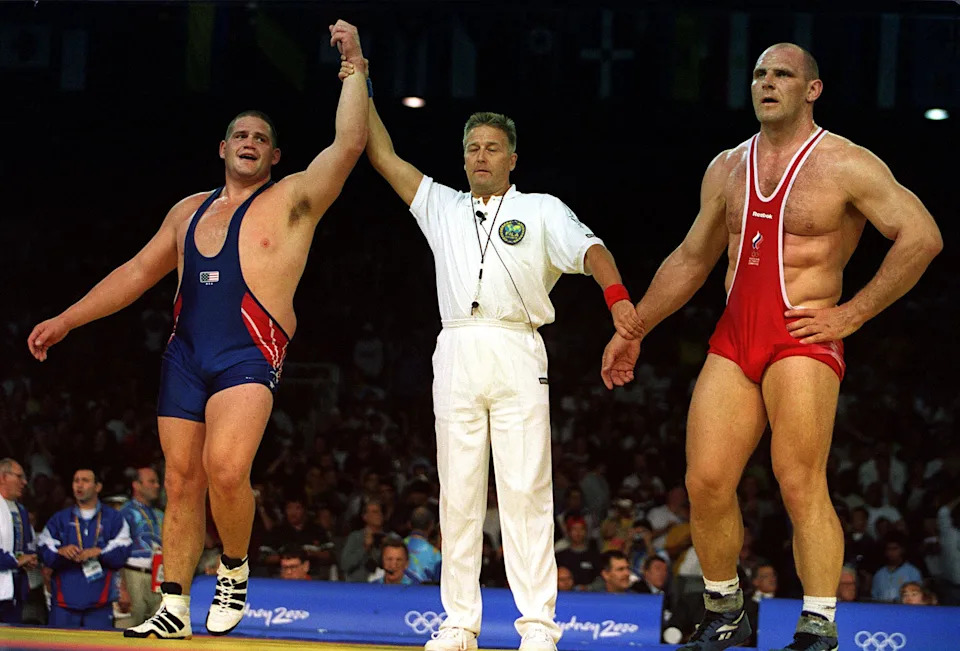
Rulon Gardner Beats Aleksandr Karelin (2000)
Most people don’t keep up with Greco-Roman wrestling as they do with basketball or baseball, but in the 90s, everyone who was even mildly interested in the sport knew who Aleksandr Karelin was.
Karelin was a three-time defending Olympic champion nicknamed “the Russian Bear,” known for a signature move called the reverse body lift that let him lift opponents his own size and slam them down. Some rivals reportedly chose to concede position rather than risk being thrown by the Russian Bear.
By 2000, this Russian heavyweight had a career record of 887 wins against two losses. He hadn’t lost an international match in thirteen years, and he hadn’t conceded a single point in six. He was set to face Rulon Gardner, an unheralded farm laborer from Wyoming, whom he had defeated back in 1997. Nobody expected a rematch to go any differently.
The match took place during the 2000 Sydney final, and Gardner’s defensive strategy kept the score open until Karelin was penalized for breaking a clinch, putting Gardner ahead 1-0. With seconds left, Karelin simply dropped his hands and stopped wrestling. He retired from the sport immediately afterward, leaving his shoes on the mat.
Miracle on Ice (1980)
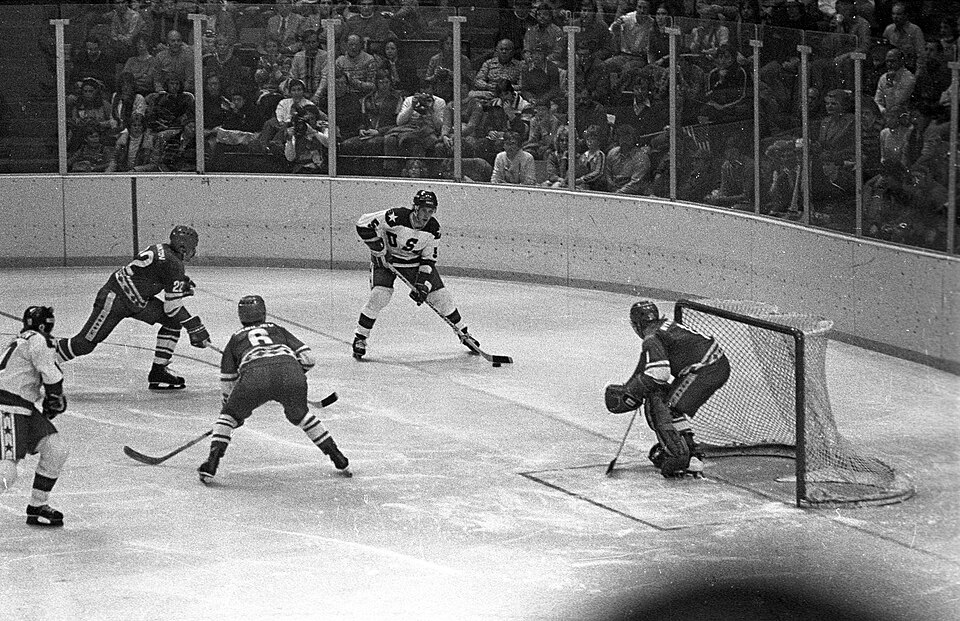
The Soviet Union’s hockey team came into the 1980 Lake Placid Olympics as the main favorites who hadn’t lost an Olympic hockey game in twelve years.
The American roster, on the other hand, was a patchwork of college players with an average age of 21, assembled less than a year earlier. Just two weeks before the Olympics, this same US team had lost an exhibition game to the Soviets 10-3 at Madison Square Garden.
Incredibly, the US managed to beat the Russians 4-3 in the semifinals, with captain Mike Eruzione scoring the go-ahead goal with ten minutes left on the clock. The US went on to beat Finland two days later, taking the gold medal home.
Mike Eruzione turned down a contract offer from the New York Rangers afterward and never played an NHL game, choosing instead to retire from hockey right after becoming famous.
Leicester City Wins the Premier League (2015-16)
Leicester City had finished the previous season of the Premier League one point above relegation, the threshold for being dropped out of the league entirely. Bookmakers opened the 2015/16 title odds at 5,000-to-1, a number so absurd that some sportsbooks compared it to the odds they’d offer on the Loch Ness Monster turning out to be real.
The entire Leicester team had cost less to assemble than what many mid-table clubs had spent that summer alone. One of the players, Jamie Vardy, had been working a factory job five years earlier, playing non-league football on the side for around thirty pounds a week.
Against all odds, they won the title in what became one of the greatest underdog stories in English football, a result the sport’s own economics say should never happen again.
Greece Wins Euro 2004
Greece had never won a single match in a major international competition, and their odds before Euro 2004 were anywhere between 80-to-1 and 150-to-1. Nobody covering the event, including the Greek press, expected them to get past the group stage.
Under German coach Otto Rehhagel, Greece beat Portugal in the opening match, then beat them again 1-0 in the final, thanks to a header from Angelos Charisteas.
The team scored seven goals across six matches, and every match they won, they won by a single goal. They won Euro 2004 playing with a disciplined back line and set-piece goals, a style so unglamorous that critics at the time called it boring. No one can argue with its efficiency, though.
Buster Douglas Knocks Out Mike Tyson (1990)
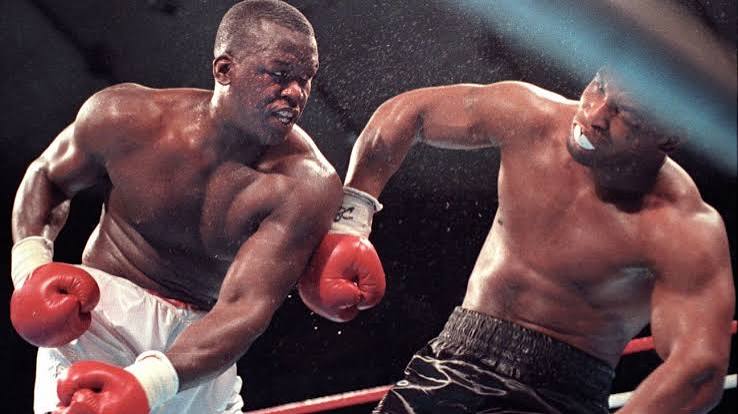
Mike Tyson was undefeated, with a reputation as the most feared heavyweight of his generation. Buster Douglas was a 42-to-1 underdog fighting eight months after his mother had died, a detail he later said motivated him more than the title shot itself.
No one had figured out how to beat Tyson’s peek-a-boo style, which consisted of constant side-to-side head movements and explosive forward pressure. But Douglas managed to use his reach advantage to keep Tyson at range for most of the fight.
In the tenth round, Douglas landed a four-punch combination that put Tyson on the canvas, fumbling for his mouthpiece as the referee counted him out. It’s still cited as the biggest upset in boxing history, and Tyson’s reputation as an unbeatable fighter never fully recovered.
Japan Beats South Africa in Rugby (2015)
South Africa had two Rugby World Cup victories under its belt and was seen as the favorite in 2015. Japan hadn’t won a World Cup match since 1991, a drought stretching across eighteen matches. Three players on the Japanese team weren’t even born the last time their team had won.
The teams faced off in a regular group match on the first weekend of the tournament. The match took place at a small stadium in Brighton instead of one of the sport’s big venues, which makes what happened next even harder to fathom.
Japan was behind by three points near the end of the match when they were awarded a penalty that would have secured a respectable draw. Instead, they kicked for the corner and went for the try, scoring with less than a minute on the clock, and winning 34-32. The decision to reject the safe result made the “Miracle of Brighton” into a turning point for Japanese rugby.
Rumble in the Jungle (1974)
The Rumble in the Jungle was one of the most iconic bouts in boxing history. The match took place in Zaire, and it was the first time the heavyweight championship had ever been contested on African soil.
Muhammad Ali walked into the ring to reclaim the heavyweight title he’d been stripped of years earlier for refusing military service. He was a 7-to-1 underdog facing a formidable opponent, George Foreman.
The undefeated Foreman was younger and considerably bigger than Ali. His punches were known to hit hard enough to leave permanent dents in a heavy training bag. He had also taken down Joe Frazier and Ken Norton, two men who had each beaten Ali.
Ali, thirty-two years old and considered to be past his prime, spent most of the fight leaning back against the ropes and letting Foreman punch himself into exhaustion, a tactic that became known as the rope-a-dope. By the eighth round, Foreman had nothing left, and Ali knocked him out.
The fight became a cultural moment in boxing, with a buildup unlike anything the sport had ever seen. It later became the subject of “When We Were Kings,” an Academy Award-winning documentary released more than twenty years after the fight itself.
The Giants Beat Patriots in Super Bowl XLII (2008)
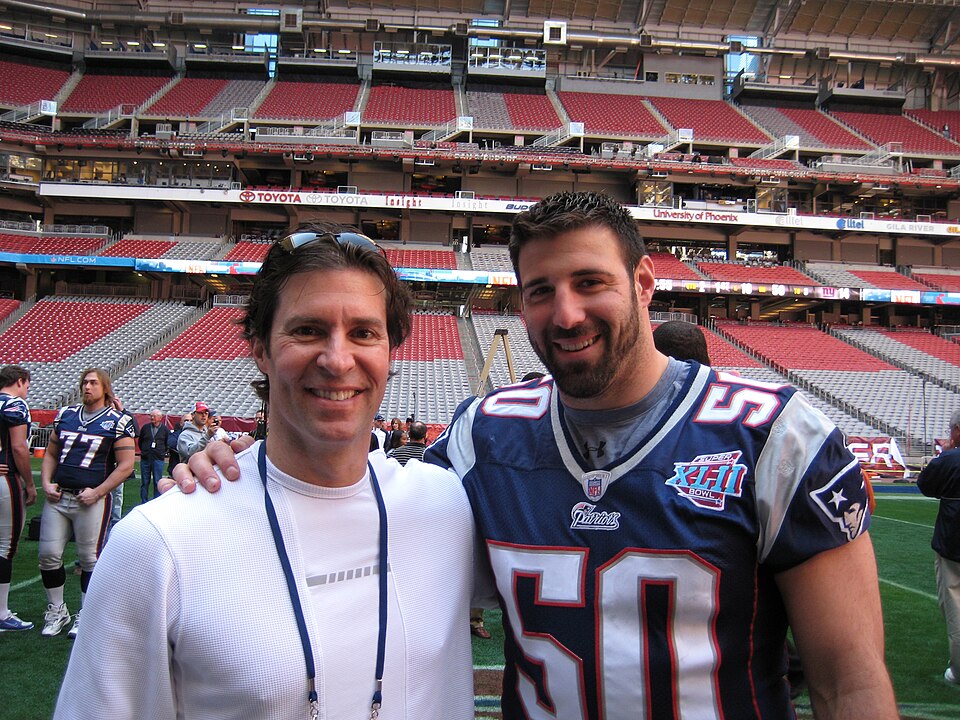
The 2007 New England Patriots had gone 16-0, a perfect regular season no team had managed since 1972. They were 12-point favorites going against the Giants, having already beaten them once that season.
The game turned on a single third-down play with under two minutes left. Eli Manning escaped what looked like a certain sack and heaved the ball downfield to David Tyree, who pinned it against his helmet as he fell backward for a 32-yard catch. Four plays later, Manning hit Plaxico Burress for the go-ahead touchdown, putting the Giants up 17-14.
The 1972 Miami Dolphins remain the only team in NFL history with a perfect season, a record the Patriots came painfully close to breaking.
Robin Söderling Beats Rafael Nadal (2009)
Spanish phenom Rafael Nadal had won 31 straight matches at the French Open, along with four consecutive titles, a streak that earned him the nickname King of Clay. Söderling was ranked 23rd in the world and had never made it past the fourth round at a Grand Slam.
He beat Nadal in four sets, hitting nearly twice as many winners as the defending champion. It remains Nadal’s only loss at the French Open. Söderling reached the final that year and again in 2010, but lost both times.
Holly Holm Knocks Out Ronda Rousey (2015)
Ronda Rousey was the first female champion in the UFC and became the sport’s biggest crossover star, appearing in movies and on magazine covers. She was also undefeated, finishing eleven of her twelve fights in the first round. Sportsbooks had her as high as a 12-to-1 favorite over Holly Holm, a former boxing champion with no UFC knockouts to her name.
Rousey believed her boxing was better than Holm’s. Overconfident, Rousey chose to keep the fight on the feet instead of grappling.
Holm avoided Rousey’s advances with superior footwork and kickboxing techniques, leaving her bleeding from the nose by the end of the first round. Then, in the second round, Holm landed a head kick that dropped Rousey instantly in front of a record UFC crowd of roughly 75,000 people in Melbourne.
Rousey fought again in the UFC and lost to Amanda Nunes. She stayed out of the cage for nearly a decade after that, then returned in 2026 for an MMA event streamed live on Netflix, submitting Gina Carano with a 17-second armbar before announcing her retirement for a second time.